Platamon Castle: A Medieval Fortress Guarding the Route to Thessaly
Site at a Glance
- Popularity
- High
- Country
- Greece
- Primary era
- Medieval
- Eras represented
- Classical, Medieval, Early Modern
- Civilizations
- Byzantine, Crusader, Kingdom of Macedon, Ottoman
- Site type
- Military
- Remains
- Castle
On this page15 sections
History
Ancient Herakleion
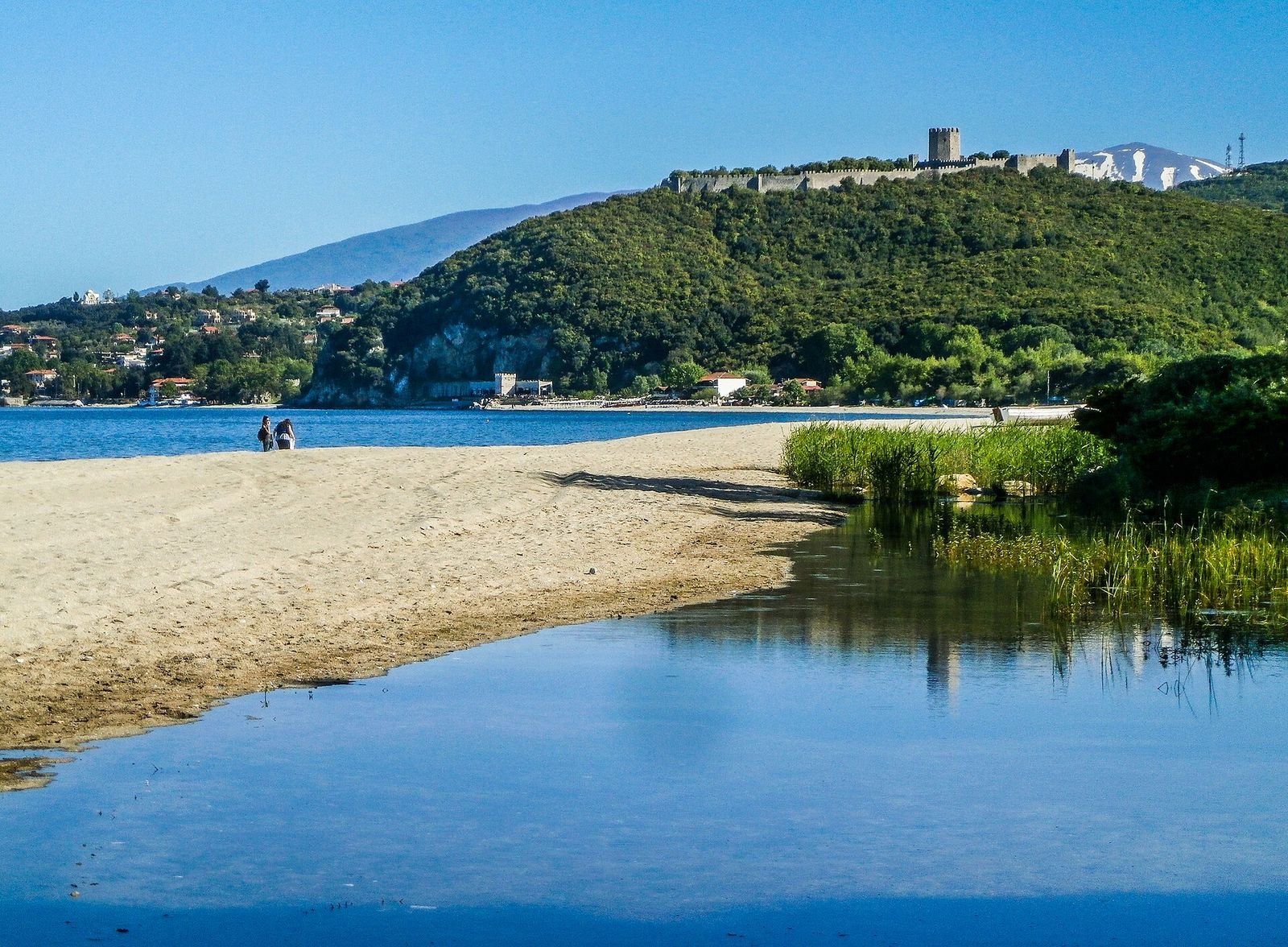
Platamon Castle is a medieval fortress on the southeastern slope of Mount Olympus in Greece, built between 1204 and 1222 on an earlier Byzantine fortification. Its position guarded the route from Macedonia into Thessaly. The hill was settled in the Bronze Age, and pottery points to Greek presence there perhaps as early as the eighth century BCE. A fourth-century BCE geographical work attributed to an author known as Pseudo-Skylax called Herakleion the first city of Macedonia.
Athens captured Herakleion around 430 BCE to control the Thermaic Gulf and its possessions on the Chalkidiki. The city and its port were destroyed in the early third century BCE, for reasons that remain unknown. In 169 BCE, Roman forces camped on the plain between Herakleion and Leivithra before campaigning against the Macedonian kingdom. A low-walled acropolis, the fortified upper part of a settlement, probably dates from around this period.
Byzantine and Crusader fortifications
A Byzantine fortification stood on the hill before the present castle. Its construction is broadly dated between the seventh and tenth centuries. The name Platamon appears in 1198 in a chrysobull, a Byzantine imperial charter authenticated with a gold seal. The name has been interpreted as referring either to rock polished by the sea or to the area’s plane trees.
After the Fourth Crusade, a western European campaign that established Latin-ruled states in parts of the Byzantine world, Pieria became part of the Kingdom of Thessalonica. Its ruler, Boniface I of Montferrat, assigned Platamon to the Lombard knight Rolando Pike, also known as Piskia. On Boniface’s orders, Pike began building the castle over the earlier Byzantine defenses between 1204 and 1222. The fortress was intended to control the route from Macedonia into Thessaly, and a Latin church was established at Platamon.
Medieval transfers and political use
Around 1224, Theodore Komnenos Doukas captured the castle as he brought the Frankish Kingdom of Thessalonica to an end. It later passed to his brother Manuel Komnenos Doukas, then became part of the Despotate of Epirus, a Byzantine Greek successor state formed after the Fourth Crusade, under Michael Doukas. In 1259, Byzantine emperor Michael VIII Palaiologos took the fortress after the Battle of Pelagonia and used it to hold Frankish captives from the battle. In 1345, the castle imprisoned members of the Thessalonian Zealots, a political faction in Thessaloniki, after their defeat by the Byzantine official Apokaukos.
Venetian and Ottoman control
The Ottomans first captured Platamon around 1385, but the Venetians soon took it. During a Venetian attempt to recapture the fortress in 1425, more than 100 Ottoman defenders were burned alive inside. The Venetians lost control after 1427, when the Ottomans re-established their rule. The castle remained a useful base for Ottoman operations against insurgents on nearby Mount Olympus.
A Venetian captain’s diary records that on 9 August 1470 the Sultan spent the night near the castle, then called Platimonia. The diary also describes a view from the fortress toward the gulf and Thessaloniki.
Revolts and modern warfare
By the late eighteenth century, Platamon was an armatoliki, a district where a local armed officer maintained order. Its leaders included Tsaknakis and the Greek military commander Georgakis Olympios. Greek forces briefly captured the castle in 1770, 1825, and 1878.
In the second half of the nineteenth century, the fortress housed 25 artillerymen and five cannons, as well as 16 houses. Naval captain Sachtouris bombarded it in 1897, after which the Ottomans abandoned the castle. Greek forces took it from Ottoman control during the Balkan Wars of 1912 and 1913, conflicts that ended Ottoman rule over much of southeastern Europe.
On 15 and 16 April 1941, German forces bombed the castle area and drove out a New Zealand battalion, which retreated.
Remains
The castle has three principal defensive elements: an outer enclosure, a second enclosure that also forms the acropolis, and a central tower. Its position above the entrance to the Tempe Valley overlooks the route linking Macedonia with Thessaly and southern Greece.
Defensive architecture
Outer enclosure
The extensive outer wall follows an irregular polygonal plan, with towers set at uneven intervals. It is generally well preserved and stands 7.5 to 9.5 metres high, with a thickness of 1.2 to 2 metres. On either side of the southeastern entrance, the wall reaches about 9.5 metres to the right and 7.5 metres to the left. A ruined outer defensive work beside the entrance may have served as a barbican, a structure protecting an entrance. The tower once positioned between the entrance’s two gates is destroyed. The upper part of the eastern wall-top walkway has also been lost, while other sections remain in good condition. The walls were raised repeatedly, especially along the southern side.
Inner enclosure and lower wall
The second enclosure stands 6 to 7 metres high. At its northeastern corner is a tower with a square exterior and circular interior, topped by a tiled dome of Byzantine type. A lower wall originally enclosed the complex outside these defenses, forming another line of protection.
Central tower
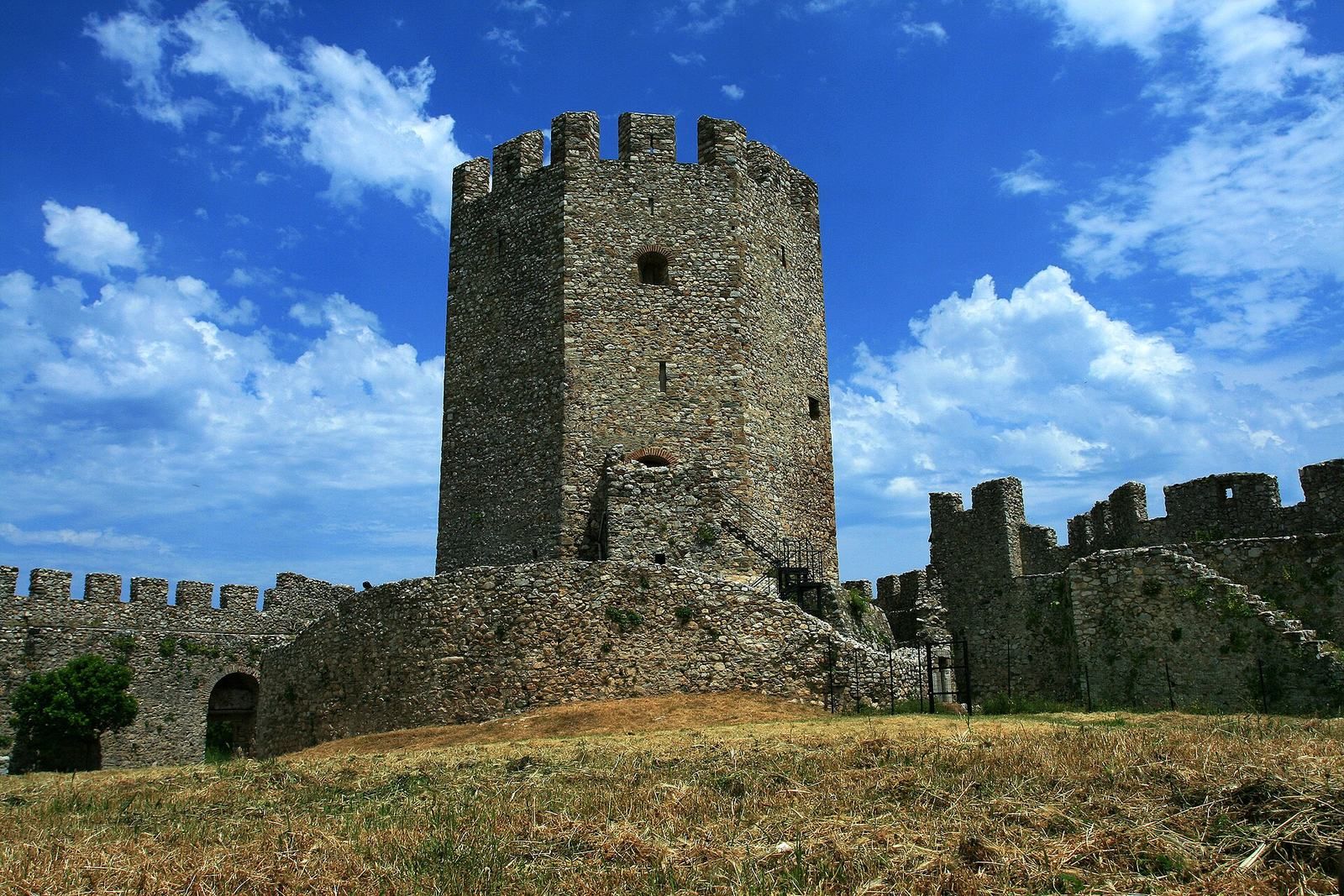
The central tower is about 16 metres high, with eight sides roughly 4.3 metres long and walls 2 metres thick. Its entrance, placed 3.45 metres above ground for security, was reached by a wooden ladder. Semicircular windows include one divided into two openings by a central column bearing a cross, a feature that may indicate repairs during the rule of the Despotate of Epirus. The tower is also dated to the fifteenth century. Inside, two vertical walls extended from the basement to about the second floor, dividing the space into four areas across four levels: a basement, a ground floor, and two upper floors. During a siege, the basement could serve as a cistern, or water-storage tank.
Shore towers and water supply
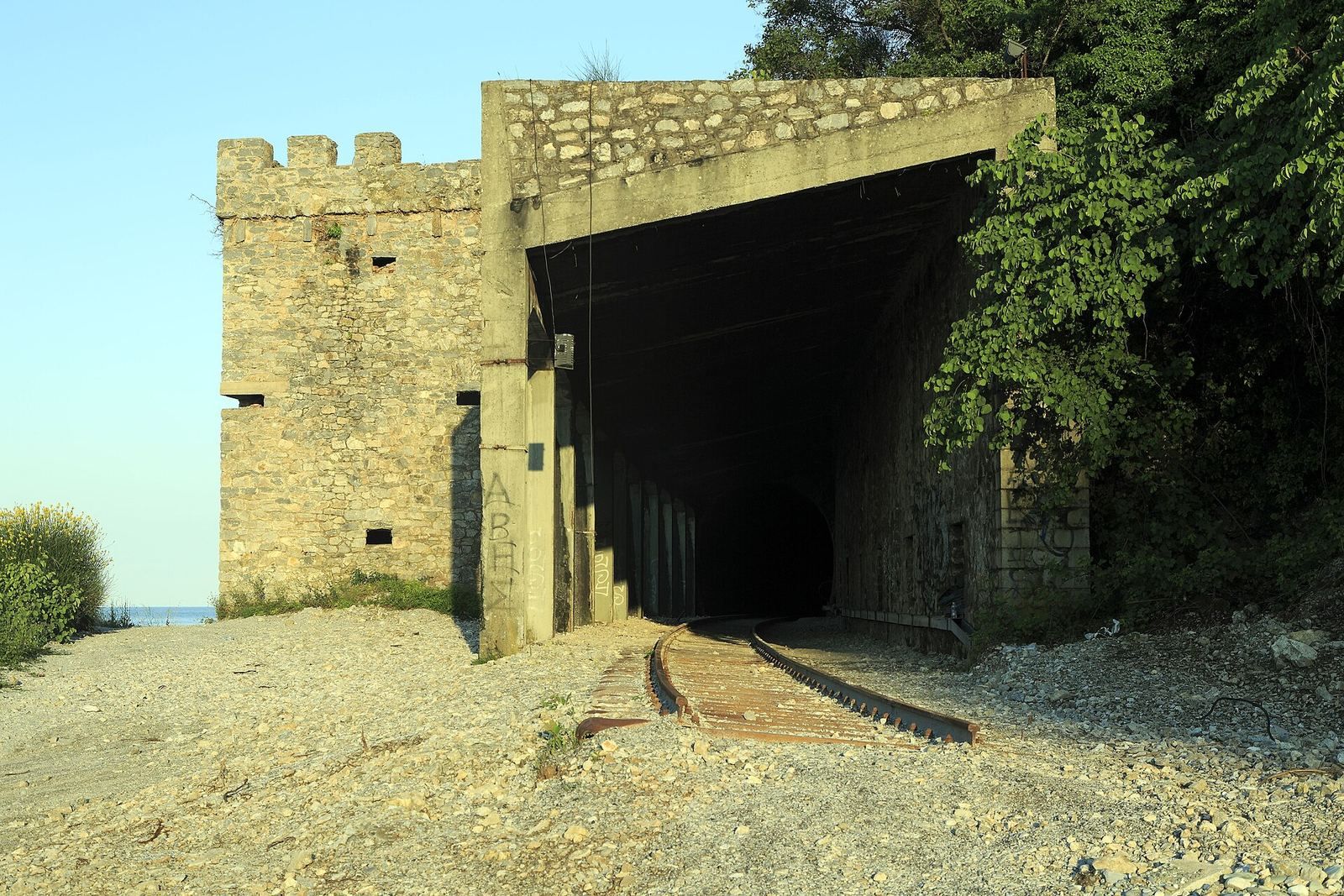
At the foot of the hill, two smaller towers stand on opposite sides of a strip of land that extends into the sea. Several cisterns within the complex supplied water during prolonged sieges.
Churches and settlement remains
Churches
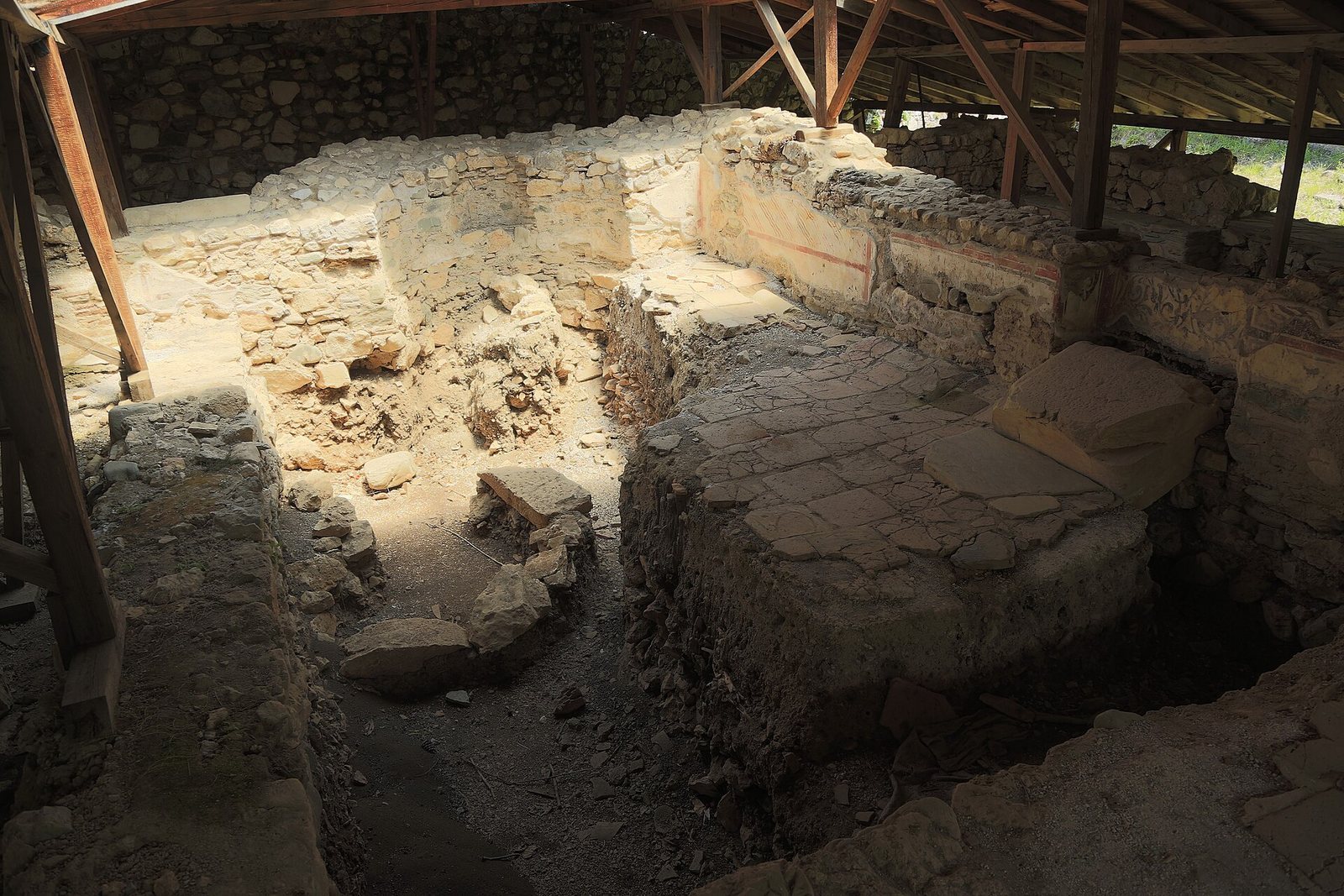
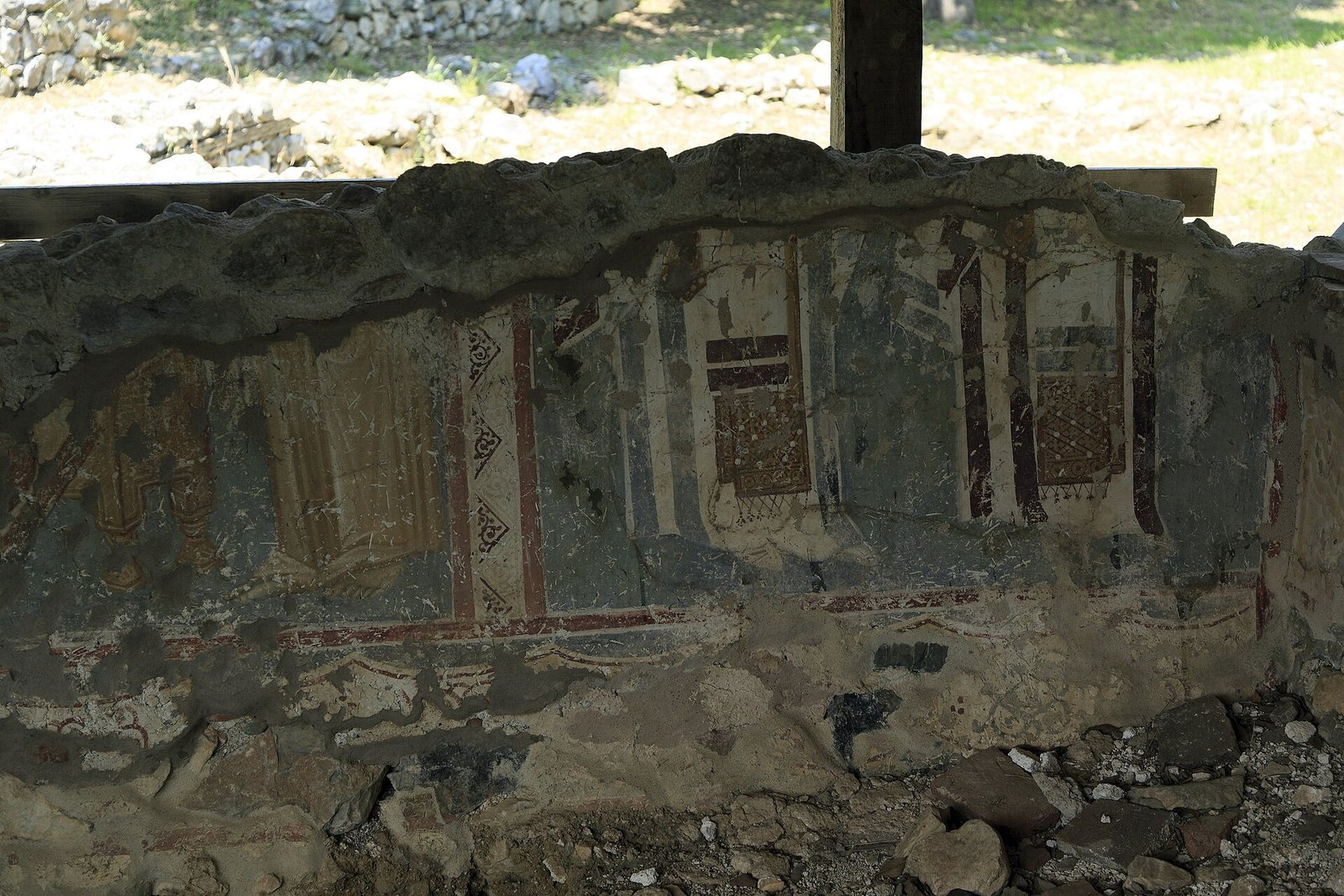
Agia Paraskevi is one of five churches formerly at the site. Richly decorated, it could accommodate about 30 worshippers; during Ottoman rule it was converted into a mosque. Excavations in the castle’s central area uncovered the remains of three Byzantine-period churches that were rebuilt in the seventeenth century.
Buildings, workshops, and archaeological finds
Foundations within the complex mark houses, a smithy, a pottery workshop, and other buildings. Some cannons survive in partial condition, and remains of some are displayed at the castle. Excavated pottery includes Euboean, Proto-Corinthian, and eastern Greek Geometric styles. A Hellenistic wall dated to the fourth century BCE was exposed in 1995. Shells and coins support the suggestion that ancient Herakleion’s core lay on the northwestern side of the hill. Building plans attributed to Herakleion were also uncovered during construction of a railway tunnel through the hill.