San Pietro: A Roman Catholic Parish Church in Copermio, Italy
Site at a Glance
- Popularity
- Very Low
- Country
- Italy
- Primary era
- Early Modern
- Eras represented
- Medieval, Early Modern, Modern
- Civilizations
- Duchy of Parma and Piacenza, Holy Roman Empire, Italian, Papal States
- Site type
- Religious
- Remains
- Church
On this page8 sections
History
From chapel to parish church
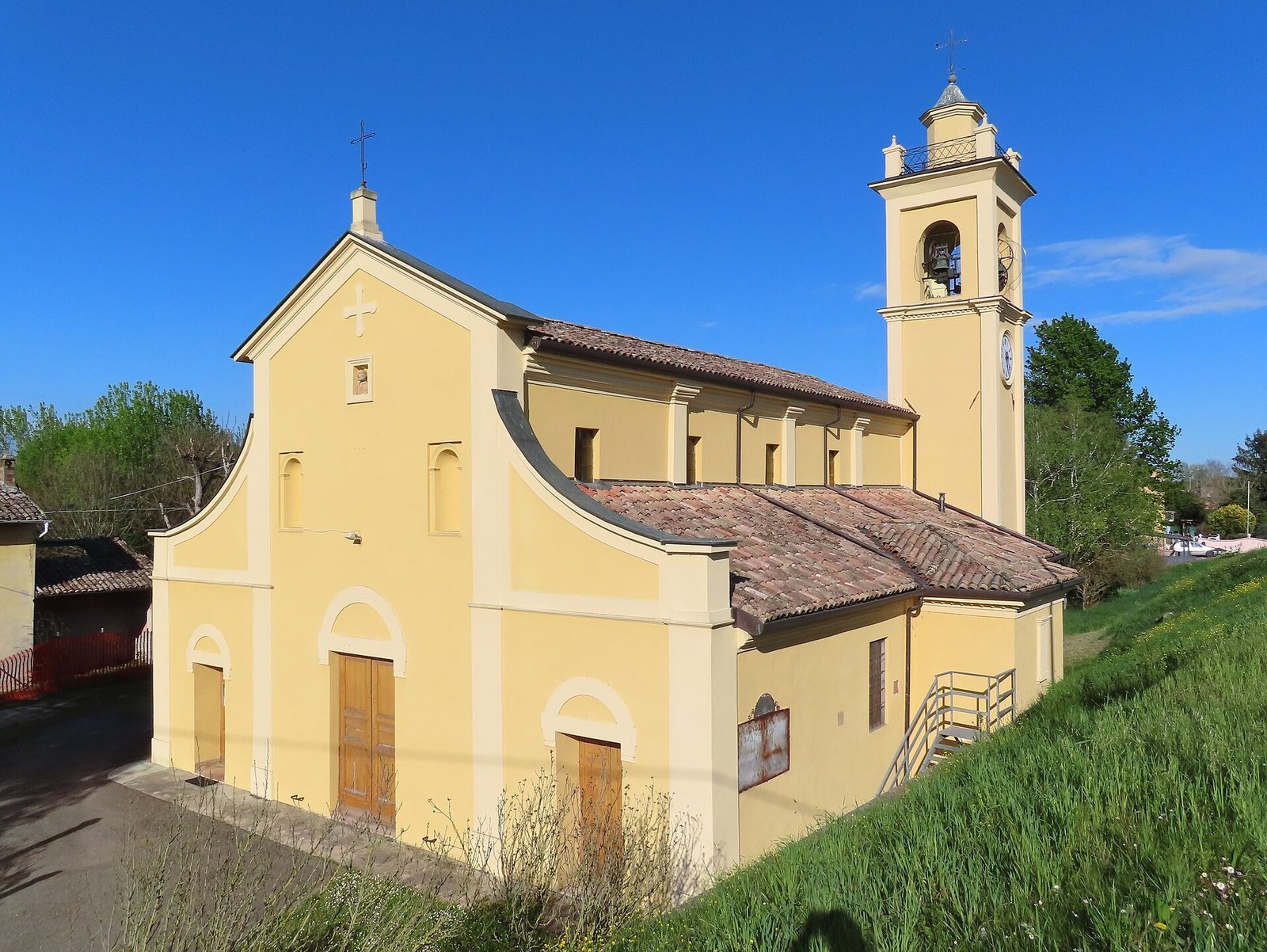
San Pietro is a Roman Catholic parish church dedicated to Saint Peter, one of Jesus’s apostles and a central figure in Catholic tradition. It stands in Copermio, within the municipality of Colorno in Parma province, Italy. The church belongs to the Diocese of Parma, a territorial church jurisdiction overseen by a bishop, and the Bassa pastoral zone, a grouping of parishes for local church organization. Its Baroque forms reflect a rebuilding in 1685. A chapel dependent on Colorno stood on the site in 1230; the first church built there probably dates to the sixteenth century. A nineteenth-century document records that Monsignor Pompeo Musacchi consecrated the church on 19 May 1525.
During a formal church inspection in 1578–79, Bishop Giovanni Battista Castelli of Rimini found the church divided into three naves. The church was rebuilt in 1685, and documents from 1691 record alterations made during that work.
Damage, repairs, and consolidation
Flooding from the Po damaged the church in 1868. Repairs in 1904, 1930, and 1937 addressed its roof and masonry. In the 1980s, a reinforced-concrete roof replaced the timber one, adding weight to the building.
An earthquake on 23 December 2008 damaged the church and made it unsafe; the heavier roof contributed to cracking. The January 2012 earthquake caused further damage. Structural consolidation was completed in June 2017, and the church reopened the following month.
Remains
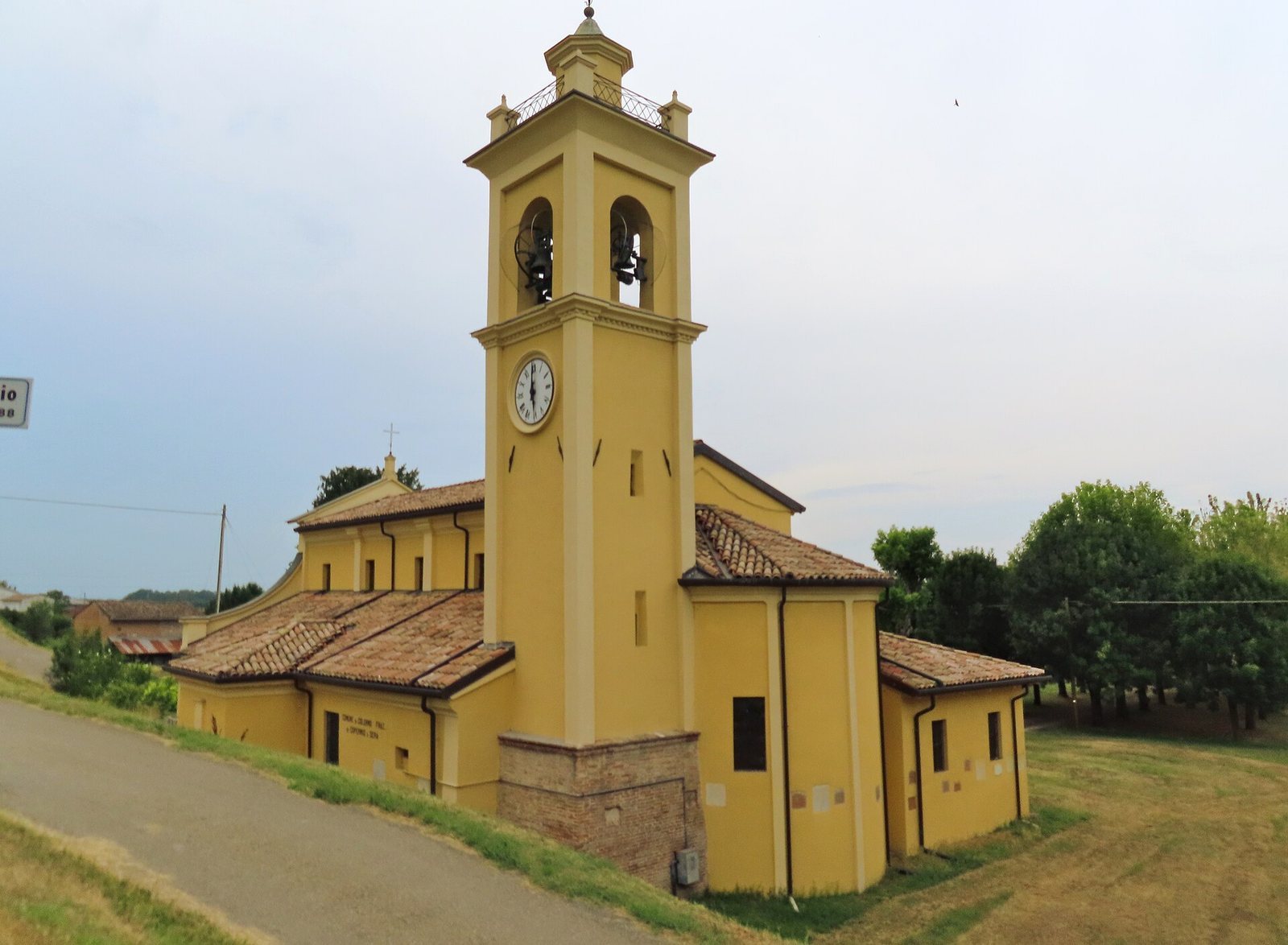
The church is a rectangular masonry building with a west-facing entrance and an altar end to the east. Its principal features include a three-nave interior, a Baroque façade, and a bell tower attached to the building.
Church architecture
Plan and interior
The interior is arranged in five sections, with the eastern two occupied by the presbytery, the part of the church around the altar, and a semicircular apse, the projecting end of the building. Two side chapels open at the third section. Two rows of supports with capitals in the Doric style divide the interior; semicircular arches connect the central nave to the side aisles. A lunette vault, a vaulted ceiling incorporating curved sections, covers the central nave.
The sections of the north aisle are longer than those on the south. The layout suggests that the earlier chapel was enlarged southward, with parts of its perimeter walls retained. The nearby Parma embankment is thought to have restricted the width of the south aisle. North-side walls are thinner than those on the south, a difference thought to reflect reuse of the chapel walls and the construction of thicker walls during the southern enlargement. At the 1578–79 inspection, six columns supported the central nave. The presbytery was level with the rest of the church, and the timber roof was visible from all three naves; the apse and presbytery already had masonry roofs.
Façade
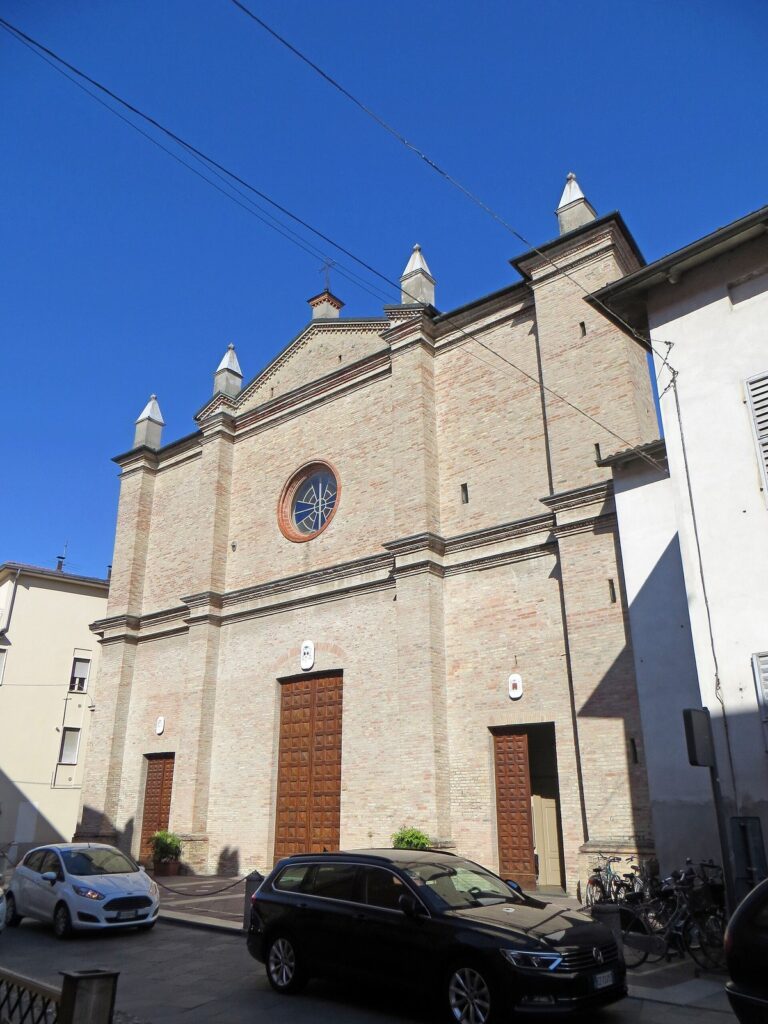
The symmetrical façade is built of rendered masonry and has a stepped outline divided by four pilasters. Cornices mark the two side sections, while a central pediment without a base crowns the front. The central portal and two side entrances each have a circular pediment above them. Two upper windows, each with a single opening, have been blocked.
Bell tower
The bell tower projects from the church’s right side, set back beside the apse. Pilasters mark its corners, and horizontal bands divide it into two levels. Each side of the bell chamber, the upper room for the bells, has a single-opening window. Above it, a railed terrace surrounds a central octagonal brick lantern, a small tower-like structure. Pastoral reports mention the tower in 1808, although another report from that year indicates it had already stood for some time. A report also records three bells, blessed by the abbot, or head, of San Martino Abbey.