Pipinsburg (Sievern): A Medieval Castle in Germany


Site at a Glance
- Rating
- 4.3
- Popularity
- Low
- Country
- Germany
- Primary era
- Medieval
- Eras represented
- Medieval
- Civilizations
- Holy Roman Empire
- Site type
- Military
- Remains
- Castle
On this page9 sections
History
Pipinsburg (Sievern) is a medieval castle in Germany, near Sievern in Geestland, Lower Saxony. It was probably built shortly before or around AD 1000, during the reign of Otto III, the medieval German king and Holy Roman Emperor who ruled from 983 to 1002. The castle stood at the inland entrance to a waterway and later became associated with the Knights of Bederkesa and the political conflicts of the Land of Wursten.
Origins around AD 1000
Pipinsburg occupied the western edge of the Hohe Lieth, an elevated sandy ridge bordering the marshlands of northern Germany. The Sieverner Aue cut through the ridge, and before the Wurster Marsh was diked, the watercourse was probably navigable inland from the Weser. This position has been compared with coastal defensive arrangements linked to Charlemagne and his successors during the period of Viking attacks. No evidence establishes that Pipinsburg itself was built in the Carolingian period, the era of the Carolingian dynasty.
Investigations by Agahd, Schuchhardt, and Hofmeister in 1906 to 1908, followed by work by Hans Aust, produced finds indicating that the medieval castle was constructed shortly before or around AD 1000. Its early ownership has been interpreted in different ways. The nobles and later counts of Diepholz founded a nunnery at their inherited estate in Midlum in 1219, about seven kilometres north of Pipinsburg. This led to the former view that the castle had been their ancestral seat and was abandoned when the nunnery was founded.
The Knights of Bederkesa and the castle’s destruction
Later evidence points instead toward the Knights of Bederkesa. In 1343, they agreed with Archbishop Burchard Grelle of Bremen to refortify the castle, then called Siverdesborg, and transferred half of it to him. This arrangement indicates that Pipinsburg was an allodial possession of the Knights, meaning hereditary property rather than a feudal fief. The castle was probably destroyed in 1256, when the Wurster Frisians, the coastal population of the historic Land of Wursten, expelled the nobility from the geest. It was probably demolished finally by the Wurster Frisians soon after the rebuilding agreed in 1343.
The Knights held extensive land and rights on the Hohe Lieth. They gradually sold or transferred some holdings to Neuenwalde Convent, a religious institution for noblewomen, whose provosts they often supplied, or assigned them to female members of their family. A tradition recorded around 1500 described the family as originally free nobility. They probably entered the archbishop’s ministerial service during the twelfth century. Because Bederkesa Castle later held one-third of the revenues from the court of the Land of Wursten at Sieverdesham, subsequently called Klenkenham, current interpretation considers the Knights of Bederkesa likely to have originated from Pipinsburg.
The family’s conflict with the Wurster Frisians continued after the castle’s rebuilding. In 1346, the Knights had a separate church built at Elmlohe because of their deadly feud with the Wurster Frisians.
The name Pipinsburg
The name Pipinsburg first appears on a map made by Wilhelm Dilich in 1603. Dilich was a German cartographer and historian. The name is considered non-historical because it does not otherwise occur in the sixteenth-century property registers of nearby Neuenwalde Convent. Medieval documents from 1343 called the castle Syverdesborch, while local speech referred to it as Ole Borg.
Early archaeological work distinguished Pipinsburg from Siverdesborg because the excavations of 1906 to 1908 found only material from around AD 1000. Siverdesborg was therefore sought at a place called Op de Borg in Sievern. Hans Aust’s discovery of fourteenth-century settlement traces at Pipinsburg in 1976 led to the present identification of the two names with the same site.
One interpretation holds that the castle was called Pipsburg or Pipingsburg before 1600. The name may have been related to a Low German expression meaning to peer out or keep watch. Its original meaning was later forgotten, and the name became associated with Pippin, a Carolingian king, through the similarity of their names and the memory of Charlemagne. In the same later tradition, the nearby Heidenschanze was called Karlsburg.
Remains
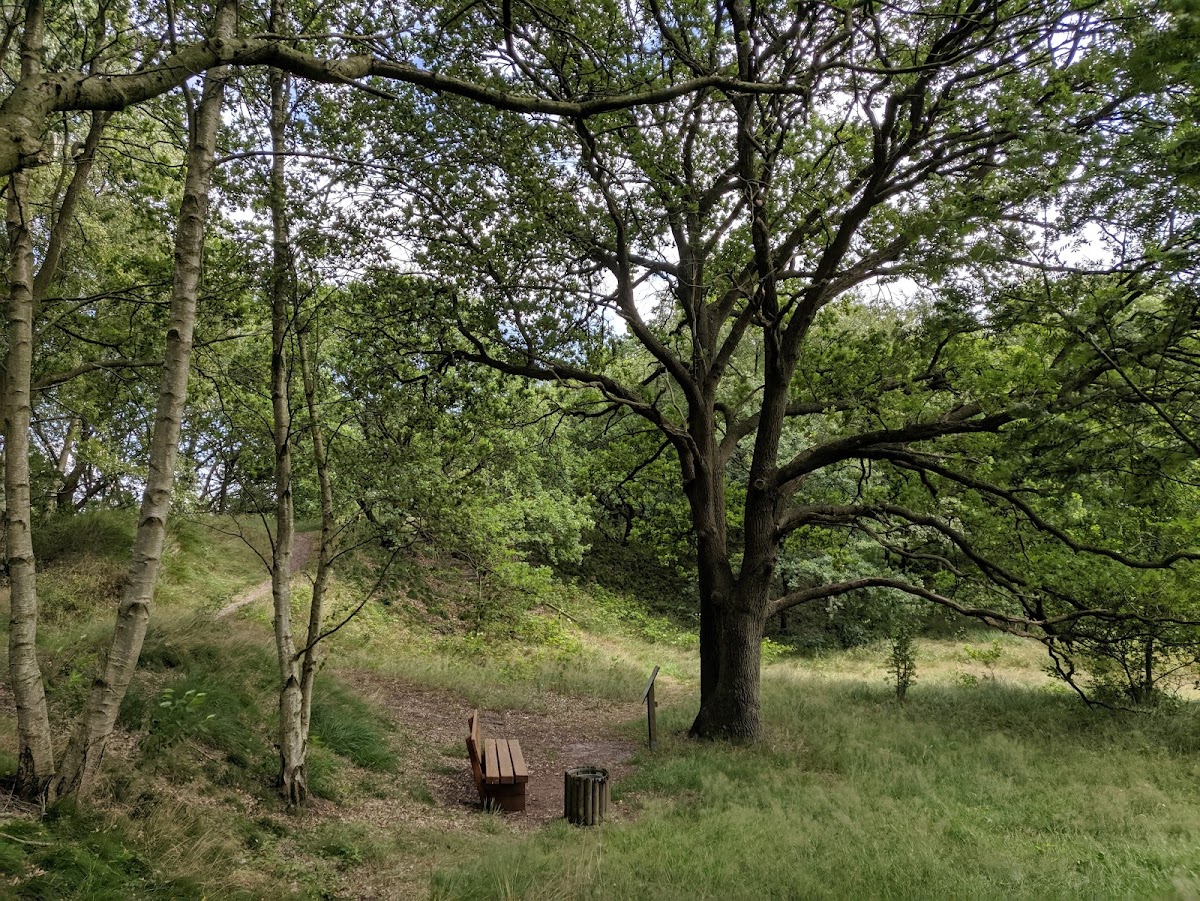
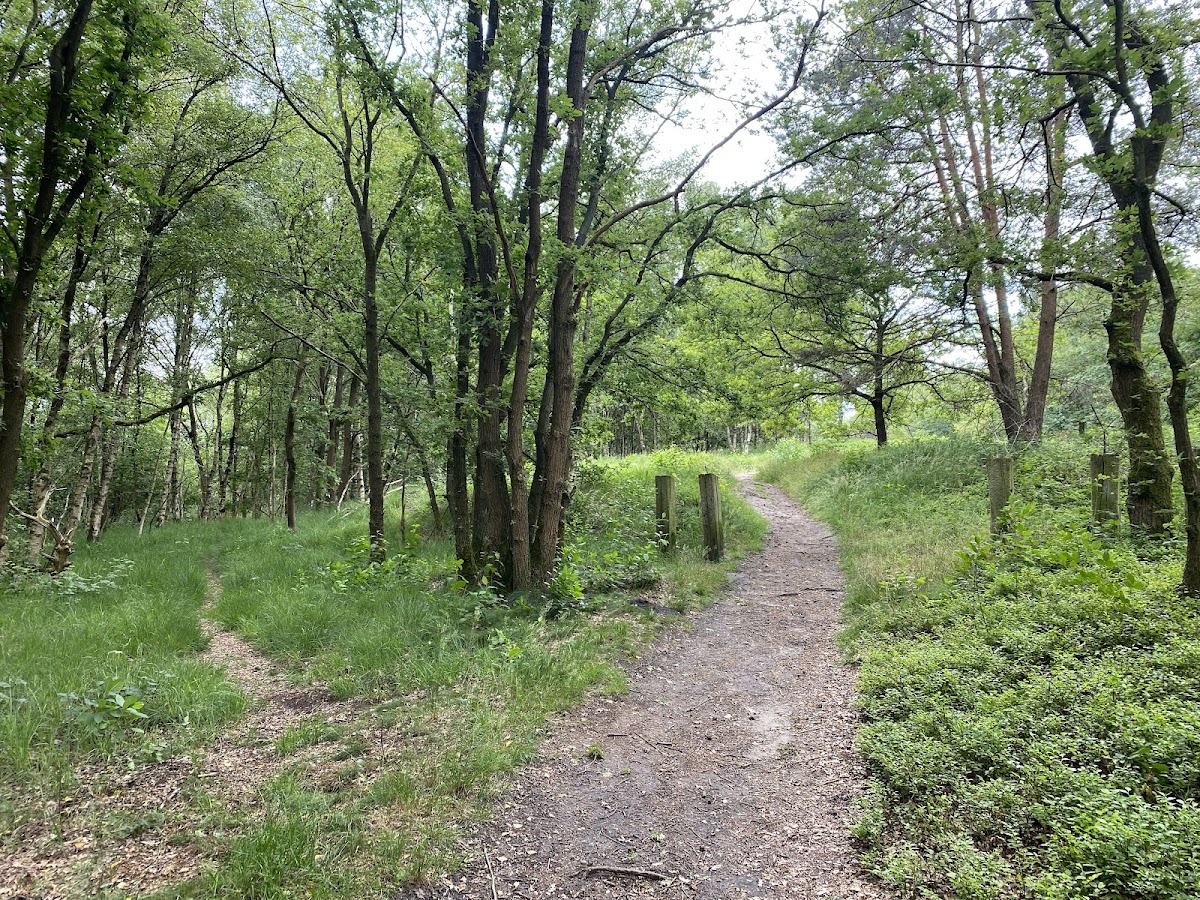
Pipinsburg occupied a defensible position beside the Sieverner Aue on the western edge of the Hohe Lieth ridge. Its approximately circular main enclosure is nearly 60 metres across and is enclosed by a ring rampart that still rises about six metres high. The side toward the edge of the geest required no additional fortification, while the landward approach was protected by an outer bailey extending about 250 metres to the northeast.
Castle enclosure and approach defenses
Main enclosure
The main enclosure is defined by its substantial circular earthwork. Many stones were reportedly removed from the ring rampart by 1864. During the 1880s or 1890s, the head of the Sievern municipality attempted to stop further stone extraction from the southern enclosure and the outer bailey. These later interventions affected the surviving physical fabric of the castle remains.
Outer bailey
The outer bailey was protected by a low rampart and ditch, or by the Sieverner Aue itself. Banks and ditches between the bailey and the main castle strengthened the landward approach. Excavations found foundation remains belonging to wooden structures. The scale of the fortifications, however, suggests that substantial stone defensive works also existed. Together, the main enclosure, outer bailey, and intervening earthworks reveal a castle organized around a strongly defended central area and a more extended approach zone.
Nearby archaeological sites
About one kilometre east of Pipinsburg, also north of the Sieverner Aue, lie the Heidenschanze and Heidenstadt. These are separate archaeological sites and are substantially older than Pipinsburg. Their presence distinguishes the medieval castle from the earlier settlement and defensive remains in the surrounding landscape.