Passage Grave in the Ahlen-Falkenberger Moor: A Neolithic Burial Monument
Site at a Glance
- Popularity
- Very Low
- Country
- Germany
- Primary era
- Stone Age
- Eras represented
- Stone Age
- Civilizations
- Unclassified
- Site type
- Burial
- Remains
- Tomb
On this page6 sections
History
The Passage Grave in the Ahlen-Falkenberger Moor is a Neolithic burial monument in Germany. It was built around 3200 BC by the Funnel Beaker culture, a farming culture named for its characteristic pottery. The Neolithic was the later part of the Stone Age. Peat later covered the grave, preserving it and the surrounding archaeological landscape over millennia.
Construction and peat cover
A raised bog developed over the grave after its construction. By about 800 BC, during the Iron Age, the period following the Bronze Age, peat had covered the monument. Drainage for peat extraction began in the early 20th century. Later cultivation dried and lowered the bog, and the grave’s large capstones began to emerge at the surface around the 1930s.
Archaeological investigation
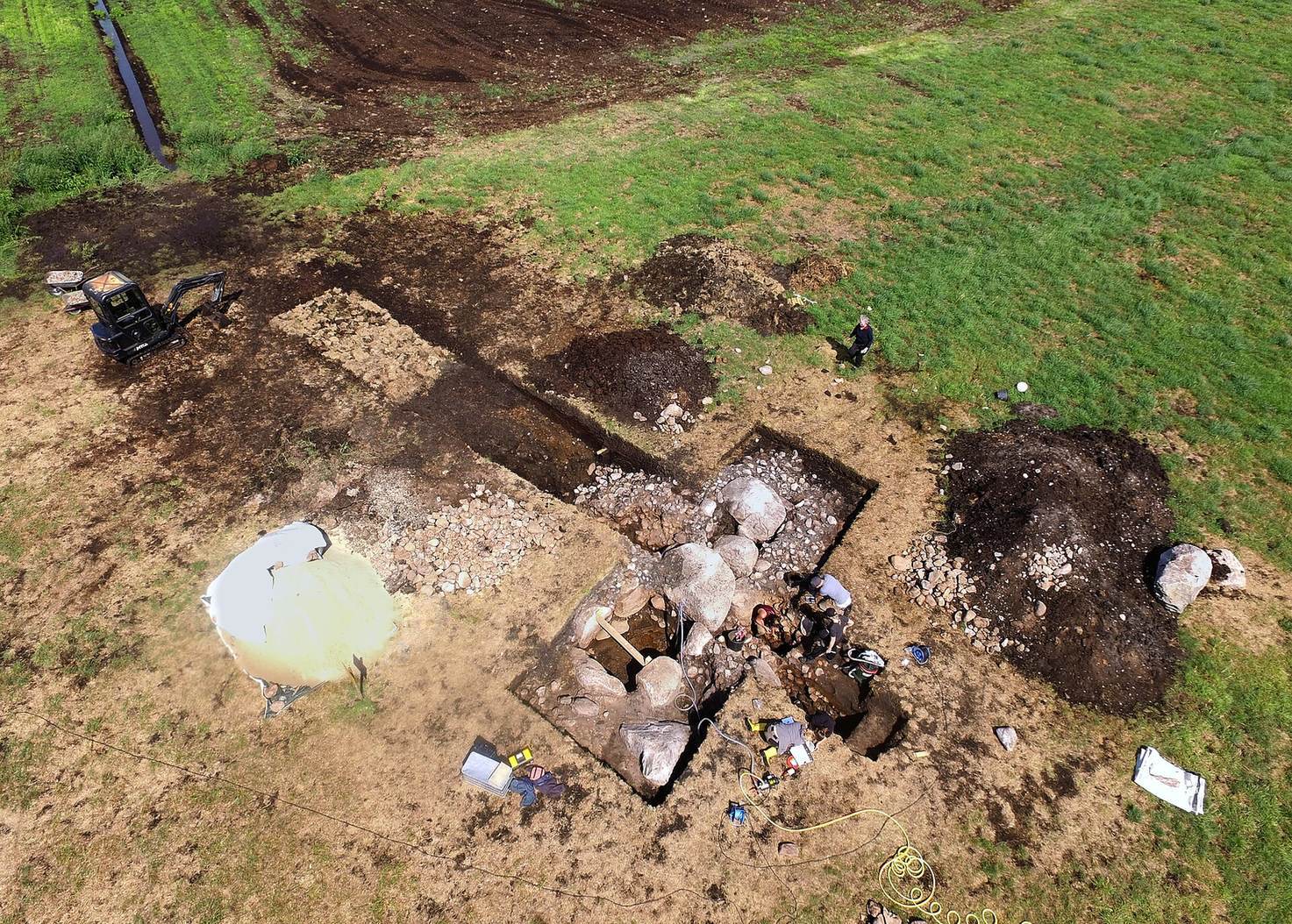
In 2019, the Lower Saxony Institute for Historical Coastal Research, a regional research institute, carried out magnetic surveys and borehole investigations in the area before excavating the grave that summer. The work belonged to a project studying prehistoric settlement landscapes beneath the moors around Klein Ahlen, Groß Ahlen, and Flögeln. Archaeological, geological, and botanical research examined the growth of Neolithic bogs and the settlement of northwest Germany by its first farmers. Magnetic surveys to locate traces of Neolithic settlements continued in 2020.
Bog-preserved megalithic graves of this kind are rare in Europe, with eleven known in the Ahlen Moor. The preservation offers evidence for the grave’s construction and for how early bog growth affected the building and use of megalithic tombs, as well as the settlement landscape of the Funnel Beaker culture. Further excavations at megalithic graves in the Ahlen-Falkenberger Moor took place over eight weeks in 2025.
Remains
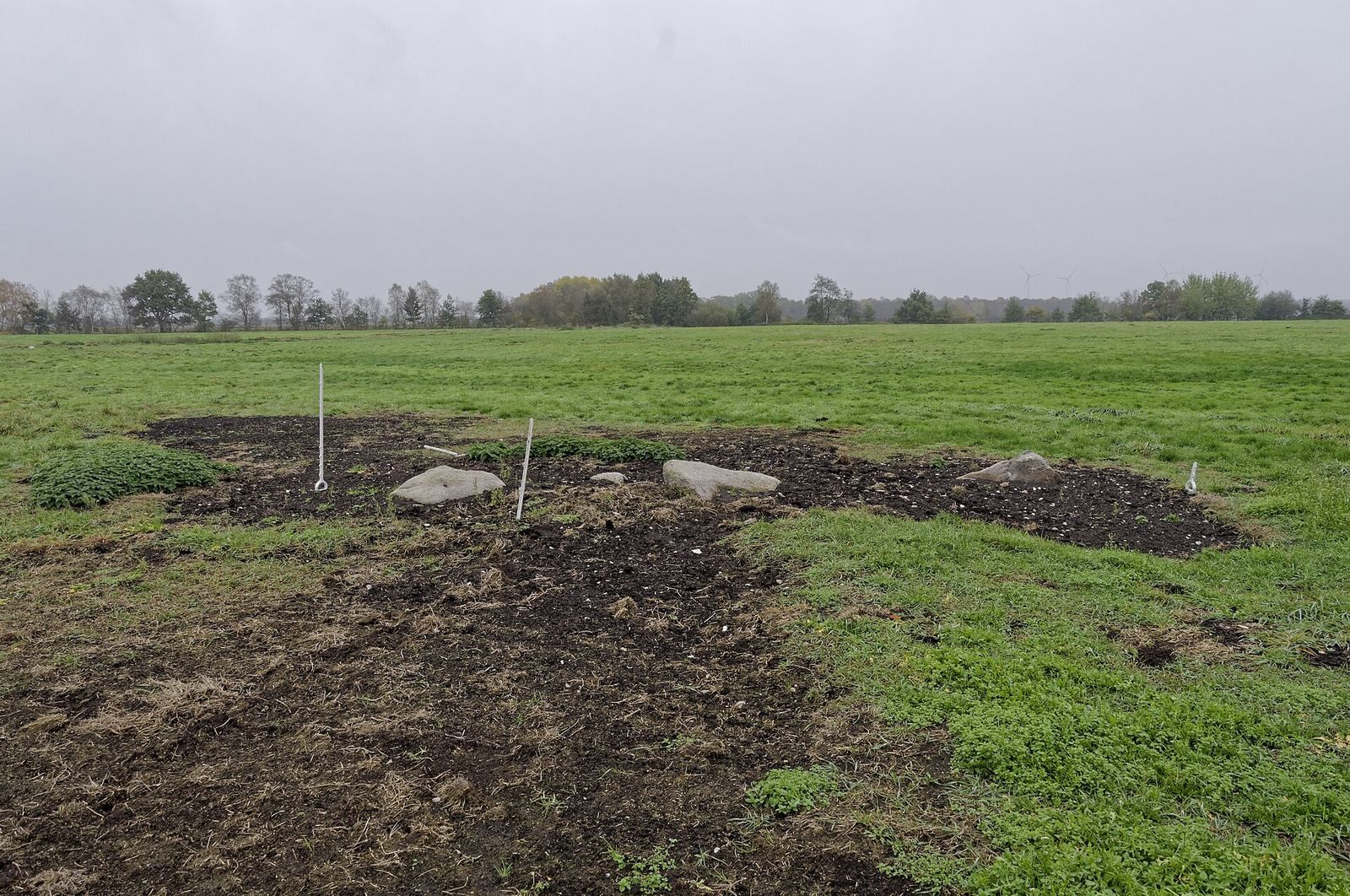
The grave lies in the low-lying Ahlen Moor, on the north shore of Dahlemer Lake at the edge of geest, elevated, generally sandy ground. Its surviving stones belonged to a passage grave, a burial chamber reached by a passage.
Passage grave and stone covering
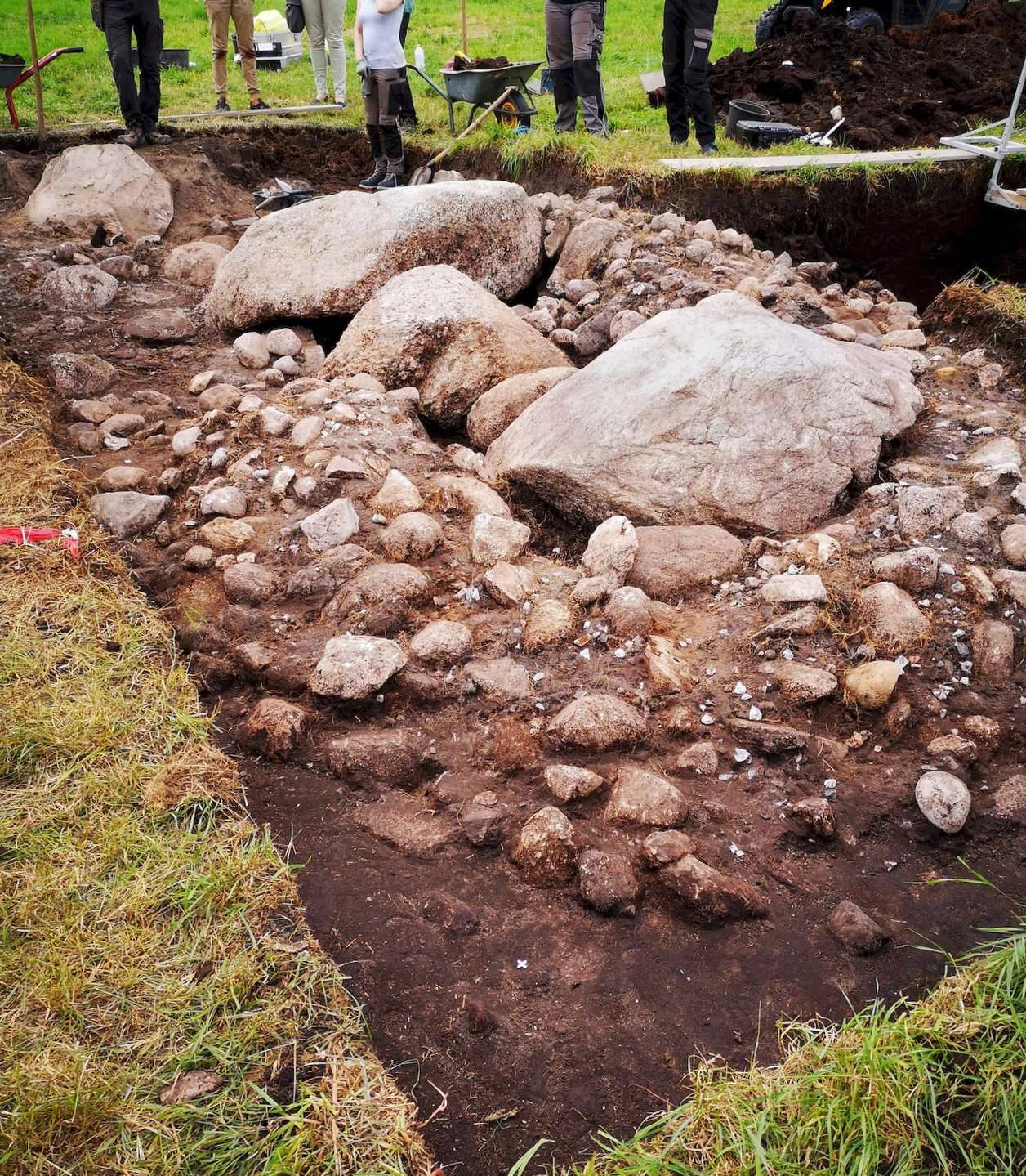
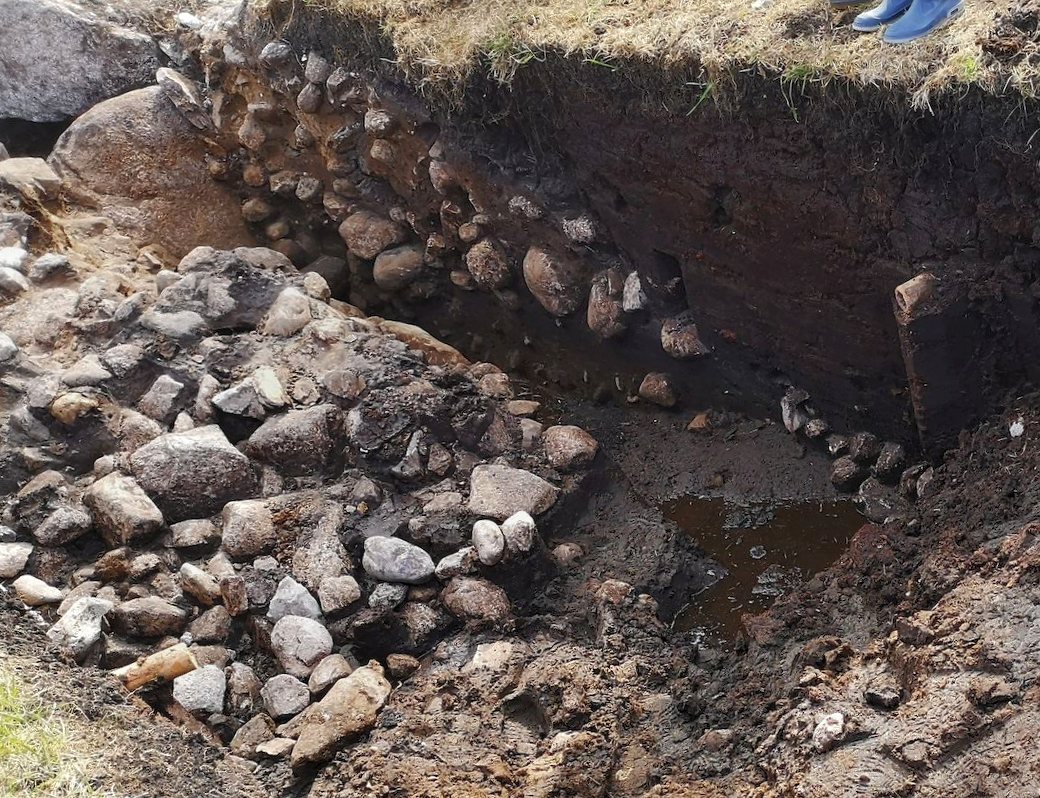
The grave had five capstones. Before excavation, two were visible at the surface, alongside the gap left by a third. The passage entered the chamber midway along one of its long sides, at a depth of 1.2 metres. It was probably filled with sand in the Neolithic, and smaller stones blocked its entrance. A covering of rounded stones gave the finished grave the appearance of a large mound. Excavation exposed the two capstones projecting from the bog soil and numerous smaller fieldstones in the overlying layers, packed around the large stones. Finds included three amber beads and two pottery sherds, representing a decorated funnel beaker with belly fringes and a bowl.
Nearby fieldstone mound
A circular mound of fieldstones about 4.5 metres across and 50 centimetres high lies nearby. Archaeologists examined it in 2019, and it is probably a later burial dating to around 2500 BC and belonging to the Single Grave culture, a later Neolithic culture associated with individual burials.