Pierre Tourneresse: A Neolithic Burial Monument in France
Site at a Glance
- Popularity
- Medium
- Country
- France
- Primary era
- Stone Age
- Eras represented
- Stone Age
- Civilizations
- Unclassified
- Site type
- Burial
- Remains
- Burial Mound
On this page10 sections
History
Pierre Tourneresse is a Neolithic dolmen, a tomb built from large stones for burial, near Cairon in Calvados, Normandy, France. It is assigned to around 4000 BC. The Neolithic was the later part of the Stone Age, associated with settled farming communities.
Settlement before the tomb
A settlement occupied the site before the tomb was built, around 4400 BC. Its main house measured 15 by 7 metres and stood among several domestic buildings.
Later use and local tradition
During the Gallo-Roman period, the era of Roman Gaul and its inhabitants, stone was quarried from the mound. Local tradition held that the stone could turn on itself, a belief also associated with other megaliths in the region.
Recognition and investigation
The site was known in the nineteenth century. At that time, Pierre Tourneresse referred to a large capstone among slabs thought to form a stone mound. During the Second World War, the large burial chamber was excavated, and bones found there were placed in a pit to the south.
Pierre Tourneresse was listed as a historic monument in France on 19 May 1954. Its archaeological importance was recognized in 1992, and four successive excavation campaigns began in 1996 under French archaeologist Emmanuel Ghesquière.
Remains
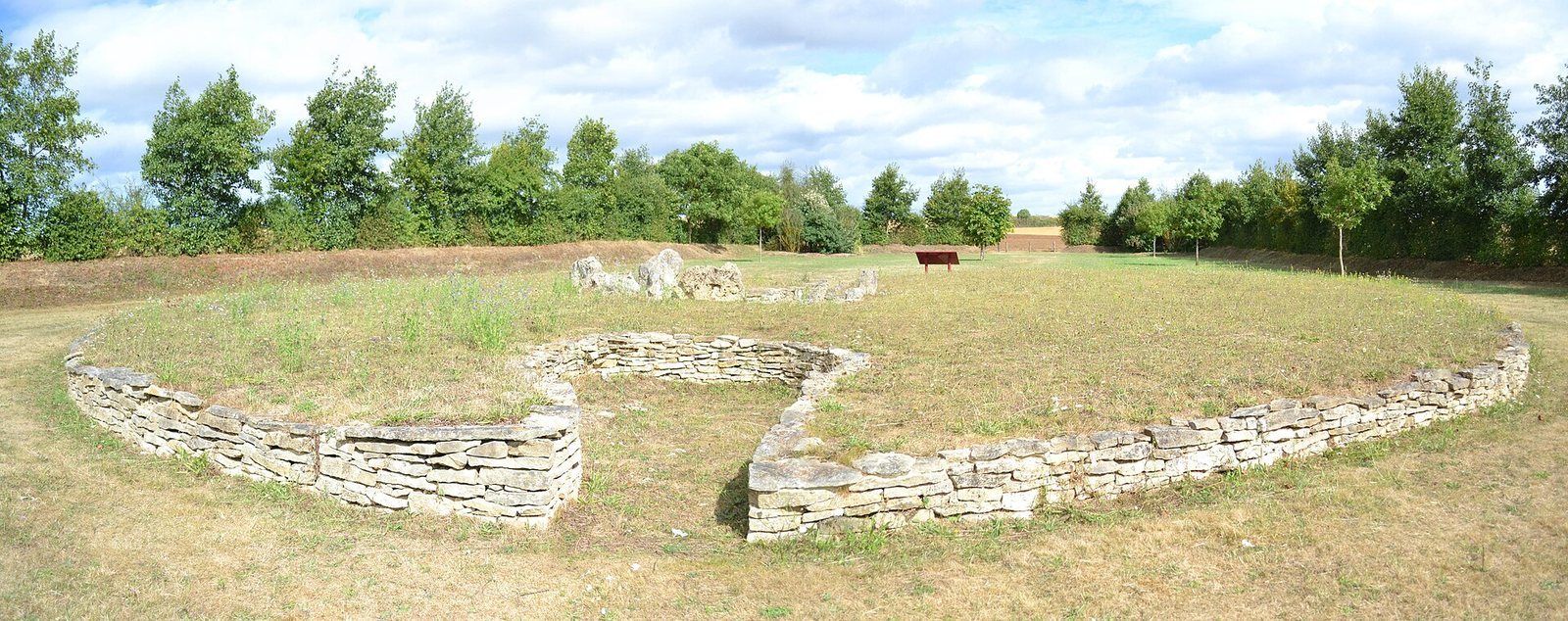
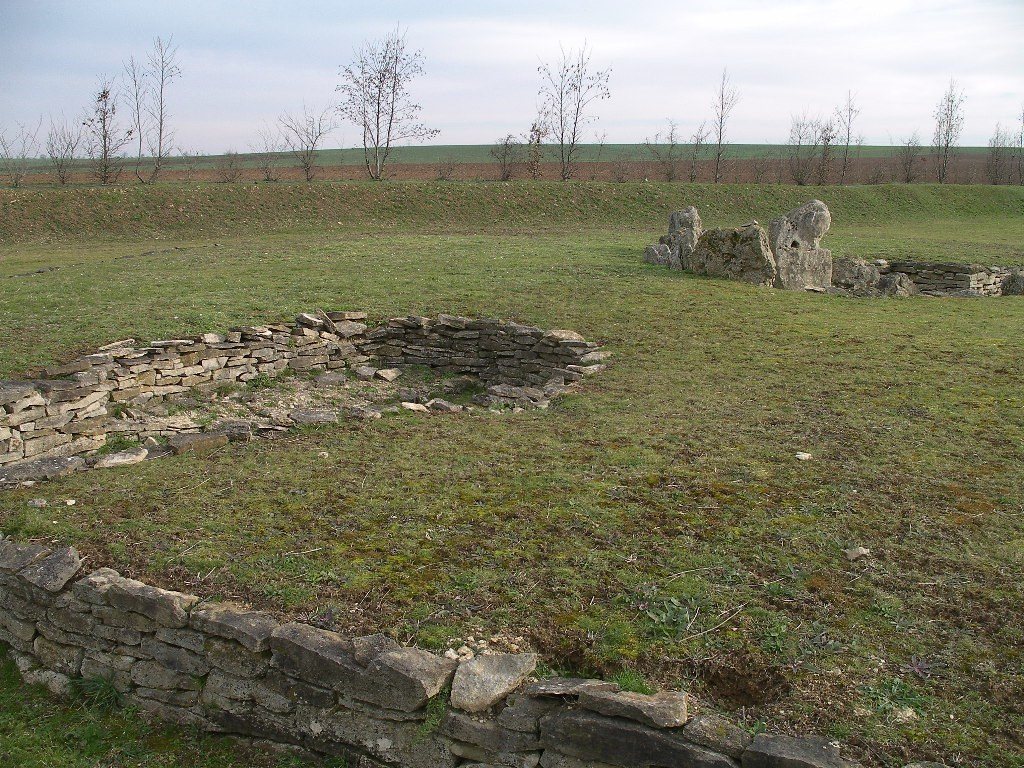
The monument stands on terraced ground near the Vey, a small stream that flows into the Mue. Its almost circular mound measures about 24 metres across and was enclosed by a facing wall of small limestone slabs, probably quarried nearby.
Internal layout
Large slabs set out like spokes divide the stone mound into compartments. Two burial chambers occupy its interior, positioned roughly opposite one another.
Burial chambers
Larger chamber
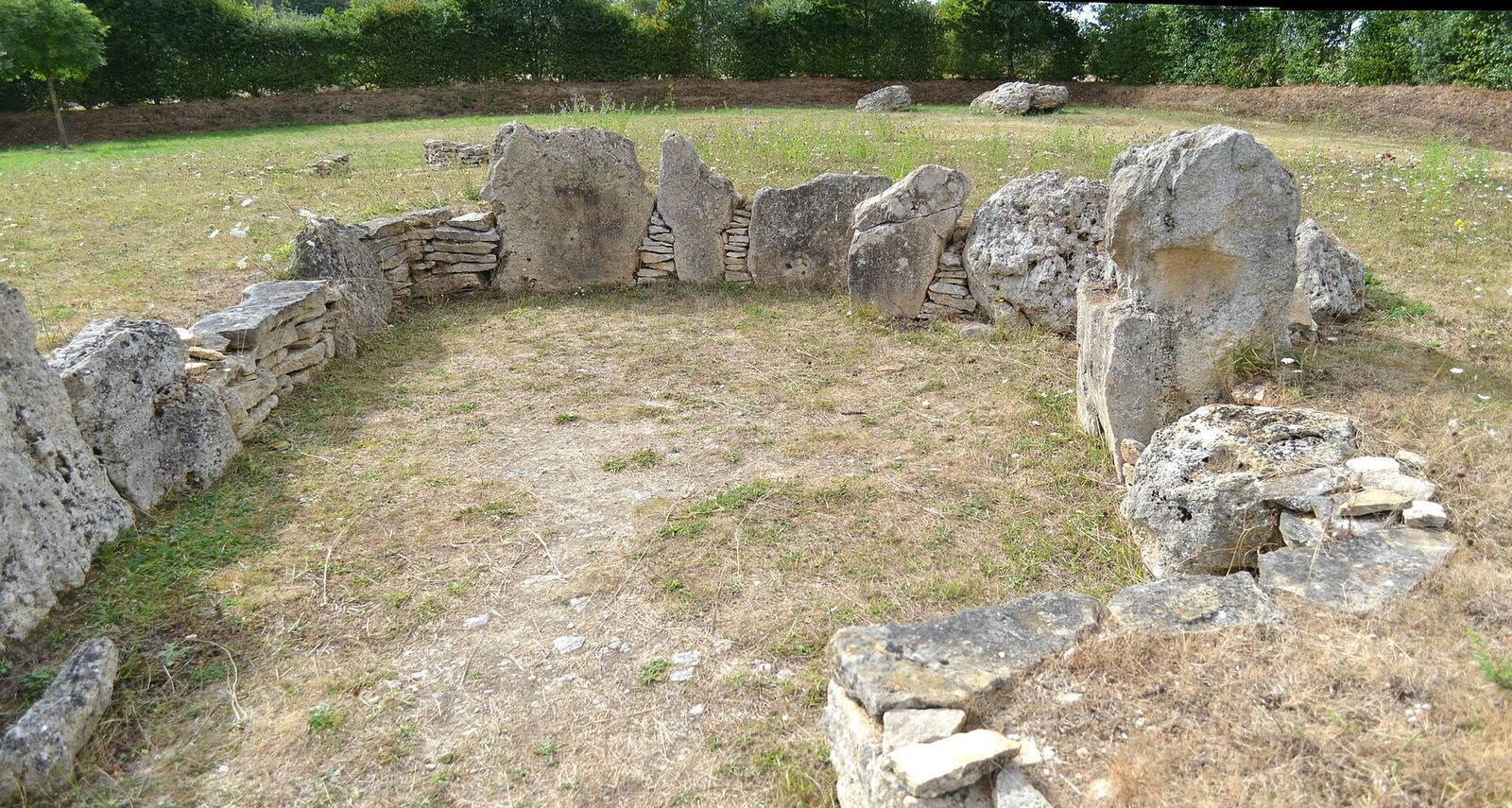
Near the mound’s centre, the larger chamber has a roughly rectangular plan, about 4 metres long and 3 metres wide. A passage about 8.8 metres long approaches from the east along the chamber’s central axis. Its walls alternate between stonework laid without mortar and upright slabs. A small alcove lies to the north, and the alcove floor and area beside the entrance pillars were paved. Small side niches may have existed at several points around the chamber; a large sloping niche was reproduced during reconstruction. Three capstones covered the chamber.
Smaller chamber
The smaller chamber is about 3.5 metres long and up to 2 metres wide. It narrows irregularly toward a rounded end and opens west through a short passage. Thin slabs laid without mortar form its walls, which probably supported a corbelled vault, made from stone courses that project inward as they rise. A change in the north wall forms a niche, and the floor was paved. The chamber may have been built separately or added later by cutting into the mound.
Burials and objects
Bone fragments represent about eight people, including at least five adults. The smaller chamber contained a child’s remains and a perforated canine tooth, probably worn as a pendant. Pottery fragments from pedestal bowls are attributed to the northern Chasséen, the regional northern grouping of a Neolithic culture in France. Radiocarbon dating places the burials in the larger chamber at about 3900 to 3700 BC.