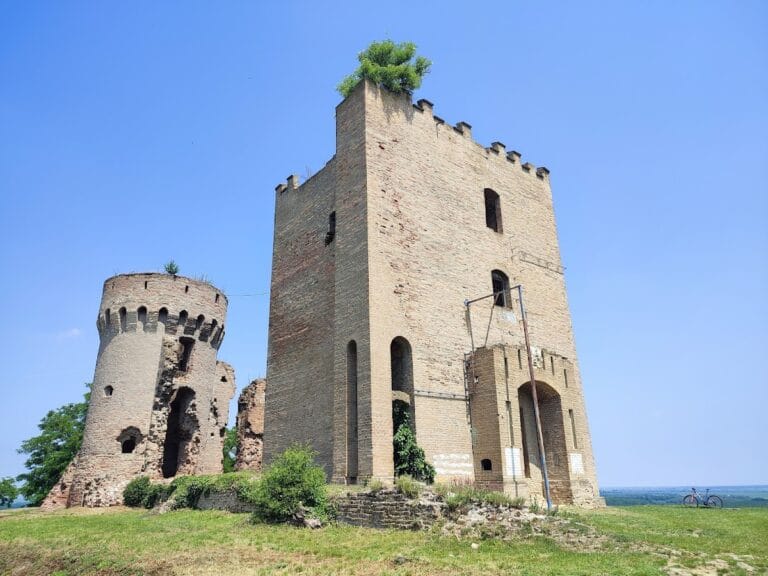
Petrovaradin Castle: A Historic Fortress in Novi Sad, Serbia
Visitor Information
Google Rating: 4.8
Popularity: High
Country: Serbia
Civilization: Early Modern, Medieval European
Site type: Military
Remains: Fort
History
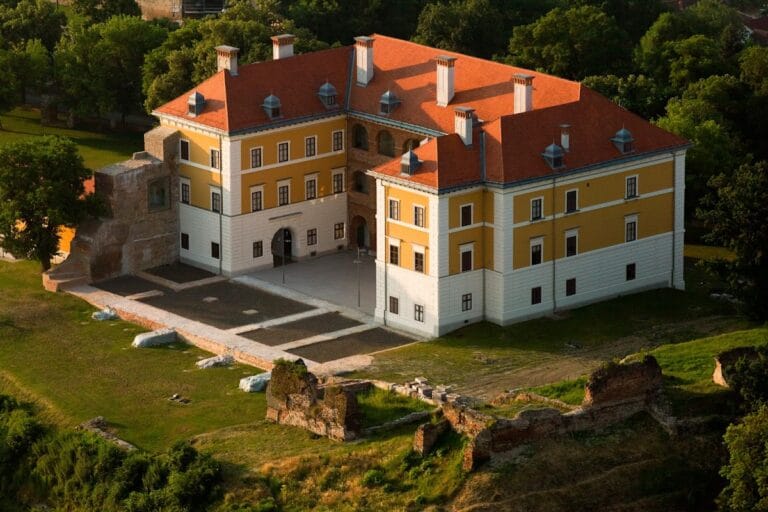
Petrovaradin Castle stands in Petrovaradin, Novi Sad municipality, Serbia; the site’s first major fortifications were erected by the Romans.
Human presence on the rocky Danube bluff stretches back to the final Paleolithic, with continuous occupation through the early Bronze Age, when defensive earthworks already enclosed the settlement. In the 1st century BCE Roman engineers established a fortified place here called Cusum, integrating it into the Danube limes, the imperial border defence line. The Roman phase established the site’s strategic role beside the river.
During the high Middle Ages King Béla IV of Hungary invited Cistercian monks from France in 1235, and between 1247 and 1252 those monks built the Bélakút monastery on the ruins of the Roman works; the monastery walls then functioned as the medieval defensive circuit. The fortress was reinforced against Ottoman advances but fell after a siege in 1526, bringing a long period of Ottoman control in the region.
Austrian forces recaptured the fortress in 1687 during the Great Turkish War, cleared the older structures, and began a comprehensive rebuilding program. On October 18, 1692 Charles Eugène de Croû laid the cornerstone for the southern portion of the new works. Planning was prepared by Colonel Count Mathias Keyserfeld and Count Luigi Ferdinando Marsigli, with field direction taken up by Colonel Michael Wamberg until his death in 1703. The rebuilt stronghold endured a 23-day Ottoman siege in 1694, after which besiegers withdrew owing to adverse weather.
The site again became central to the struggle between Habsburg and Ottoman forces in the early 18th century. On August 5, 1716 Prince Eugene of Savoy led Austrian troops to a decisive victory there, a battle that curtailed Ottoman military pressure on Central Europe. In the mid-18th century large-scale improvements resumed; from 1753 to 1776 engineers carried out extensive modernization, and a plan for an underground anti-mine system was approved in 1764 and finished in 1776 following a proposal by Major Albrecht Heinrich Schroeder.
The fortress’s final combat role came during the Hungarian Revolution of 1849, when Imperial Austrian units bombarded the nearby town of Novi Sad to compel its surrender. Afterwards the complex served primarily as barracks and storage. After World War I the site became part of the Kingdom of Serbs, Croats, and Slovenes, later Yugoslavia. In the 20th century Petrovaradin escaped demolition that affected other regional fortresses; that preservation was secured in part through the decision of Colonel Dragoš Đelošević. Since 1991 the monument has been protected as a Spatial Cultural-Historical Unit of Great Importance of the Republic of Serbia.
Remains
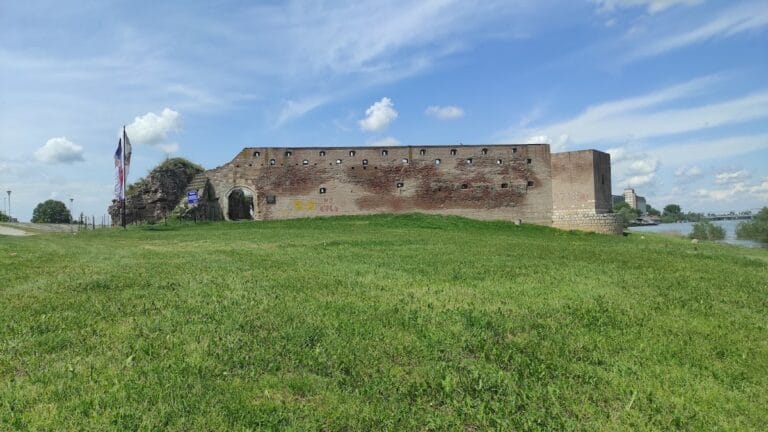
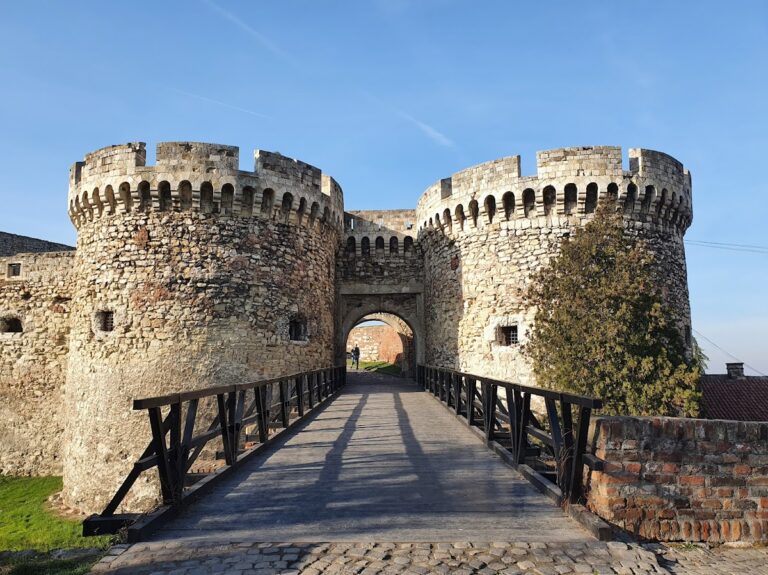
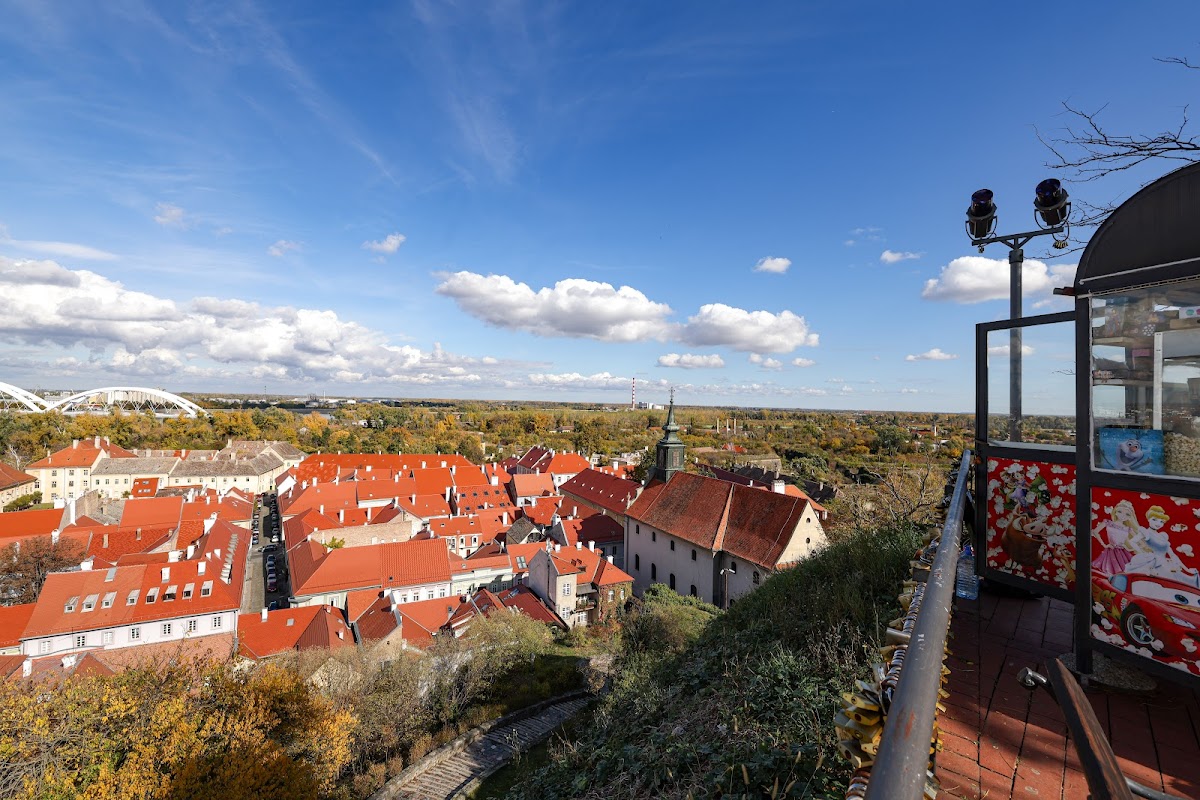
The fortress is a bastion-type stronghold, a form of fortification in which angular projecting platforms provide flanking fields of fire, combined with an extensive subterranean network designed to counter tunnelling. The site’s preserved underground passages exceed sixteen kilometres in length and include a multi-level countermine arrangement built to detect and foil enemy miners. These substructures follow an 18th-century military plan and reflect engineering approaches of that period.
The southern sector of the complex dates to the late 17th century, its building campaign begun in 1692. Masonry and structural forms here correspond to late 17th-century military practice, employing stone and earth works shaped for defence. This part survives in situ and forms a coherent segment of the present fortress fabric, showing the transition from earlier medieval ruins to the modern bastioned layout.
Embedded within the enclosure are remains of the medieval Bélakút monastery erected between 1247 and 1252. The monastery walls, constructed by Cistercian monks, survive as visible fragments that document the site’s medieval phase and were incorporated into later defensive arrangements. Those masonry sections remain on the site and attest to the long sequence of reuse at this location.
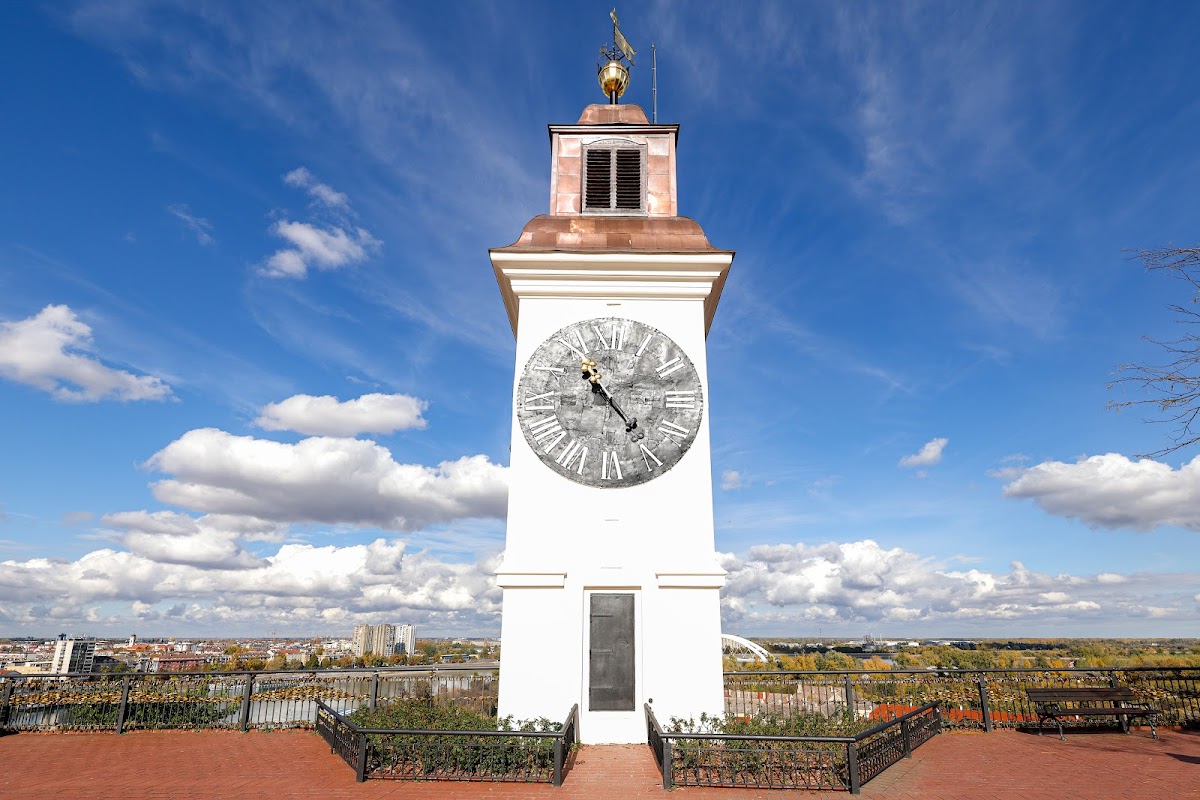
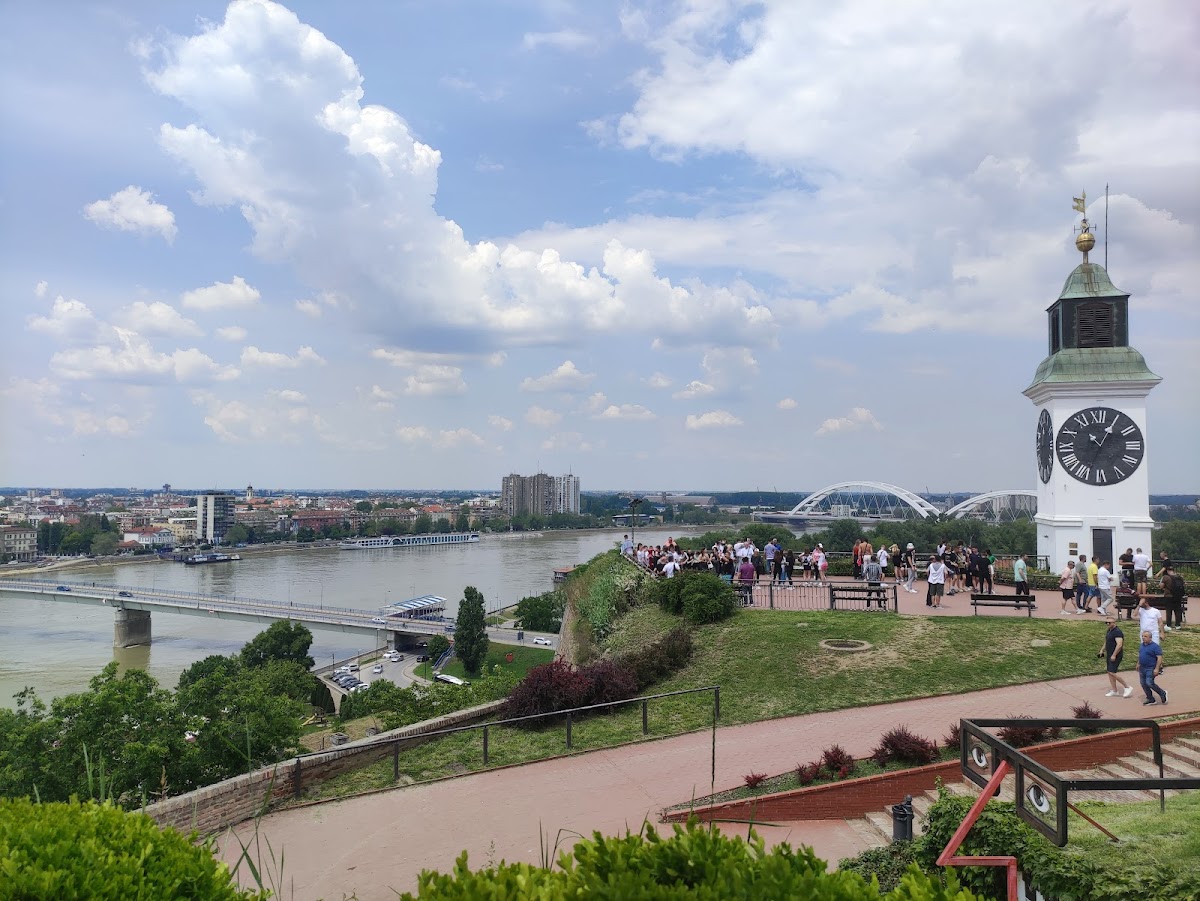
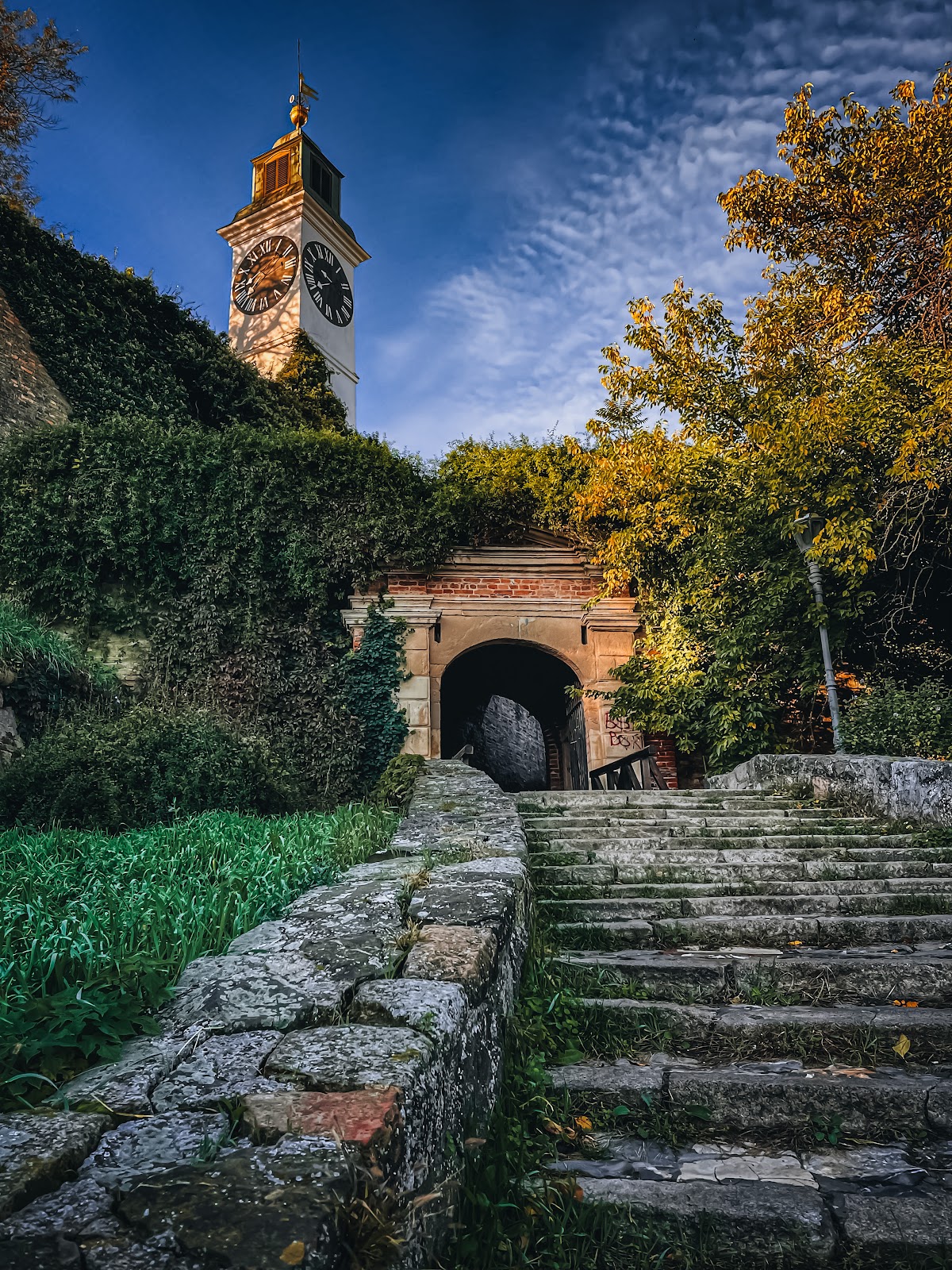
A prominent tower in the ensemble houses a distinctive clock whose hands are reversed in scale so that the smaller hand marks minutes and the larger hand indicates hours, a design intended to be read from the Danube at distance. The clock is a notable visible element of the fortress silhouette and continues to occupy its original place on the tower.
The underground anti-mine complex was built following approval of a military plan in 1764 and completed in 1776, incorporating four stacked levels of tunnels intended to prevent or counteract undermining operations. These passages were created using the period’s masonry and excavation techniques and are preserved to a high degree, forming the principal subterranean feature of the ensemble.
A former Franciscan monastery church on the site was later repurposed as part of a military hospital; recorded burials there include Colonel Michael Wamberg. That building demonstrates adaptive reuse, shifting from a religious function in earlier centuries to a military-administrative role in later times, and parts of it remain integrated into the fortress complex.
Overall the complex displays building materials and workmanship typical of late 17th- and 18th-century military engineering, including bastions and the extensive anti-mine tunnel system. The condition of the monument is high, with the main structures and long sections of the underground galleries preserved; the site is legally protected as a cultural-historical unit of national importance.