Petit Bé: A Coastal Fort Protecting Saint-Malo


Site at a Glance
- Rating
- 4.6
- Popularity
- Low
- Country
- France
- Primary era
- Early Modern
- External website
- Open
- Eras represented
- Early Modern
- Civilizations
- French
- Site type
- Military
- Remains
- Fort
On this page13 sections
History
Construction and Coastal Defense
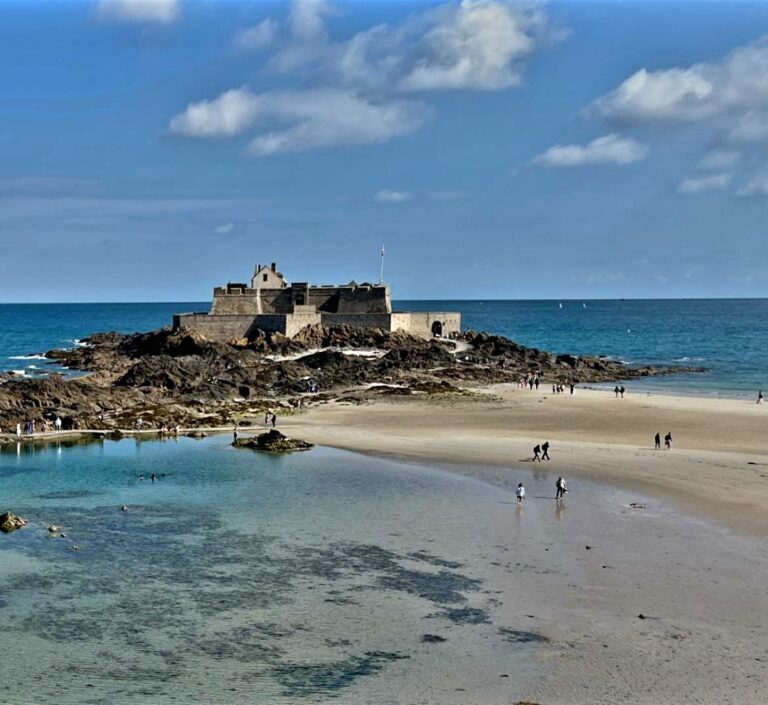
Petit Bé is a tidal island near Saint-Malo, France, occupied by a French coastal fort built to protect the port and the entrance to the Rance estuary. A small fort stood on the island from 1667, while construction of the present Fort du Petit Bé began in 1689 under the direction of the engineer Siméon Garangeau. The work formed part of the defensive system associated with Sébastien Le Prestre de Vauban, a French military engineer and marshal whose fortified towns, coastal batteries, and defensive works shaped French military architecture during the seventeenth century.
The fort was still unfinished when British forces attacked Saint-Malo in November 1693, and it was finally completed in 1707. It belonged to a wider network that included the walls of Saint-Malo, Fort National, Fort Harbourg, Fort de la Conchée, and forts at Cézembre and Pointe de la Varde. The forts of Cézembre and Pointe de la Varde were later destroyed.
Military Use and Later Status
During the Anglo-Dutch attack on Saint-Malo in 1695, Petit Bé helped repel the assault. Its guns also worked with those of Fort Harbourg, creating cross-fire that protected the Rance estuary. The French army occupied the fort until 1885, when it was decommissioned and transferred to the city of Saint-Malo.
Fort du Petit Bé received France’s historic monument designation in 1921, while the island itself became a registered site on 8 August 1945. After the transfer to the city, the fort was neglected. In the 1970s, Saint-Malo offered Alain-Etienne Marcel the opportunity to restore and manage it, but he initially declined. He began the project in the early 2000s after a dispute concerning the owners of Fort National, later signing a long-term lease with the city that was extended from 40 years to 70 years.
Restoration under Marcel’s direction began after 2000. Vegetation was cleared from the cannon openings, period guns were placed in some of them, rubbish was removed from the cistern, and the barracks roof was restored so that it could collect rainwater for the cistern.
Remains
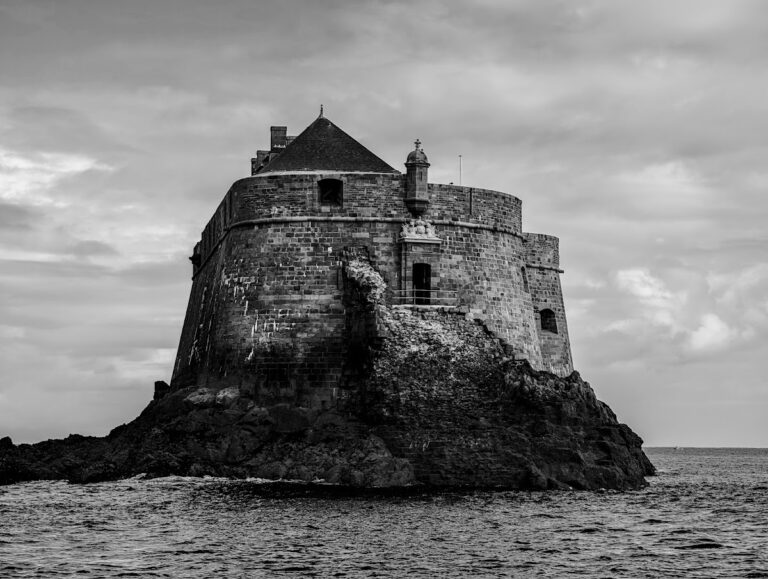
Petit Bé is an uninhabited tidal island in the English Channel, measuring about 200 metres from end to end and 100 metres across, with an area of approximately 20,000 square metres. It lies a few hundred metres from the walls of Saint-Malo and a few dozen metres from Grand Bé. The stone fort occupies a broad enclosed platform, with its main artillery position facing the sea and its entrance turned toward the land.
Seaward Battery
Gun Platform
The seaward side is occupied by a horseshoe-shaped battery, also described as oval in plan, with 19 embrasures. An embrasure is an opening in a fortification through which a cannon fires. The battery held nine guns in 1695 and 15 guns by 1697, including four 48-pounders and six 36-pounders, as well as two mortars. The gun platform covers casemates, vaulted chambers used here as soldiers’ quarters.
Harbour-Side Buildings
Barracks and Cistern
A multi-level blockhouse or barracks building stands along the eastern side facing the harbour. Its roof was restored so that rainwater could flow into the fort’s cistern. The cistern was cleared during the modern restoration and retained storm water supplied from the repaired roof.
Landward Defenses
Half-Bastions and Entrance
Two half-bastions flank the landward entrance. A half-bastion is a projecting defensive work with one flank, used to protect the ends or sides of a fortification. The entrance stands several metres above the surrounding rocks. The bastions contain loopholes, narrow openings for muskets, and were designed to resist attempts to scale the fortifications.
Unbuilt Outwork
Several plans proposed a demi-lune in front of the entrance. This detached, usually crescent-shaped work would have provided an additional defense before the gateway, but it was never constructed.
Garrison Capacity
Soldiers and Artillery Service
The fort could accommodate up to 160 soldiers. In 1697, 177 men were assigned to defend Petit Bé and operate its artillery, reflecting the demands placed on the fort within Saint-Malo’s coastal defenses.
Nearby sites