Fort du Portalet: A Nineteenth-Century Mountain Fort in France


Site at a Glance
- Rating
- 4.4
- Popularity
- Low
- Country
- France
- Primary era
- Modern
- External website
- Open
- Eras represented
- Medieval, Modern
- Civilizations
- French
- Site type
- Military
- Remains
- Fort
On this page10 sections
History
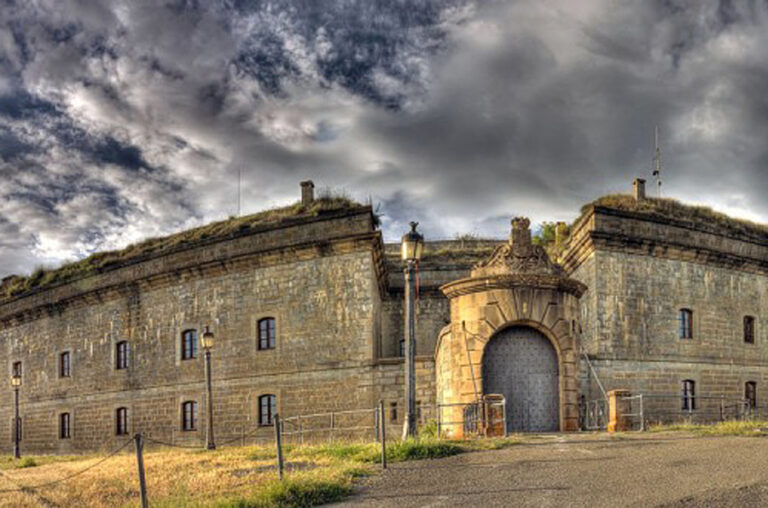
Fort du Portalet is a nineteenth-century mountain fort in France, located at Etsaut in the Pyrenees. Built to control the route to the Somport Pass and defend against a possible war with Spain, it was constructed between 1842 and 1870 under the order of King Louis-Philippe.
Construction and military purpose
Construction began on 22 July 1842 by order of Louis-Philippe I, who was king of the French from 1830 to 1848. The new fort replaced the Fortin du Poutou, a medieval toll post that had controlled movement through the Aspe Valley. Fort du Portalet took its name from this former toll station.
Completed in 1870, the fort was planned to house 400 men and stocked to withstand a siege lasting at least one week. Its position above the Gave d’Aspe allowed it to control the approach toward the Somport Pass, as well as the route beside the Chemin de la Mâture, a historic path cut into the mountain landscape. The 18th Infantry Regiment of Pau occupied the fort from 1871 to 1925.
From military post to political prison
After the end of its main military occupation, Fort du Portalet served as a holiday colony until 1939. During the Second World War, the Vichy regime used it as a political prison from 1941 to 1943. Vichy was the French government that collaborated with Nazi Germany, while the prisoners held at the fort included leading figures of the French Third Republic, the republican government that preceded it.
Among the detainees were Édouard Daladier, Paul Reynaud, Léon Blum, Georges Mandel, and General Maurice Gamelin. Daladier, Reynaud, Blum, and Mandel were prominent French political figures, while Gamelin was a senior French general. After Germany occupied the formerly unoccupied zone of France, the prisoners were transferred to German custody or otherwise removed from the fort. Reynaud was held in Germany, while Mandel was taken to Paris and executed by the Milice in 1944. The Milice was the collaborationist paramilitary organization of the Vichy regime.
The fort then housed a German garrison. French Resistance forces captured it in 1944, returning the site to French control during the final phase of the occupation.
Pétain’s detention and the end of military use
After his trial for treason, Marshal Philippe Pétain was detained at Fort du Portalet under the supervision of mobile guards from 15 August to 16 November 1945. Pétain had headed the Vichy government during the German occupation. He occupied the cell previously used by Georges Mandel before being transferred to the fortress on the Île d’Yeu.
The 18th Infantry Regiment returned after the war and remained at the fort until 1952. The Ministry of Defence officially demilitarized the site in 1962, ending its formal military service.
Abandonment, protection, and restoration
A private buyer acquired the fort at auction in 1966 for 171,000 French francs. Proposed real-estate projects were not carried out, and the fort received little maintenance. After a period of abandonment, the Aspe Valley community of communes purchased it in 1999. A community of communes is an intermunicipal public authority that groups several municipalities for shared administration.
The access route was first restored for safety. From 2006, work focused on clearing invasive vegetation and repairing roofs and terraces to prevent water infiltration. Further restoration and safety work continued as financing became available. Fort du Portalet was classified as a French historic monument on 30 November 2005. The designation recognized its historical and artistic importance, its place in nineteenth-century fortification history, and its integration into the surrounding landscape. Restoration subsequently made the site suitable for visits.
Remains
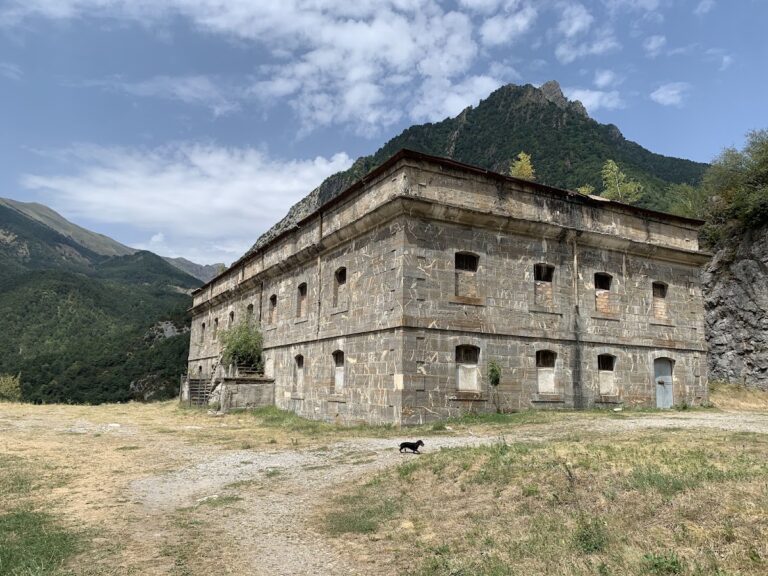
Fort du Portalet occupies a steep west-northwest-facing slope on the right bank of the Gave d’Aspe, at the confluence with the Sescoué torrent. Built on a cliff above the river, the complex is arranged in tiers between approximately 700 and 800 metres in elevation. Its bridge crosses the Gave d’Aspe, while the fort lies about three kilometres upstream from central Etsaut, two kilometres downstream from central Urdos, and sixteen kilometres from the Somport Pass.
Lower barracks and upper batteries
Barracks
The lower part of the fort contains a three-storey barracks. Its lowest level forms the officers’ pavilion, placing accommodation within the lower tier of the fortified complex. The barracks are integrated into the steep slope rather than standing as an isolated building, linking the inhabited part of the fort with the defensive works above it.
Fortin and cannon batteries
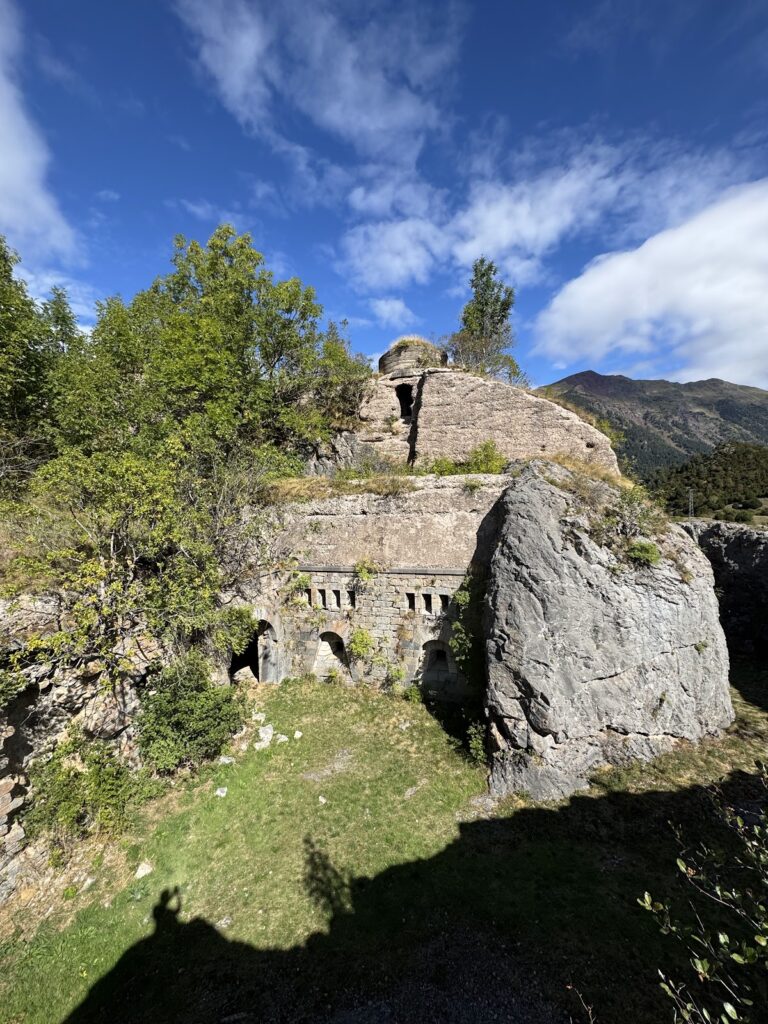
Above the barracks stands a fortin, a small fortified outpost, with three bastions. A bastion is a projecting section of a fortification designed to permit defensive fire along the walls and approaches. These bastions carried cannon batteries, and the wider fort contained approximately ten such batteries. Their positions protected the route toward the Rouglan plateau and the Chemin de la Mâture.
Rock galleries and surrounding defenses
Galleries cut into the rock cover the road descending from Urdos and the Somport Pass. They contain crenellations or loopholes, the narrow openings through which defenders could observe or fire. These galleries, the batteries, and the elevated fortifications worked together with the river and the mountain slopes to defend the approaches.
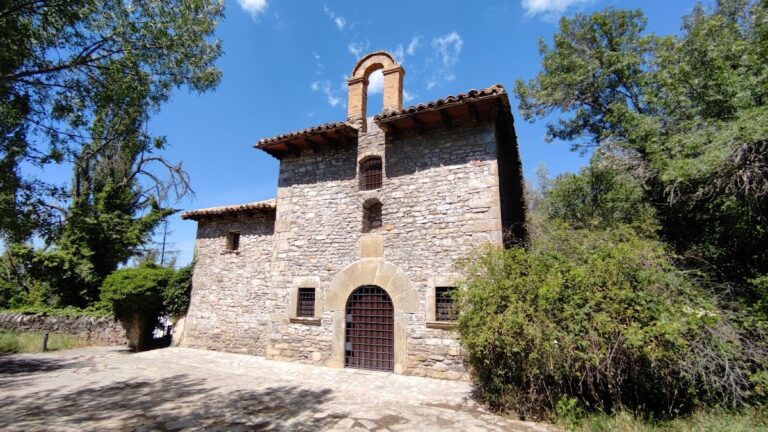
The defensive setting extended beyond the principal nineteenth-century fort. The fortified complex known as the Portalet includes the Fortin du Poutou, positioned about 100 metres to the north beside the imperial road. This earlier structure began as a medieval toll post before being superseded by Fort du Portalet. Together, the surviving elements occupy the deep Aspe Valley in relation to the Gave d’Aspe, the Somport route, the Chemin de la Mâture, and the Rouglan plateau.
Nearby sites