Fort du Mengant: A Coastal Defence Fort Protecting Brest


Site at a Glance
- Rating
- 4.4
- Popularity
- Low
- Country
- France
- Primary era
- Early Modern
- Eras represented
- Early Modern, Modern
- Civilizations
- French, German
- Site type
- Military
- Remains
- Fort
On this page9 sections
History
Fort du Mengant, also known as Fort Mingant or Fort du Léon, is a French coastal fort in Plouzané, France, built as part of the defensive system protecting the entrance to Brest’s roadstead and harbour.
Construction under Vauban
The fort is associated with Sébastien Le Prestre de Vauban, the prominent military engineer whose designs shaped French defences during the reign of Louis XIV. Between 1684 and 1687, engineer Paul-Louis Mollart directed the construction of the great battery of Léon on an artificial platform above the water.
The battery faced the Cornouaille Battery on the Roscanvel peninsula. The two positions stood just over 2 kilometres apart and were intended to prevent ships from passing through the Brest narrows, the confined waterway linking the roadstead with the open sea.
The original plan also called for a battery on Roche Mengant, a dangerous reef in the middle of the narrows. Strong currents and tides prevented its completion. The reef was later associated with maritime accidents, including the wreck of the Républicain in 1794 and the grounding of the battleship Charles Martel in 1897.
Later military adaptations
Changing military conditions led the Ministry of the Navy to modify the site around 1875. A dam was built against the lower battery, creating a sheltered small harbour for motor torpedo boats. The Ravin Battery followed in 1885 and 1886, and it received four large guns in December 1888.
A fire that spread through the surrounding heathland and pine woods in September 1906 threatened the fort and destroyed part of it. During the German occupation in the Second World War, a new protected gun chamber was added to the Ravin Battery.
Modern use and protection
The lower section is managed by the naval club of the Marine in Brest, while the upper section is used for radar testing. The fort was listed as a historic monument in 2014.
Remains
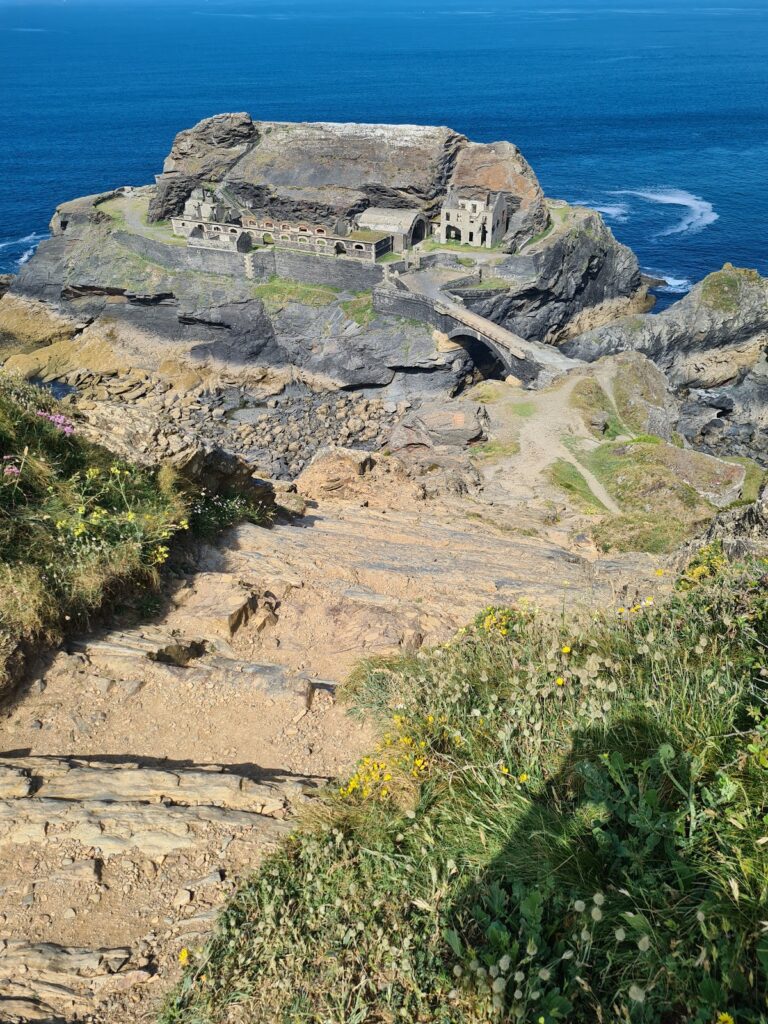
Fort du Mengant is arranged on two principal levels above the coast. A high battery stands 58 metres above sea level, while a lower semicircular battery occupies the foot of the cliff on an artificial platform above the water. The dam attached to the lower position encloses a small sheltered harbour. A large ramp built in the 1960s connects the harbour to the upper battery and was designed to carry substantial radar-testing equipment uphill. A power station stands beside the upper section.
Main fortifications
High and lower batteries
The high battery formerly included an artillery tower, which has since been destroyed. In the lower battery, two small powder magazines survive. These secure buildings stored gunpowder and ammunition. The lower position follows the same general design as the Cornouaille Battery across the Brest narrows, while its artificial platform and attached dam define the fort’s connection with the water.
Ravin Battery
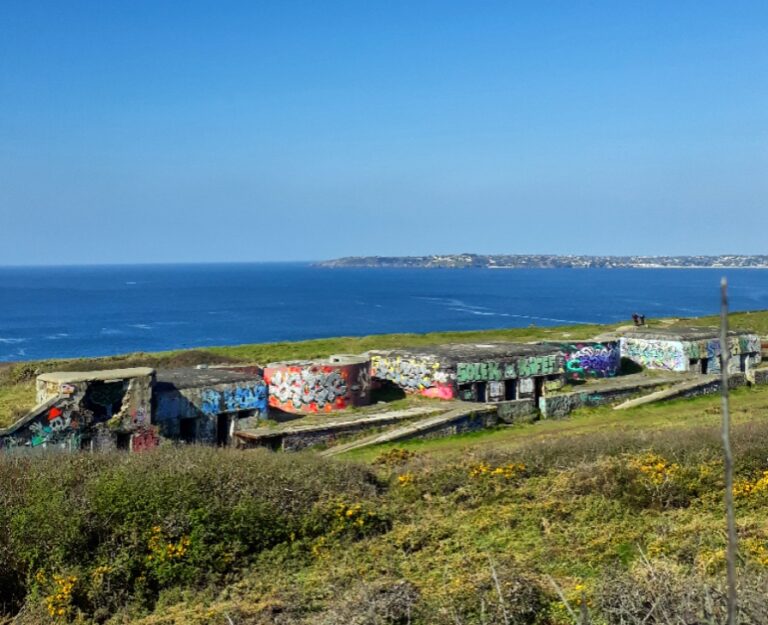
The Ravin Battery lies east of the fort, near the tower, in the Kerdalaez area. It was equipped in December 1888 with four 320-millimetre guns of the 1870–81 and 1882 M PA models. A new casemate, a protected chamber for housing guns, was added during the Second World War.
Annex Battery
The annex battery stands west of the fort in a commanding position approximately 60 metres above sea level. Also called the Quillihouarn Battery, it contains twelve gun positions for six 100-millimetre guns. Each position has a niche for the safe storage of ammunition, and observation posts occupy both ends of the battery. The battery is privately owned and only intermittently occupied.
Nearby sites