Pestrup Grave Field: A Bronze Age and Iron Age Burial Ground in Germany
Site at a Glance
- Popularity
- Medium
- Country
- Germany
- Primary era
- Iron Age
- Eras represented
- Stone Age, Bronze Age, Iron Age
- Civilizations
- Unclassified
- Site type
- Burial
- Remains
- Necropolis
On this page10 sections
History
Prehistoric burials and earlier activity
The Pestrup grave field is a prehistoric burial ground near Wildeshausen, in western Lower Saxony, Germany. It was used for burials from about 900 to 200 BCE, during the late Bronze Age and Iron Age, periods named for metals important in tools and other objects. Cremated remains were placed in urns beneath mounds. The field is the largest Bronze Age and Iron Age burial ground in northern Central Europe.
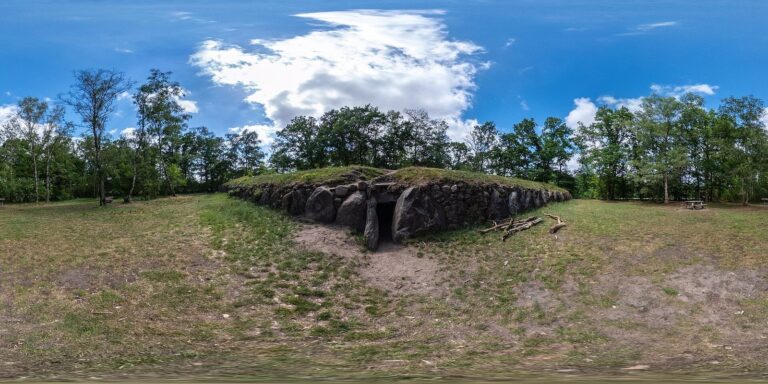
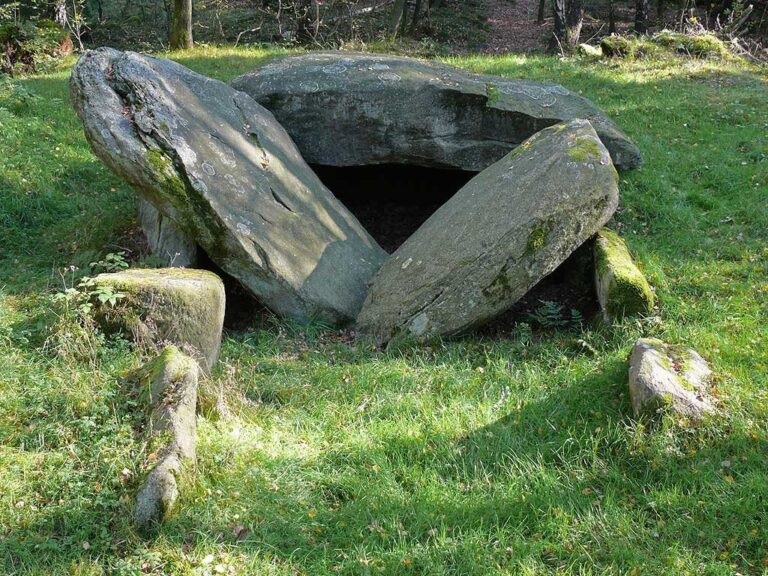
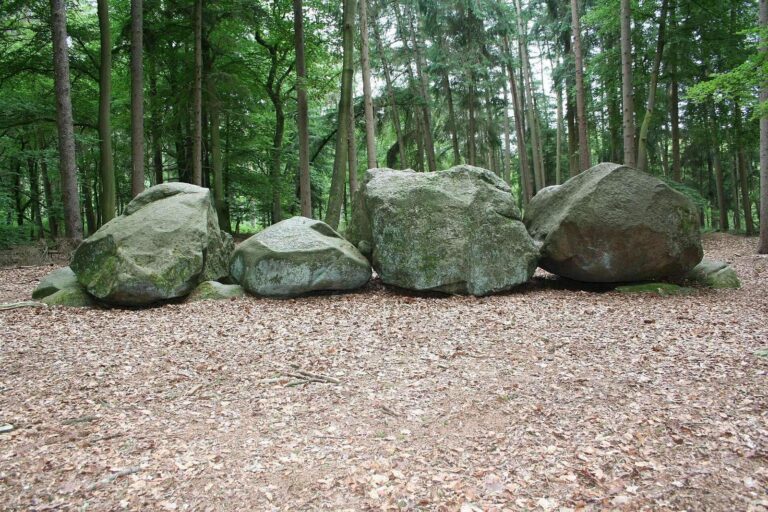
Excavations in 1938 identified a Late Neolithic settlement beneath the burial ground. The Late Neolithic was the final phase of the Stone Age, before the Bronze Age. Six large mounds are also assigned to this earlier period, including three traditionally known as the King’s Mounds. Two tombs built from large stones, with passages leading to burial chambers, lie about a kilometre south of the field. Known as the Great Stones, they have not been shown to be connected with it.
Excavation and interpretation
Investigations began in the nineteenth century, when local clergy, teachers, and pharmacists carried out largely uncontrolled excavations. The Oldenburg Museum undertook smaller excavations in 1876, 1880, and 1882. A larger excavation followed in 1938, and archaeologist Johannes Pätzold led another major investigation in 1958 and 1959.
During the Nazi period, the grave field’s size fuelled expectations that it would explain “Germanic” culture, even before systematic excavation. Ideological interpretations sometimes went beyond the evidence. For example, the popular name Rose Garden was reinterpreted as a reference to horses, prompting speculation about their presence or use.
Sheep grazing and conservation
Around 1938, Dietrich Schwarting established a sheepfold at the site and began breeding Heidschnucke, a regional sheep breed suited to heath and moorland grazing. His son Georg continued the breeding after his death. A replacement fold was built on another plot within the grave field and handed over to Schwarting in November 1969. After Schwarting sold his flock in 1973, other shepherds continued grazing. A fire damaged the fold in 1976; it reopened that October. A barn for straw, fodder, and hay was built in 1981, after which the fold was no longer used.
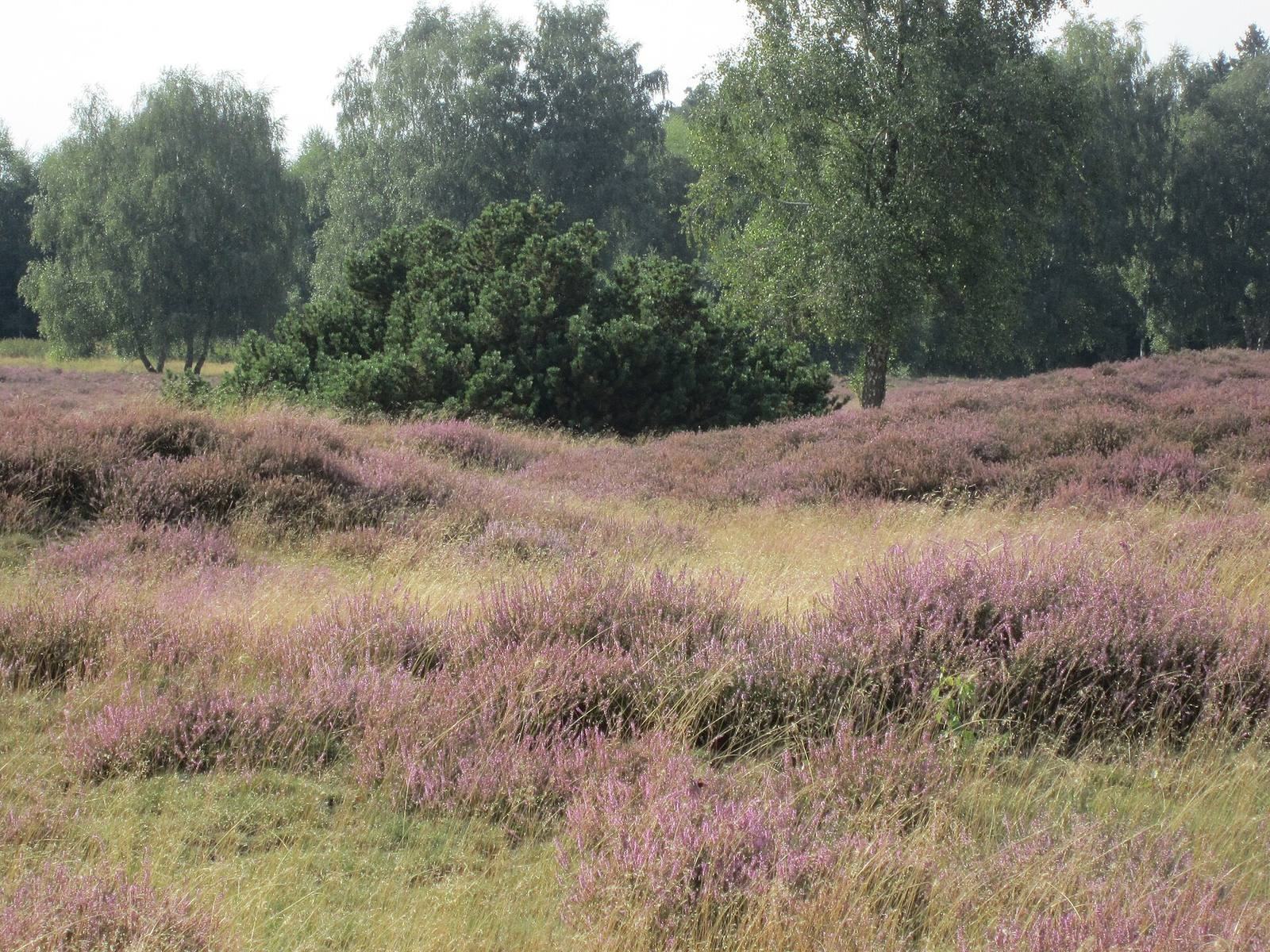
The grave field and neighbouring Rose Garden became a nature reserve in 1938. The area was designated a permanent archaeological protection zone in 1992. In 2006, the spread of new grasses and an increase in heather beetles led to renewed grazing the following year to maintain the heath. Conservation work also created a further seven hectares of heath, while maize was planted on a separate adjoining seven-hectare field to draw nutrients from the soil. In 2009 the area was assessed as being in good condition, and it was remapped in 2017 to update its management plan and address protection of sand lizards and other wildlife. A shepherd working for the Lower Saxony State Forests manages 100 to 150 Diepholz Moor Sheep there. The grave field was included in a historical cultural landscape judged to be of statewide importance in 2018, but that classification did not establish a legally binding protection status. Fires damaged the sheepfold in 2011, and it had been rebuilt by 2012.
Remains
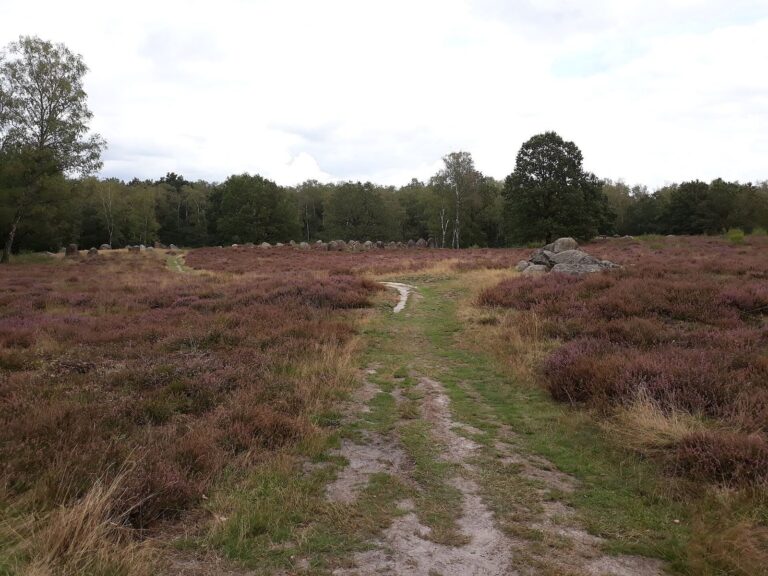
The burial ground covers about 30 hectares of heath within a broader historical cultural landscape of roughly two square kilometres. It lies about one kilometre west of the Hunte River, with Pestruper Moor along its eastern side. More than 530 large and small mounds are spread across the site.
Mounds and burial forms
Circular mounds
Most mounds are circular, about one metre high and between six and twelve metres in diameter. Those measuring around eight metres across are generally assigned to the Early Iron Age. Excavated mounds contained urns holding cremated remains. Usually there was one urn burial in a mound, although some held several.
Large northern mounds
Several larger, flat-topped mounds in the northern part of the field rise about 1.2 metres and measure roughly 30 metres across. They may have served as Bronze Age cremation sites, with graves dug into them later.
Raised embankments and layered burials
About 14 long, raised-field-like embankments lie in the middle of the grave field. One examined in 1959 measured 40 centimetres high, eight metres wide, and 33 metres long. It contained a deposit of bone and an iron pin. Beneath it lay a nearly covered mound, below which was a cremation pyre with cremated remains, iron belt hooks and buckles, and two pottery vessels. The burials in this sequence took place within a short period around 400 BCE. Furrows beneath the mound were interpreted by Pätzold as traces of ritual ploughing connected with funerary practices.
Objects from the burials
Finds from more than 500 burial places include pottery, bronze neck and arm rings, some with clay cores, chains of bronze and glass beads, dress pins, and fragments of iron belt fittings. Cremation and corrosion have badly damaged many objects. Some jewellery resembles finds from southern Germany and has been interpreted as showing Celtic stylistic influence, while the pottery reflects local techniques and materials. A wagon is represented by a few iron objects, including an axle nail; it is the only wagon identified at the grave field and has been taken to suggest that the deceased held a prominent position. A sword blade about 50 centimetres long, found south of the main group of mounds in 1909, is dated to the Early Bronze Age. By 2003 it was regarded as the oldest Bronze Age find from the site.