Freudenberg Castle in Bassum: A Medieval Fortress and Administrative Seat
Site at a Glance
- Popularity
- Medium
- Country
- Germany
- Primary era
- Early Modern
- Eras represented
- Medieval, Early Modern
- Civilizations
- Holy Roman Empire
- Site type
- Civic
On this page9 sections
History
Freudenberg Castle in Bassum, Germany, was probably established as a medieval lowland stronghold between 1209 and 1213. Its name has been linked to the Mount of Joy near Jerusalem, whose name also had a counterpart near Rome. This connection points to the Crusades, medieval religious and military campaigns associated with efforts to secure Christian control of sacred places. At the time, the Counts of Oldenburg-Wildeshausen, active in the crusading movement, served as bailiffs, officials exercising secular authority on behalf of an institution, for the Bassum collegiate foundation, a religious community of women.
Medieval castle and changes of lordship
During the last quarter of the 13th century, the Counts of Altbruchhausen, then bailiffs, probably moved the castle to the area of the present Amtshaus, a local administrative office building. In 1338, the County of Altbruchhausen was sold to the Counts of Hoya, and the castle passed to them. It served as a border fortress against the Bishopric of Bremen, a church territory governed by a bishop. Compared with the Counts’ other border castles, it played a limited role, mainly housing a bailiff and later serving as an official’s seat.
The first known written reference to the castle dates to 1384, when it belonged to the Counts of Niederhoya. Its name was then spelled “Vroydenbergh.” Records from 1530 and 1582 refer to the earlier castle as Old Freudenberg.
Decline and later use
After the Counts of Hoya died out in 1582, wars, pledges of land, and disputes led to repeated changes of ownership. The buildings were altered by their occupants, but the castle fell into disrepair during the 17th century and was eventually demolished.
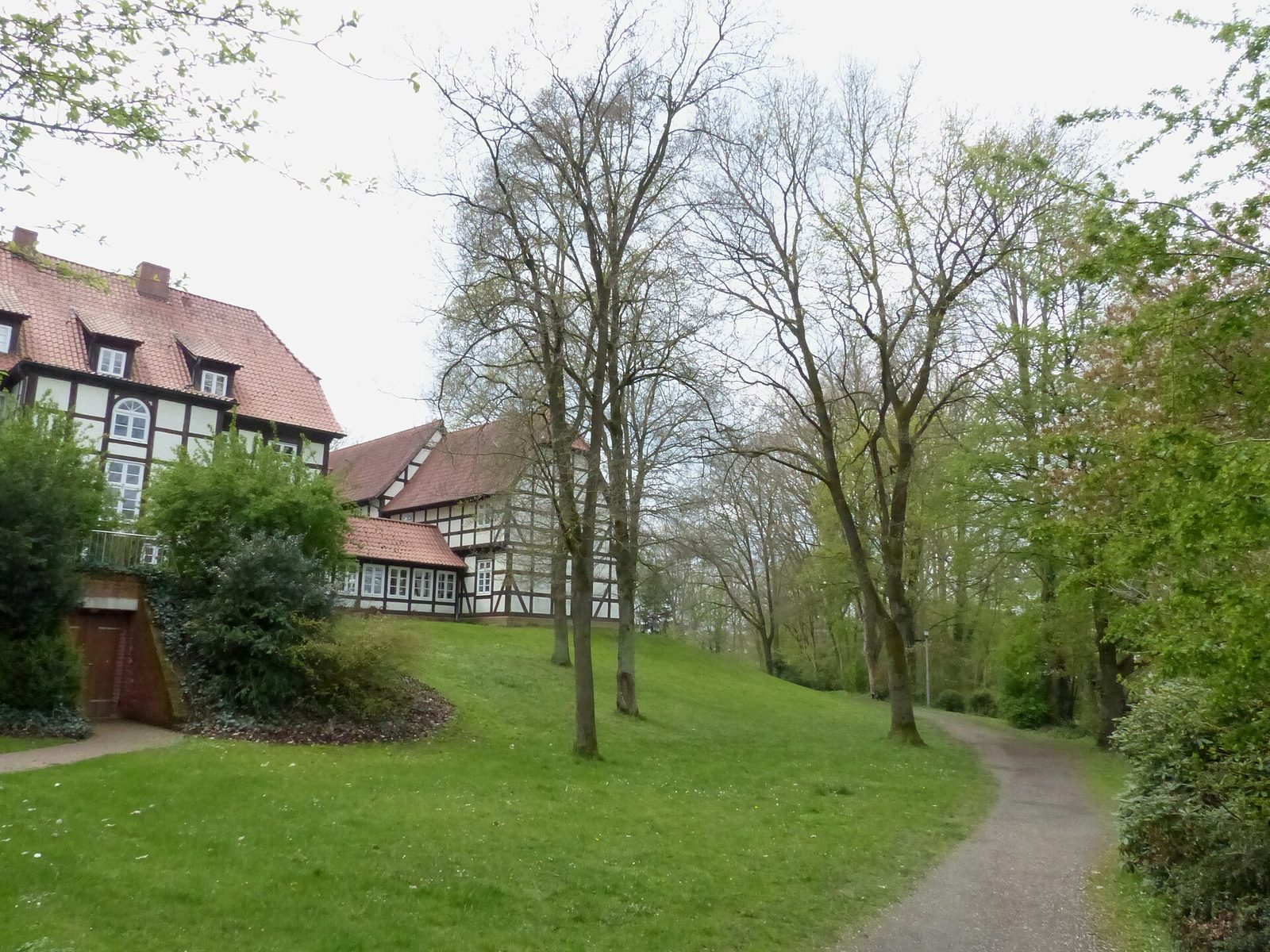
From 1852 to 1974, the grounds served as the seat of the Freudenberg local court, renamed the Bassum local court in 1879. In 1967, the City of Bassum acquired the site and its buildings from the State of Lower Saxony. The buildings were renovated and a landscaped park was laid out. Since 1993, the District of Diepholz and its adult education center have used the grounds as a seminar and conference venue.
Remains
Castle layout
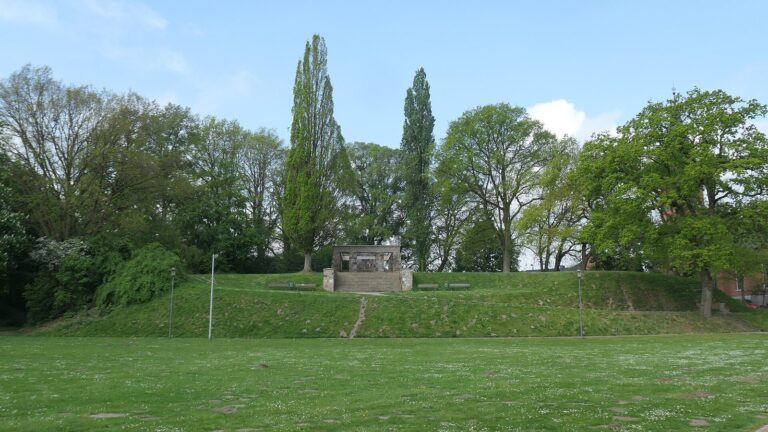
The medieval lowland castle stood at the western edge of Bassum. Its earliest site lay roughly halfway between the present Amtshaus and the Bassum collegiate foundation. The castle was probably arranged as a motte, a fortification with a defensive building on a raised mound and a surrounding ditch. Later expansion added ditches that extended the defensive circuit.
Buildings on the grounds
Amtshaus
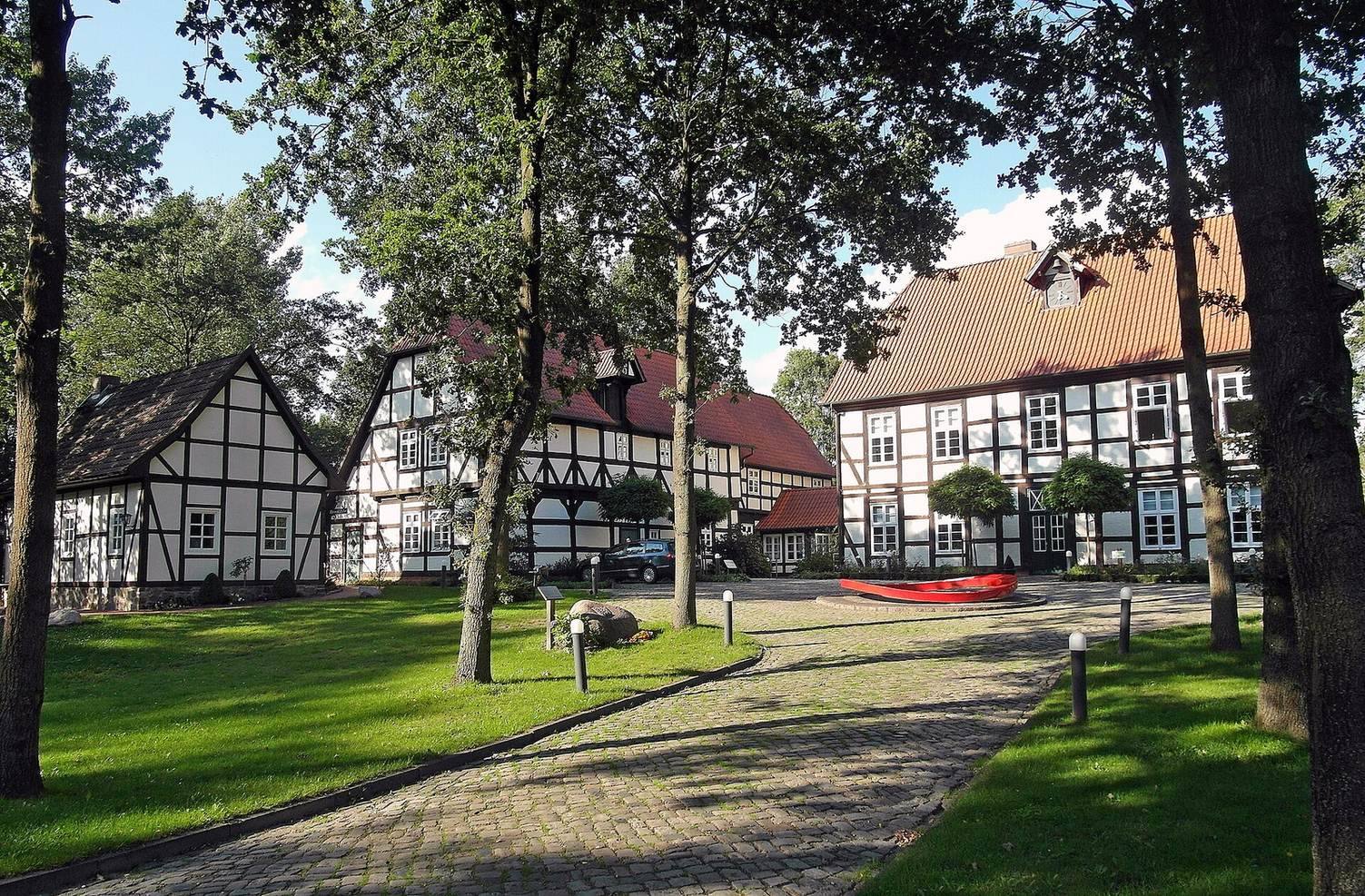
The Amtshaus is a two-storey, half-timbered building dating to the 17th century. Its middle section projects from the main face, while an attached wing has undergone substantial alteration.
Former district clerk’s house
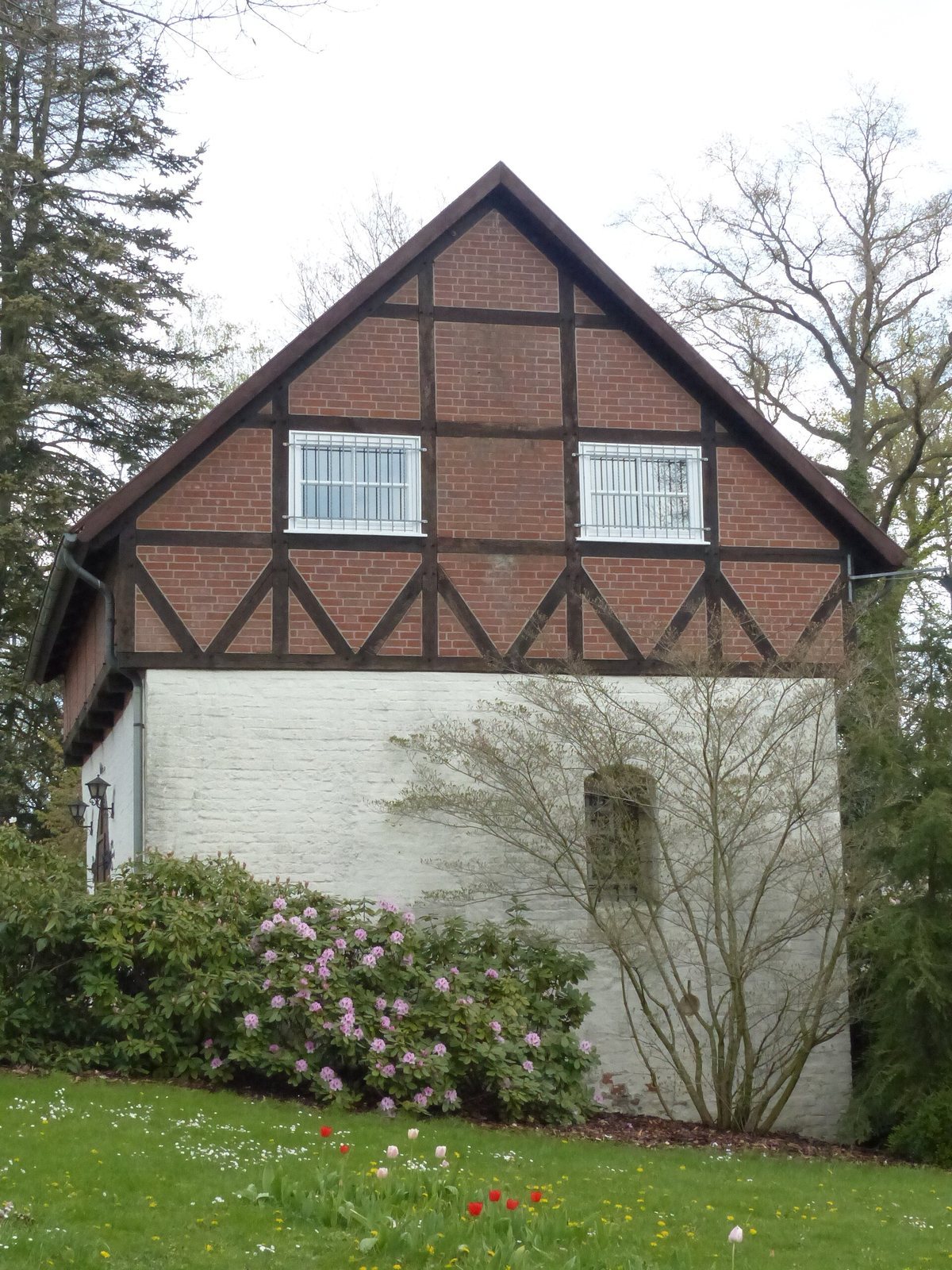
South of the Amtshaus stands a building known as the “dungeon,” formerly the district clerk’s house. Its brick lower storey dates to the late 13th century.
Local-history room and ancillary building
A building measuring 9 by 5 metres was assigned to the local-history association for use as a local-history room. The grounds also include a renovated ancillary building incorporated into the conference facility in 2009.