Peruzzi Chapel: A Gothic Chapel with Giotto’s Frescoes in Florence
Site at a Glance
- Popularity
- Medium
- Country
- Italy
- Primary era
- Medieval
- Eras represented
- Medieval, Modern
- Civilizations
- Republic of Florence
- Site type
- Religious
- Remains
- Chapel
On this page14 sections
History
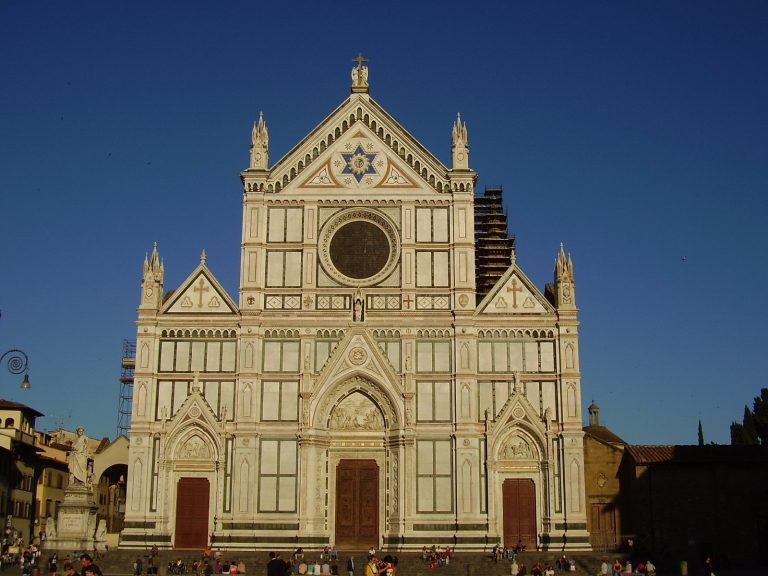
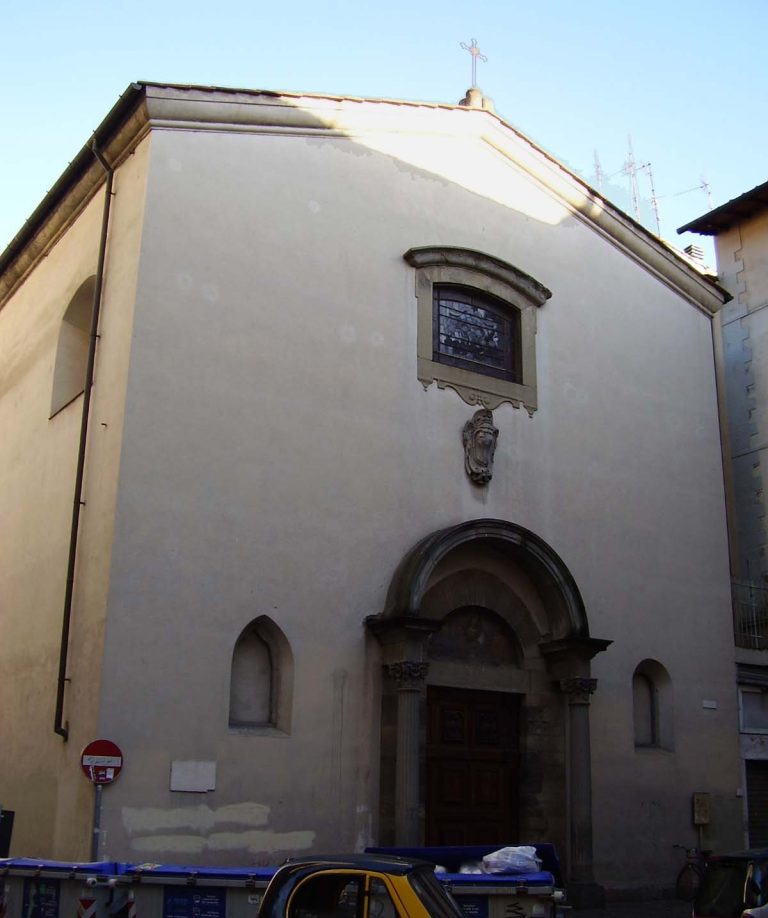
The Peruzzi Chapel is a Gothic Catholic chapel in the Basilica of Santa Croce in Florence, Italy, dated to 1318 and commissioned by the Peruzzi family. Arnolfo di Cambio designed the chapel, and Giovanni di Rinieri Peruzzi, a member of Florence’s banking and merchant family, commissioned Giotto to paint its cycle around 1318–1322.
The chapel honors John the Evangelist, traditionally identified as an apostle of Jesus, and John the Baptist, the preacher who baptized Jesus. Its dedication connected Giovanni’s name with Florentine devotion to John the Baptist. It also reflected the fact that the Baptist’s birth and the Evangelist’s Ascension were both commemorated on June 24. The Ascension story belongs to uncertain traditions rather than the accepted account of the Evangelist’s life. Giotto’s narratives probably drew on The Golden Legend, Jacopo da Varazze’s medieval collection of saints’ stories.
Giotto’s cycle and its influence
The Peruzzi paintings belong to a mature phase of Giotto’s career, roughly twelve years after his work in Padua’s Scrovegni Chapel. He painted cycles in four chapels at Santa Croce; the Peruzzi and Bardi cycles remain in the church. Around 1328, Ambrogio Lorenzetti adapted figures of women watching Salome and a garland design in frescoes at San Francesco in Siena. Those works provide a latest possible date for the Florentine cycle. Masaccio later copied figures from the scene of Drusiana’s resurrection.
Damage and restoration
Age, water seepage and flooding, and the addition of tombs and family heraldry damaged the paintings. Some lower frescoes were knocked away to make space for a burial. In 1714 the chapel was whitewashed, as its fourteenth-century paintings were then considered to have little value. The frescoes were uncovered around 1840, during a period of growing interest in Italy’s cultural heritage.
Nineteenth-century restoration brought substantial additions by Antonio Marini, which were later removed and kept in rooms beside the church sacristy. The paintings were also repainted during that century, and an altar installed around the same time damaged the rear-wall paintings. Leonetto Tintori directed a further restoration from 1958 to 1961.
Remains
Chapel form and decoration
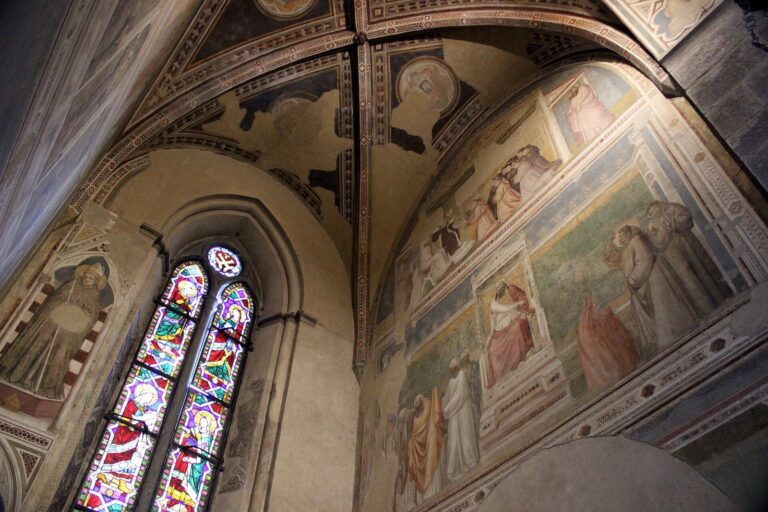
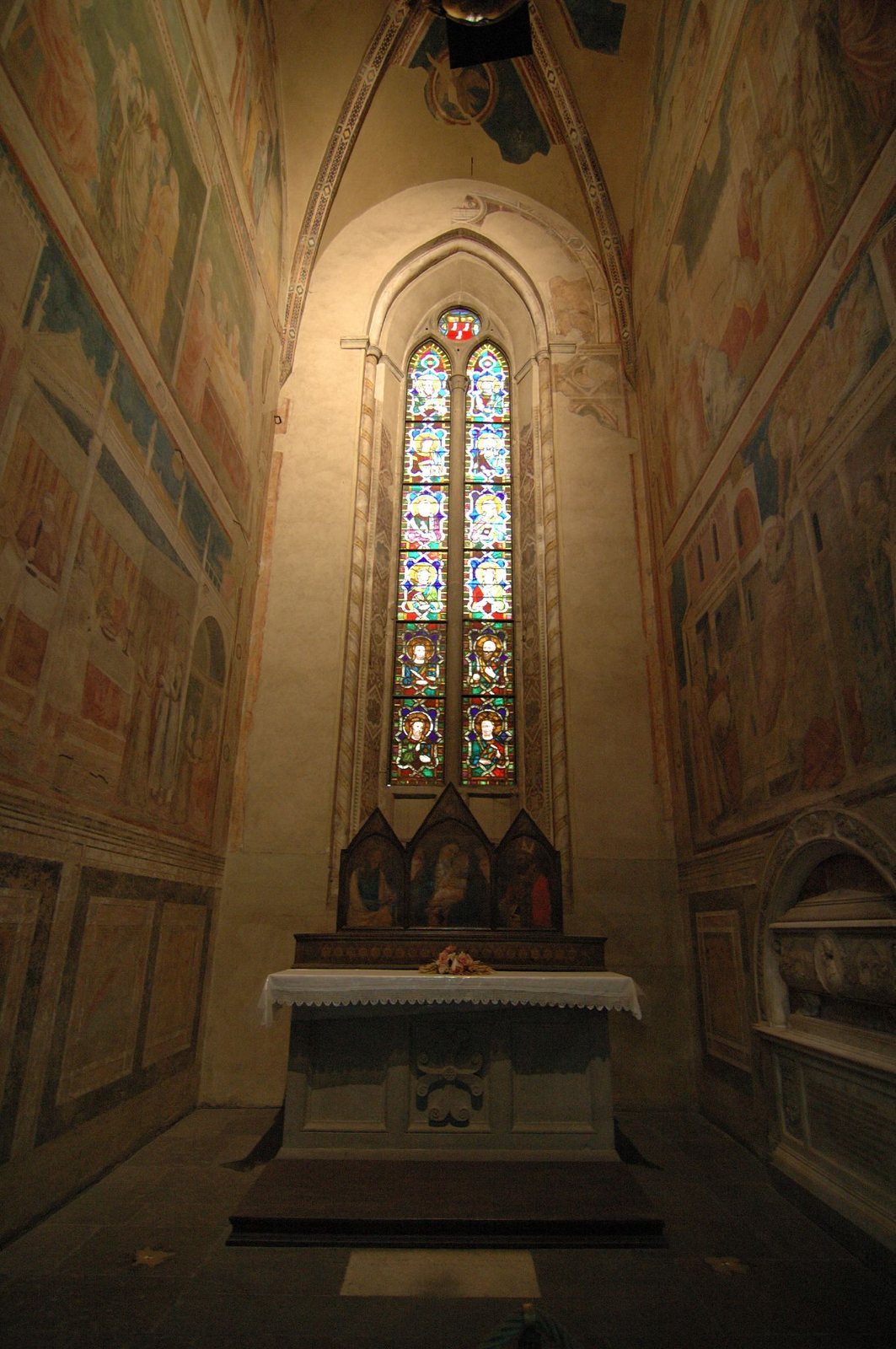
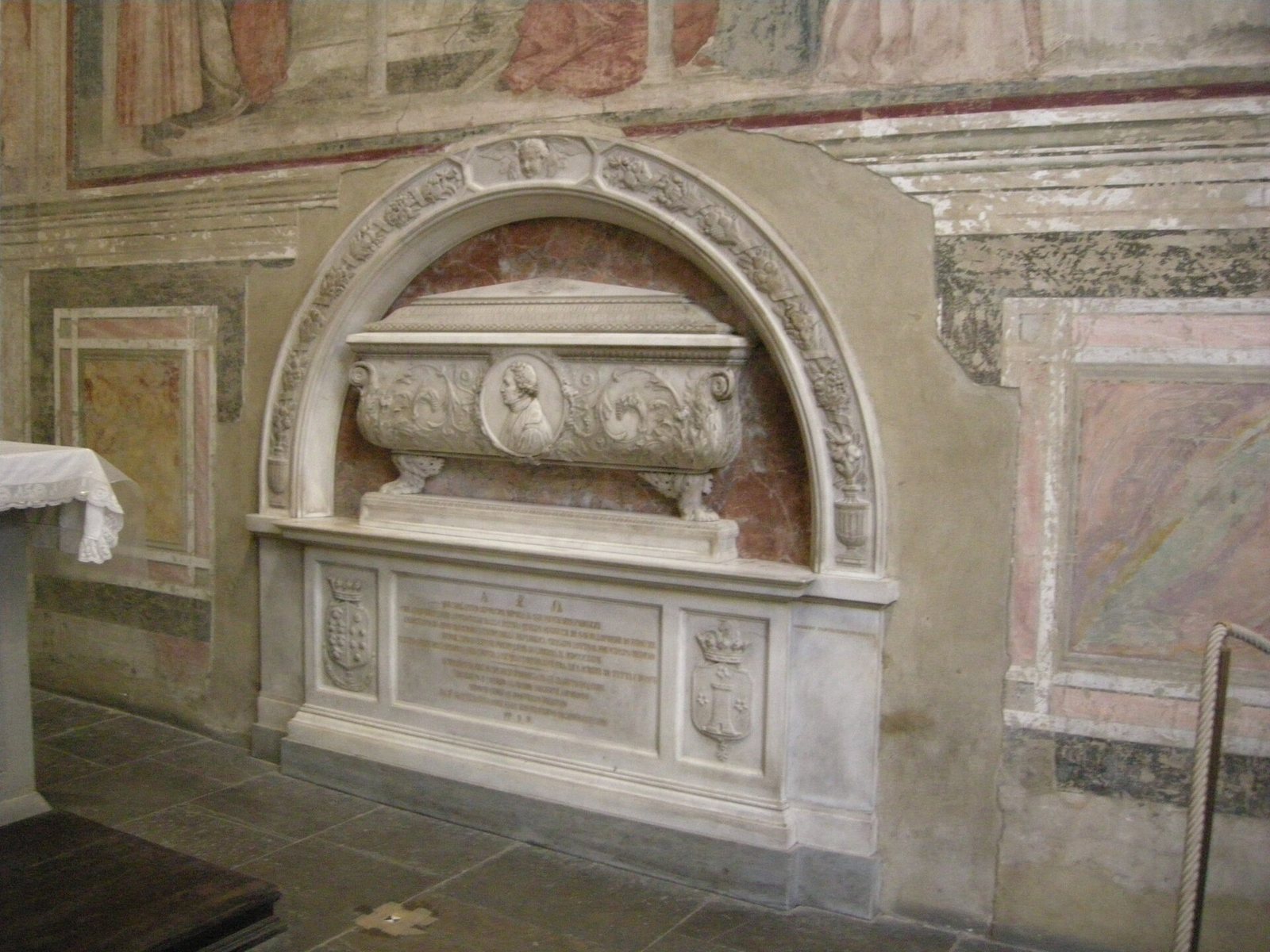
The chapel is the second to the right of Santa Croce’s choir. It is high and deep but relatively narrow, and its Gothic painted space was designed to extend beyond the scene frames. The compositions were arranged to be viewed especially from the entrance. Six scenes, each measuring 280 × 450 cm, cover the side walls. The paintings combine fresco, made on wet plaster, with extensive a secco work, applied to dry plaster.
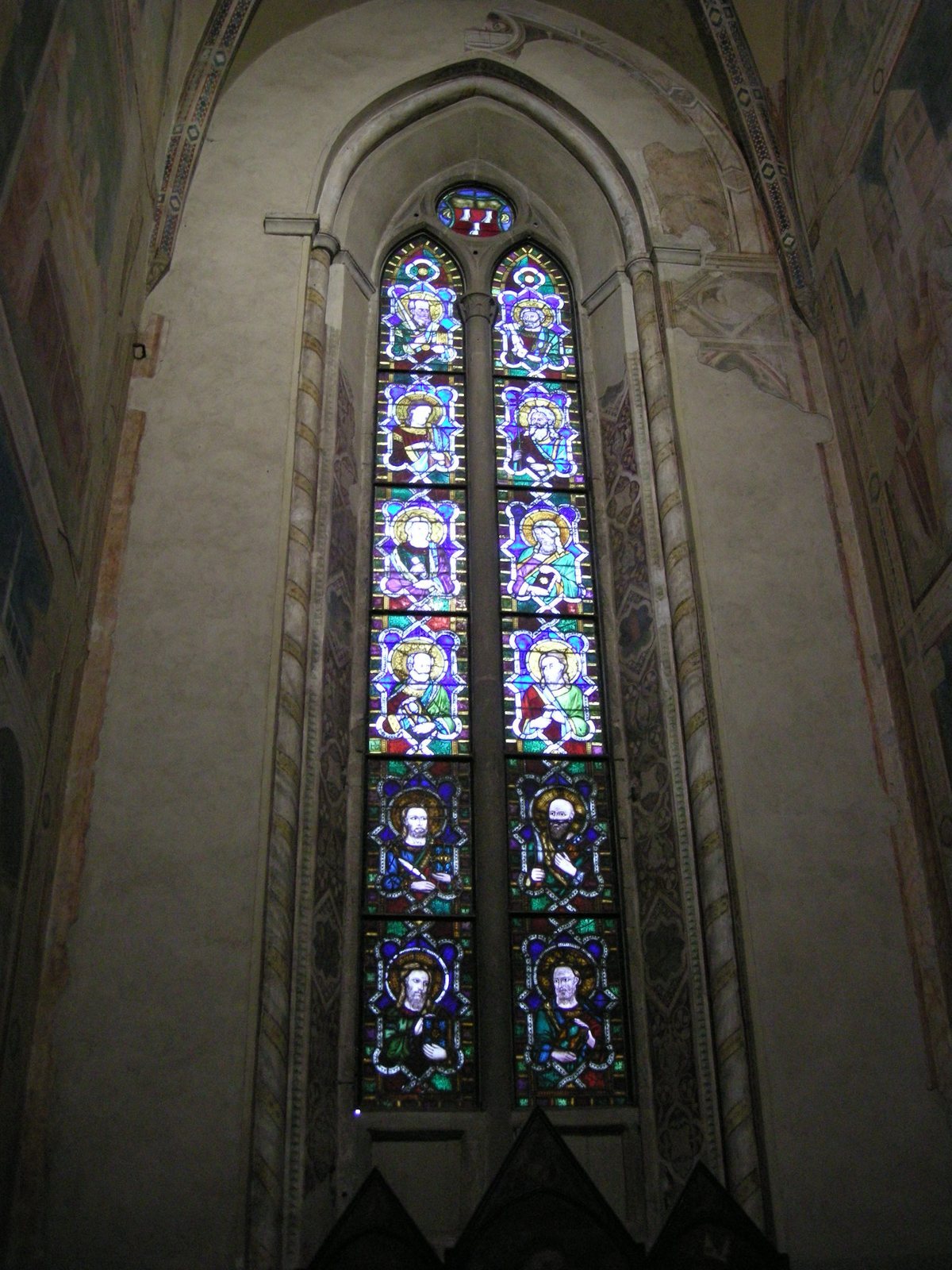
Other painted details include eight prophet busts in the archivolt, a band following the curve of an arch, and four Evangelist symbols in the curved triangular sections supporting the vault. Above the arched upper panels, bands of hexagons contain male faces. These distinctive faces have been proposed as portraits of the Peruzzi family, but that identification is unconfirmed. The window wall retains decorative traces and a damaged Angel of the Apocalypse. The paintings are incomplete and damaged, and much of their original painterly quality has been lost, though their compositions and inventive designs remain appreciable.
John the Baptist cycle
Announcement to Zechariah
The scene places the action in the Temple of Jerusalem. Beneath a Gothic canopy, Zechariah performs a sacrifice and swings a censer, a vessel for burning incense. On the far side of the altar, the angel Gabriel approaches with one hand raised as if speaking. An angled building stands at the right, with figures before it, including two comparatively well-preserved women. Musicians enter from the left, one carrying a plucked string instrument. Painted decoration representing the Temple was added later and removed during twentieth-century restoration.
Birth and Naming of the Baptist
A large building with two rooms forms the setting. Its front walls are opened up so that both interiors can be seen. In the room on the right, Elizabeth rests in bed with three women attending her. In the left-hand room, Zechariah writes his son’s name on a sheet while a woman brings the child to him. The architecture angles toward an imagined viewer at the chapel’s center and rises in stacked, cube-like forms. The figures wear broad cloaks with strongly modeled folds.
Feast of Herod
The story unfolds through connected rooms in a palace, using an angled viewpoint and a deliberately non-linear sequence. Herod feasts while Salome dances and two women watch. Elsewhere, Salome kneels before her mother, Herodias, showing her John the Baptist’s head; a soldier then presents the head to Herod in the banquet room. Statues stand along the ceiling cornice, with garlands between them. Many heads in the scene were repainted in the fifteenth or sixteenth century. The painted surface is badly worn, although the overall composition remains largely intact.
John the Evangelist cycle
Vision on Patmos
John sleeps on a narrow strip of land surrounded by water. The scene includes a woman in labor driving away a dragon, the Redeemer holding a sickle, and the armed Archangel Michael. At the edges, four angels close the noses and mouths of large, hairy demonic heads. These images relate to John’s apocalyptic vision and the seven letters associated with it.
Resurrection of Drusiana
The event takes place outside a walled city. Its gate lies between two towers with pyramid-shaped roofs, and a large basilica rises behind them. The building has apses, rose windows, decorative wall arcades, and three large ribbed domes. John raises Drusiana from a bier; she rises to her knees in prayer, as three women near his feet make a similar gesture. The funeral crowd responds in different ways, while a man using crutches approaches in hope of a miracle.
Ascension of John
John is drawn upward from a grave through an opening in the ceiling of his home at Ephesus. Jesus appears among angels in a luminous manifestation, and Peter helps John. Below, witnesses react to the empty grave, while a red-clad figure lies on the ground. The building resembles a decorated basilica, with geometric friezes in colored stone or mosaic, a barrel vault over one half, and a terrace with a parapet beyond the opening. Two figures on the left were copied by Michelangelo in a drawing now in the Louvre’s Cabinet des Dessins.
Peruzzi Polyptych
The Peruzzi Polyptych, a multi-panel painting that came from the chapel, depicts the Redeemer, the Virgin, the two Johns, and Saint Francis. After being dismantled and dispersed among collections, it was reunited at the North Carolina Museum of Art in Raleigh.