Penlle’r Castell: A Thirteenth-Century Military Stronghold in Wales

Site at a Glance
- Rating
- 4.3
- Popularity
- Very Low
- Country
- United Kingdom
- Primary era
- Medieval
- Eras represented
- Medieval
- Civilizations
- Norman
- Site type
- Military
- Remains
- Castle
On this page6 sections
History
Penlle’r Castell is a historic military ruin in Wales, United Kingdom, on the summit of Mynydd y Gwair in the far north of Swansea. Probably established as a thirteenth-century stronghold by an Anglo-Norman lord, it occupied a high position on the upland ridge route through Gower. Its name means “summit of the place of the castle.”
A Frontier Stronghold
The construction date is uncertain, although William de Braose, 2nd Baron Braose, may have established the site shortly before 1252. De Braose was a medieval Anglo-Norman nobleman associated with the lordship of Gower. The stronghold was probably garrisoned by one of the Marcher Lords, frontier lords who governed and defended territories along the border between England and Wales.
Penlle’r Castell is believed to have been the “New Castle of Gower” attacked and destroyed in 1252. This identification rests partly on the lack of another suitable northern Gower castle from the same period. The location and form of Cae Castell are considered unsuitable for that identification.
The stronghold’s position allowed its occupants to monitor the lords of Is Cennan, a medieval lordship north of the River Amman, and to hinder movement into northern Gower along the ridge route. Its purpose was probably entirely military. It may have functioned as a blockhouse, a small fortified position for defence and troop deployment, where mounted soldiers could harass raiders and send warnings to Swansea of approaching incursions. The site may not have been occupied permanently.
Remains
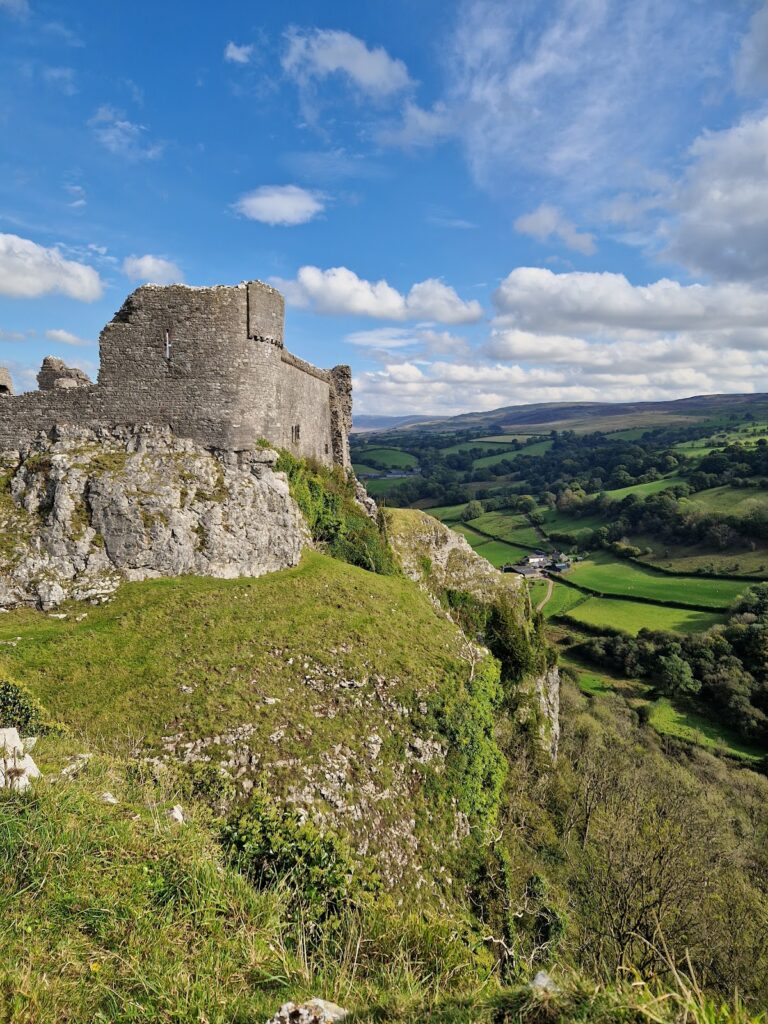
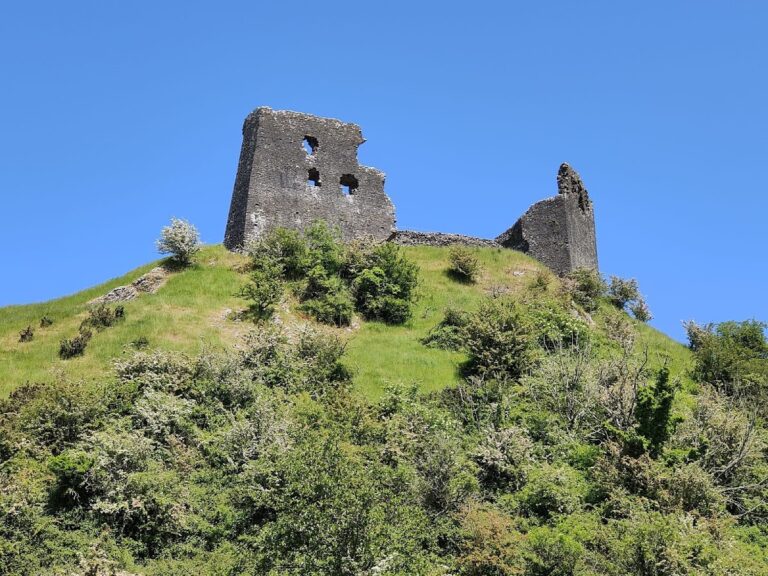
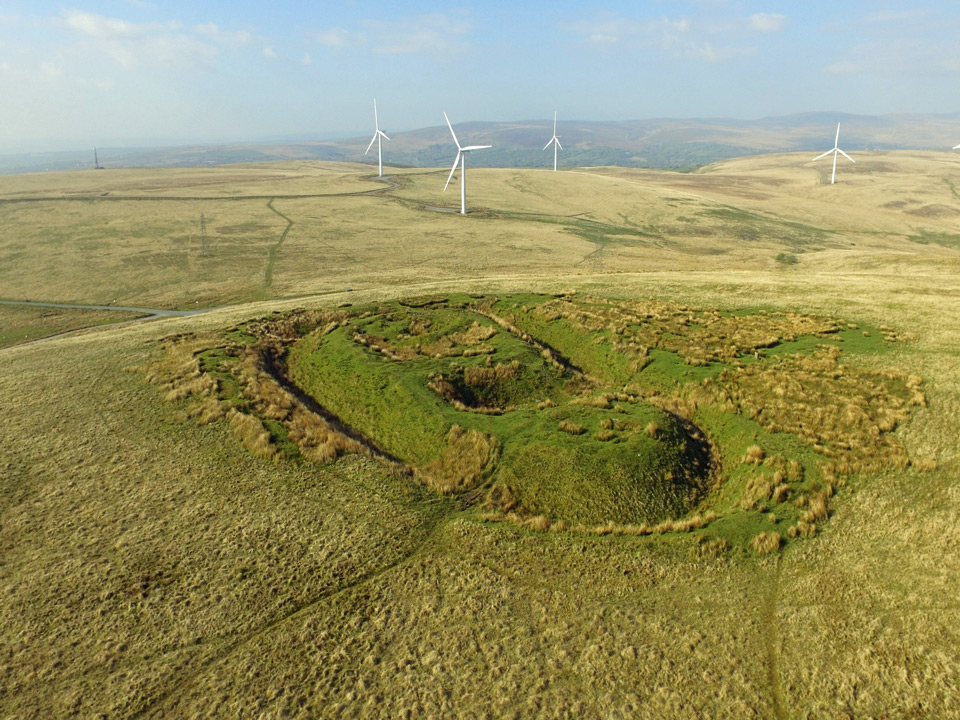
Penlle’r Castell occupies a summit associated with the upland ridge route through Gower. Its surviving fortifications are formed chiefly by substantial earthworks and deep ditches, with fragments of stone structures probably rising above them.
Fortifications
Earthworks and Ditches
The earthworks define the defensive position on the summit, while the deep ditches strengthened its protection. Together they form the principal surviving elements of the stronghold and reflect its role as a compact military position overlooking the ridge route.
Stone Towers
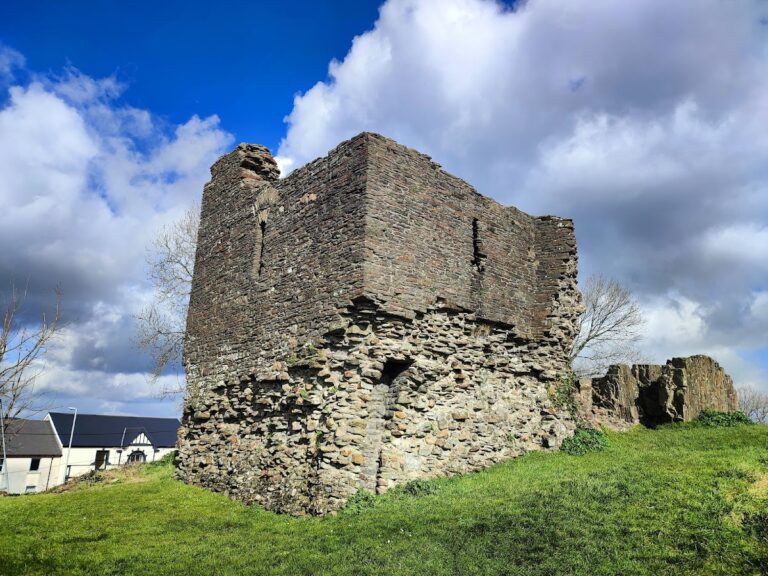
The fortification may have included two stone towers. These were probably built with dry-stone walls, using stones laid without mortar. Only fragments of the stone buildings survive above the earthworks, but they indicate that the summit defences included structures in addition to the ditches and banks.