Pauluskerk, Baarn: A Historic Reformed Church in the Netherlands
Site at a Glance
- Rating
- 4.1
- Popularity
- Very Low
- Country
- Netherlands
- Primary era
- Medieval
- External website
- Open
- Eras represented
- Medieval, Early Modern
- Civilizations
- Dutch, Holy Roman Empire
- Site type
- Religious
- Remains
- Church
On this page10 sections
History
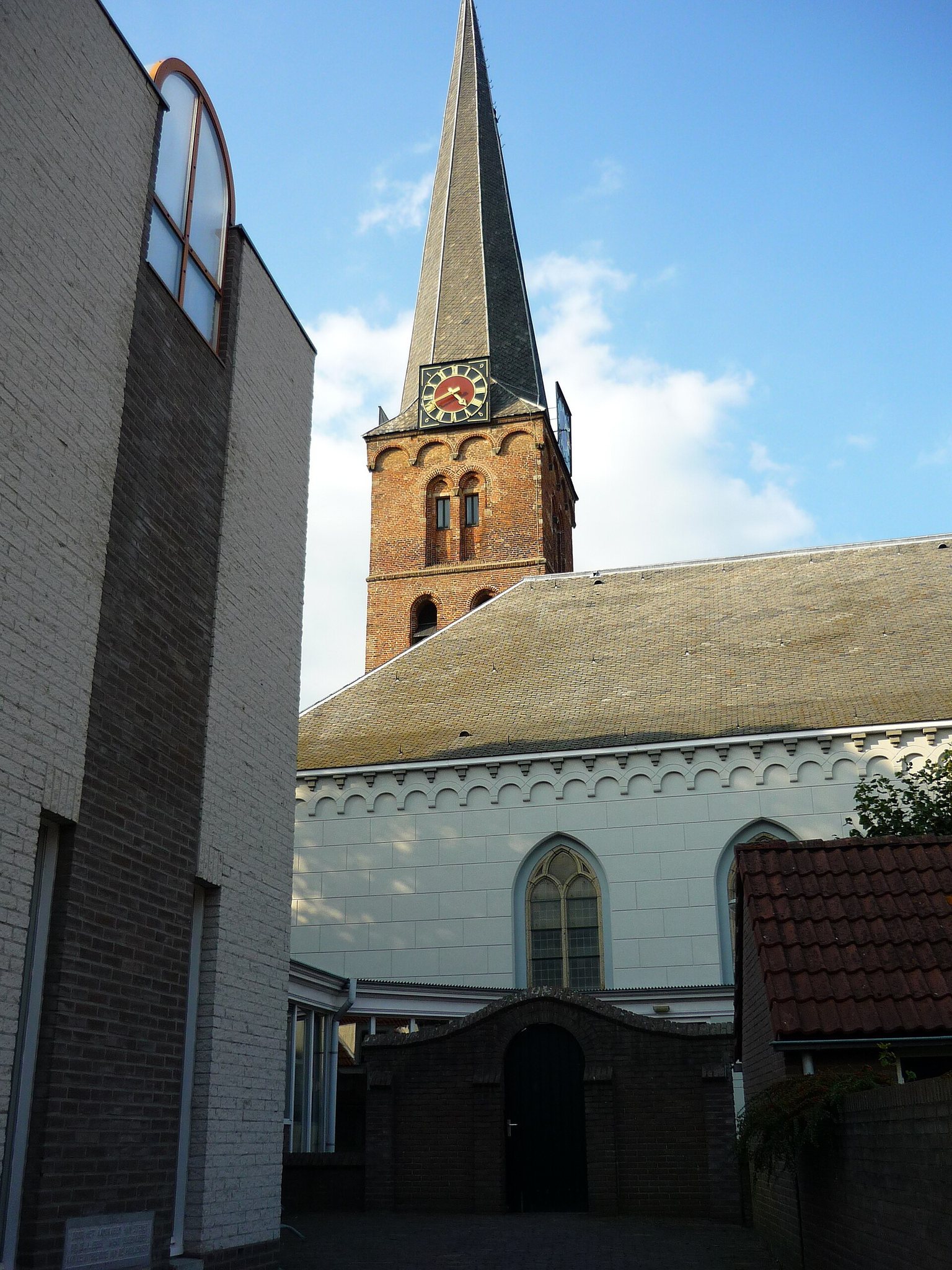
Pauluskerk is a historic church in Baarn, the Netherlands, built around 1385 in an originally Romanesque form that later acquired Gothic elements. It served as a Roman Catholic church until 1580 and is now a Protestant church dedicated to Paul. The building stands among the oldest surviving monuments in the town and has been Baarn’s oldest Rijksmonument, a legally protected monument of national importance, since 31 October 1967.
Medieval Catholic foundation
Until the Reformation, the sixteenth-century movement that replaced Catholic worship and institutions with Reformed Protestant practice in the region, the church belonged to the Catholic Abbey of St Paul in Utrecht. Its earlier dedication was to Saint Nicholas. During the fifteenth century, the choir was enlarged and the nave extended toward the tower, reflecting the church’s continuing development during its Catholic period.
Reformation and Protestant use
On Christmas night in 1580, Reformed Protestants took over the church on the orders of the States of Utrecht, the province’s governing representative body. It then became a Protestant church dedicated to Paul. A consistory, the governing council of a Reformed congregation, was built beside the choir during the sixteenth century.
The church continued to change during the seventeenth century. A second aisle was added in 1638, and the tower was raised to its present height. A covered court pew was installed during that century for Stadholder William III, a senior political and military officeholder in the Dutch Republic who later became king of England, Scotland, and Ireland. Because William lived at nearby Soestdijk, the pew linked the church with the local courtly environment.
Burial ground and civic responsibilities
Until 1 January 1829, Baarn’s dead, including Catholics, were buried in and around the Reformed church. Burial was then prohibited because decomposition produced severe odors and contributed to cracking floors and subsidence. Catholics and Protestants subsequently received separate cemeteries.
The former churchyard later disappeared completely, although sections of grave monuments remained inside the church. The transfer of burials also ended income associated with the cemetery. An agreement therefore required the municipality to pay the church ƒ21.40 each year, until the arrangement was bought out for ƒ250.00 on 30 January 1914. When the cemetery had become overcrowded, the church purchased land from Queen Regent Emma in 1919 for a new general cemetery at Torenlaan.
Repairs, occupation, and modern preservation
Storm damage led to repairs during the eighteenth century. In 1888, the liturgical center was moved from the west side of the church to the east. The court pew remained draped and lockable until 1930. Princess Juliana was the last member of the royal family to sit in it, and the pew remains reserved for a possible member of the royal house unless the church is crowded.
During the German occupation of 1940 to 1945, the church’s sixteenth-century bell was stolen. The present large bell commemorates the loss in an inscription that attributes the first bell’s disappearance to German tyranny and the second bell’s creation to civic spirit. The tower clock faces were restored in 2005, when oxidation was removed, their colors revived, and their gold leaf renewed.
The organ was built in 1959 by D. A. Flentrop of Zaandam. It received major maintenance and revoicing in 1995, followed by adjustments to its intonation and changes to its disposition, the specification of its stops and tonal resources, in 2008 and 2009. These later changes deliberately did not preserve the characteristic tonal character that had previously been maintained.
Remains
Pauluskerk stands on the highest point of Baarn’s town center beside the Brink and can accommodate approximately 600 people. Its fabric combines Romanesque and Gothic forms, using natural stone, brick, tuff stone, and large monastery bricks. The church’s principal mass incorporates a tower beside the central axis, while surviving furnishings and burial monuments preserve parts of its religious, political, and funerary history.
Tower and bells
The 43-meter tower is incorporated into the nave’s building mass and has two stages. The lower stage contains openings for the bells, while the upper stage contains windows. The tower originally stood in the middle of the nave but became off-center during a seventeenth-century rebuilding. Its carillon, a set of tuned bells arranged for musical performance, contains 44 bells and is operated both by computer and by hand.
Royal and civic furnishings
The covered court pew bears the coat of arms of the House of Orange-Nassau, the Dutch royal dynasty, and the motto of the Order of the Garter, “Honi soit qui mal y pense,” meaning “Shame on him who thinks evil of it.” Emma of Waldeck and Pyrmont used a specially made low-legged chair in the pew; the chair is kept in the church attic. A States Bible, the authorized Dutch Reformed translation commissioned by the Dutch Republic’s States-General, lies on the pew. The church board presented it to Prince Henry of the Netherlands for his fiftieth birthday. He had been baptized in Pauluskerk on 18 July 1820. The adjacent pew is known as the mayors’ pew.
Pulpit and baptismal font
The oak pulpit dates from approximately 1635. Decorations once applied to its flat panels were later removed. In 1888, the pulpit stood on the east side of the church, with its entrance beneath the tower to the right. The octagonal stone baptismal font was recovered in two halves after being lost during the Reformation. One half was found in 1888 and the other almost a century later. The pieces were joined in 1976 and placed in the church as a single font. Four carved heads probably represent the four rivers of Paradise, the Tigris, Euphrates, Nile, and Ganges. A brass baptismal bowl was added in 2011.
Burial monuments
A tombstone for Dirck van Zuylen, lord of Drakenburg, who died in 1635, and his wife Agnes van Brakel, who died in 1638, survives in almost undamaged condition. Parts of other grave monuments also remain visible inside the church, preserving physical evidence of the former cemetery that once surrounded the building.