Great Moravian Basilica in Bratislava Castle: An Early Medieval Bishop’s Church
Site at a Glance
- Rating
- 4.6
- Popularity
- Very Low
- Country
- Slovakia
- Primary era
- Medieval
- Eras represented
- Medieval
- Civilizations
- Great Moravia, Hungarian
- Site type
- Religious
- Remains
- Basilica
On this page11 sections
History
The Great Moravian Basilica in Bratislava Castle is a substantial ninth-century church in Slovakia, built during the period of Great Moravia in the pre-Romanesque or early Romanesque tradition. Probably constructed in the second half or near the end of the ninth century, it stood on the eastern terrace of the Bratislava hillfort and may have served as a bishop’s church.
Bratislava under Great Moravia
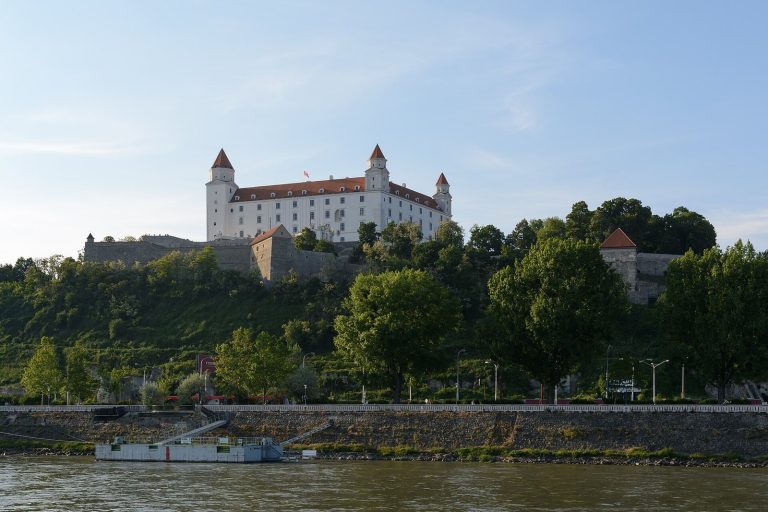
The castle hill had strategic importance on the left bank of the Danube, where water and land routes crossed. Settlement in the area reaches back about 4,500 years, followed by Hallstatt, La Tène, and Roman-period occupation. Slavic groups began settling there around the turn of the fifth and sixth centuries.
During the first half of the ninth century, the Moravian and Nitra principalities formed the main political units in the region. In 833, the Moravian prince Mojmír I united them into Great Moravia, a ninth-century Central European state. Bratislava and Devín became important settlements within its territory, and Bratislava developed into an intensively occupied centre.
The basilica was probably connected with the Moravian-Pannonian archdiocese, an ecclesiastical province headed by an archbishop. Its division into three bishoprics provides the context for interpreting the church as a possible bishop’s seat. The building was a major ecclesiastical foundation within Great Moravian Bratislava.
Later use of the site
The basilica probably stopped functioning at the beginning of the tenth century. A fortification tower was then raised over its foundations, remaining there until a later building phase in the eleventh century.
A church dedicated to the Holy Saviour, or Salvator, was subsequently built in the same place. It appears to have continued the religious role of the earlier basilica. Bratislava was then the seat of a provostship, an ecclesiastical institution headed by a provost. The church remained in use until 1221, when the provostship moved to the settlement below the castle hill.
A cemetery surrounding the churches was used from the ninth to the twelfth century. Later burials disturbed some of the ninth-century graves, while the burial population indicates descendants of the local Slavic community.
Discovery and preservation
The basilica was discovered in 1965. Its foundations and associated remains were conserved and presented within the Bratislava Castle complex. The churches and cemetery form part of Bratislava Castle, a Slovak National Cultural Monument designated and registered in 1961, and the preserved remains are used as a museum exhibition.
Remains
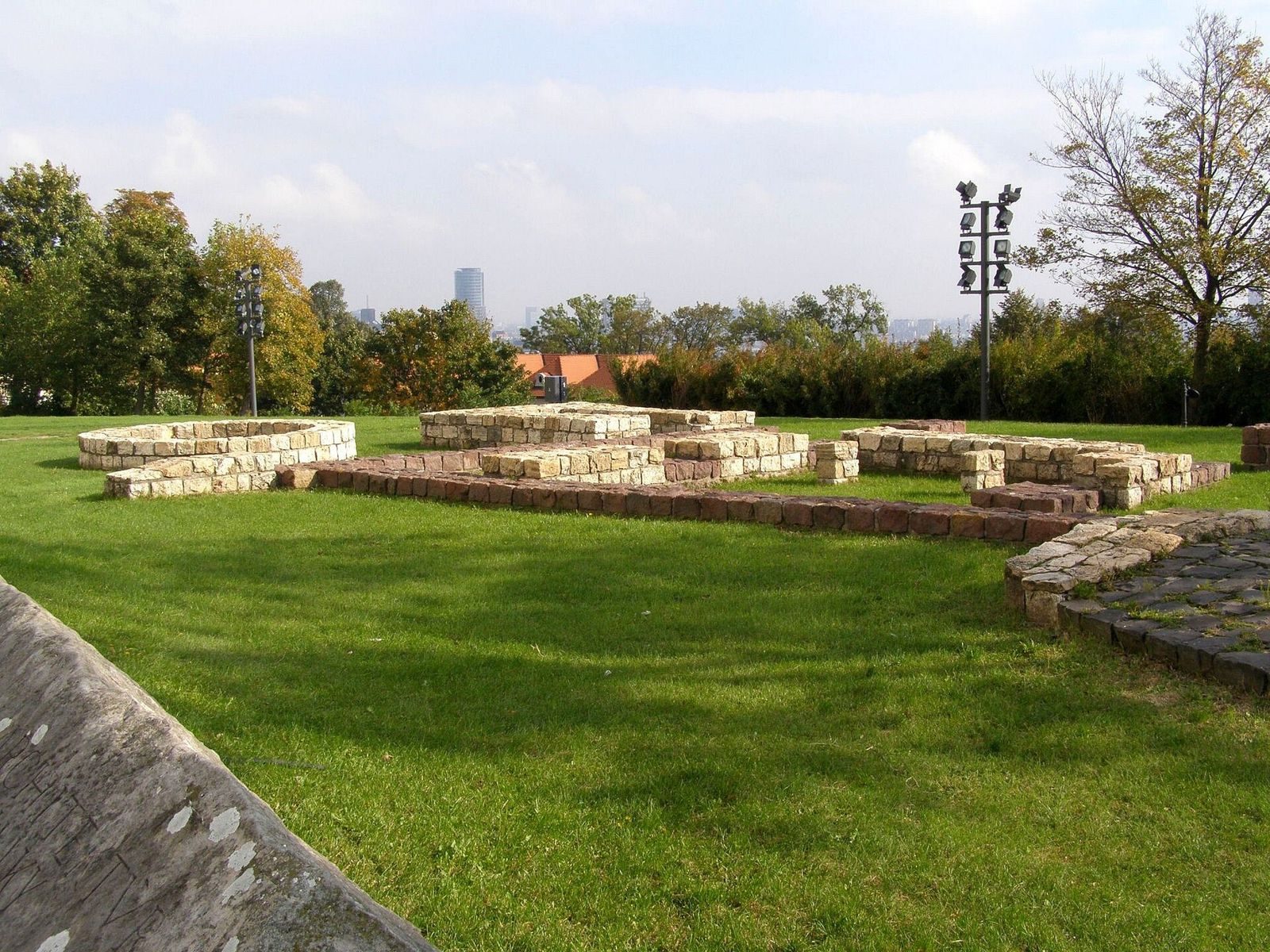
The surviving remains occupy part of the castle hill’s eastern terrace and consist chiefly of partial conserved foundations from the ninth-century basilica, the later Church of the Holy Saviour, and subsequent structures. The site preserves evidence of successive religious, defensive, and funerary phases. Stone blocks and bricks formed the basilica, while reused Roman building material connects its construction with earlier occupation of the hill.
Great Moravian church
Three-aisled basilica
The basilica was almost 13 metres wide, and some reconstructions propose an original length of nearly 20 metres. Its three-aisled plan had a central nave flanked by two side aisles, with three pairs of pillar foundations dividing the spaces. The eastern termination is reconstructed as having three apses, based on comparisons with contemporary churches.
Stone blocks and bricks were used in the construction, together with roofing material reused from an older Roman building associated with the former Celtic oppidum, a large fortified settlement or regional centre. Some bricks carry the stamp of the Fourteenth Roman Legion. The interior had wall paintings, and reused masonry preserves fragments of plaster with red paint and predominantly plant-based fresco decoration.
The building was among the largest known Great Moravian churches and was the largest church of its type identified in present-day Slovakia. Foundations in its southwestern area were overlain by younger tenth- and eleventh-century structures, preserving physical evidence of the site’s later occupation and rebuilding.
Later church and medieval charnel
Church of the Holy Saviour
The later Church of the Holy Saviour occupied the basilica’s location. Its surviving remains, together with foundations of the earlier church and other structures, form a partial conserved architectural layer within the castle complex.
Romanesque charnel
After 1200, a circular Romanesque charnel was built beside the later church. The structure, associated with the storage or secondary burial of human bones, had a diameter of 3.5 metres and represents a later architectural phase of the site.
Cemetery and archaeological finds
Excavations around the churches revealed graves containing skeletal remains and personal objects, including hollow ornamented gilded-bronze buttons and silver earrings shaped as grape clusters. These finds accompany the ninth- to twelfth-century cemetery and help define the material character of the burials.
Archaeological material from the site also included the torso of a figurative relief from an unidentified Roman building. Its discovery is dated to the end of the first third of the fifteenth century, adding a later find to the remains associated with the churches and cemetery.