Pasinler Castle: An Iron Age Fortress in Turkey
Site at a Glance
- Popularity
- Very Low
- Country
- Turkey
- Primary era
- Iron Age
- Eras represented
- Iron Age, Medieval
- Civilizations
- Aq Qoyunlu, Urartian
- Site type
- Military
- Remains
- Castle
On this page6 sections
History
Iron Age and Urartian fortress
Pasinler Castle is an Iron Age fortress in Pasinler, Turkey, associated with Urartu, an Iron Age kingdom in the region. It served as a fortification from that period and became one of the notable strongholds of northeastern Urartu. The castle would have helped Urartian kings secure valuable regional resources.
Later occupants and the name Hasankale
Later occupants included the Byzantines, Armenians, and White Sheep Turkomans, a Turkoman political confederation also known as the Aq Qoyunlu. In the 15th century, Uzun Hasan, a prominent ruler of the confederation, contributed to fortifying the town and castle. The town’s historic name, Hasankale, derives from the castle, which is also sometimes called Hasan Castle. Uzun Hasan may have been the source of the name.
Ottoman rebuilding and later use
The Ottomans rebuilt the castle in the 16th century. It remained in use until after the Russo-Turkish War of 1828–1829, a conflict between the Russian and Ottoman empires.
Remains
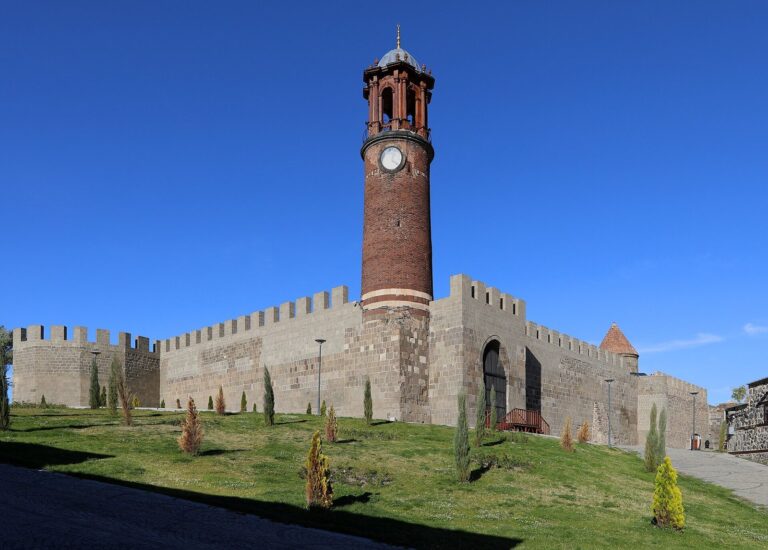
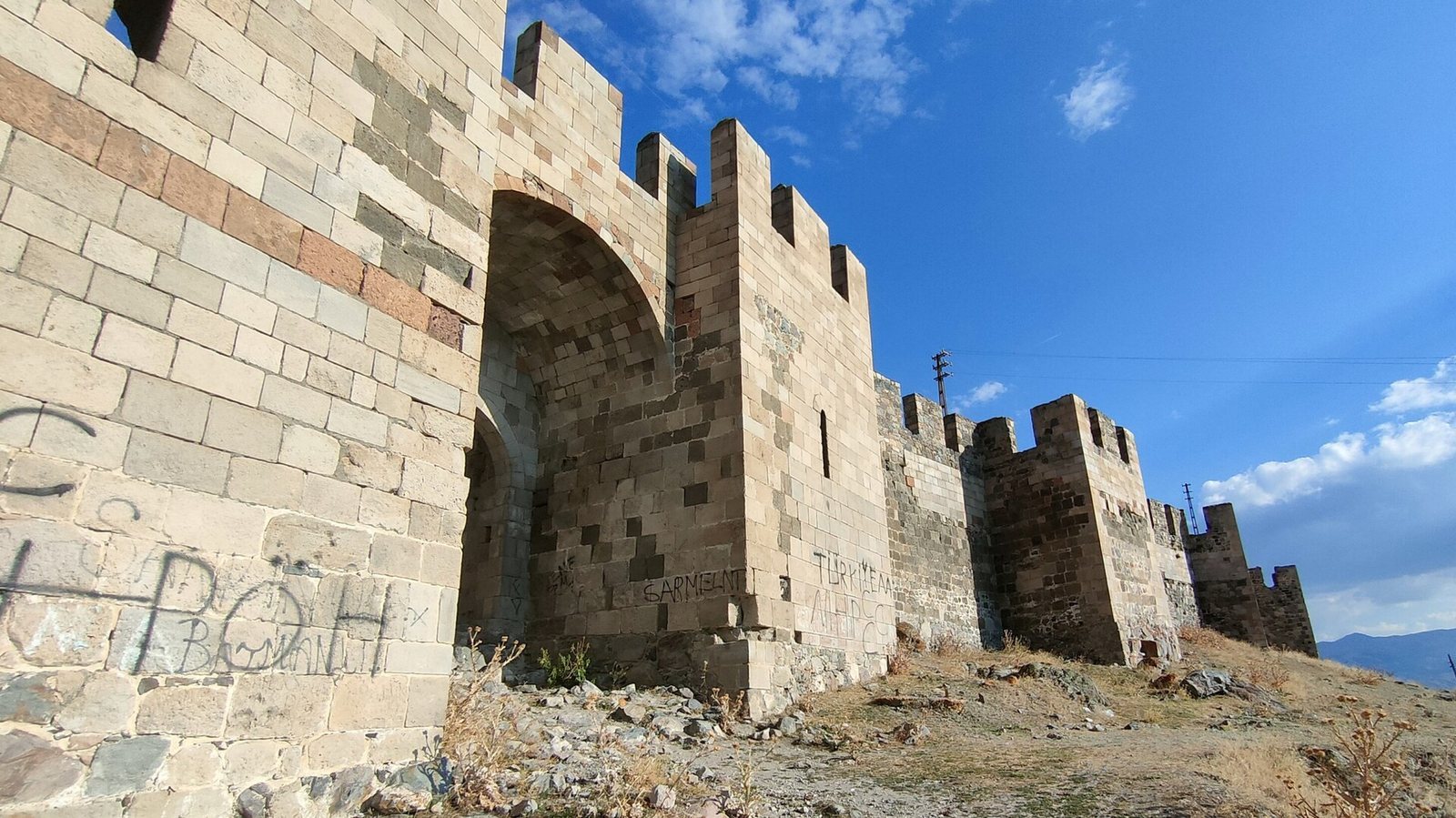
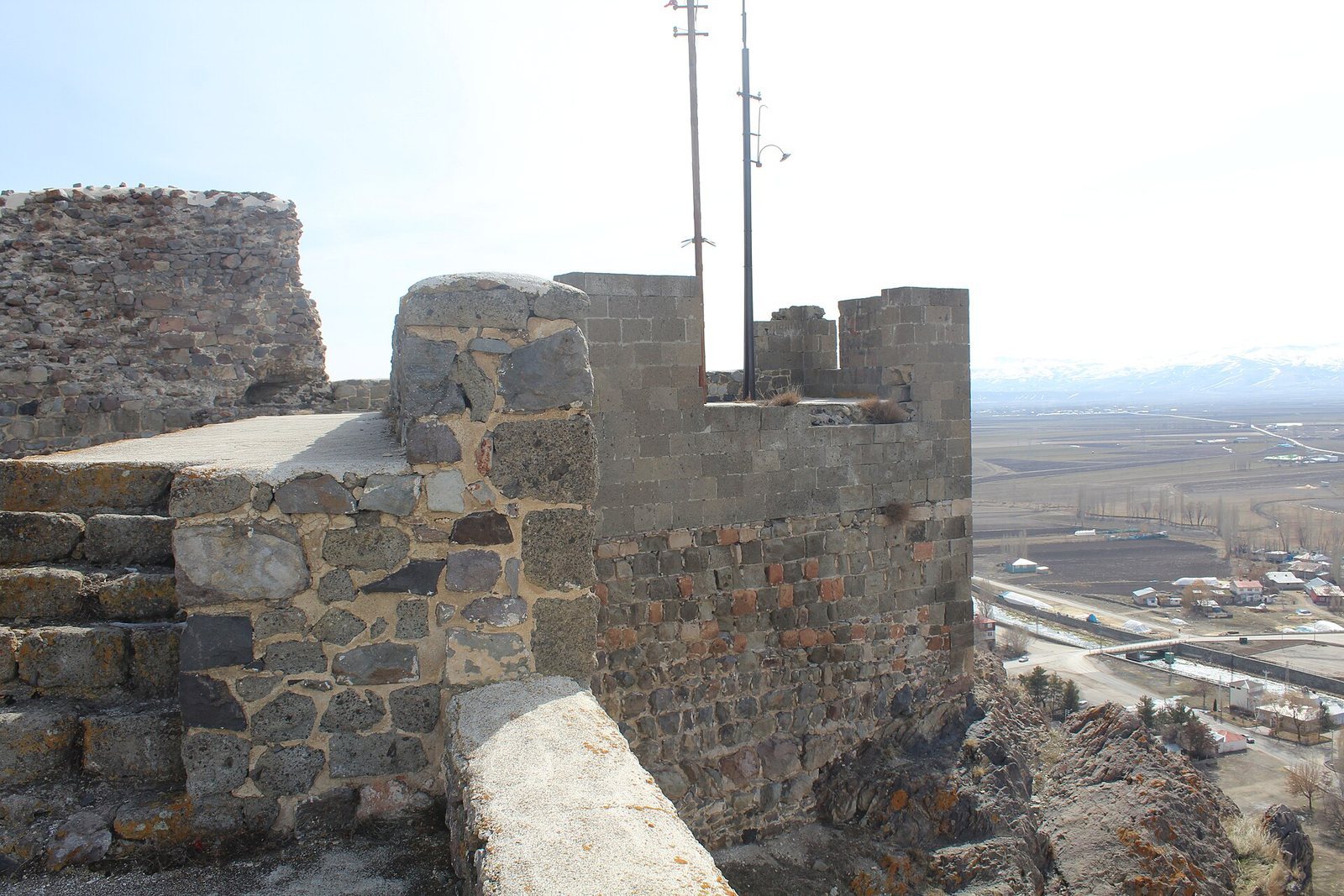
The ruined fortification stands on a large rocky hill at an elevation of 1,740 metres, overlooking Pasinler and the surrounding plain. Three sets of walls form its defensive layout. The outer two end at the steep rock face rather than completing full circuits. A gatehouse occupies the western part of the site, while a water tunnel cuts through the rock and reaches the Pasinler Stream below.
Urartian traces and depictions
Inscriptions and stonework at the castle date to the reign of Minua, a king of Urartu. A depiction shows a tower with the plain and a river in the background. The castle also appears in an early-18th-century image credited to Tournefort and a 19th-century depiction credited to Théophile Deyrolle.