Erzurum Castle: A Byzantine Fortress in Türkiye
Site at a Glance
- Country
- Turkey
- Primary era
- Medieval
- Eras represented
- Classical, Medieval
- Civilizations
- Byzantine, Roman
- Site type
- Military
- Remains
- Castle
On this page10 sections
History
Byzantine foundation
Erzurum Castle is a fortress in Erzurum, Türkiye, whose earliest fortification was built by the Byzantines in 422. It is regarded as the city’s oldest site. The Byzantines, the eastern continuation of the Roman Empire, built the fortress amid conflict with the Sasanian Empire.
After Armenia was partitioned in 378, Byzantine rule covered part of Western Armenia, including Upper Armenia, Sophene, and Aghdznik, as well as Lesser Armenia. New fortifications were added at Erzurum in 431, when the city was named Theodosiopolis in honor of Theodosius II, Eastern Roman emperor from 408 to 450. An Armenian ecclesiastical council, a gathering of church authorities, met at the site in 633.
Arab and Armenian rule
As wars between the Byzantines and the Sasanian Empire weakened both powers, the Arab caliphate, an Islamic polity led by a caliph, took control. It brought the Armenian Highlands together under the governorate of Arminia, and the Arabs called the place Karin Fortress. Karin is the historical Armenian name for Erzurum. One proposed explanation connects the word khali, meaning carpet, with Kalikala, a corrupted form of the fortress’s name.
Karin became the center of an emirate, a territory governed by an emir, before passing to the Bagratids, an Armenian royal dynasty. After the kingdom fell, Karin was no longer part of Armenian political entities.
Saltukid rule and the name Erzurum
The Saltukids, a medieval Turkic ruling dynasty in eastern Anatolia, altered the castle in the 12th century. The nearby, unwalled trading city of Artsn joined with Karin to form Erzurum. One proposed derivation combines Artsn with Rum, a term for the Roman or Byzantine Greek world and its people. Another interprets the name in Arabic as “land of the Greeks.”
Ottoman and Russian conflicts
During the Ottoman period, janissaries, elite troops serving the sultan, used the castle. In the 19th century, an Ottoman army official described the fortification as surrounded by shops and residences.
Russian forces captured the castle in 1829 and 1878, and it was returned to Ottoman control on both occasions. They seized it again in 1916 during the Battle of Erzurum. Ottoman defenses extended well beyond the historic fortress. The British historian William Edward David Allen wrote that Russian troops broke through the outer forts and entered the city without fighting at Erzurum’s old fortifications.
Remains
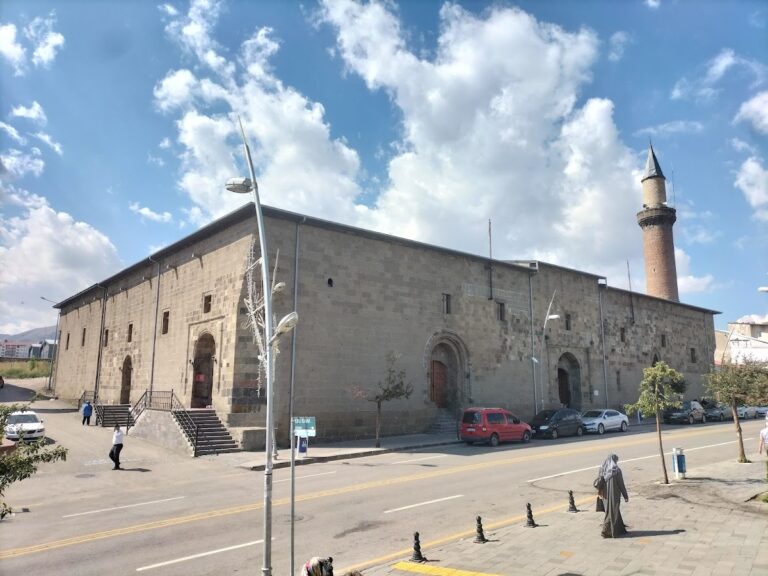
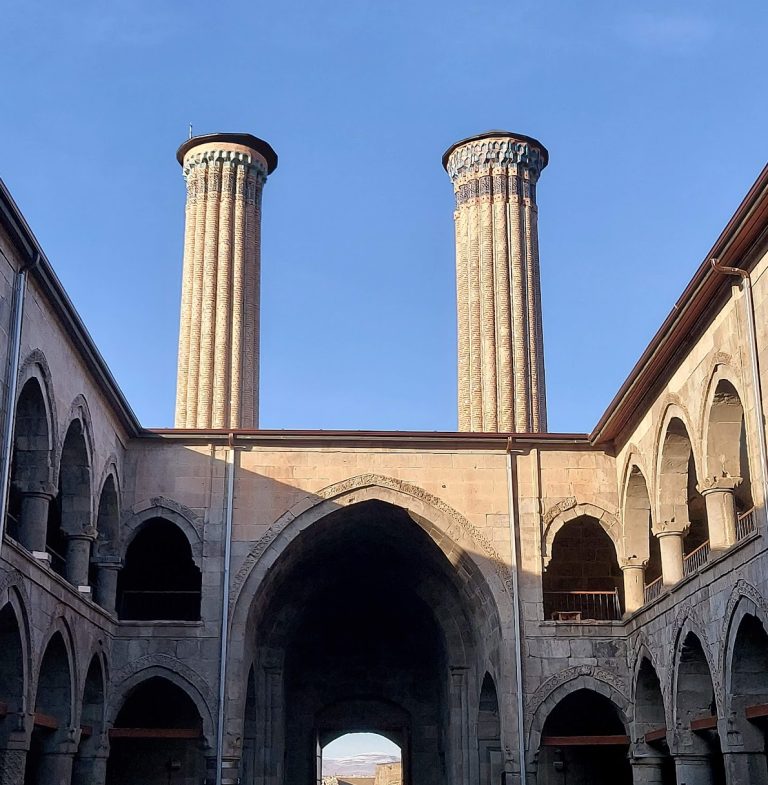
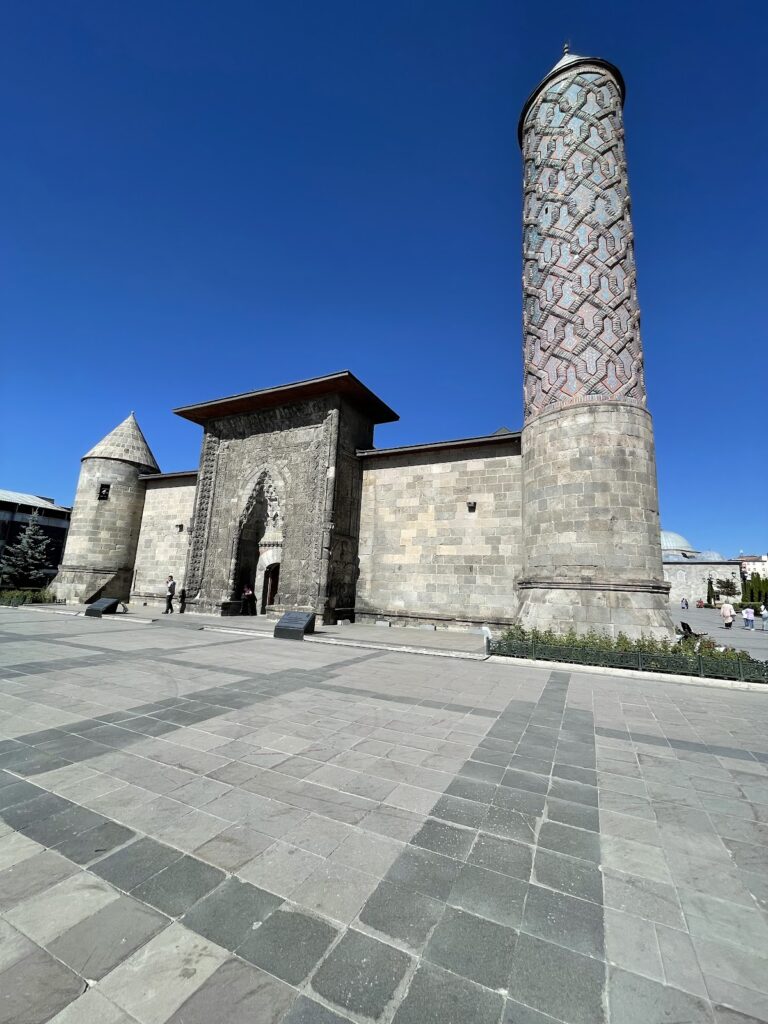
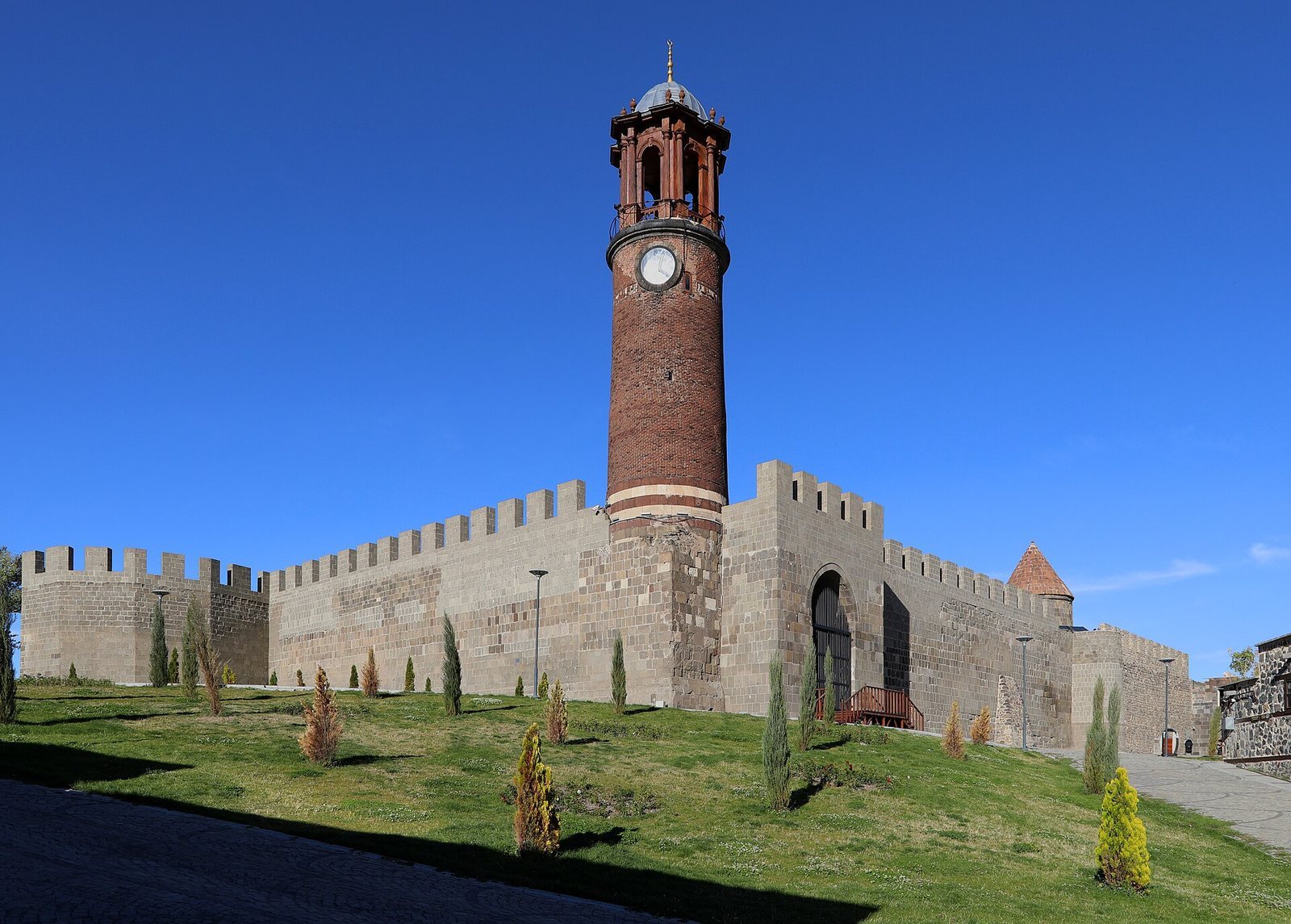
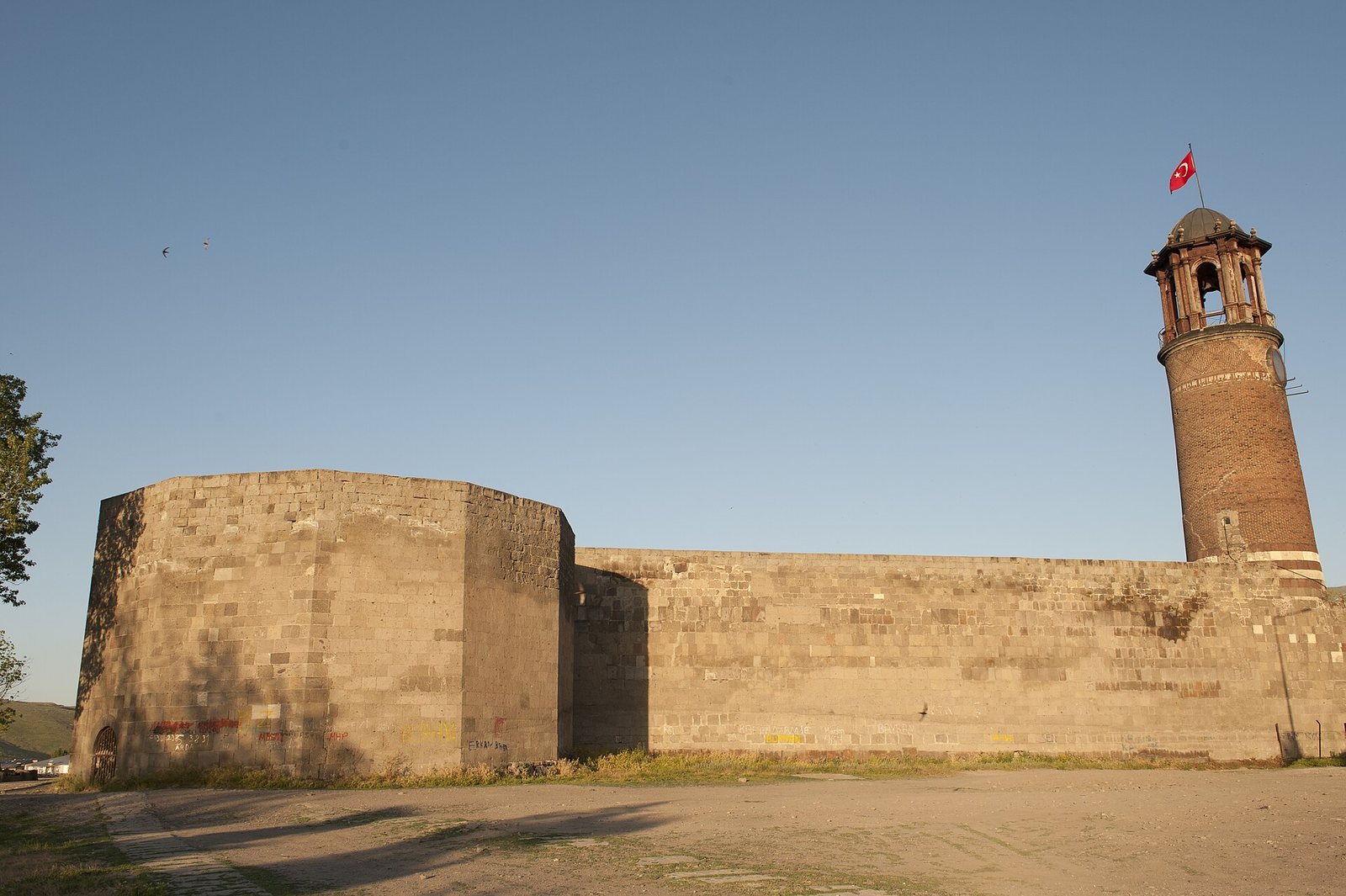
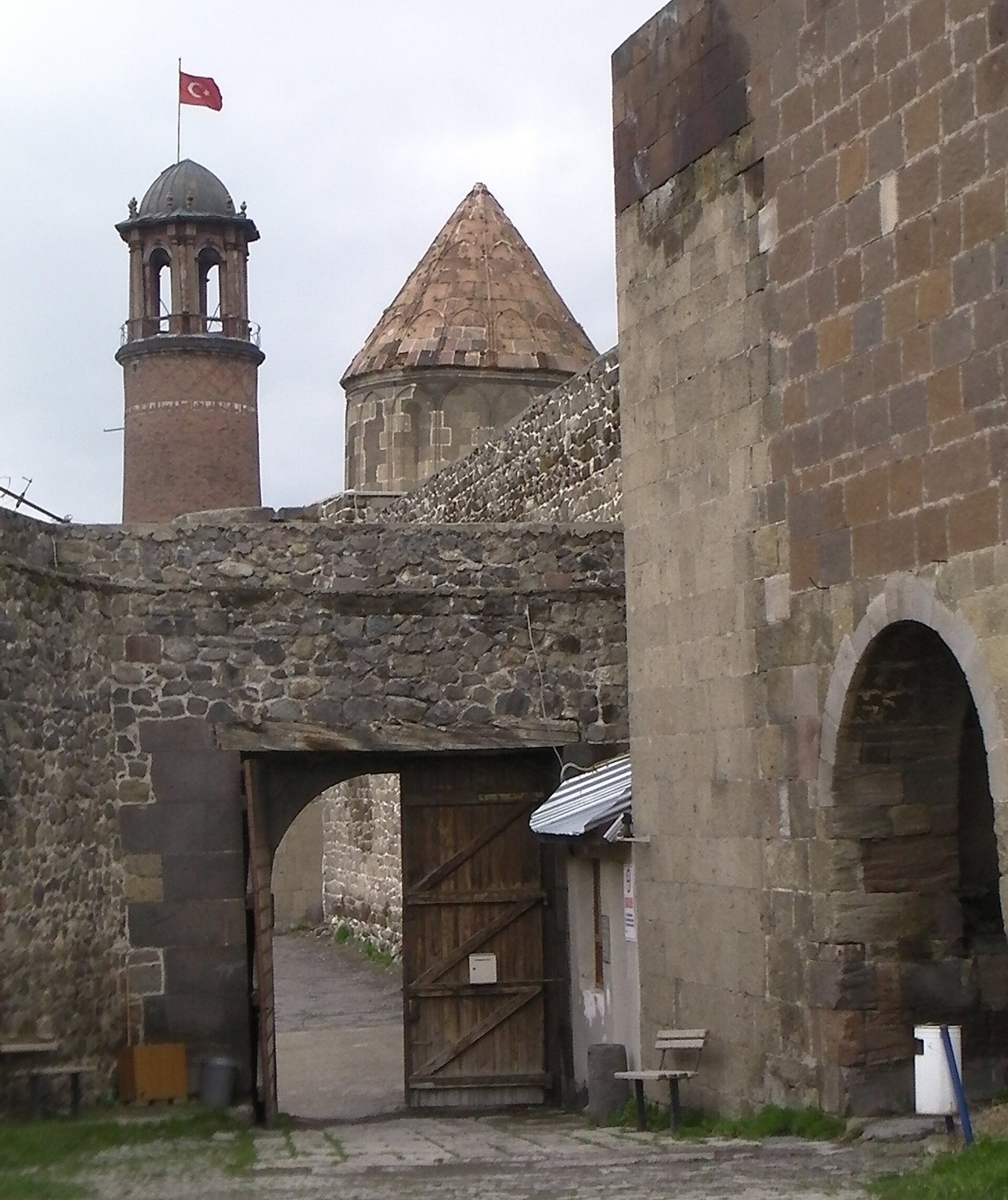
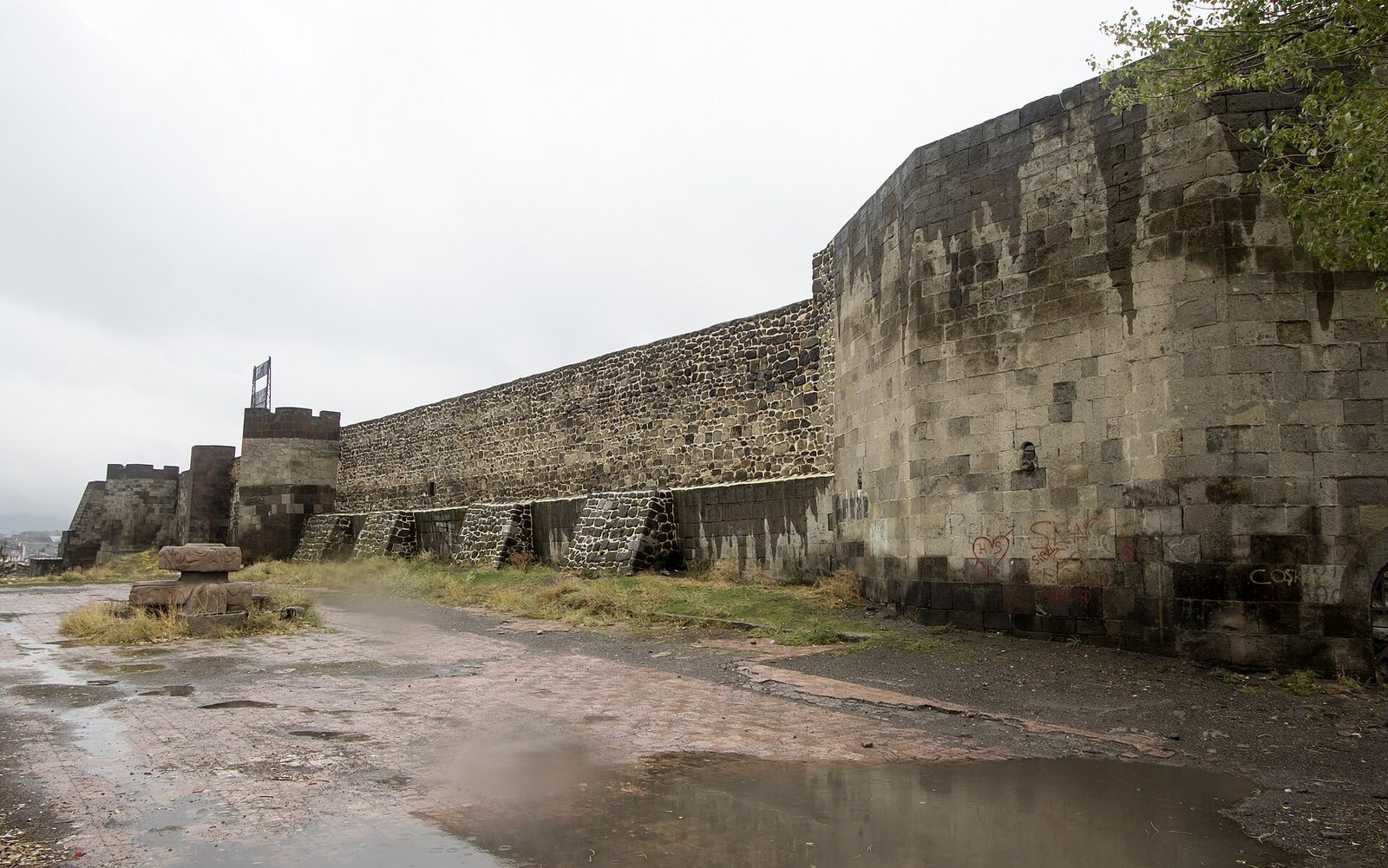
Erzurum Castle stands in the city’s traditional center, near the Çifte Minareli Medrese. Its remains include defensive walls, a gate, a mosque, a minaret, and a clock tower.
Fortress structures
Walls and gate
Walls dating to the castle’s 12th-century alterations make up most of its surviving structure. A gate is also identified among the fortress features.
Minaret and mosque
The Saltukids added a brick minaret, a tower associated with a mosque, in the 12th century. A citadel mosque also existed around this period.
Clock tower and clock
A clock tower is identified among the castle’s features, alongside a clock dating to the 19th century.