Paraggi Castle: A Genoese Coastal Defensive Post in Italy

Site at a Glance
- Rating
- 4.8
- Popularity
- Very Low
- Country
- Italy
- Primary era
- Early Modern
- Eras represented
- Early Modern
- Civilizations
- Genoese
- Site type
- Military
- Remains
- Castle
On this page4 sections
History
Paraggi Castle, also known as Villa Bonomi Bolchini, is a coastal fortification in Italy, located at Paraggi within the municipality of Santa Margherita Ligure. The Republic of Genoa, a maritime republic whose coastal territories relied on fortified defenses, erected it as a protective post for the Tigullio Gulf. The decision to build the castle may have been made in 1626, and the structure was probably raised on an earlier building.
Genoese Defensive Post
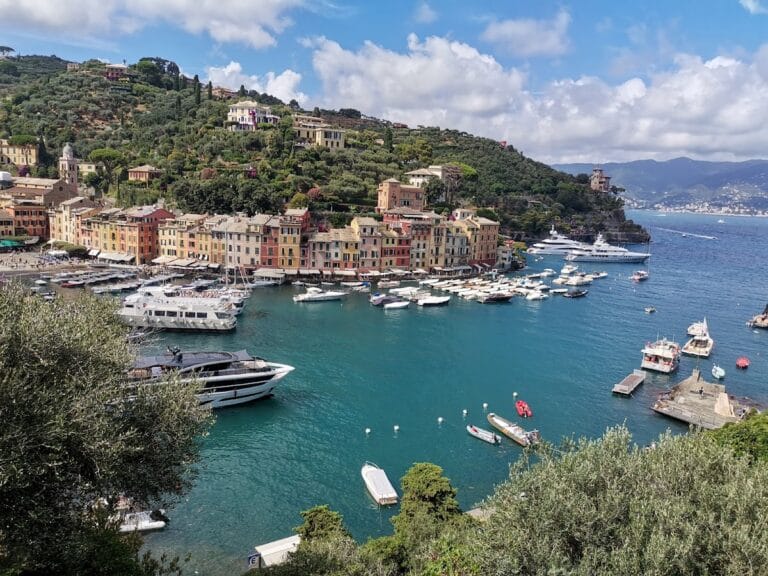
The castle formed part of the coastal defenses maintained during the period of the Republic of Genoa. Its position on the eastern side of Paraggi Bay allowed it to serve a defensive purpose along this stretch of coast.
French Occupation and Later Use
French troops occupied the castle from 1812 to 1814 during the First French Empire, Napoleon Bonaparte’s imperial regime, which controlled or occupied parts of Italy during the Napoleonic Wars. After several modifications over the centuries, the building was converted into a private residence. In the 1990s, its owners, the Bonomi Bolchini family of textile industrialists from Biella, rented the property to Silvio Berlusconi and his family. Berlusconi was an Italian businessman and politician who later served several terms as Italy’s prime minister.
Remains
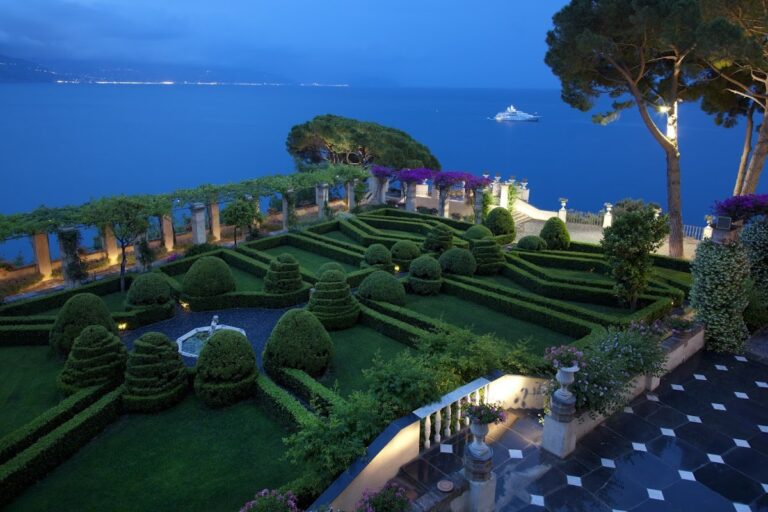
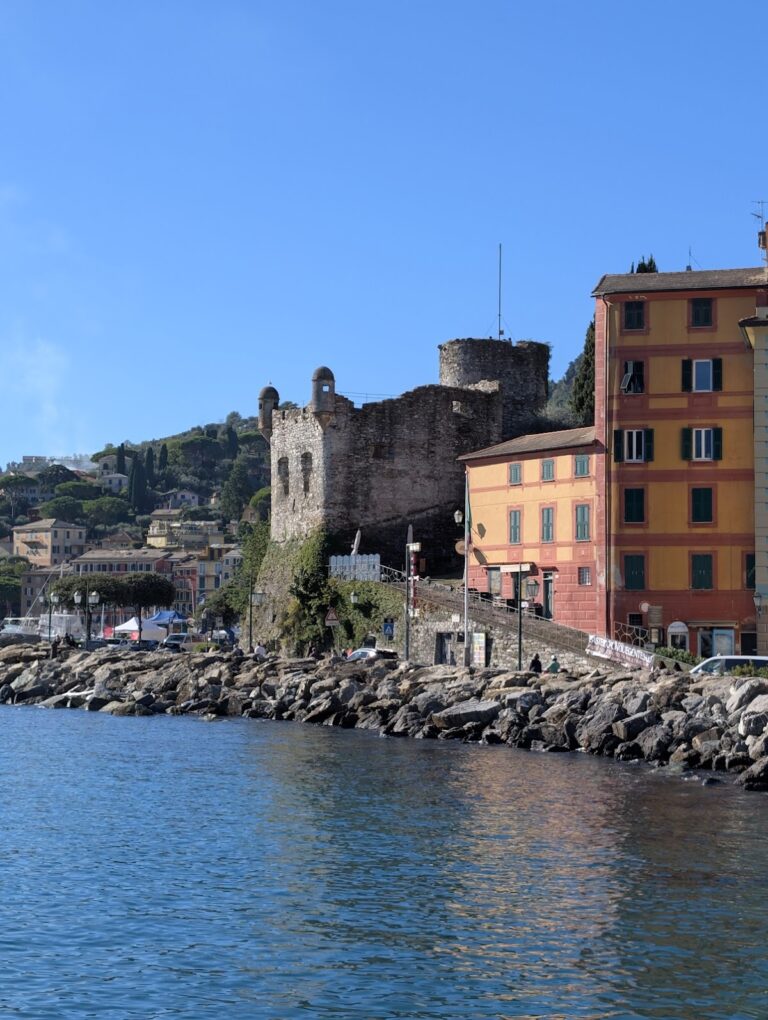
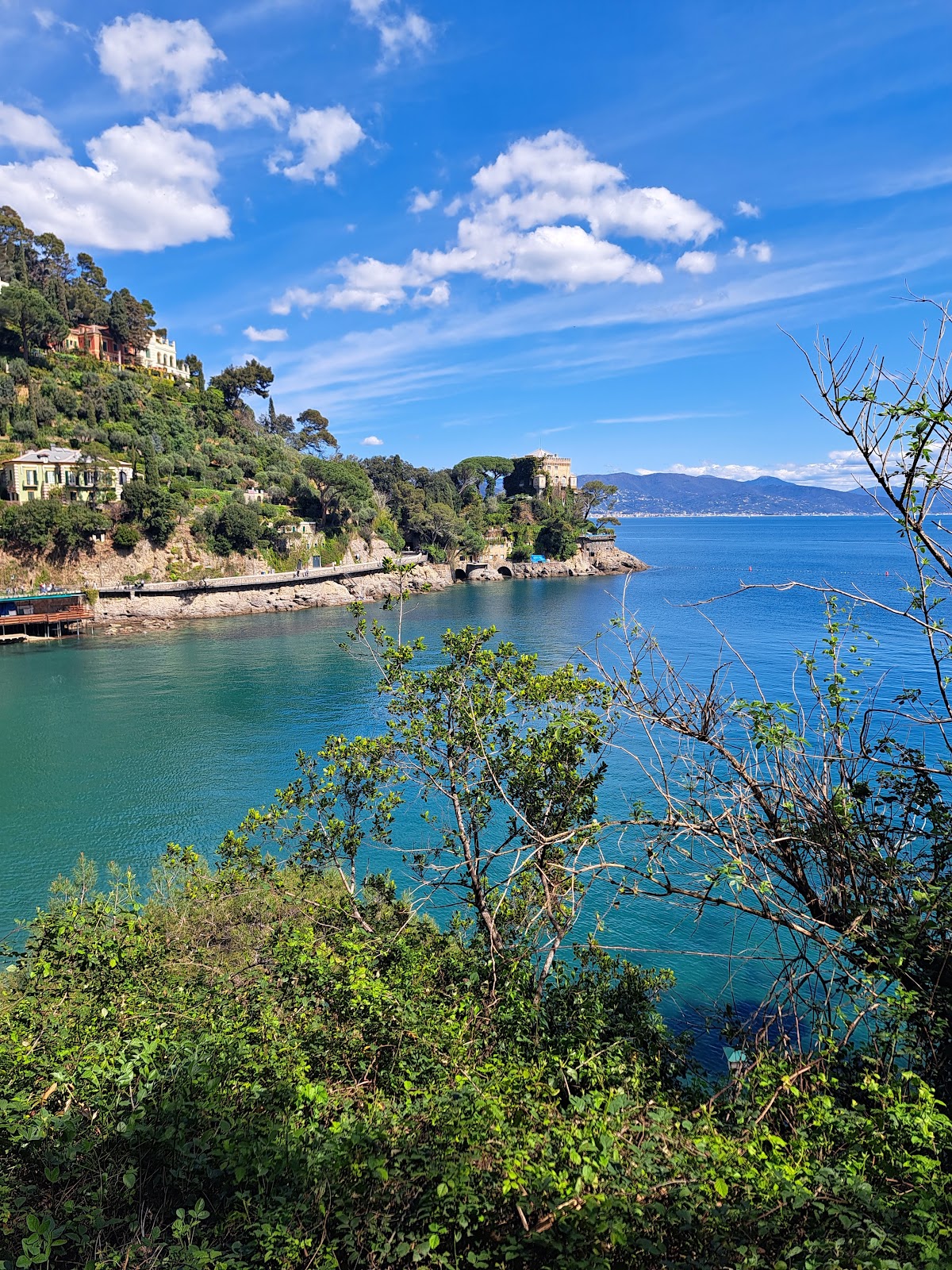
Paraggi Castle occupies a small promontory that defines the eastern side of Paraggi Bay on the road toward Portofino. The massive stone building has a square plan and four projecting corner turrets. Each turret is supported by corbels, stone projections that carry the structure above them. Together, these elements give the former defensive post a strongly fortified form.
A large loggia, or open gallery, extends across the southeast facade. The facades are finished with Guelph merlons, rectangular crenellations forming the battlements along the upper walls. These surviving architectural features express the building’s original defensive character, even though the castle later became a private residence.