Castle of Rapallo: A Genoese Coastal Fortress in Italy


Site at a Glance
- Rating
- 4.3
- Popularity
- Medium
- Country
- Italy
- Primary era
- Early Modern
- Eras represented
- Early Modern
- Civilizations
- Genoese
- Site type
- Military
- Remains
- Castle
On this page7 sections
History
The Castle of Rapallo is a sixteenth-century coastal fortress in Rapallo, Italy, built by the Republic of Genoa to protect the town and the western part of the Gulf of Tigullio. Construction began in 1550 after a devastating attack exposed the weakness of Rapallo’s defenses.
The 1549 attack and Genoese response
Rapallo had been under the authority and protection of the Republic of Genoa, a maritime republic with influence across parts of the Ligurian coast and the Mediterranean, since the community submitted to Genoa in 1229. On 4 July 1549, the Ottoman-aligned corsair and naval commander Dragut attacked the town. His forces landed at three points along the coast, sacked Rapallo, and abducted twenty-two local girls, who were later enslaved in Algiers.
At the time, Rapallo had no adequate defensive walls. Its main protections were lookout towers on the surrounding hills and tall houses in the marina district. These defenses did little to prevent the nighttime landing. Genoa sent troops under Captain Gregorio Roisecco, who examined the town’s condition and recommended a castle or other defensive post commanding the western Gulf of Tigullio.
Construction and completion
On 16 February 1550, Doge Luca Spinola told Rapallo’s podestà, a civic official with administrative and judicial responsibilities, that Genoa could not finance the project. The local community would have to pay. This decision produced a dispute between the inland inhabitants, known as the Ville, and the marina residents, called the Borgo. The Ville preferred a hilltop location with a broader view, while the Borgo favored a site beside the marina and historic settlement.
The argument over the cost led the podestà to seek a 10-lire loan from Genoa’s Senate and impose a compulsory residence tax. A local duty eventually raised 1,770 Genoese lire. Work began in 1550 to a design by Antonio de Càrabo. The original fortress was much simpler than the structure seen today. Construction became more expensive because the materials had to resist strong wave action, and unpaid wages sometimes caused spontaneous strikes.
The newly appointed podestà, Benedetto Fieschi Raggio, inaugurated the castle on 10 May 1551 and asked the Genoese Senate to provide artillery. The fortress completed the western Tigullio defensive and lookout system linked with the fortifications of Portofino, Paraggi, Santa Margherita Ligure, and Punta Pagana near San Michele.
Administrative and modern uses
The castle was altered and enlarged several times after its construction, and its strategic defensive role ended during the seventeenth century. In 1608 it became the seat of the Captaincy of Rapallo, a territorial administrative and judicial jurisdiction separated from the Captaincy of Chiavari. The captain and his office occupied the fortress, while its lower part contained a temporary prison for people awaiting trial by the Genoese court. The administrative seat moved to a new courthouse in Rapallo’s historic center in 1645.
In 1865 the former defensive post became property of the Kingdom of Italy. It then served as a headquarters for the Guardia di Finanza, Italy’s military police force for financial, customs, and economic enforcement, and as a small district prison. The Municipality of Rapallo purchased the castle in 1958 for 6.7 million lire.
Conservation began with an initial restoration in 1963. A major scientifically directed restoration led by Benito Paolo Torsello followed between 1997 and 1999, supported by the European Union and the Italian Ministry of Cultural Heritage. Safety work continued in 2005. The castle is owned by the Municipality of Rapallo, is used for art exhibitions and cultural events, and is an Italian national monument.
Remains
Seaward fortress
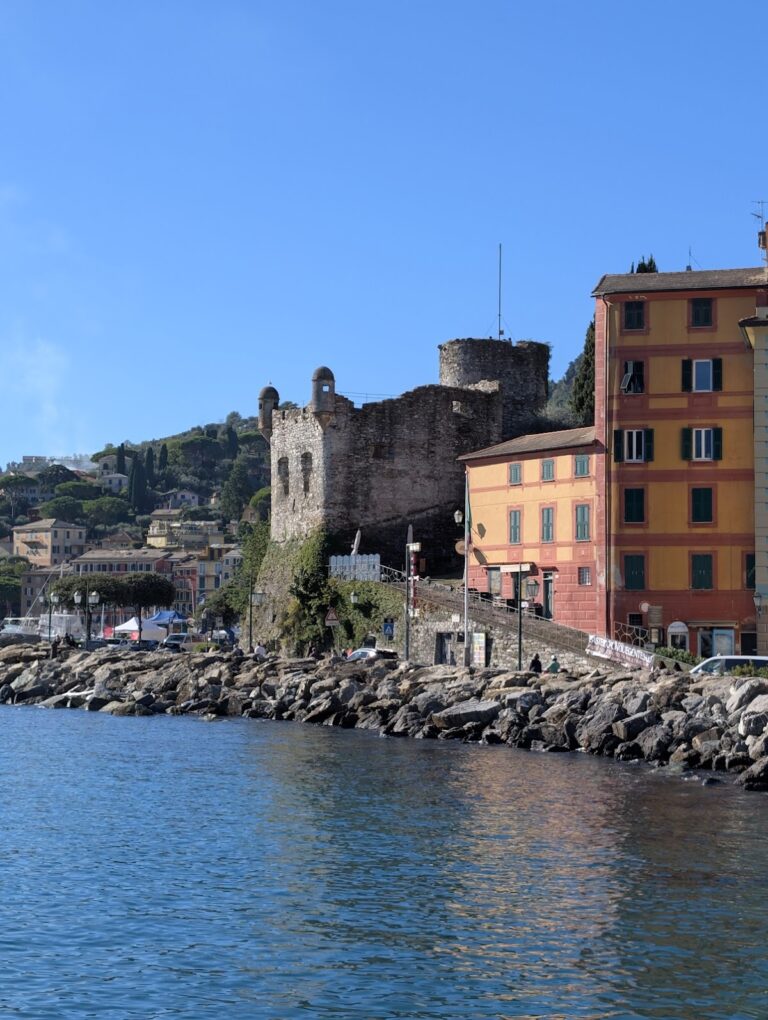
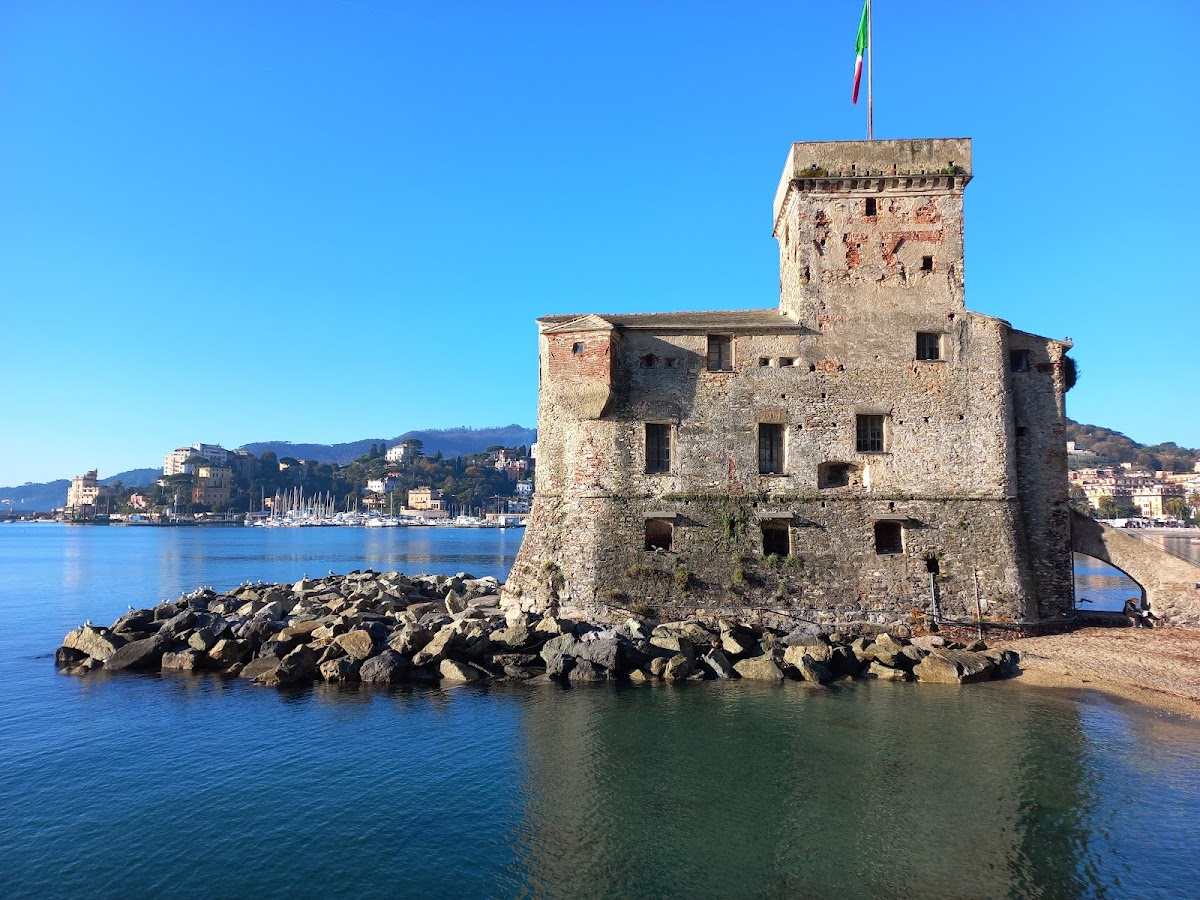
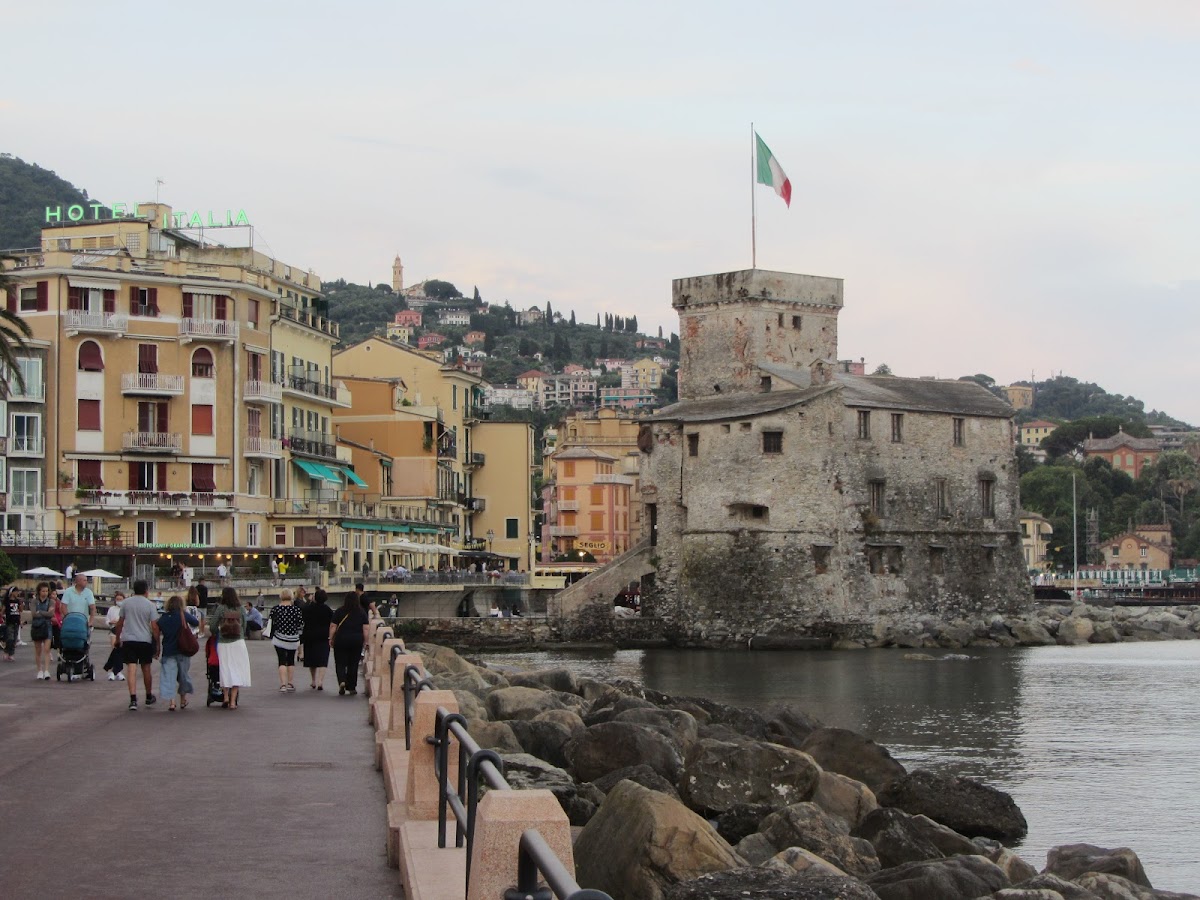
The Castle of Rapallo stands directly beside the sea on the Vittorio Veneto promenade, with its defensive mass facing the water. This seaward position differs from that of many other Ligurian castles and fortresses. The structure was designed to protect the waters beside Rapallo and the western coast of the Gulf of Tigullio, and its form was adapted and enlarged repeatedly after the initial construction.
Marine exposure has shaped the castle’s conservation history. Rocks were placed around the structure during the 1963 work to give it greater protection from waves. The restoration of 1997 to 1999 treated the external wall surfaces, which had suffered heavy salt deterioration, as well as the floors, window and door fittings, and electrical system. The castle is currently in good condition.
Chapel of Saint Gaetano
A small chapel dedicated to Saint Gaetano was built inside the castle in 1688. Saint Gaetano, or Gaetano of Thiene, was a sixteenth-century Catholic priest associated with the founding of the Theatines. The chapel has a small dome and a bell, both clearly visible from outside the fortress.