Panna Castle: A Gothic Hussite-Wars Stronghold in Czechia
Site at a Glance
- Rating
- 4.5
- Popularity
- Very Low
- Country
- Czechia
- Primary era
- Medieval
- External website
- Open
- Eras represented
- Medieval
- Civilizations
- Holy Roman Empire, Kingdom of Bohemia
- Site type
- Military
- Remains
- Castle
On this page7 sections
History
Panna Castle is a Gothic castle ruin in Czechia, near Řepčice in the Litoměřice District, built in 1421 during the Hussite Wars. These fifteenth-century religious and political conflicts in Bohemia followed the reforming movement associated with Jan Hus. The castle formed part of the Catholic response to Hussite military power and stood less than two kilometres from Jan Žižka’s castle of Kalich in a straight line.
Foundation during the Hussite Wars
Sigmund of Vartenberk, a Bohemian nobleman who supported the Catholic side, established Panna as a strongpoint against Kalich. The nearby castle of Litýš served a similar purpose. Panna probably already existed in autumn 1421, when Sigmund ended his unsuccessful siege of Kalich and left a garrison in the newly built castle above Řepčice. Its name, meaning “Virgin,” provided a symbolic counterpart to Kalich, whose name means “Chalice.”
The first certain written reference to Panna dates from 1422. In a charter, Emperor Sigismund, the Luxembourg ruler who contested control of Bohemia during the Hussite Wars, pledged the property of the former Teutonic Order commandery at Býčkovice to Sigmund of Vartenberk. A commandery was a local administrative and religious establishment of the Teutonic Order, a Catholic military religious institution.
Hussite capture and destruction
Hussite forces unsuccessfully besieged Panna in 1422, but captured it in 1423. Bohuslav of Švamberk was among the commanders during the successful campaign, and Hašek Čelechovec of Kralovice then became the castle’s commander. Panna remained in Hussite hands until 1437.
After the Battle of Lipany in 1434, Emperor Sigismund ordered Sigmund of Vartenberk to besiege and recapture the castle. During the operation, a letter dated 15 January 1437 requested reinforcements from the garrison of Königstein. The defenders surrendered after their commander, captured while attempting to obtain help from Hradec Králové, ordered them to capitulate. The besiegers destroyed Panna, and the emperor later ordered the demolition of both Panna and Kalich, calling them robber strongholds whose revenues could not support their defenses.
Investigation and protection
A comprehensive investigation in 2009–2011 surveyed the castle, recorded individual remains, inspected the visible features, and collected archaeological finds from the surface. Panna has been protected as a cultural monument since 1964.
Remains
Layout and Fortifications
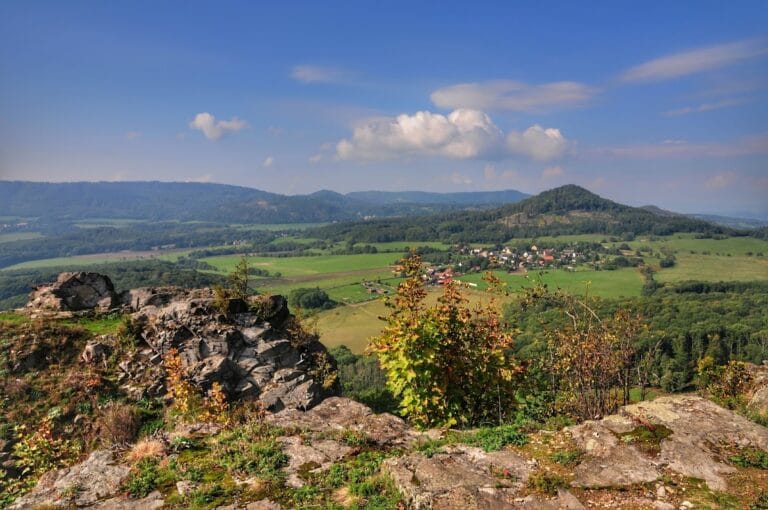
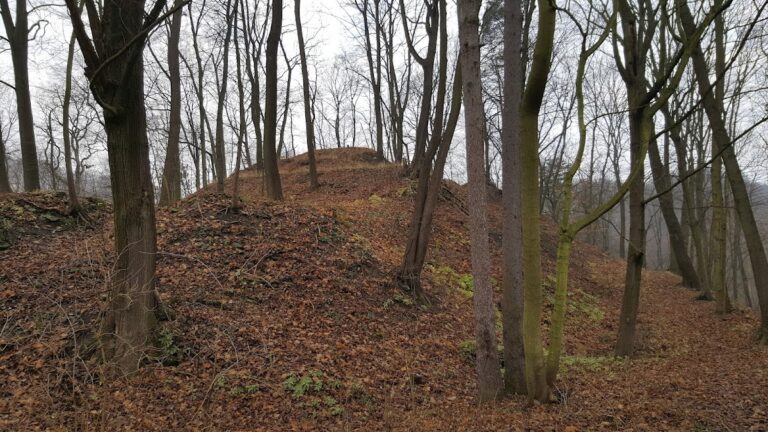
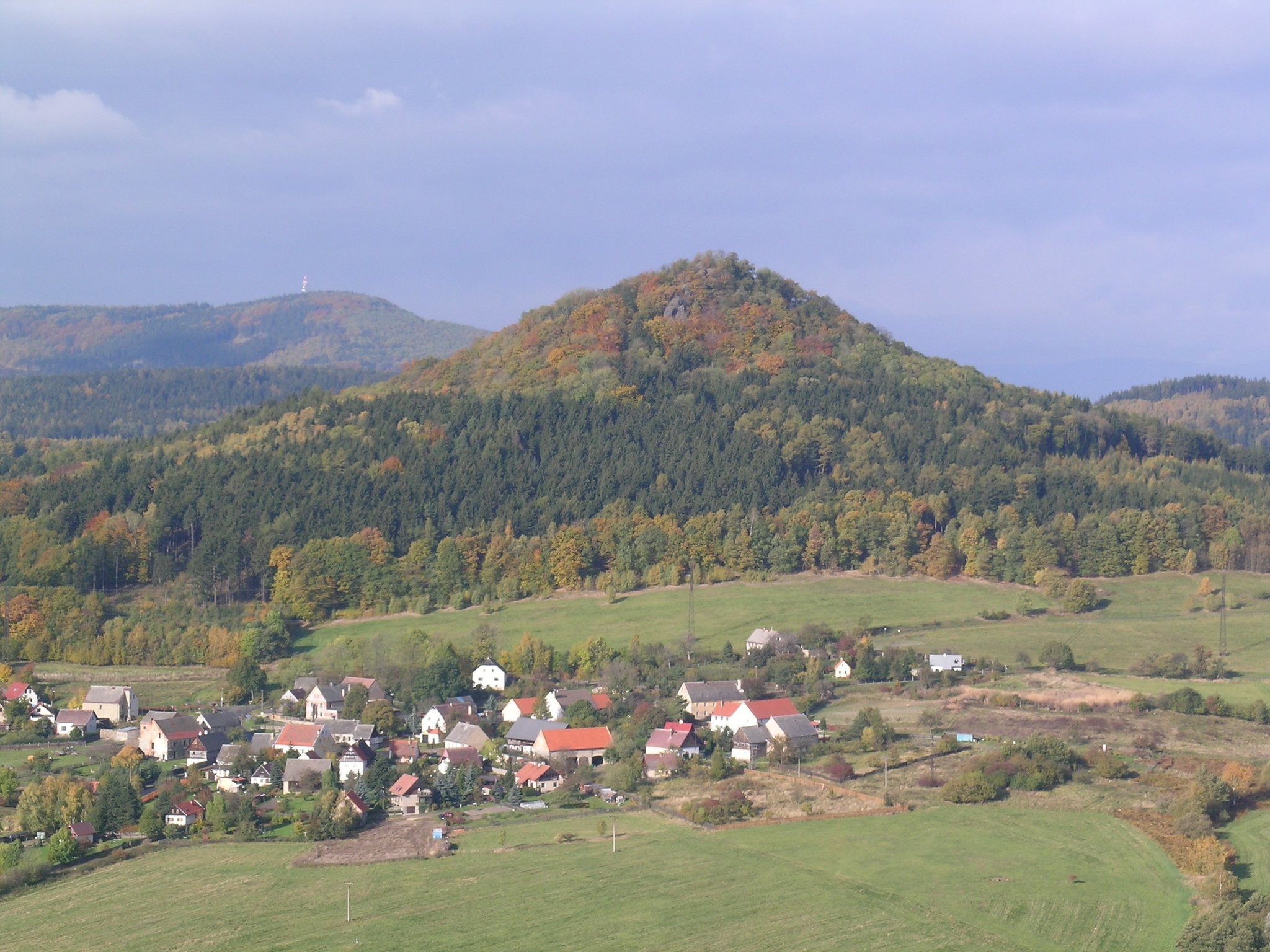
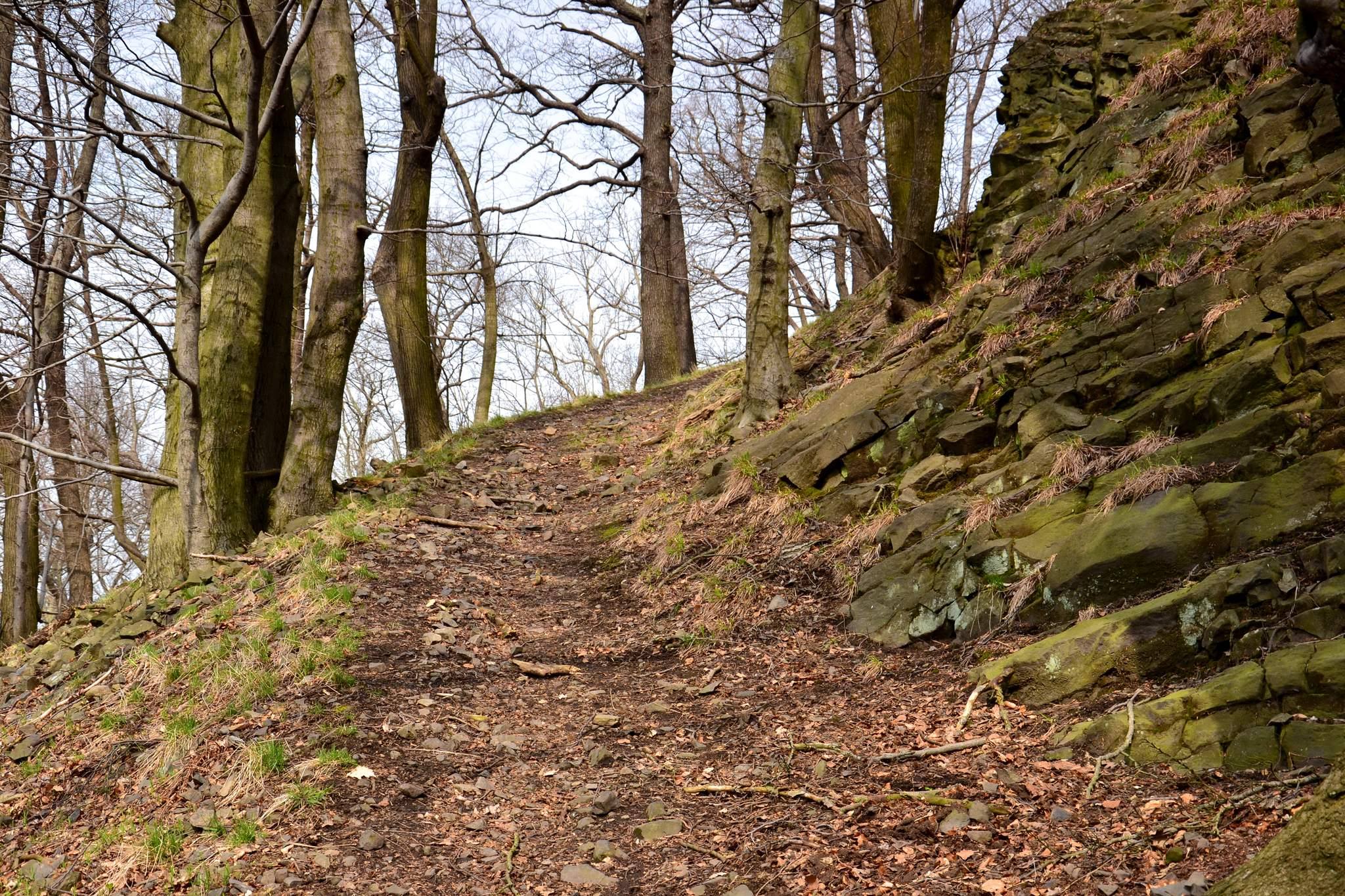
The castle occupied the summit of Panna Hill at an elevation of 596 metres, about 0.5 kilometres northwest of Řepčice. Its extensive complex was built largely of wood, while the fortifications used packed-earth terraces faced with horizontally laid blocks of local augitite, a dark igneous rock rich in augite. These stone blocks also supported the wooden enclosures. An approach road entered from the north through a first gate and reached a small courtyard with traces of no buildings. Beyond a second gate stood a rectangular wooden building, after which the road divided. One branch ran southeast along the slope beside three earthen bastions, which were projecting defensive earthworks. The other continued northeast toward a third gate protected by a small earthen bastion. Farther inside, the castle was divided into several sections. The road probably followed the northeastern fortifications, passed through a fourth gate, and entered a courtyard with traces of one or two buildings.
Central Core and Finds
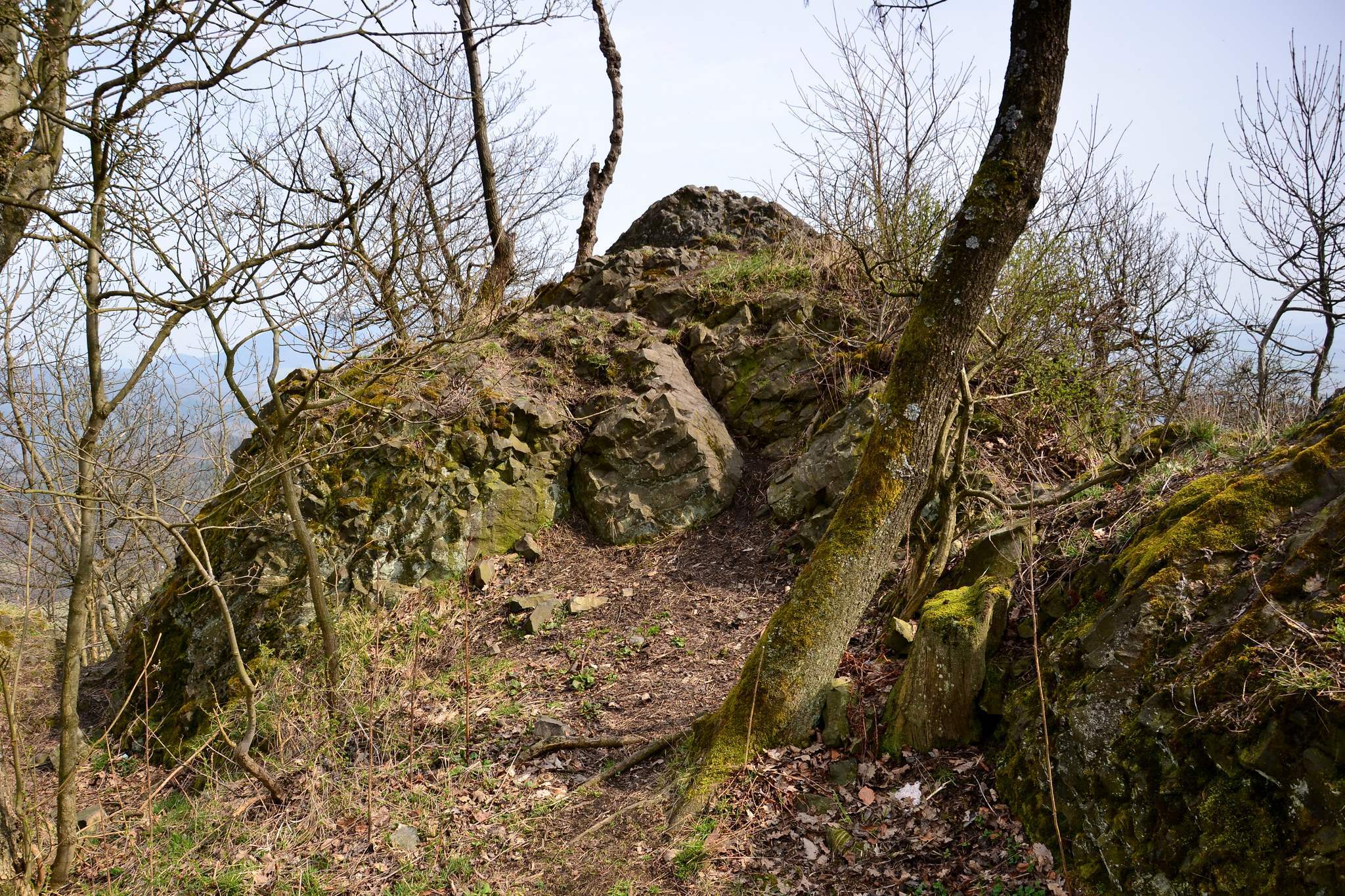
The central castle core, or citadel, occupied a pointed summit rock and was reached by a steep path that may follow the medieval approach to this strongest part of the castle. Traces of cutting or carving remain visible in the rock. The surviving remains consist chiefly of slight terrain features, banks, earthworks, and small fragments of fortifications and other buildings. Fragments of stove tiles indicate that some of the wooden structures were heated by stoves.