Panagia tis Angeloktistis: A Byzantine Church in Cyprus
Site at a Glance
- Rating
- 4.8
- Popularity
- High
- Country
- Cyprus
- Primary era
- Medieval
- Eras represented
- Classical, Medieval
- Civilizations
- Byzantine
- Site type
- Religious
- Remains
- Church
On this page7 sections
History
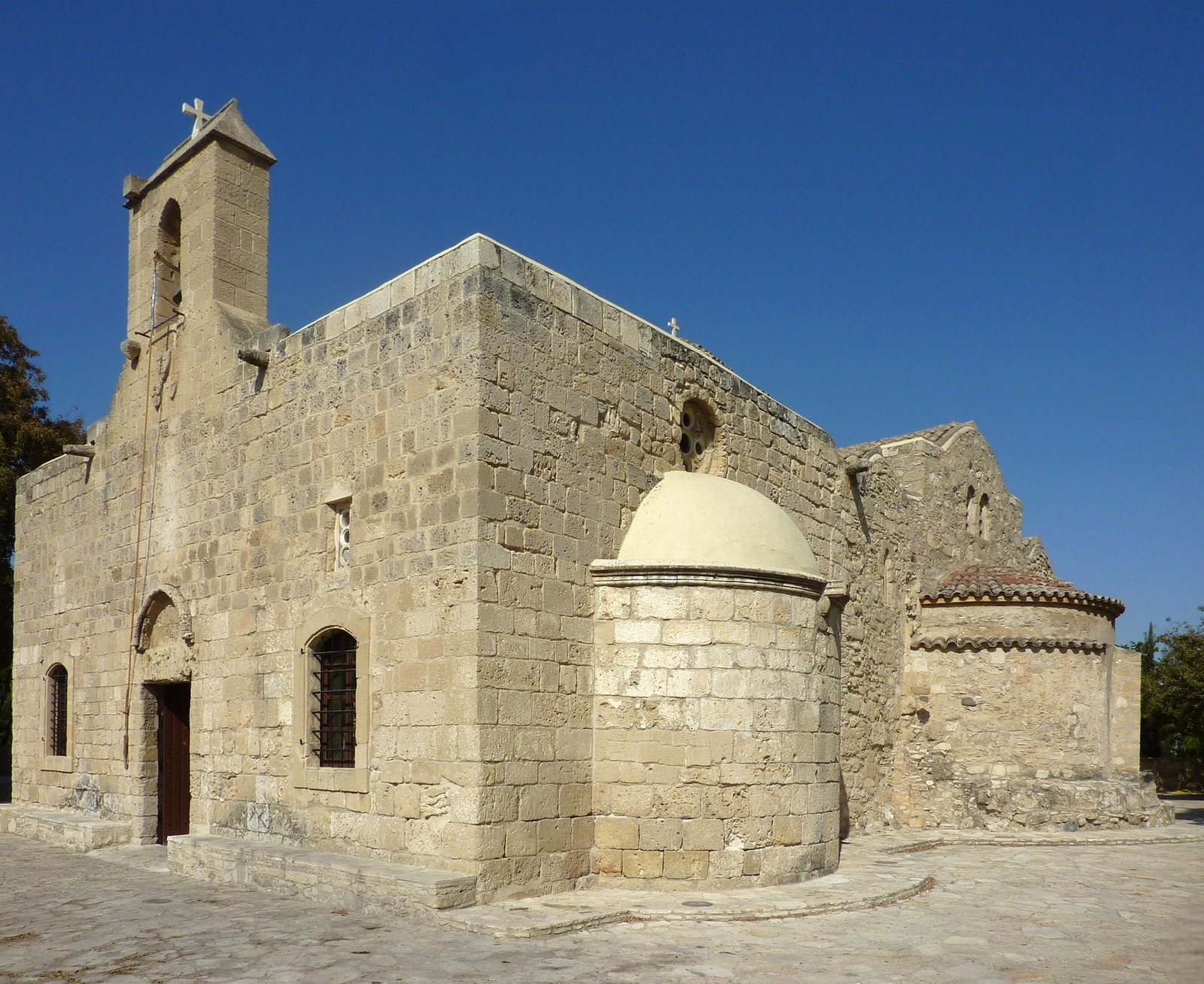
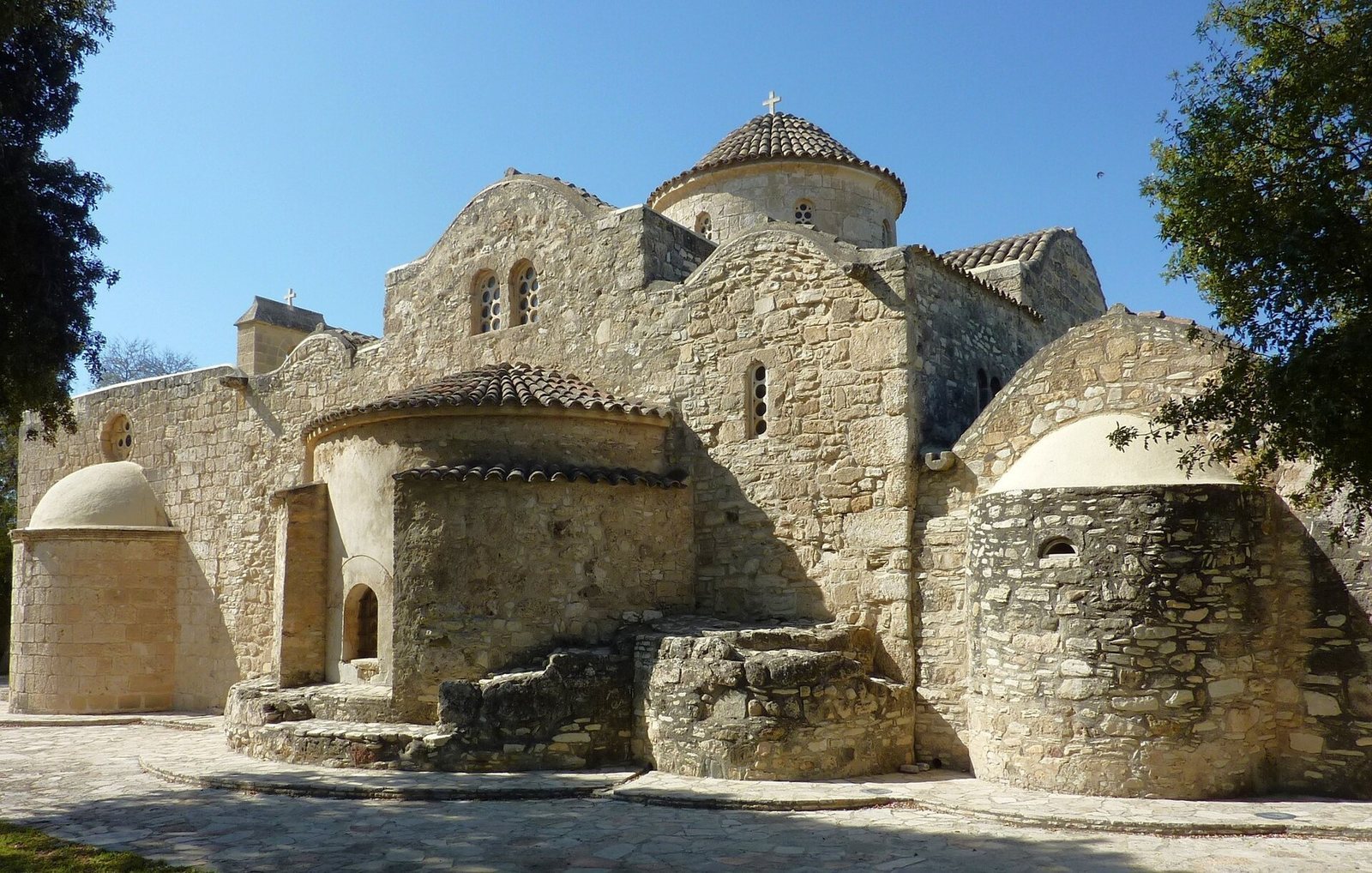
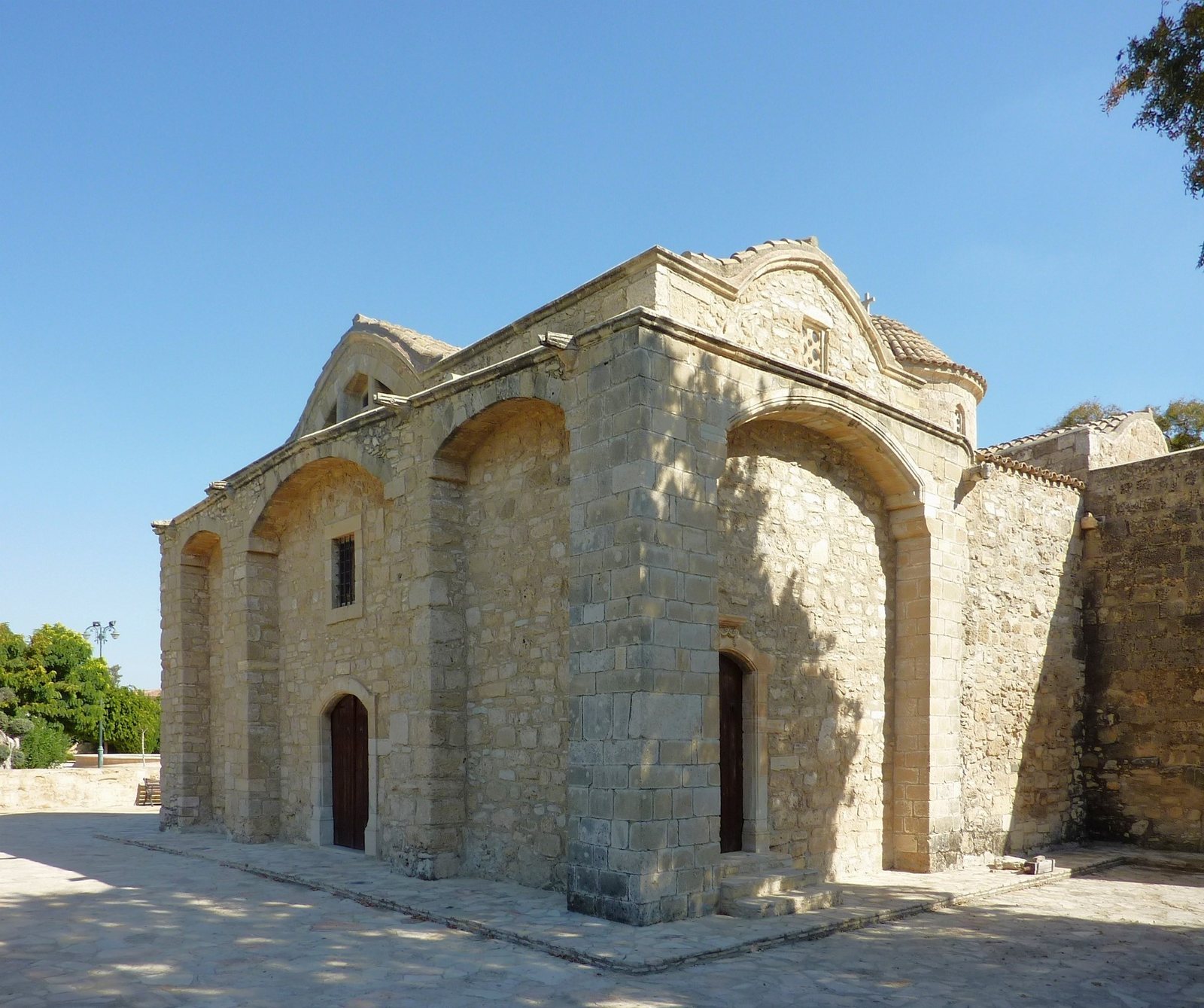
Panagia tis Angeloktistis is a Byzantine church in Kiti, Cyprus, about 12 kilometres southwest of modern Larnaka and ancient Kition. Its present building dates from between the mid-eleventh and early twelfth centuries. The name combines Panagia, an honorific for the Virgin Mary, with Angeloktistis, meaning “built by angels.”
The early Christian basilica
A basilica, a church with a long central space, was probably first built at Kiti in the fifth century. Cyprus had then belonged for more than a century to the Byzantine Empire, the eastern continuation of the Roman Empire centered on Constantinople. The first church had columns; a later version, probably built in the sixth or seventh century, used substantial masonry supports instead. The earlier basilica had a wooden roof.
Destruction and Byzantine rebuilding
The basilica was destroyed around the seventh or eighth century. The cause is uncertain. Arab raids may have played a part, as may fires associated with oil lamps in wooden churches. Builders retained parts of the earlier structure in the later church, though why they did so is unclear. Reuse may have made construction faster, or the remains may have mattered to the local community, despite making the new building harder to erect.
An agreement in 688–689 between the caliph Abd al-Malik and the Byzantine emperor Justinian II made Cyprus neutral territory. The island was consequently largely unaffected by the Byzantine Iconoclast controversy of 730–843, a dispute over the use and veneration of religious images. Byzantine rule returned to Cyprus in 965. The present church was built during a broader expansion of church and chapel construction by Byzantine governors and other officials.
In September 2015, the church was proposed for UNESCO World Heritage status and placed on the UNESCO Tentative List, which contains sites a country may consider nominating for inscription.
Remains
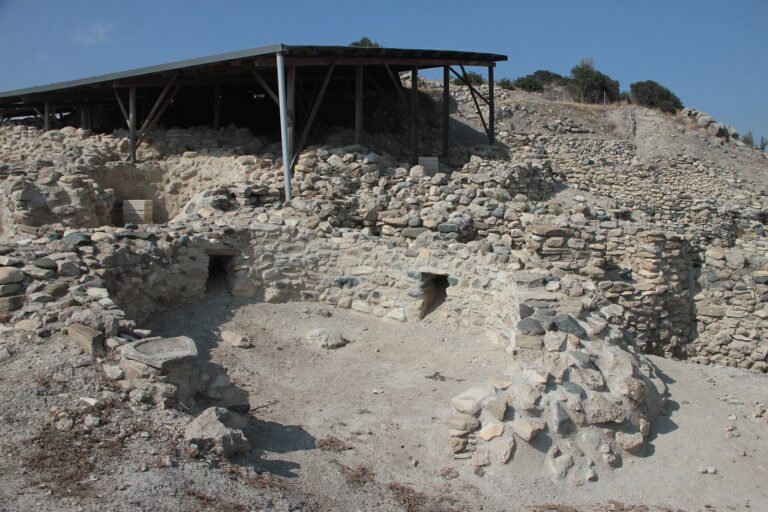
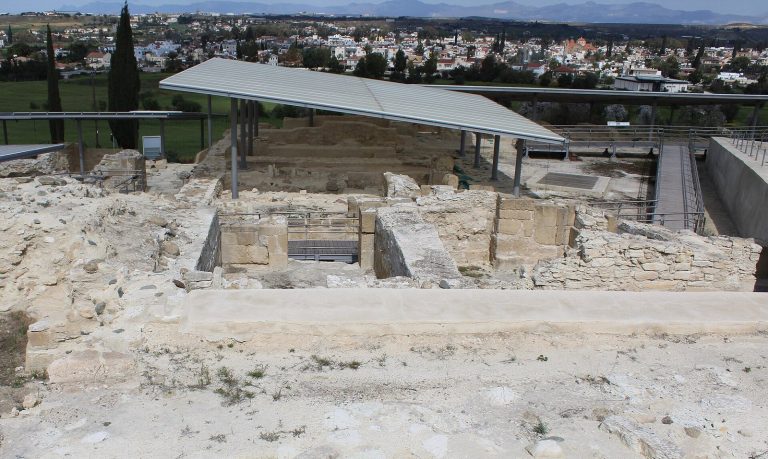
The domed church has a cross-in-square plan, a centrally arranged layout with arms around a central space. Its shape is elongated by the incorporation of the earlier basilica’s foundations, and its walls are built of rubble masonry, using irregular stones. The older apse, a recessed area at one end of a church, and foundations survive within the later building. A small excavation in 1959 found graves built into the earlier foundations, indicating that the basilica had also served as a burial ground before the later church was constructed.
The apse mosaic
The Virgin and the archangels
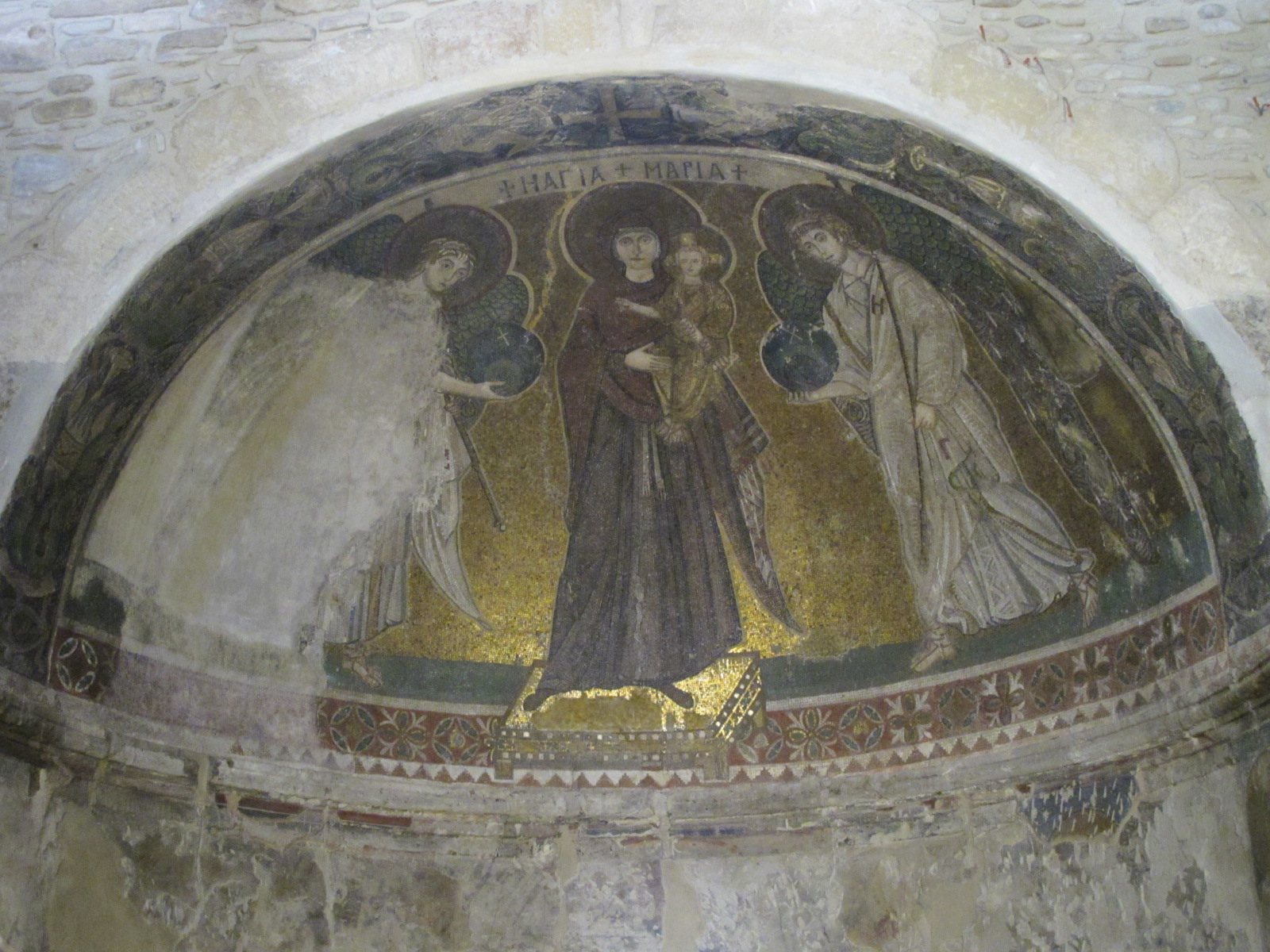
A surviving early Christian wall mosaic fills the apse. Probably made in the late sixth century, it is among Cyprus’s best-preserved mosaics of this period. The Virgin Mary holds the Christ Child on her left arm in the Hodegetria type, in which Mary directs attention to her son. She stands on a stool in a way that makes her appear almost suspended. The archangels Michael and Gabriel flank her against a gold background. The inscription above her reads “HAGIA MARIA” (“Holy Mary”), rather than Theotokos, meaning “Mother of God.”
The angels’ wings appear to be made of peacock feathers, associated with eternal life. They hold a sceptre and offer a globe topped with a cross, a gesture interpreted as presenting earthly dominion to Christ and the Virgin. The faces are rendered with precision and delicacy, in contrast to the more impressionistic style associated with Lythrankomi. The technique recalls the mosaic at San Vitale in Ravenna, while similar features at Saint Catherine’s Monastery in Sinai support a sixth-century date.
The Fountain of Life border
A border around the scene depicts the Fountain of Life, a Christian image of a life-giving source, with pairs of ducks, parrots wearing ribbons, and deer or stags drinking from fountains. The parrots have been interpreted as a Persian emblem of earthly power, while the deer may refer to Psalm 41 or 42. Related imagery appears on the ambo, a raised platform for church readings, of Bishop Agnellus at Ravenna, as well as at Salona, Zadar, Stobi, Amphipolis, and Edessa. The motif may belong to a wider development that began in the fifth century, bringing depictions of the natural world into church interiors and becoming especially prominent in the sixth.