Památník Velké Moravy: A Memorial to Great Moravia at Na Valách
Site at a Glance
- Popularity
- Very Low
- Country
- Czechia
- Primary era
- Medieval
- Eras represented
- Medieval, Modern
- Civilizations
- Holy Roman Empire, Margraviate of Moravia
- Site type
- Burial
- Remains
- Necropolis
On this page17 sections
History
Early activity at Na Valách
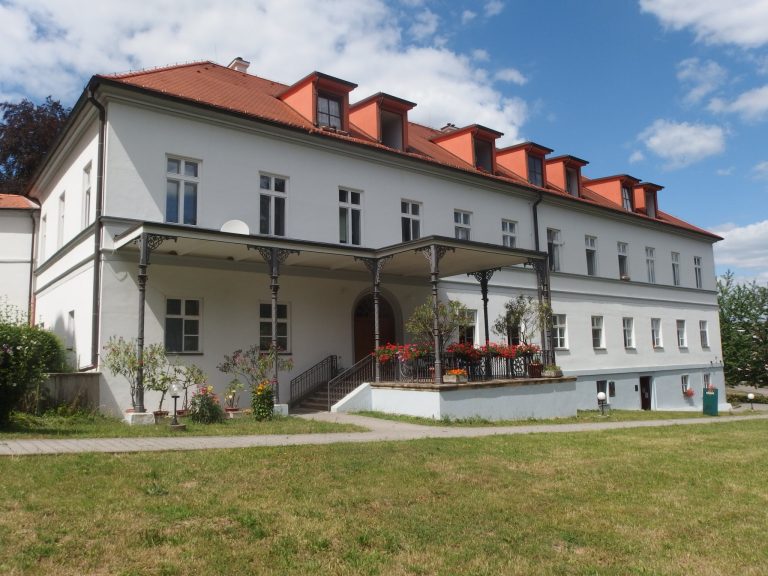
Památník Velké Moravy is a memorial built over the remains of the Church of Na Valách in Staré Město, Czechia. The church stood within the cemetery of Veligrad, a major early medieval settlement associated with Great Moravia, a Slavic polity centered in parts of Central Europe. Na Valách later became the largest known Great Moravian cemetery in the Czech Republic and in territories influenced by Great Moravian rulers.
Human activity at Na Valách reaches back to the Upper Paleolithic, when a hunter probably stopped at the site. A woman’s burial from the Late Paleolithic, dated to 10,000–8,000 BC, was found near a hearth and small stone tools. The woman was estimated to have been about 45 years old. This is the only known anthropological find of a Late Paleolithic person in the territory of the Czech Republic.
Farmers associated with the Moravian Painted Ware culture, a Neolithic farming culture known for painted pottery, settled there around the end of the fifth millennium BC. After a gap of more than 3,000 years, people of the Lusatian Urnfield culture, associated with cremation cemeteries, occupied the slope during the Late Bronze Age, around 1250–1000 BC. Activity at the site is not evident again until the sixth century AD.
Slavic settlement and Great Moravia
Slavs probably established a small settlement at Na Valách during the sixth or first half of the seventh century. Dispersed sherds of Prague-type pottery, an early Slavic pottery tradition, and cremation graves point to this occupation, although its settlement buildings have not been securely identified. Five cremation graves lay at the site’s northern edge, with other graves found elsewhere. Urn burials also help indicate seventh-century occupation.
By the eighth century, a substantial settlement occupied the area known as Dvorek. Dozens of archaeological features indicate a fortified community with higher-status residents and workshops where non-ferrous metals were worked, especially bronze and probably gold. Inhumation burials, in which bodies were buried unburned, began to appear in the cemetery in the second half of the eighth century, alongside the earlier cremation practice.
During the first half of the ninth century, settlements around Staré Město expanded while their agricultural hinterlands contracted. By about the middle of the century, separate settlements had joined into a large agglomeration known as Veligrad. At Na Valách, burial of unburned bodies became dominant from the start of the ninth century and spread downslope. The settlement and its workshops were gradually abandoned, probably as residents moved to other parts of the agglomeration, particularly Za Zahradou. The earlier fortification fell out of use around mid-century, and its ditch slowly filled with refuse. A church within the cemetery further established the area’s role as a burial place.
The date of the Church of Na Valách remains uncertain. Proposed dates range from a possible first wooden church in the first half of the ninth century to a later building in the late ninth century. A date around the middle of the ninth century, perhaps extending into its second half, is considered plausible, but the archaeological evidence does not define its exact limits. The church probably served as a cemetery chapel for the Veligrad agglomeration.
The cemetery’s burials ranged from modest graves to richly furnished ones containing gold and silver jewelry, weapons, and riding equipment, reflecting sharp differences in status. Some people were buried with their bodies forcibly contracted, facial areas deliberately damaged, or limbs separated. Others were placed in deep pits covered with stones. These practices were intended to stop the dead, believed to be vampires, from returning to harm the living.
The church stood for about fifty years. It burned at least once, but was repaired and used again. Its precise end date is unknown; the church and its cemetery ceased to function before the middle of the tenth century, possibly soon after Great Moravia fell in the early tenth century.
Medieval settlement and reuse
Little is known about Na Valách between the mid-tenth and early thirteenth centuries. Written records place the market village of Veligrad within the territory of Staré Město, but its remains have not been clearly identified here. A brief settlement may have occupied the southern part of the former mill garden. The area’s decline may have reflected broader changes in the agglomeration, shifts in settlement and power under the Přemyslids, a Bohemian ruling dynasty, or reverence for the cemetery and ruined church.
In the first half of the thirteenth century, Veligrad came into the possession of the Cistercians, members of a monastic order following a reformed form of Benedictine life. Rather than repair the church, they probably reused some of its stones and Roman bricks in a large building at Dvorek, perhaps connected with a watermill. A medieval fortification was built across earlier Great Moravian graves. The mill appears in later records and continued operating until the 1970s.
The founding of the Přemyslid royal town and fortress of Nový Velehrad in 1257, later called Hradiště and now Uherské Hradiště, checked Veligrad’s growth as an economic center for the nearby monastery. Workshops, a mill, and stone buildings nevertheless developed along the edge of the Staré Město promontory. For centuries, Staré Město served as a suburb of Uherské Hradiště.
Excavations and the memorial
Initial excavations took place in 1887 and 1889, while a watermill and private gardens occupied the area. A sand quarry opened in 1897 and led to the uncontrolled destruction of dozens of graves each year. At the time, the graves were mistakenly attributed to violence during the Thirty Years’ War. Local teacher Antonín Zelnitius and the accidental discovery of a gold earring in 1924 helped draw researchers’ attention to the site.
Rescue excavations by the State Archaeological Institute in Prague began in 1928, with Zelnitius directing the work from 1929. By its end in 1932, the project had examined 350 inhumation graves, several dozen Great Moravian settlement features, and the structure of the rampart. Excavation resumed in 1948 under archaeologist Vilém Hrubý. Work in 1949 revealed the church’s backfilled foundation trenches, identifying the first demonstrable Great Moravian architecture in what is now the Czech Republic. More than 1,000 graves dating from the second half of the eighth to the first half of the tenth century were investigated before work ended in 1951.
Further excavations in 1957–1959 uncovered graves, settlement features, and early medieval defensive ditches around the promontory. The known grave total reached 1,636, making Na Valách the largest known Great Moravian cemetery in the Czech Republic and in territories under the influence of Great Moravian rulers. Renewed investigations at Dvorek began in 1988 and have identified more than 150 additional graves east of the church cemetery, as well as earlier fortifications, settlement remains, and later medieval activity.
The memorial was built over the church remains in 1959–1960. Technical problems and an unconvincing presentation led to its closure in 1964; improvements to the building and exhibition were completed by 1969. That year, the memorial and church remains became part of a Category I National Cultural Monument within the protected Great Moravian settlement complex of Staré Město, Uherské Hradiště, and Modrá. An exhibition plan prepared by Hrubý in 1985 continued to shape the memorial’s displays. A complete renovation in 2008–2009 added a multimedia permanent exhibition on Great Moravia.
Remains
Site and memorial
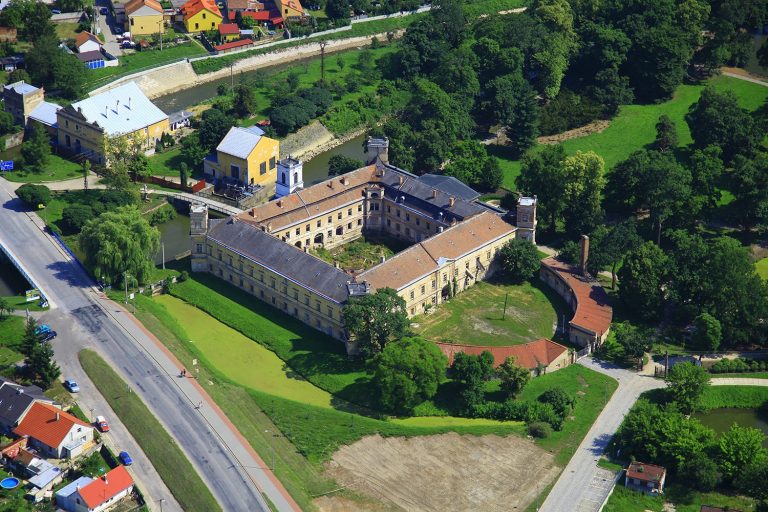
The archaeological site occupies the gentle slope of the eastern Staré Město promontory, formed by a gravel terrace of the Morava River, and extends partly onto the edge of the river floodplain. Its approximate boundaries follow Jezuitská Street to the south, Velkomoravská Street to the east, Na Hradbách Street to the north, and Antonína Zelnitia Street to the west. The area includes Na Valách, Dvorek, and the southern part of Nový svět. The memorial stands above Jezuitská Street, over the church remains.
Church of Na Valách
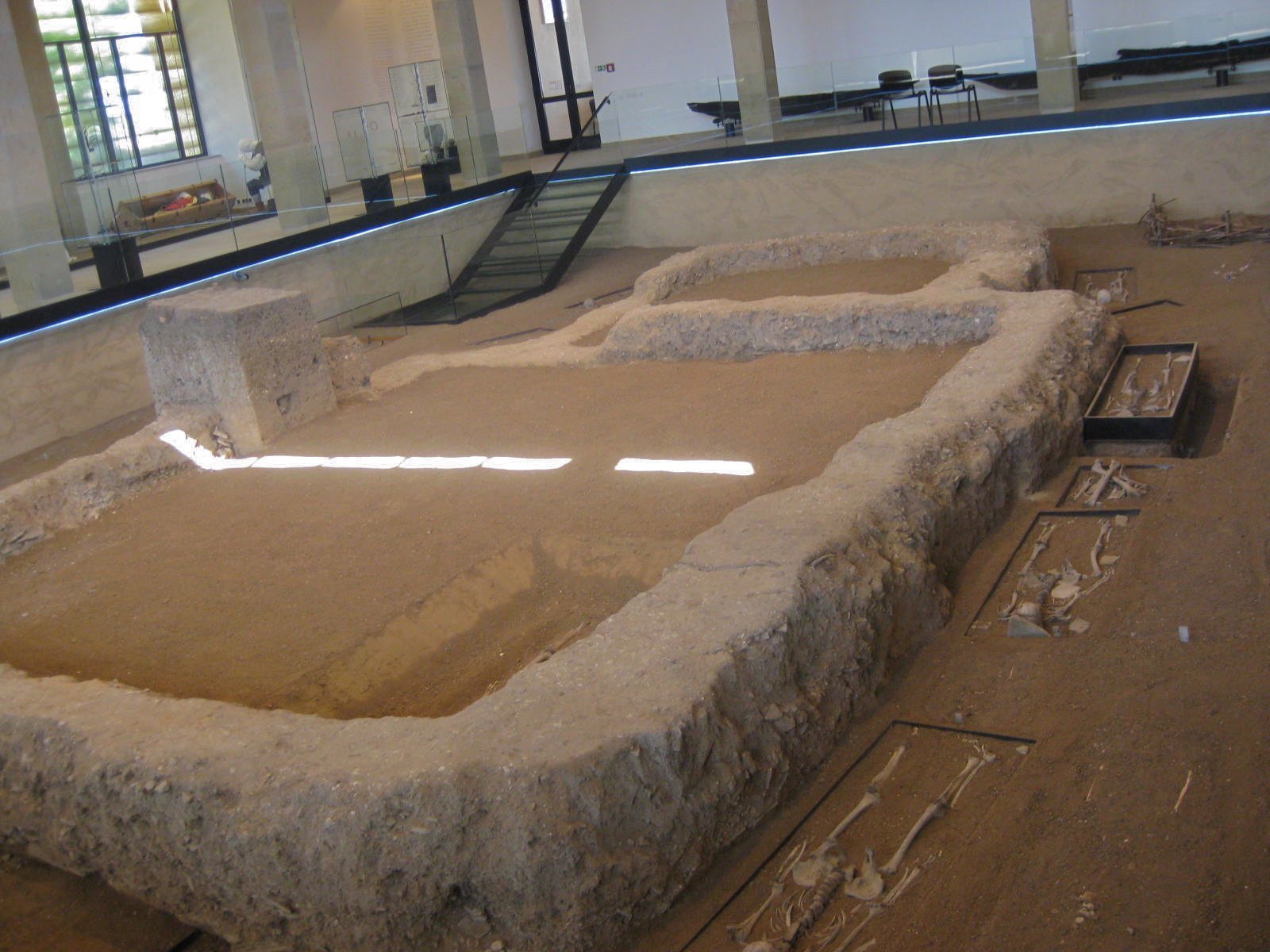
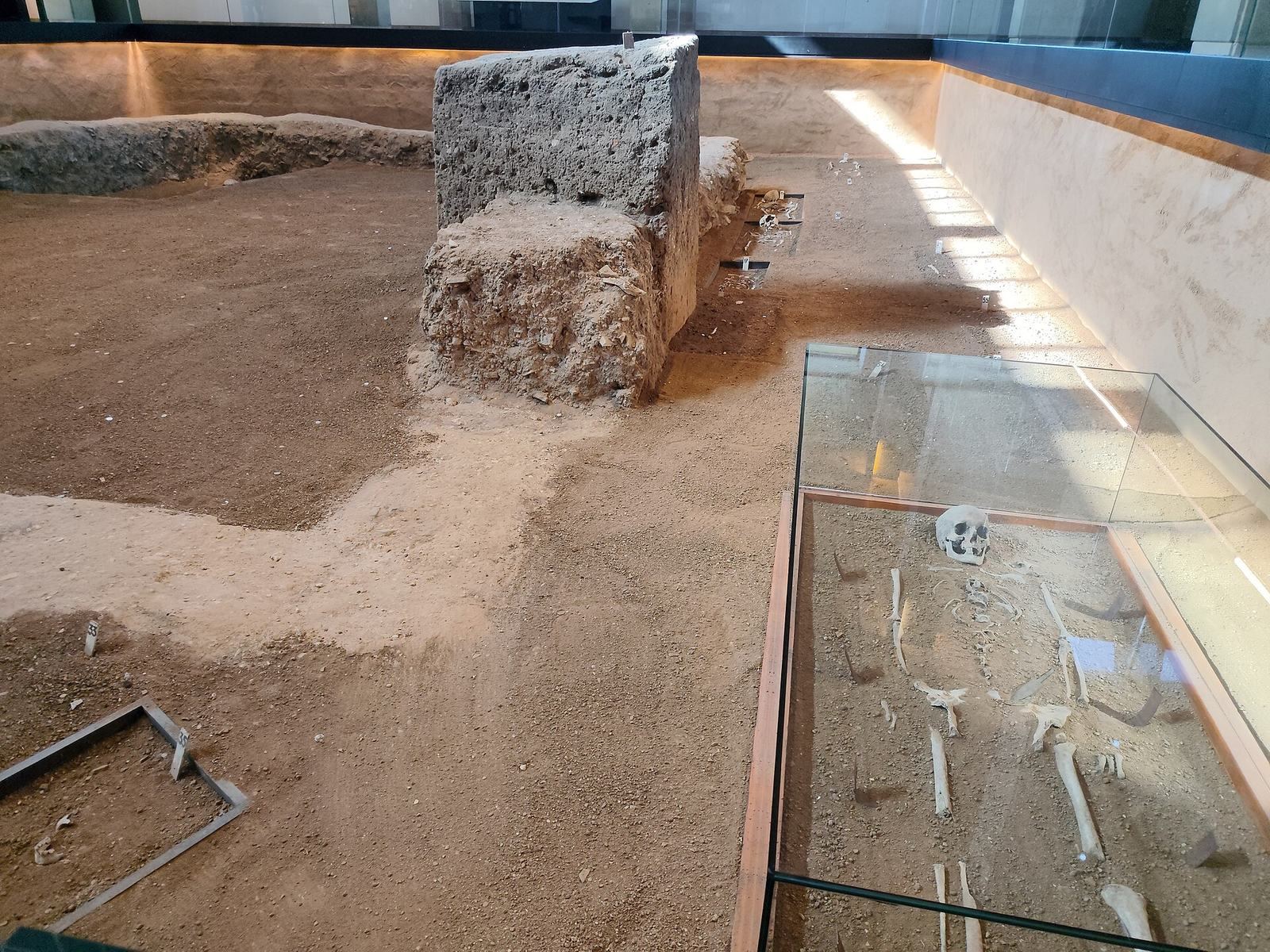
The church’s outline is traced by backfilled foundation trenches in the gravel subsoil. The trenches formed bands about 80–90 cm wide and reached depths of 60–80 cm. Their raised profile consists of debris deposited after stones were removed from the deteriorating building, rather than the original foundation material. The apparent alignment of graves with the raised outline reflects the method used to expose it. The church’s dimensions are therefore approximate.
The church was aligned east to west. Its rectangular nave, the main body of the church, measured about 8.5 by 7.25 m externally, and its horseshoe-shaped apse, a projecting sanctuary end, measured about 5 by 4.25 m. Churches with semicircular apses were widespread in Great Moravian architecture. A proposed reconstruction shows a single-nave building with a flat ceiling, vaulted apse, and gabled roof. Its walls were probably made from sorted rubble stone, occasional Roman bricks, and lime mortar. Finds include fragments of structural and plastering mortar, painted plaster, and cast mortar flooring on a stone bed.
Broken and whole flat Roman-type roof tiles, curved tiles, and decorative ridge tiles point to a roof assembled from fired-clay components. The ceiling may have used boards and woven branches, perhaps covered with plaster. These details are reconstructions based on the archaeological evidence, not standing parts of the building. Possible architectural influences include Byzantine and late Roman traditions, as well as western missionary architecture; a precise origin has not been established.
Memorial building and exhibition spaces
The memorial building covers the church site, and an extension houses the Cyril and Methodius Center. Its exhibition spaces present Great Moravia, the prehistory of the Uherské Hradiště region, and Constantine and Methodius, ninth-century Christian missionaries associated with the spread of Christianity and literacy among Slavic peoples.
Burials and archaeological finds
Cemetery and grave goods
The cemetery contains both cremation and inhumation graves. Some early Slavic cremations used urns set in shallow pits; in other burials, cremated remains were placed directly in a pit, which may have been topped by a small mound. Near the church, graves were sometimes placed in successive layers. Grave goods range from objects for everyday use to gold and silver jewelry, weapons, and riding equipment. In the distinct group associated with beliefs about returning dead, some bodies were placed in tightly contracted positions, skulls had deliberately damaged facial areas, or limbs were separated. Some of these burials lay in deep pits covered with stones.
Prehistoric finds
Finds from earlier periods include Upper Paleolithic stone blades and flakes, as well as the Late Paleolithic burial, hearth, and small stone tools. Neolithic settlement pits contained painted pottery and ground-stone tools. Late Bronze Age material includes hand-marked pottery, a bone awl, and a possible hearth. Some ground-stone tools also occurred in secondary deposits within the fill of Great Moravian graves.
Settlement and fortifications
Eighth-century settlement at Dvorek
Several dozen settlement features at Dvorek, some of which cut into one another, indicate an eighth-century fortified community. Their fills are covered by deposits from the Great Moravian period or contain ninth-century graves. The features provide evidence for metalworking, particularly bronze working and probably gold.
Earlier defenses
The earlier fortification at Na Valách is represented by a ditch and a palisade or wooden wall, possibly linked to a modified natural watercourse. Elsewhere in the broader settlement area, parts of outer defenses lay to the west and north, and may also have followed the Vláce watercourse near the Morava River.
Medieval rampart and millrace
The medieval fortification consisted of a wooden-and-earth rampart, a defensive embankment about 10 m wide, laid across Great Moravian graves. Its ditch was about 3.5 m deep and was later adapted as a millrace, a channel that carries water to a mill. The fortification measured about 16.5 m across, and its documented length reached 220 m. Traces of the rampart remain visible along Na Valech Street and in gardens on Svatovítská Street, east of the memorial.
Medieval buildings and kilns
At Dvorek, substantial stone foundations belong to buildings dating from the thirteenth to fifteenth centuries. The remains also include lower parts of pottery kilns and fired ceramics. A large building southeast of the church may have formed part of the watermill complex.