Paleokastro of Malevizio: A Fortress Guarding the Gulf of Heraklion


Site at a Glance
- Rating
- 4.5
- Popularity
- Low
- Country
- Greece
- Primary era
- Early Modern
- External website
- Open
- Eras represented
- Medieval, Early Modern
- Civilizations
- Genoese, Venetian
- Site type
- Military
- Remains
- Fort
On this page10 sections
History
Paleokastro of Malevizio is a fortress in Greece, located at Palaiokastro near Heraklion. The Genoese pirate Enrico Pescatore, also known as Henry, Count of Malta, built it in 1206 as part of a chain of 14 fortresses intended to protect the Gulf of Heraklion from naval landings.
Genoese and Venetian Conflict
When the Venetians attacked Crete in 1211, Paleokastro was the last fortress still controlled by Pescatore. After the stronghold fell, he left the island. The castle then held less importance for several centuries while the Venetian fleet protected Crete.
The threat posed by the Ottoman fleet led Venice to strengthen and rebuild the fortress extensively between 1573 and 1595. The work took place under the Venetian general Latino Orsini, who also reconstructed the fortresses of Gramvousa and Souda. Paleokastro’s defenses formed part of a system that allowed crossfire across the gulf with the fortifications of Heraklion.
Destruction during the Cretan War
The Cretan War was the 1645-1669 conflict in which the Ottoman Empire conquered Venetian Crete and captured Heraklion. During the war, Paleokastro was destroyed in 1669 to facilitate the capture of the city. The Municipality of Malevizi later worked with the 13th Ephorate of Byzantine Antiquities, the Greek archaeological service responsible for protecting antiquities in its area, and the Paleokastro Cultural Association to seek support for maintaining, promoting, and restoring the fortress ruins.
Remains
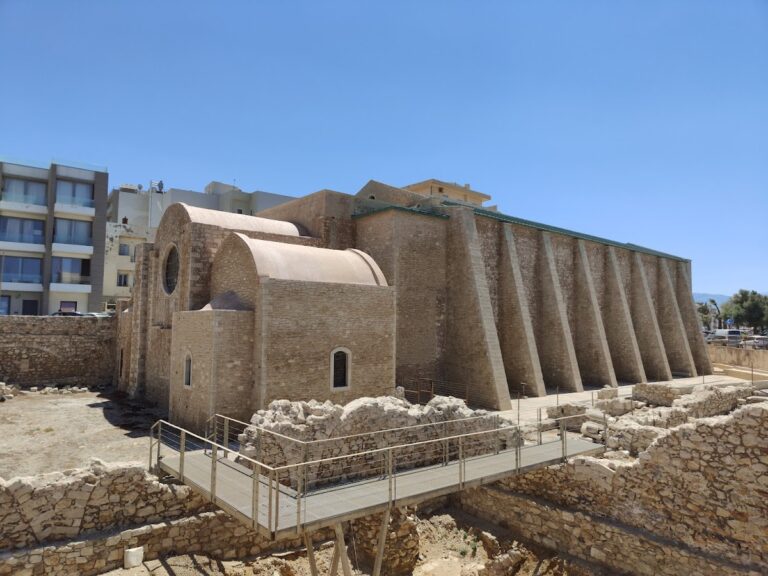
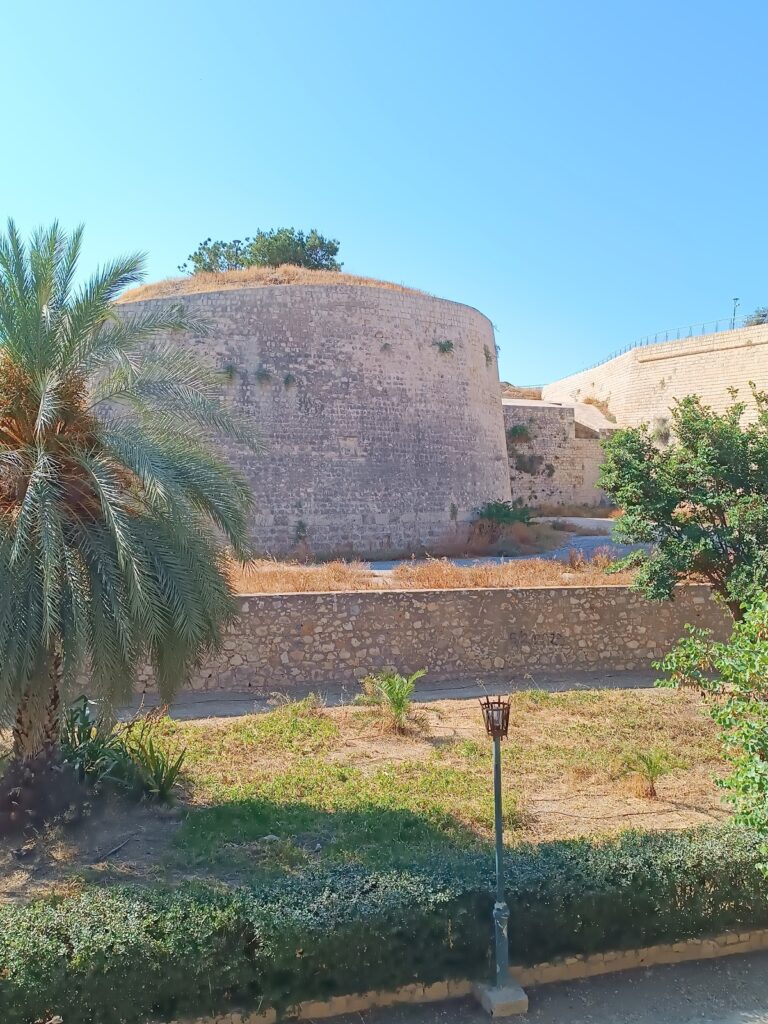
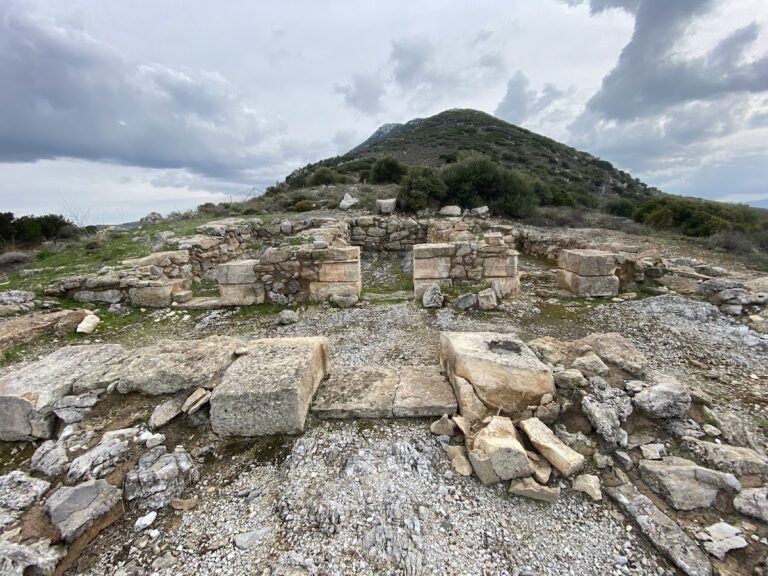
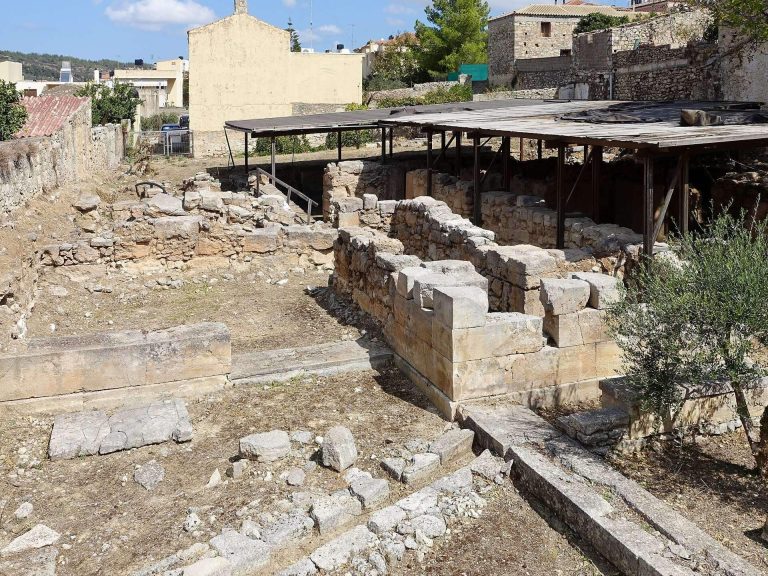
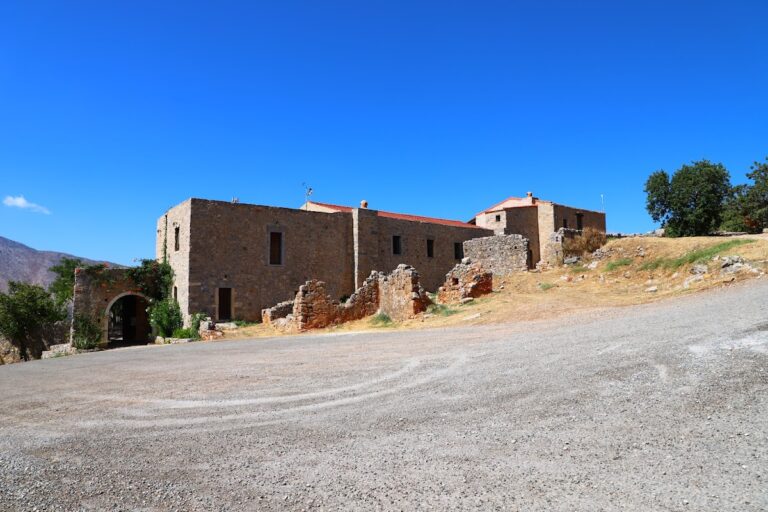
The fortress stood on a sea-cliff approximately 8 kilometres west of Heraklion. It was arranged on three levels within sloping perimeter walls. The northern wall, facing the sea, rose highest, compensating for the rocky ground and balancing the enclosure’s other walls. Cornices remain in places along the lower wall sections. These projecting elements were designed to make assaults more difficult.
Levels and Defensive Works
Southern Entrance and Barracks
A southern gate, measuring 2 by 5 metres, opened into the lower defensive level. Small rooms occupied this area, and rock-cut stairs connected it with the middle level, where the barracks stood. Sloping defensive embankments strengthened the eastern side of the walls.
Central Church
A church occupied the centre of the highest level. It was built during the same period as the fortifications and formed the principal structure at the summit of the fortress.
Armory, Powder Magazine, and Reservoir
The lower northern section contained an armory, a powder magazine, and a water reservoir. The reservoir collected water from the upper levels, provided drinking water, and supplied water for firefighting. It also partly supported the upper level of the fortress.
Artillery and Watchtowers
Paleokastro carried defensive guns of several calibers, including a culverin, a long-barreled cannon used in early modern fortifications. Two tall watchtowers stood in the highest southern area and in the northern part of the fortress.
Venetian Emblem
The winged lion of Saint Mark remains in the northeastern corner of the fortifications. This emblem of Venice marked Venetian political and military authority.