Wolvesey Castle: A Medieval Episcopal Palace in Winchester


Site at a Glance
- Rating
- 4.4
- Popularity
- Medium
- Country
- United Kingdom
- Primary era
- Medieval
- External website
- Open
- Eras represented
- Medieval, Early Modern
- Civilizations
- Anglo-Saxon, English
- Site type
- Religious
- Remains
- Palace
On this page10 sections
History
Wolvesey Castle is a medieval English episcopal palace in Winchester, United Kingdom, built on an island in the River Itchen around 970. It developed through successive medieval and later architectural phases, becoming a fortified residence during the civil war known as the Anarchy before serving as a bishop’s palace again in later centuries.
The medieval episcopal palace
The site occupied an eyot, a small river island, known as Wulveseye, or “Wulf’s island.” Buildings had stood there during the Roman period. Around 970, Æthelwold, Bishop of Winchester from 963 to 984, established an official episcopal residence on the island.
Around 1110, William Giffard, the second Norman bishop of Winchester, added a new hall to the southwest. Under his successor, Henry of Blois, the palace gained a piped water supply. Archaeologists rediscovered it in the late 1960s, identifying it as one of the earliest known examples of such a system in a medieval English building. Henry also built a second hall on the western side between 1135 and 1138.
Fortification and medieval conflicts
The palace changed markedly during the Anarchy, the English civil war fought during King Stephen’s reign between Stephen and Empress Matilda over the succession. Empress Matilda besieged Winchester for three weeks in 1141. The city held out until Queen Matilda, Stephen’s wife and supporter, brought relief. Henry of Blois then enlarged and fortified the palace with a curtain wall, a defensive wall enclosing a castle or fortified complex, giving the episcopal residence the appearance of a castle.
In June 1216, during the First Barons’ War, Oliver fitz Regis defended the buildings against Louis of France. The conflict, fought from 1215 to 1217, involved rebel English barons supported by Louis against King John and, later, Henry III.
Later use and destruction
Wolvesey hosted the wedding breakfast of Queen Mary I and Philip II of Spain in 1554. Parliamentary forces known as the Roundheads destroyed the palace in 1646 during the English Civil War, the conflict between supporters of King Charles I and Parliament.
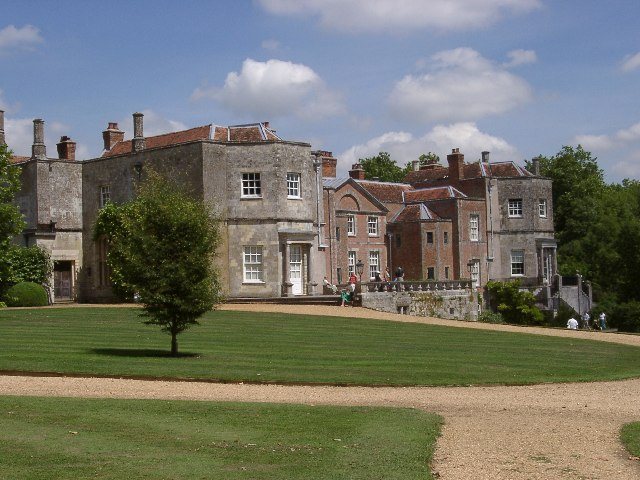
A new Baroque palace was built south of the medieval complex in 1684 by Thomas Finch for George Morley, Bishop of Winchester. Brownlow North demolished all but its west wing in 1786. After several later uses, Theodore Woods refurbished the surviving section as the bishop’s residence in 1926.
Wolvesey Castle was chiefly an episcopal palace rather than a fortress, although Henry of Blois fortified it during the Anarchy. The ruins stand beside the current bishop’s palace and are owned and maintained by English Heritage. The site is a scheduled monument under the official name Wolvesey Palace, designated in 1915, and the ruins are a Grade I listed building under the name Wolvesey Castle, designated in 1950.
Remains
Medieval palace complex
Curtain wall and halls
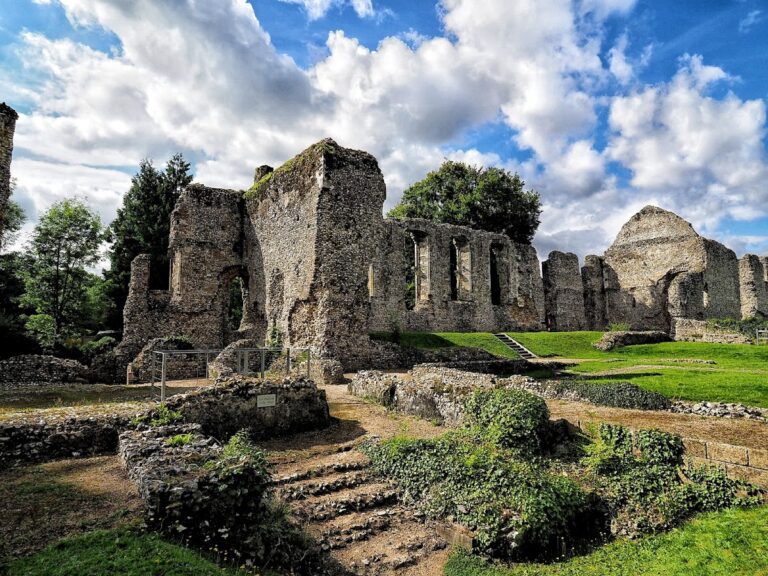
The medieval complex is now largely ruined, but a substantial section of its curtain wall survives. The inner arrangements have mostly disappeared, although the remaining fabric allows one hall to be identified. This hall contains a substantial round arch and a surviving Norman window. The remains also include the East Hall and its facade, preserving parts of the palace’s principal medieval architectural group.
South-range chapel
The fifteenth-century chapel is the only considerable surviving remnant of the medieval south range. It remains in use and is attached to the bishop’s palace, linking the surviving medieval fabric with the later episcopal residence.
Archways and Woodman’s Gate
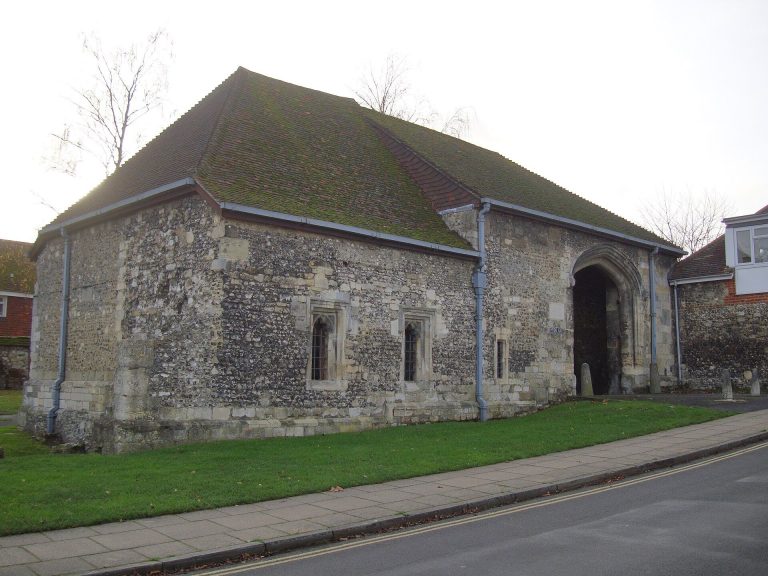
Archways and Woodman’s Gate form further surviving elements of the medieval site. Together with the curtain wall, halls, and chapel, they provide evidence of the complex’s former arrangement beside the River Itchen.
Baroque palace
The seventeenth-century Baroque palace stood south of the medieval complex. Only its west wing survives, and this forms part of the present bishop’s residence. Wolvesey Castle also lies near Winchester’s city walls, sections of which remain standing.