Palazzo Trivulzio: A Historic Palace in Milan
Site at a Glance
- Popularity
- Medium
- Country
- Italy
- Primary era
- Early Modern
- Eras represented
- Early Modern
- Civilizations
- Duchy of Milan, Habsburg, Habsburg Austria, Holy Roman Empire
- Site type
- Domestic
- Remains
- Elite Residence
On this page6 sections
History
Origins and Trivulzio ownership
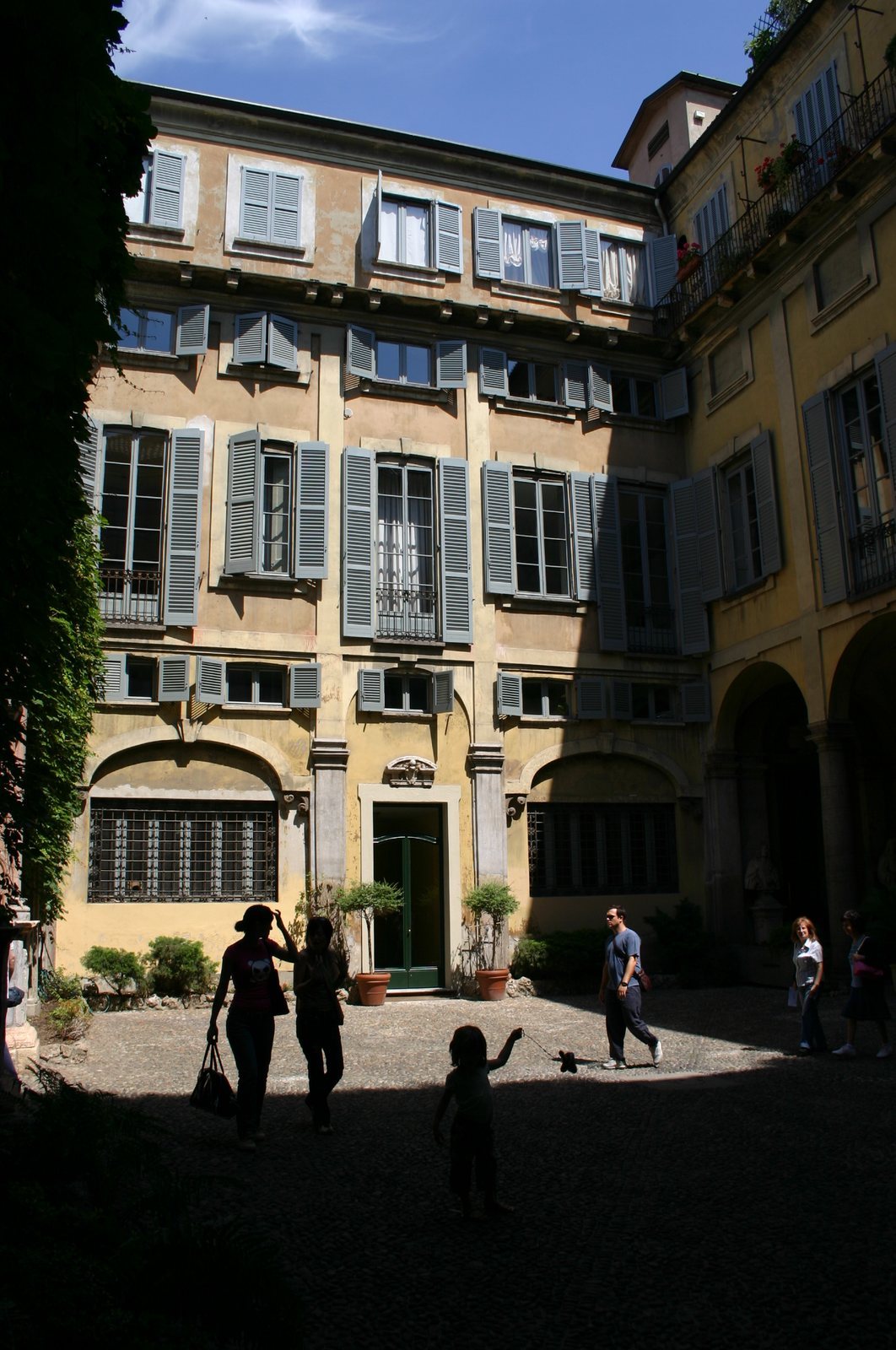
Palazzo Trivulzio is a sixteenth-century palace in central Milan, Italy, whose present appearance reflects Baroque and Rococo architecture, including an early Milanese example of the Rococo style. Its earliest known history places the property in the hands of the Corio-Figliodoni-Visconti family. In the early eighteenth century, Marquess Giorgio Trivulzio bought the palace and commissioned architect Giovanni Ruggeri to renovate and remodel it between 1707 and 1713.
The palace became known for its lavish parties. Guests encountered richly furnished rooms, decorated ceilings, servants in gold-trimmed livery, and numerous elaborate candelabra. Giorgio’s eldest son, Alessandro Teodoro, founded the Biblioteca Trivulziana, a library.
Cristina Trivulzio and the nineteenth century
Cristina Trivulzio was born at the palace in 1808. Her troubled relationship with Emilio Barbiano Belgiojoso and their divorce when she was twenty caused a scandal in Milanese aristocratic society. She later moved to Paris, where she attended literary salons, and led a battalion of volunteers during the 1848 Risorgimento uprisings, part of the movement for Italian unification.
Remains
Facade and entrance
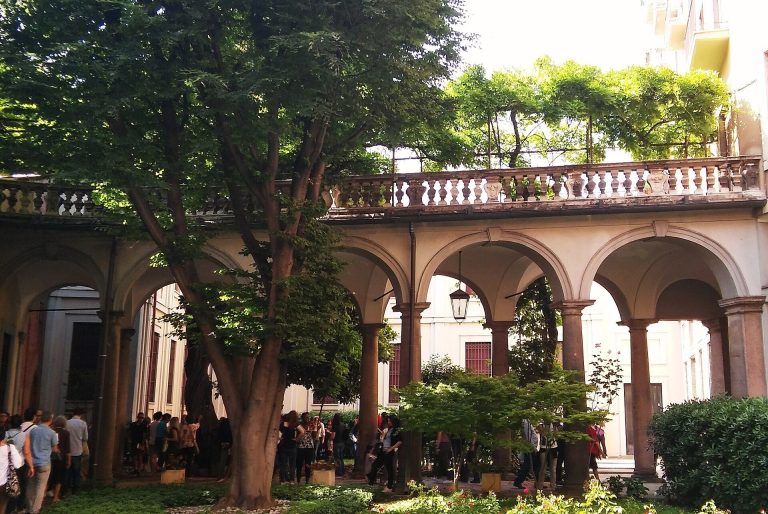
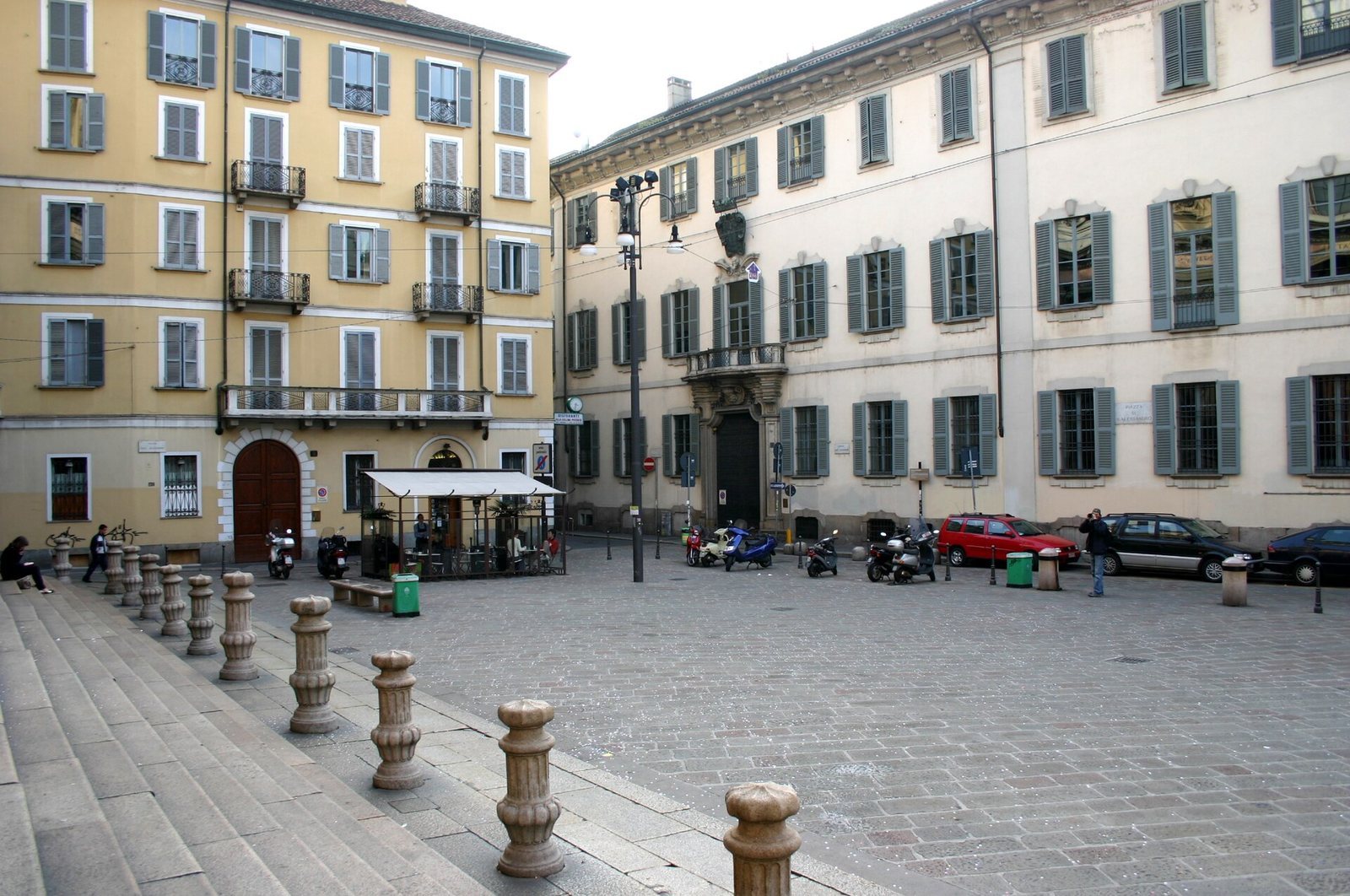
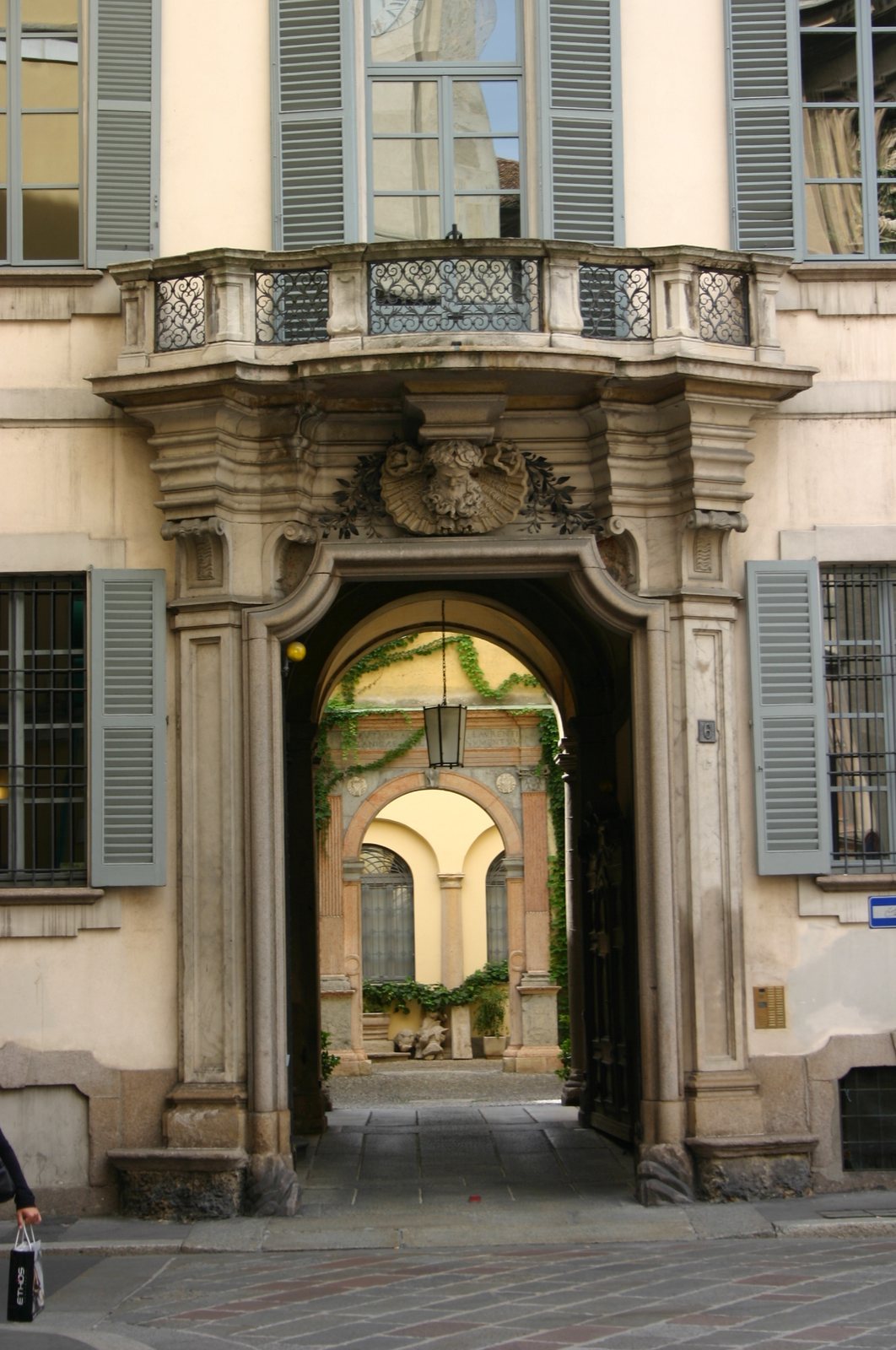
The cream-colored facade facing Piazza Sant’Alessandro is relatively plain. Its elaborate entrance has granite sides and is topped by a balcony with dense wrought-iron ornament. The Trivulzio family coat of arms appears above a tall first-floor window. Inside, surviving architectural features include entrances, fountains, and the grand staircase. Little of the palace’s former sumptuous furnishings remains.
Interior and collections
Tapestries designed by Bramantino, a Renaissance painter associated with Milan, once adorned the rooms with scenes representing an allegory of the months. The palace’s collections also included objects from the Roman period through the Renaissance, among them Ludovico Sforza’s secret seal, the Cup of Nero, and a manuscript by Leonardo da Vinci known as the Codex Trivulzianus. The palace’s remaining artworks and memorabilia are now displayed in the Sforza Castle Museums. The palace remains in use.