Kinnitty Castle: A Historic Castle in County Offaly, Ireland
Site at a Glance
- Popularity
- High
- Country
- Ireland
- Primary era
- Modern
- Eras represented
- Medieval, Early Modern, Modern
- Civilizations
- British, English, Irish, Norman
- Site type
- Domestic
- Remains
- Castle
On this page10 sections
History
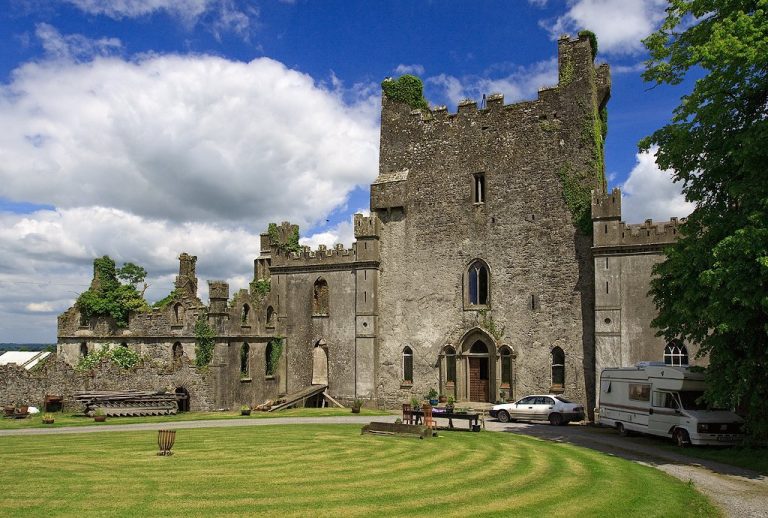
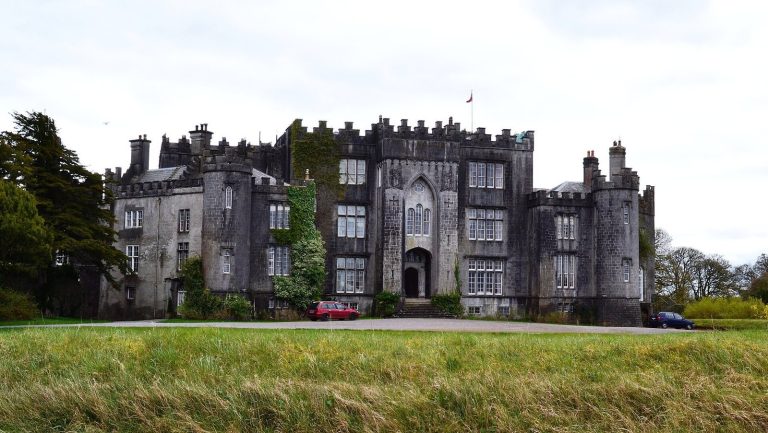
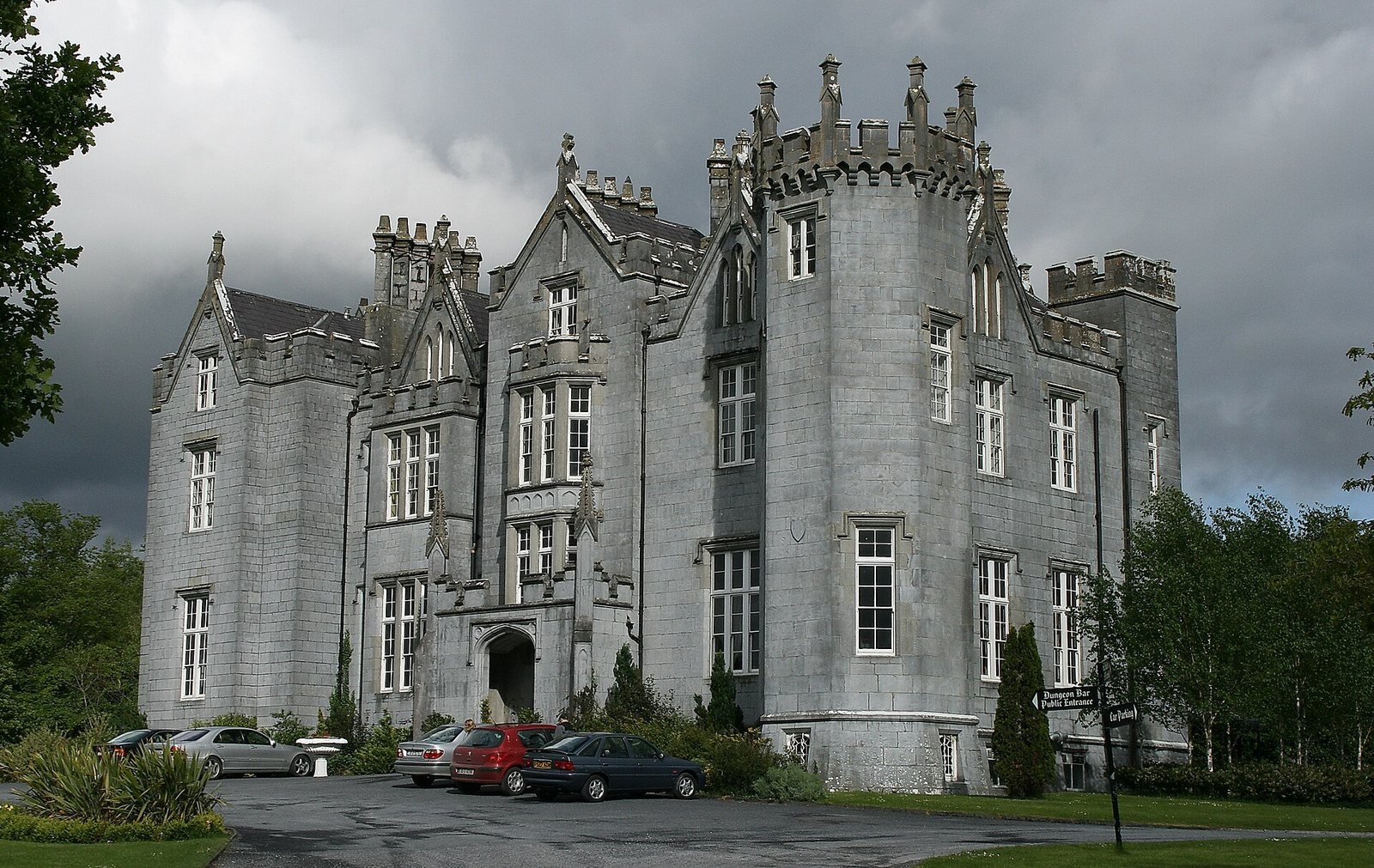
Kinnitty Castle is a castle in County Offaly, Ireland, first built after the Anglo-Norman conquest of 1171 by the Normans, settlers from Normandy who established a presence in Ireland. Its later enlargement adopted the Neo-Gothic style.
Norman foundations and O’Carroll rule
The first castle was destroyed in 1209 and rebuilt by the Normans in 1213. During the Norman period, an Augustinian abbey, belonging to a Christian order whose members followed the Rule of St Augustine, was established nearby and dedicated to St Finnian, an early Irish Christian saint. The Normans were later displaced by the O’Carrolls of Ely, an Irish ruling family that held the surrounding territory.
The O’Carroll castle and Bernard family
In 1630, William O’Carroll built a new castle near the former abbey. After the Irish rebellion of 1641, the castle was confiscated from its owners for supporting the rebels during the Plantation of Offaly, a settlement and redistribution of land in the county, then also called King’s County. In 1664, the Crown granted the castle and estate to Colonel Thomas Winter in return for his military service. Winter’s descendants later sold them to Thomas Bernard, who renamed the house Castle Bernard and left it to his son, Thomas Bernard, a Member of Parliament.
In 1811, Lady Catherine Hutchinson, wife of Thomas Bernard junior, commissioned architect James Pain to enlarge and remodel the castle. Bernard junior’s son, Colonel Thomas Bernard, succeeded him. He served as Lord Lieutenant of King’s County, the Crown’s senior representative in the county, and as High Sheriff in 1837, a county official with administrative and judicial duties. He died unmarried in 1882, and the estate passed to his niece’s husband, Captain Caulfield French, who became High Sheriff in 1887.
Burning, institutional use, and hotel conversion
In 1922, during the Irish War of Independence, the Irish Republican Army, a republican military organization in the independence struggle, burned the castle. It was restored in 1928 with government support. The Bernard family had lived there until 1946, when the castle was sold to Lord Decies. He sold it to the Irish state in 1951, and from 1955 to 1985 it housed a Forestry Training College.
The Ryan family of Limerick bought the castle in 1994 and converted it into a four-star hotel and wedding venue, with 37 bedrooms and a banqueting hall. KBC Bank took it over in 2008 and continued operating the hotel until 2015, when a group of Irish and American investors purchased the property. The group included Derek Warfield, a founding member of the Irish music group the Wolfe Tones, and Colin Breen, owner of the Four Green Fields Pub in Tampa, Florida. The castle then underwent substantial renovation and continued as a hotel and a venue for weddings and conferences.
Remains
The site is centered on the main castle building, with the ruined Abbey Wall nearby. A High Cross stands close to the entrance, and a pyramid is also located near the castle. The main building includes accessible historic features from the original castle and has a Neo-Gothic enlargement.
Castle and grounds
Main castle
Historic features of the original castle remain accessible within the main building. Its later enlargement is Neo-Gothic in style.
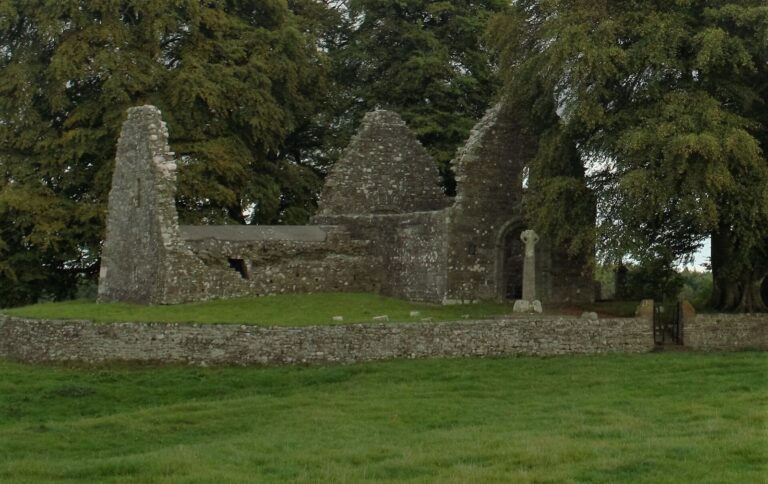
Abbey Wall
The Abbey Wall, near the castle, survives as a ruin.
High Cross
A High Cross, a freestanding stone cross associated with early medieval Irish Christianity, stands about 50 metres to the left of the main building’s entrance. It probably dates to the tenth century. The cross was moved to this position in the nineteenth century and is in poor condition.
Bernard family pyramid
A pyramid built by the Bernard family stands near the castle.