Palazzo San Sebastiano: Gonzaga Palace and City Museum


Site at a Glance
- Rating
- 4.3
- Popularity
- Medium
- Country
- Italy
- Primary era
- Early Modern
- External website
- Open
- Eras represented
- Early Modern
- Civilizations
- Holy Roman Empire
- Site type
- Domestic
- Remains
- Palace
On this page16 sections
History
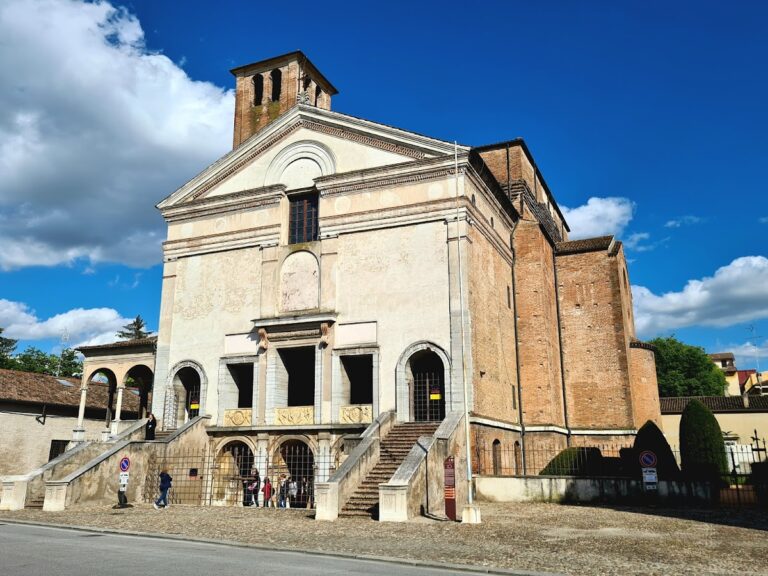
Palazzo San Sebastiano is a sixteenth-century palace in Mantua, Italy, built for the Gonzaga family between 1506 and 1508. Francesco II Gonzaga, the marquis and ruler of Mantua, commissioned the residence, which became his favorite home until his death in 1519. Gerolamo Arcari and Bernardino Ghisolfo designed the building, while Lorenzo Leonbruno, Matteo Costa, and Lorenzo Costa the Elder were engaged to decorate its interiors.
Francesco II Gonzaga and the Renaissance court
The palace was closely connected with the artistic life of the Gonzaga court. Its main hall originally housed Andrea Mantegna’s Triumphs of Caesar, a monumental series showing Julius Caesar’s triumphal procession. Mantegna was a major Italian Renaissance painter who served the Gonzaga court in Mantua. The paintings are now at Hampton Court near London.
After Francesco II’s death, Palazzo San Sebastiano lost its leading place among the Gonzaga residences. Valuable furniture and paintings were transferred elsewhere, and the building was used by the Gonzaga branches of Novellara, Gazzuolo, and Castiglione delle Stiviere. Aloysius Gonzaga later ceded his inheritance to his younger brother Rodolfo at the palace. Aloysius was a sixteenth-century Gonzaga who became a Jesuit religious figure and was later canonized as a Catholic saint.
Decline, reuse, and restoration
The palace was largely forgotten until the mid-eighteenth century, when the Austrian government converted it into a storehouse and barracks. These functions accelerated the deterioration of the original building. Its frescoes almost completely disappeared, particularly after the palace was used as a hospital in 1883.
During the twentieth century, Palazzo San Sebastiano was repeatedly adapted for public baths, an elephant colony, schools, storerooms, and recreational societies. A restoration campaign from 1999 to 2003 aimed to recover the building’s original arrangement and conserve surviving interior and exterior paintings and decoration. The 2012 earthquakes in northern Italy damaged several rooms.
The city museum and the Risorgimento collections
Since 19 March 2005, the palace has housed Mantua’s city museum, the Museo della Città di Palazzo San Sebastiano. Its seven thematic sections explore Mantua’s relationship with water, civic and dynastic imagery, antiquity, Mantegna’s Triumphs of Caesar, and Mantuan painting of the fifteenth and sixteenth centuries.
The city museum began in the nineteenth century as the Museo Patrio. The Museo del Risorgimento di Mantova, inaugurated on 3 March 1903 on the fiftieth anniversary of the deaths of the Belfiore martyrs, occupied several locations before its collections were formally merged with those of the city museum in 2005. The Risorgimento was the nineteenth-century movement that led to Italy’s political unification. Its collection covers the Napoleonic era through the Third Italian War of Independence, after which Mantua was annexed to the Kingdom of Italy. The displays are organized around the Napoleonic era, the Restoration and the Revolutions of 1848, the Belfiore conspiracy, and the period between the Second and Third Wars of Independence. The Belfiore martyrs were Italian patriots executed by Austrian authorities in Mantua in 1853.
Remains
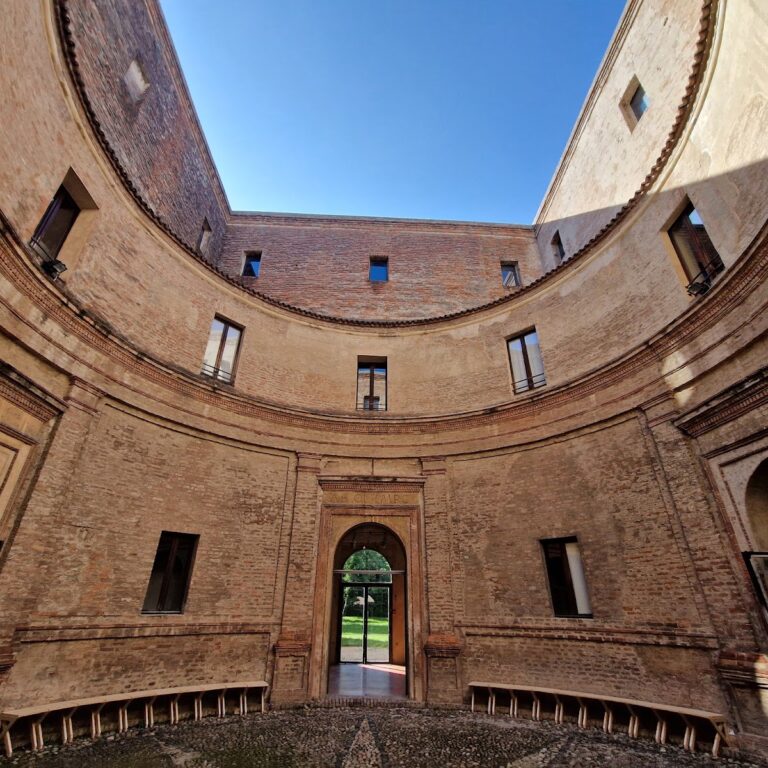
Palazzo San Sebastiano survives as a Gonzaga residence organized around rooms and galleries on three principal levels. Its surviving spaces combine the original palace structure with restored fragments of wall decoration and museum installations. The restoration between 1999 and 2003 stabilized and recovered portions of the external frescoes. These fragments were identified as characteristic of Mantuan buildings dating from 1550 to 1600, while surviving interior decoration was also recovered where possible.
Ground-floor rooms
Loggia dei marmi
The ground-floor Loggia dei marmi contains the museum’s “City and Water” section. Its position within the lower level makes it part of the palace’s principal arrangement of exhibition rooms, where the museum interprets Mantua’s relationship with water.
Sala del Porcospino and Sala del Crogiolo
The ground-floor Sala del Porcospino and Sala del Crogiolo contain the “Emblems of Kindness” section. The fresco cycle associated with the Camera del Crogiuolo, the Camera delle Frecce, and the Camera del Sole was opened to the public in 2003, following the restoration campaign.
Sala dei Trionfi
The ground-floor Sala dei Trionfi presents the “City of Princes” section. The room belongs to the palace’s exhibition sequence devoted to the civic and dynastic imagery connected with Mantua and its ruling family.
First-floor rooms
Camera de’ Brevi
On the first floor, the Camera de’ Brevi contains “The Cult of Antiquity,” an exhibition section devoted to the museum’s interpretation of ancient culture.
Sala delle Frecce
The first-floor Sala delle Frecce contains “The Rebirth of Antiquity, Mantua as Rome.” Together with the restored fresco cycle associated with the room, this space forms part of the palace’s surviving decorated interior.
Sala Est
The first-floor Sala Est is associated with the display of Andrea Mantegna’s Triumphs of Caesar. The palace’s original main hall was the setting for the series before the paintings were moved to Hampton Court near London.
Upper gallery and displayed works
Galleria Superiore
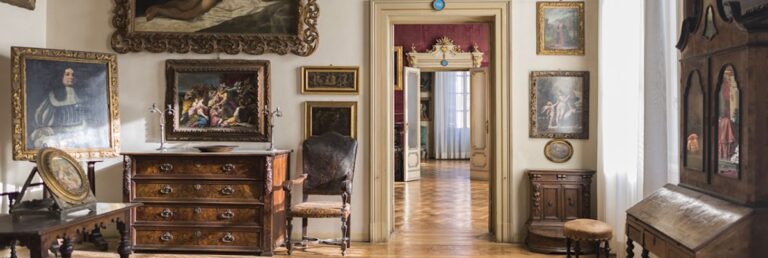
The second-floor Galleria Superiore presents examples of Mantuan painting from the fifteenth and sixteenth centuries. It extends the museum’s presentation of the artistic culture associated with the Gonzaga court and the palace’s original period.
Paintings and sculpture
The museum displays Occasio e Poenitentia, produced by the school of Andrea Mantegna around 1500; Antonio da Pavia’s Madonna and Child with Saints Jerome, Albert, Angelo and Peter, an oil painting on canvas from 1500; and a terracotta bust of Francesco II Gonzaga dating from around 1498 to 1500 and attributed to Giovanni Cristoforo Romano.
Nearby sites