Palazzo Nuovo: Bergamo’s Municipal Palace and Civic Library
Site at a Glance
- Rating
- 4.8
- Popularity
- Medium
- Country
- Italy
- Primary era
- Early Modern
- External website
- Open
- Eras represented
- Early Modern, Modern
- Civilizations
- Italian, Venetian
- Site type
- Civic
- Remains
- Palace
On this page8 sections
History
Construction and Civic Purpose
Palazzo Nuovo is a civic palace on Piazza Vecchia in Bergamo, Italy, begun in the early seventeenth century to house the city’s municipal government. Its design was by Vincenzo Scamozzi, an Italian Renaissance architect. The name Palazzo Nuovo, meaning “New Palace,” distinguished it from the older Palazzo della Ragione, also called Palazzo Vecchio.
The Angelo Mai Library
The Biblioteca Civica Angelo Mai traces its beginnings to a book bequest to Bergamo by Cardinal Giuseppe Alessandro Furietti, a senior cleric in the Catholic Church, on 13 February 1768. First located in the Palazzo della Ragione, the library moved to Palazzo Nuovo in 1928 and remains there. Its collections include 677,145 volumes, 2,280 incunabula (books printed before 1501), and 16,830 manuscripts. It is one of Italy’s most important institutions for historical preservation.
Remains
Setting and Facade
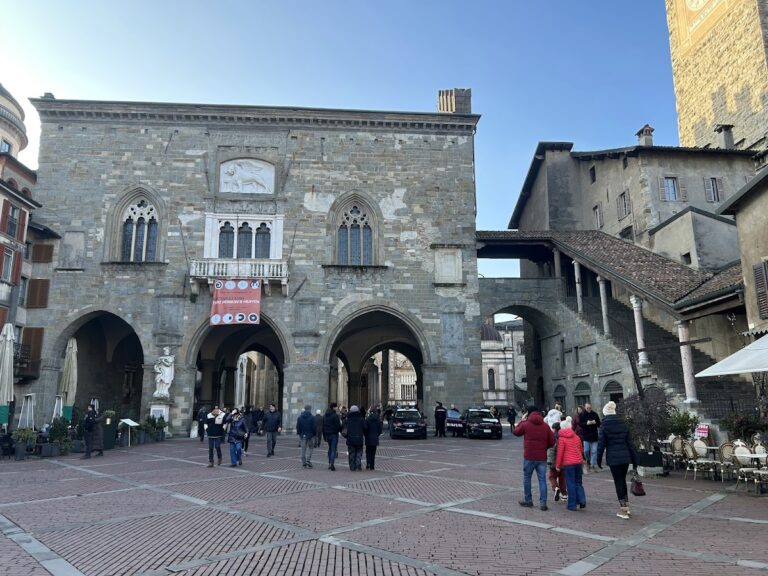
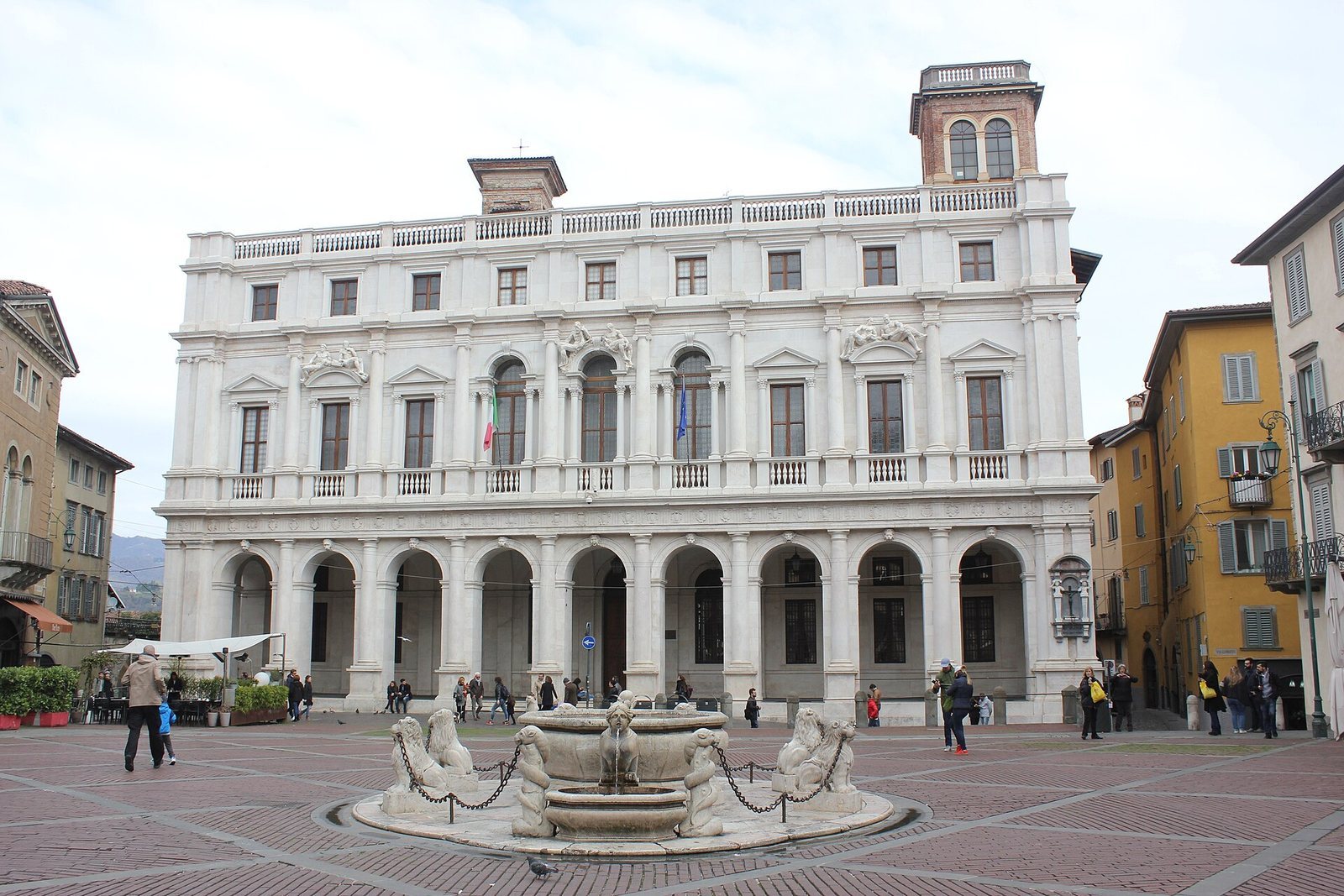
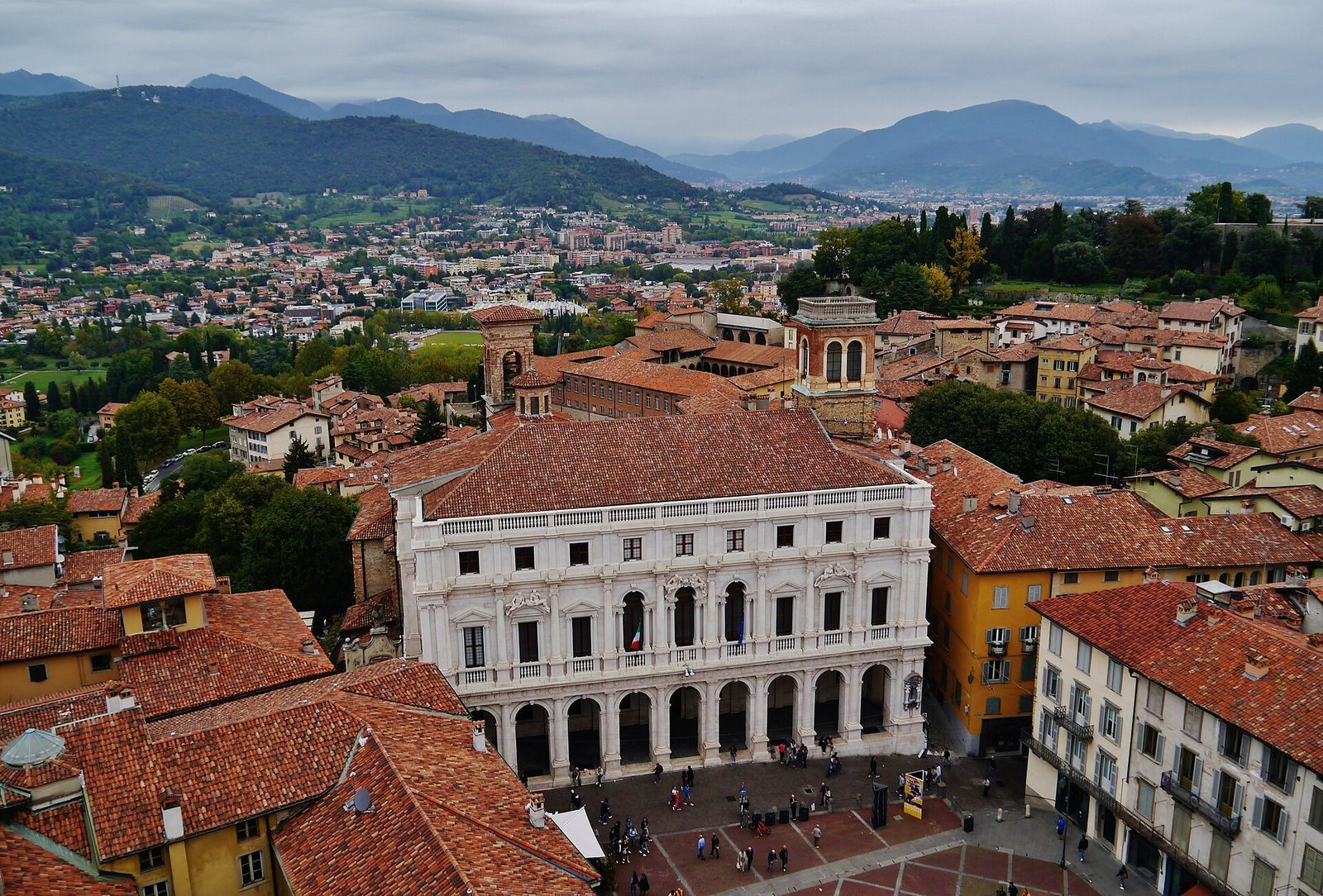
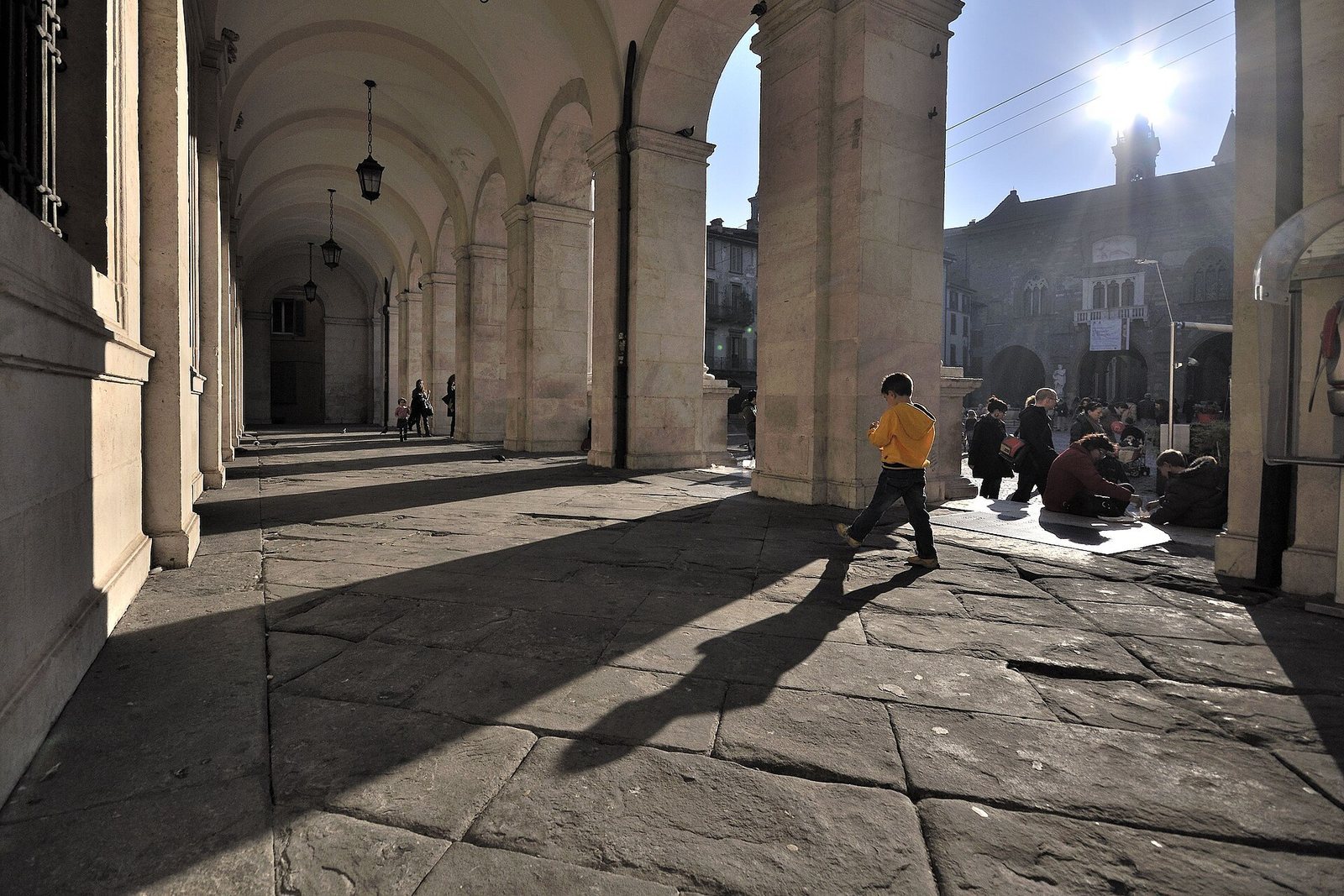
Palazzo Nuovo stands on the northeastern side of Piazza Vecchia in Bergamo’s upper town, forming a backdrop to the square. The Contarini Fountain occupies the center, while the Campanone Tower, Palazzo del Podestà, and other buildings also frame the piazza. The palace’s white Zandobbio marble facade was designed by Ernesto Pirovano in 1928 with regard for Scamozzi’s original design. Its lower level has arches opening onto a loggia, an open-sided gallery; above them, nine windows sit behind a balustrade. Doric columns, a classical architectural form, frame the arches and windows. A windowed mezzanine, an intermediate floor, and a balustrade crown the facade. Six statues by Tobia Vescovi stand above the second, fifth, and eighth windows. The final facade ornaments were added in 1958.
Entrance and Interior
Loggia and Atrium
Andrea Ceresola, known as il Vannone, designed the entrance loggia, which leads into a neoclassical atrium, or entrance hall, decorated with marble and commemorative plaques. Its features include the Camozzi Column, a tree-shaped carved lectern bearing the emblems of Bergamo and Brescia. Marble busts portray the poet Paolina Secco Suardo and Ambrogio Calepio, a monk and lexicographer also known as Calepino; another bust depicts Bartolomeo Colleoni, a fifteenth-century military commander.
Interior Decoration
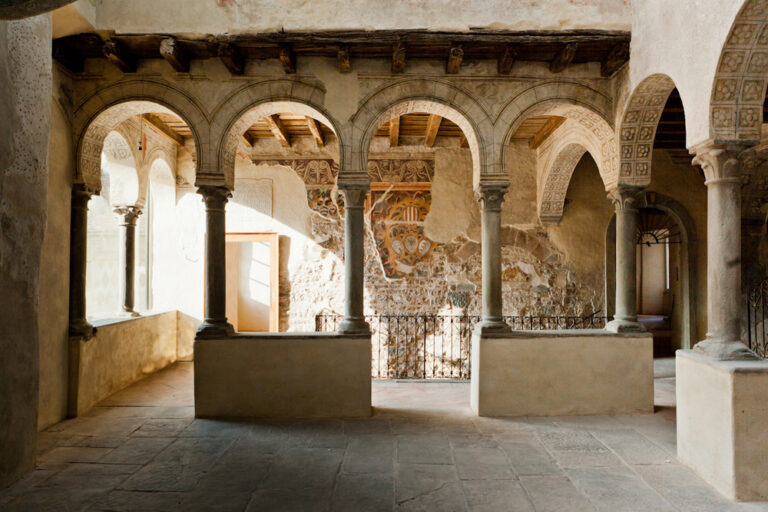
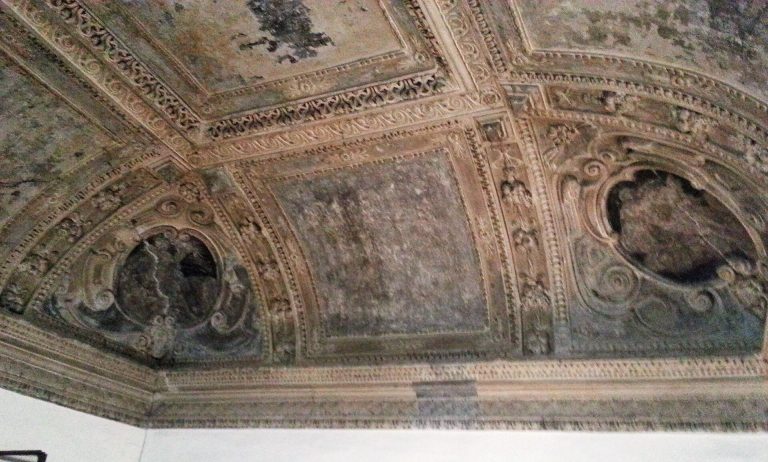
Twenty plaster medallions high on the atrium walls portray notable people who worked in Bergamo. In the Sala Tassiana and other rooms, Pietro Baschenis painted frescoes with fanciful grotesque ornament and allegorical subjects.