Vieilley Castle: A Medieval Fortified Residence in France
Site at a Glance
- Rating
- 4
- Popularity
- Very Low
- Country
- France
- Primary era
- Medieval
- Eras represented
- Medieval, Early Modern, Modern
- Civilizations
- French, Holy Roman Empire
- Site type
- Domestic
- Remains
- Castle
On this page12 sections
History
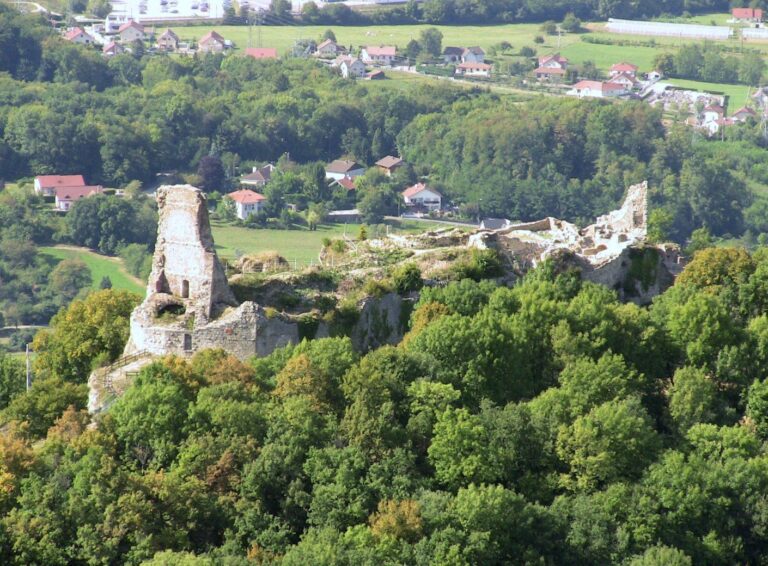
Vieilley Castle in France began as a thirteenth-century fortified house on land held by the metropolitan chapter of Besançon. The chapter was a corporate body of clergy attached to a cathedral, and its dean, a senior officer, exercised high justice, meaning jurisdiction over serious cases. The castle’s history reflects successive struggles over the chapter’s lands, its later use as a residence for church leaders, and its role in the Second World War Resistance.
Foundation and chapter control
The earliest known dispute dates to 1258, when the dean complained to the pope that Étienne de la Chassagne had built a fortified residence on the chapter’s fief, or land held under feudal obligations, without permission. In July 1262, a ruling ordered its demolition. Étienne acknowledged his wrongdoing in 1270 and gave the chapter land valued at twenty livrées, medieval land allotments, as compensation. Yet the house remained: in 1272, Jean and Hugues de la Chassagne pledged feudal allegiance to the new dean, Eudes de Neuchâtel, for it. They also promised not to assist the enemies of Alix, Countess of Savoy and Burgundy.
In 1284, Thiébaud du Faucogney, then the chapter’s high dean, turned the fortified house into a castle, which was smaller than its later form. After his death in 1300, the chapter secured an imperial diploma dated 8 April 1307 authorizing improvements to the defenses, and defensive work followed.
During the fourteenth century, the chapter and the de la Chassagne family made a series of property agreements. In 1342, Dean Jean de Corcondray sold Jean de la Chassagne half of the fortified house and half of the Vieilley property for 600 gold florins from Florence. If Jean did not pay by Christmas, he owed an additional 100 florins for the castle’s guard and upkeep. As part of a wider effort to consolidate the chapter’s holdings, Jean de Corcondray spent more than 800 livres on land and property purchases between 1335 and 1357. The chapter acquired the castle’s other half in 1357 for 407 livres and 10 sols.
Conflict and military damage
In 1470, marauding bands, including people from Lorraine and Germany as well as French troops under Louis XI, entered Franche-Comté and ravaged Vieilley and other villages. When a French threat loomed in 1477, regional lieutenant Jean Sixsols urged the village to prepare its defenses on 24 April. On 24 August, the canon of Cicon and Jean du Puy agreed to guard it for 20 francs. Some marauders pursued by Burgundian troops took shelter in the walled castle, but surrendered after little resistance. In 1486, the chapter remitted the dean’s dues after a fire damaged both the castle and the village.
During the Thirty Years’ War, supplies of powder and lead reached the castle in January 1637, and steps were taken to secure its guard. On 10 July, after a three-day siege by the army of Duke Bernard of Saxe-Weimar, the castle surrendered to the French when cannon appeared and after three calls to surrender. The French placed 25 soldiers there under Mr. de la Vaivre. Reinforcements from Montbéliard, led by the Count of Concey, joined the campaign to free Franche-Comté. Swedish troops burned the castle in 1642. Under the Treaty of Nijmegen, a series of peace settlements concluded in the late 1670s, Vieilley and the rest of Franche-Comté returned permanently to France.
Church residence and Revolution
In 1680, François-Joseph de Grammont, archbishop and high dean of the Besançon chapter, could not restore the castle’s defenses and instead developed it as a pleasure residence. He died there in 1717. The archbishops of Besançon stayed at the château with increasing frequency. Grammont also disputed with the Parlement of Besançon, a high court in pre-revolutionary France, over Jansenism, a Catholic movement associated with strict teachings on grace, and the papal bull Unigenitus, which condemned propositions linked to the movement.
A visit in 1735 led to repairs carried out between 1736 and 1739, with further work later in the eighteenth century. In 1756, the chapter entrusted the castle’s guard and upkeep to master gardener Jean-Claude Carquille and leased the revenues and produce of the Vieilley lordship to private individuals. In 1758, the high dean, as lord of Vieilley, enjoyed the castle and its lands, which yielded 7,000 livres. The chapter still held the castle, its dependencies, and associated rights in 1789, while the community faced heavy debts.
The château and its dependencies were appropriated by the state and sold as national property in 1792, then divided among several purchasers. In February 1791, parish priest Barbelenet had taken the oath with reservations; he was replaced on 30 July by the Benedictine Monier. On 26 April 1796, Barbelenet, then a deported priest, may have been concealed in a secret room at the castle.
War and divided ownership
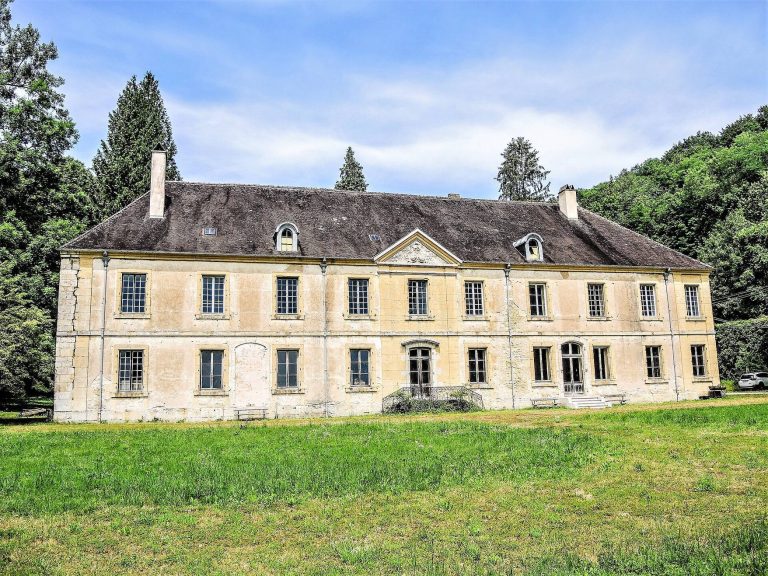
Nineteenth-century restorations changed the château’s appearance. In 1917, during the First World War, French cavalry requisitioned it. Seventeen officers, 220 men, and 262 horses were billeted in the village, with some housed at the castle. At the war’s end, the château was in poor condition, and its main part became the property of the Faivre-Picon family.
During the Second World War, the château, code-named Le Carlton, became a secret meeting place for leaders of the Franche-Comté Resistance. In 1944, George Millar, an English soldier with the Special Operations Executive, a British organization for covert operations, arrived after parachuting into the area. He trained the local maquis, rural Resistance groups, in military matters. The group carried out rapid operations, including railway sabotage intended to slow German forces. On 15 August, German troops surrounded Vieilley and searched the village. They arrested local Resistance leader Colonel Maurin, who escaped that day and continued his work. On 16 November, tanks of the French 1st Armored Division passed through Vieilley during the Liberation.
The château remains divided among several owners. Its main part belonged to the Faivre-Picon family after the First World War, while the north wing has been owned by the Liard–Faivre-Picon family for a century.
Remains
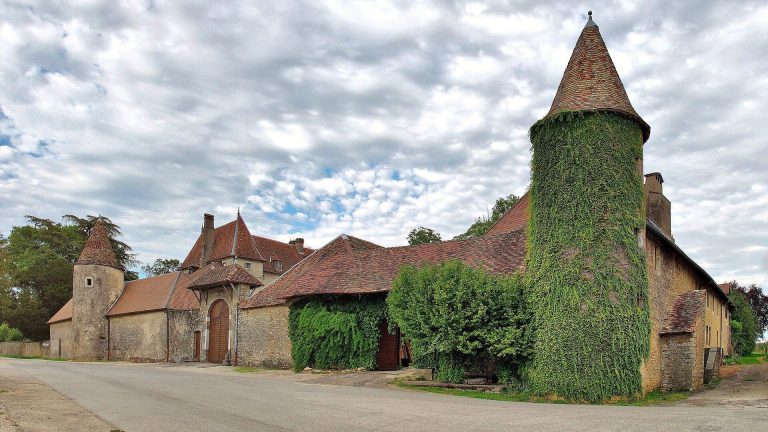
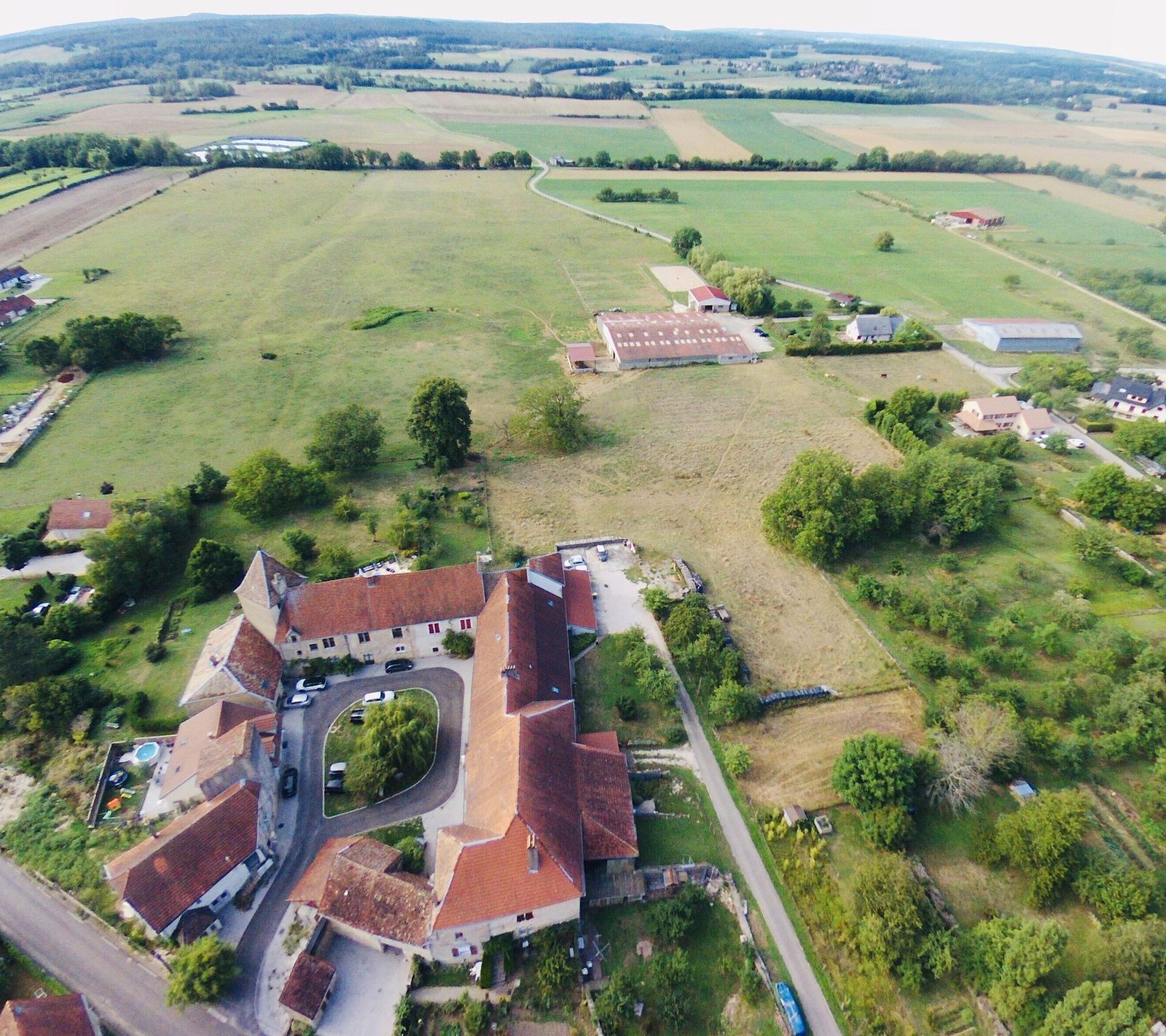
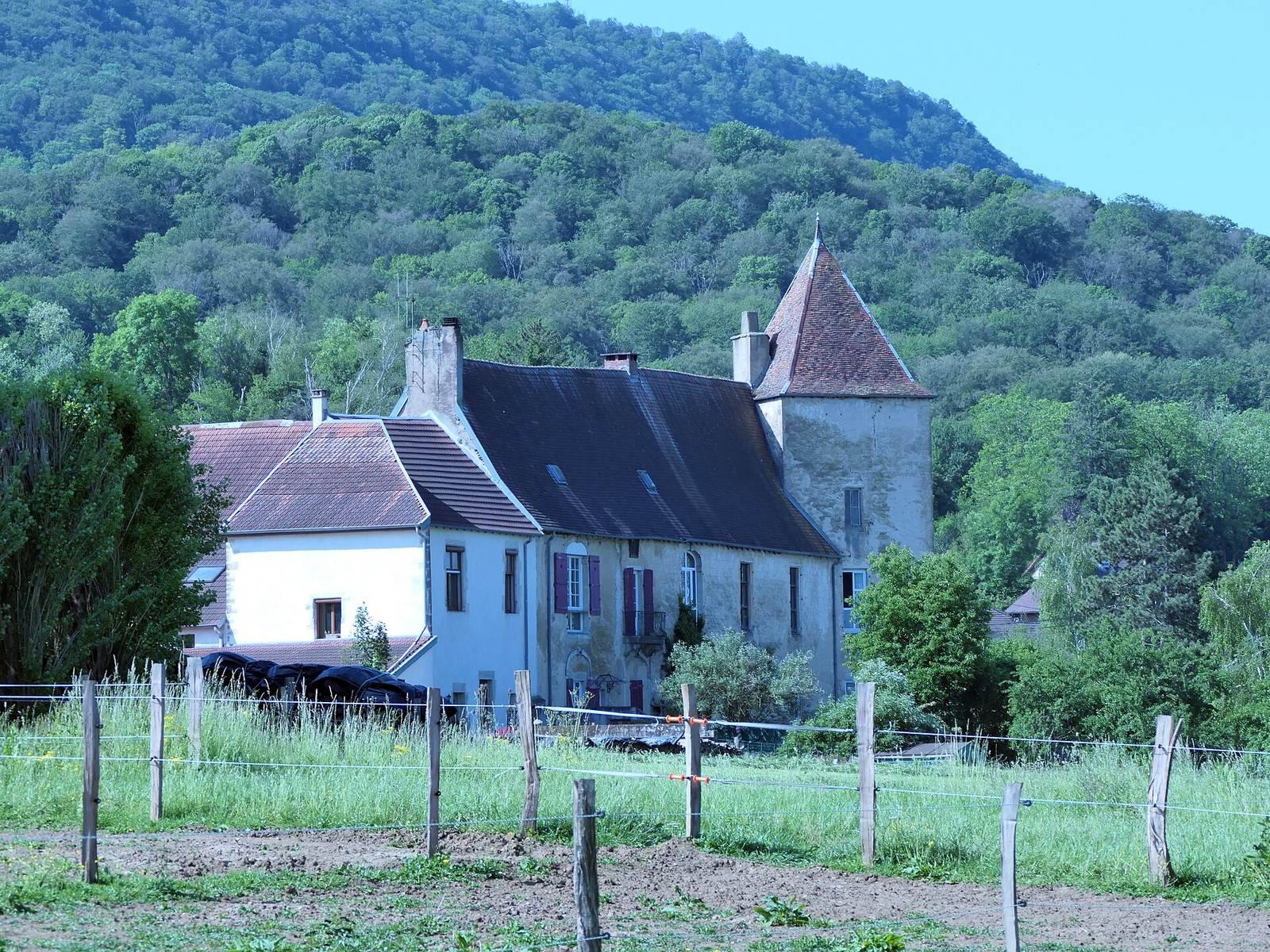
The château developed from a fortified house into a castle and later a residence. Its documented layout includes enclosing walls and ditches, landscaped grounds, and a courtyard-facing façade with an old tower. The present complex is divided into two principal parts, including a north wing.
Defenses and grounds
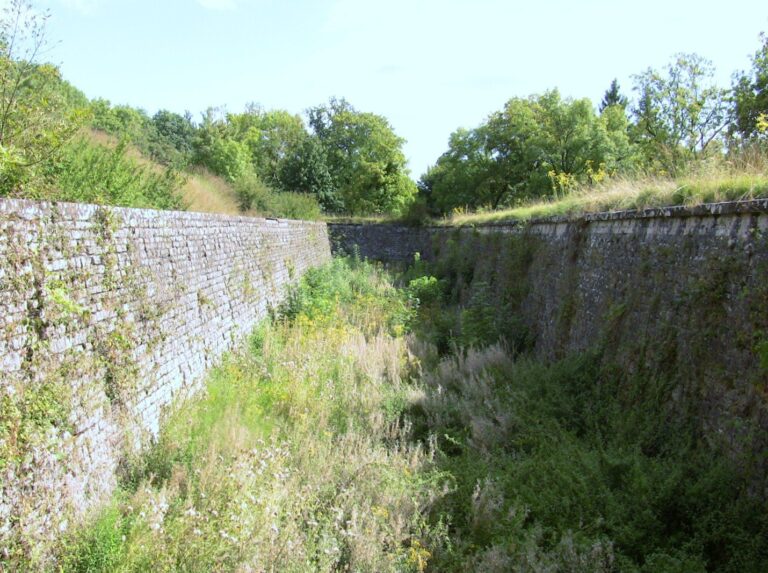
Enclosing walls and ditches
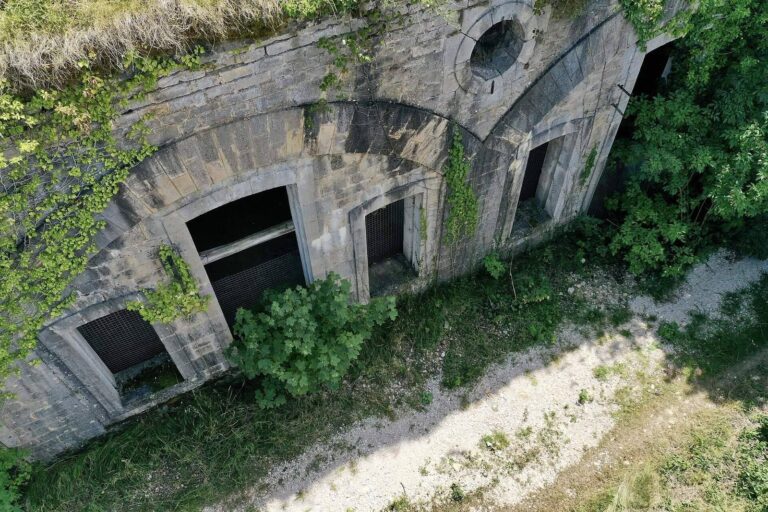
The castle’s defenses included walls around the enclosure and ditches. Some fortifications had been demolished by 1680, and the defensive works gradually disappeared.
Gardens and terraces
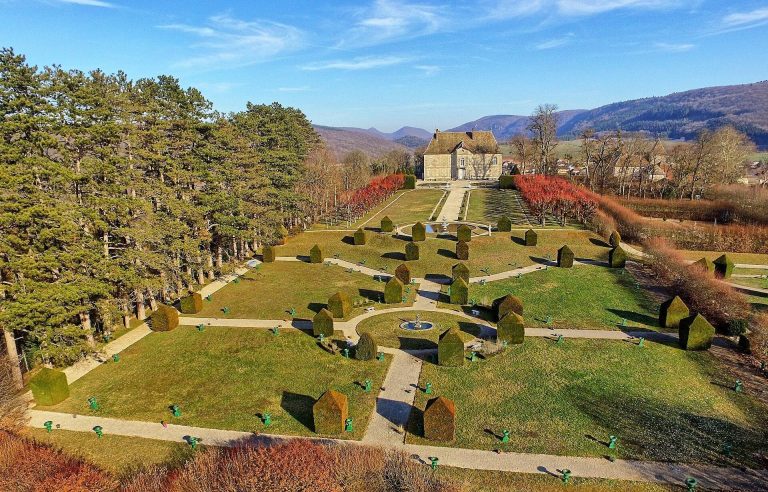
When François-Joseph de Grammont developed the château as a residence, its grounds included gardens, decorated parks, terraces, fountains, water jets, and groves.
Residential buildings
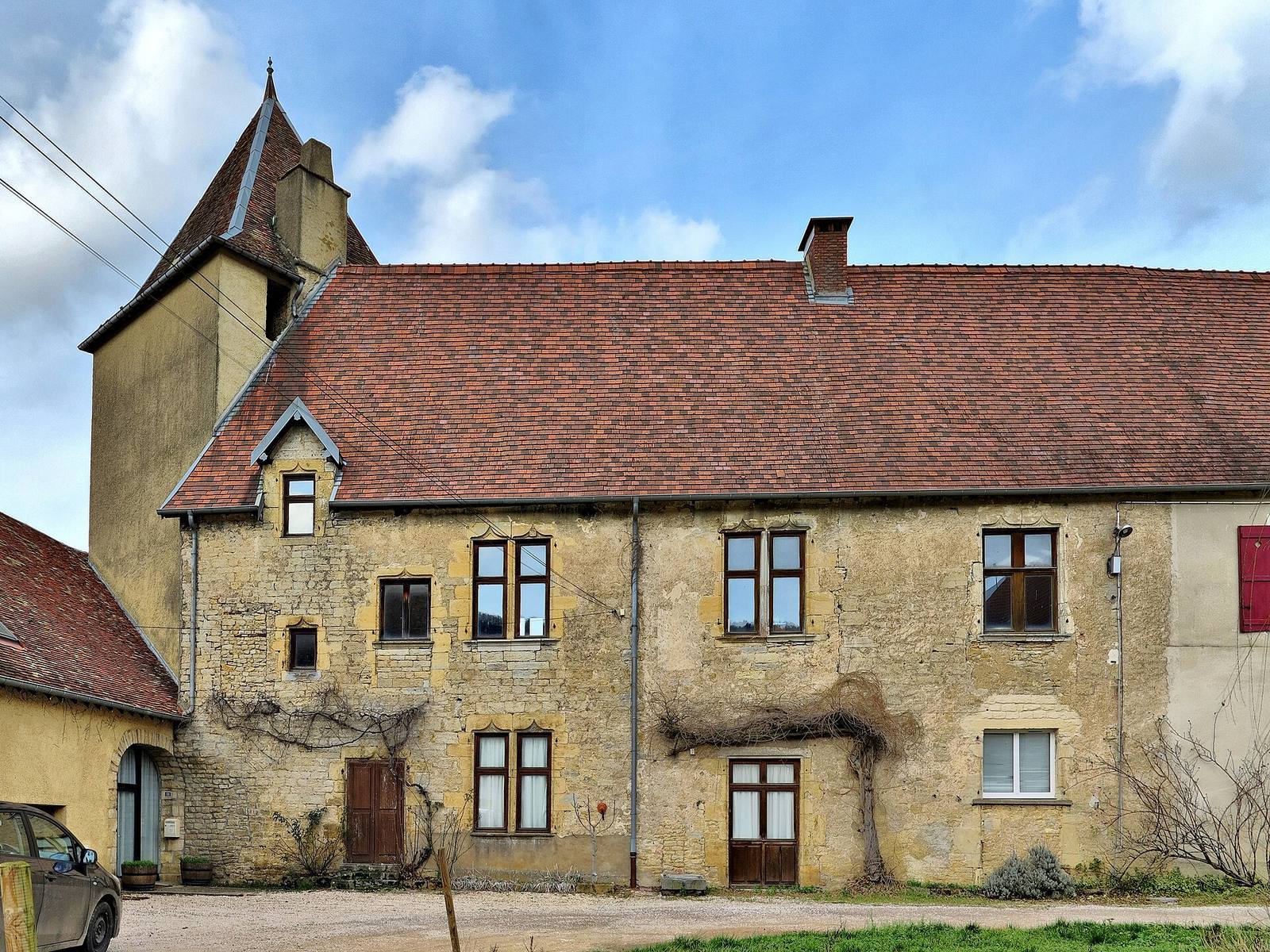
Courtyard façade and tower
The château has a façade facing the courtyard and an old tower. These features form part of the surviving residential complex, whose appearance was altered by nineteenth-century restoration.
Principal parts
The château is divided into two principal parts, one of which is the north wing. The north wing has remained under the ownership of the Liard–Faivre-Picon family for a century.