Palazzo Margherita: A Historic Palace and United States Embassy in Rome


Site at a Glance
- Rating
- 4.6
- Popularity
- Very Low
- Country
- Italy
- Primary era
- Modern
- Eras represented
- Modern
- Civilizations
- Italian
- Site type
- Domestic
- Remains
- Palace
On this page6 sections
History
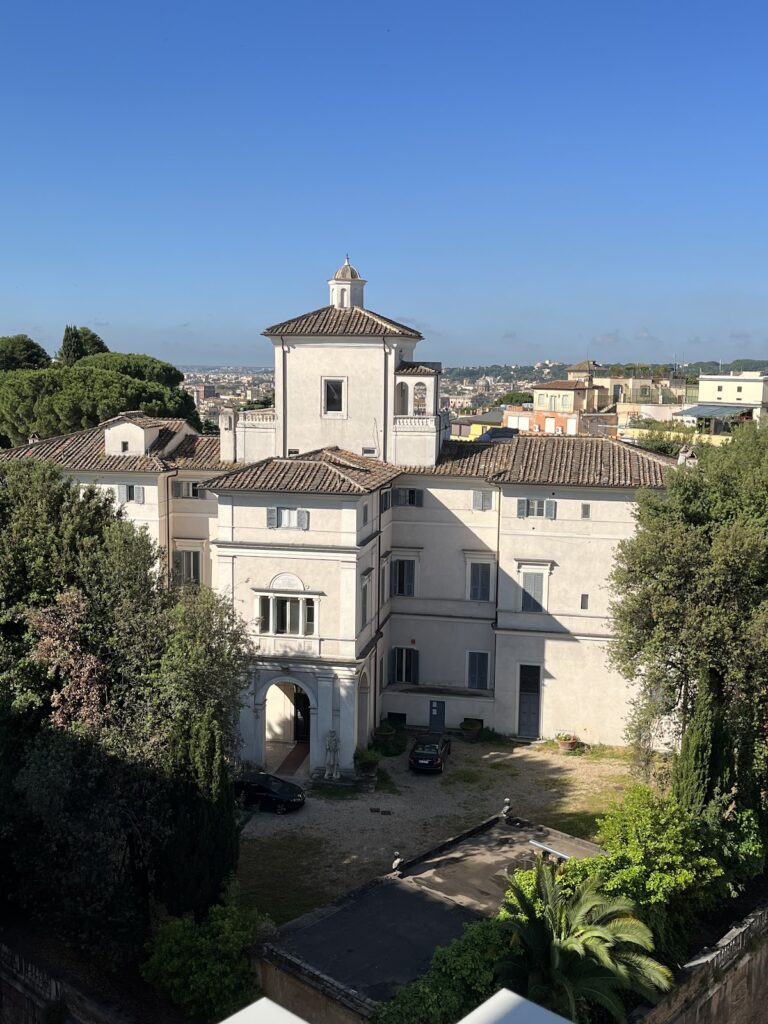
Palazzo Margherita is a palace in Rome, Italy, built in the Renaissance Revival style between 1886 and 1890 for Rodolfo Boncompagni Ludovisi, the titular Prince of Piombino, as a new residence for the Boncompagni-Ludovisi family. Designed by Gaetano Koch, it stood on a prominent plot along Via Vittorio Veneto, a new main road created through the former grounds of the Villa Ludovisi.
The Boncompagni-Ludovisi Palace
The palace was originally called Palazzo Piombino. Its construction followed the sale of the Villa Ludovisi and most of its grounds in 1883, when the Boncompagni-Ludovisi family faced severe financial difficulties. In 1885, the Società Generale Immobiliare divided the former estate into plots for luxury buildings, helping to reshape the area around the new road.
The family occupied Palazzo Piombino for barely a decade. Further financial problems, including the high cost of the palace itself, led to its sale in 1900.
Queen Margherita’s Residence
After the assassination of King Umberto I at Monza in 1900, his son and successor, King Victor Emmanuel III, purchased the palace for his widowed mother, Queen Margherita of Savoy. She moved into the building on Christmas Day that year. As queen dowager, a queen whose husband has died, and queen mother, the mother of the reigning monarch, she remained active in public life until her death in 1926. The building subsequently became known as Palazzo Margherita.
Government and Embassy Use
Following Queen Margherita’s death, the palace was divided into offices for the government of Benito Mussolini, the Fascist leader who ruled Italy from 1922 to 1943. In 1946, the United States government purchased the building from the Italian government. It now serves as an administrative building and houses the United States Embassy in Italy.
Extensive renovation carried out between 1949 and 1952 restored the rooms to their earlier appearance, modernized the plumbing and heating systems, and increased the available office space. Palazzo Margherita is protected under Italian cultural-heritage law and is also listed on the United States Department of State Register of Culturally Significant Property.
Remains
Palace and Administrative Building
Palazzo Margherita stands at Via Vittorio Veneto 121 on the former property of the Villa Ludovisi. It is a palazzo designed in the Renaissance Revival style, which reinterprets architectural forms and decorative principles associated with Renaissance Italy, particularly the architecture of the sixteenth century. The building’s rooms were restored to their earlier appearance during the renovation of 1949 to 1952, while updated plumbing and heating systems and expanded office space adapted it for administrative use. The palace continues to function as an administrative building containing the United States Embassy in Italy.
Nearby sites