Palazzo Grazioli: A Renaissance Urban Palace in Rome


Site at a Glance
- Rating
- 4.3
- Popularity
- Very Low
- Country
- Italy
- Primary era
- Early Modern
- Eras represented
- Early Modern, Modern
- Civilizations
- Italian, Papal States
- Site type
- Domestic
- Remains
- Elite Residence
On this page10 sections
History
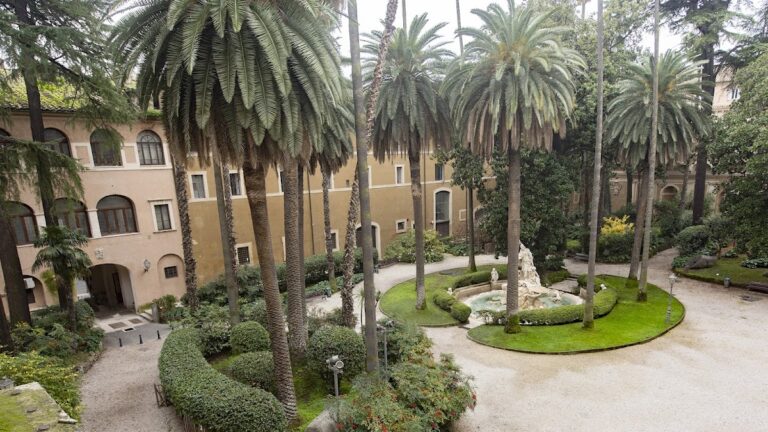
Palazzo Grazioli is a Renaissance urban palace in Rome, Italy, located in the Campo Marzio district between Palazzo Doria-Pamphili and Palazzo Altieri. Built during the sixteenth century, it reflects the development of Rome’s aristocratic residences in an area rich in archaeological remains from ancient Rome.
Renaissance origins and Baroque restoration
The earliest records connect the palace with the Ercolani family. The architect Giacomo della Porta, an Italian designer associated with late Renaissance and early Baroque architecture in Rome, built the palace for them during the sixteenth century.
After the Gottifredi family settled there, the building underwent a major restoration between 1645 and 1650. The work was directed by Camillo Arcucci, a Roman Baroque architect. The Gottifredi family was associated with the Society of Jesus, a Catholic religious order also known as the Jesuits.
Diplomatic and aristocratic residence
At the beginning of the nineteenth century, Palazzo Grazioli became the residence of the Austrian ambassador. He had been forced to surrender Palazzo Venezia to Cardinal Fesch after the Treaty of Pressburg, the 1805 peace agreement that ended the War of the Third Coalition between France and Austria.
The palace later housed Maria Luisa of Bourbon-Spain, an infanta, or daughter of a Spanish monarch who was not heir to the throne, and Duchess of Lucca. She died at Palazzo Grazioli in 1824.
Commander Vincenzo Grazioli subsequently acquired the palace. His family had recently entered the Roman nobility. Originally from Valtellina, the Grazioli family arrived in Rome at the end of the eighteenth century, when papal authorities employed Valtellinese immigrants in grain handling and food-supply services.
The Grazioli family
Vincenzo Grazioli began as a lessee of mills on the Tiber. He later acquired those mills and became a large-scale baker, agricultural merchant, and landowner. After purchasing the Castelporziano estate in 1823, he was made Baron of Castelporziano by Pope Gregory XVI in 1832. He became a Roman nobleman in 1843 and was created Duke of Santa Croce di Magliano by Pope Pius IX in 1851.
Vincenzo’s son Pio Grazioli married Caterina of the Lante Montefeltro della Rovere family in 1847. After the marriage, the family adopted the name Grazioli Lante della Rovere. Pio and his children were prominent in Roman high society during the second half of the nineteenth century, and Pio supported the reconstruction of the Church of San Giovanni della Malva in Trastevere.
Antonio Sarti directed another restoration beginning in 1863. Completed in 1874, it added the wing facing Piazza Grazioli and contributed to the palace’s present form.
Twentieth- and twenty-first-century uses
A marble-and-bronze plaque on the side facing Piazza Grazioli commemorates naval sub-lieutenant Riccardo Grazioli Lante della Rovere. He received the Gold Medal of Military Valour, an Italian decoration for exceptional bravery in combat, and died at Homs, now Al Khums in Libya, on 28 October 1911 during the Italo-Turkish War, fought between Italy and the Ottoman Empire from 1911 to 1912.
From 1995, the owner Giulio Grazioli Lante della Rovere leased the piano nobile, the principal residential floor of a traditional European palace, to Silvio Berlusconi. Berlusconi paid approximately 40,000 euros per month and made Palazzo Grazioli his principal residence in September 2013. He announced his resignation there on 12 November 2011. The lease ended on 31 December 2020, when he decided to move to his own villa on the Appian Way.
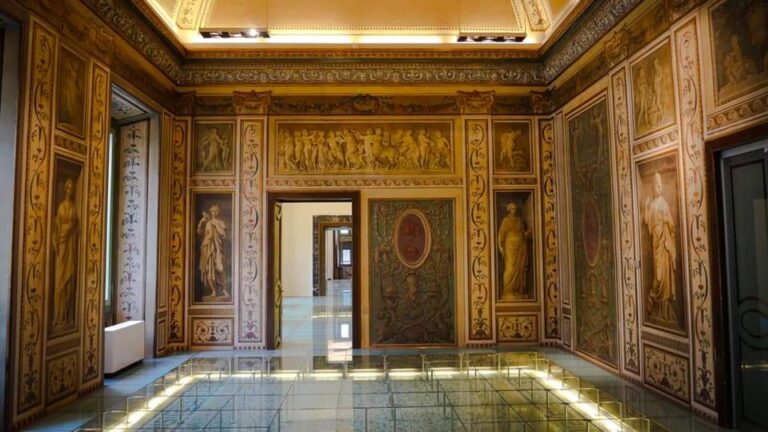
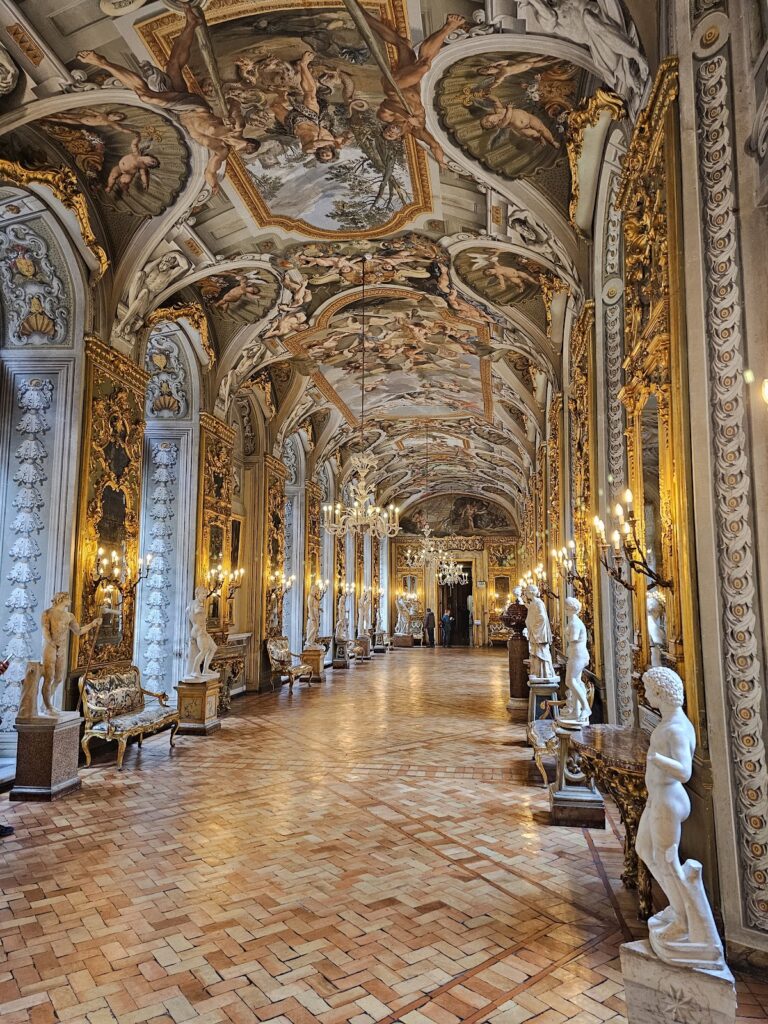
The basement housed the digital television station RED TV, originally called Nobody TV and chaired by Massimo D’Alema, from 2008 to 2011. After the broadcaster went bankrupt, Berlusconi also rented the basement. Since 2024, Palazzo Grazioli has housed the foreign press, meaning journalists and news organizations representing media from outside Italy. The palace remains privately used, and its appearance reflects the alterations and restorations carried out by the noble Roman families who lived there over the centuries.
Remains
Main palace
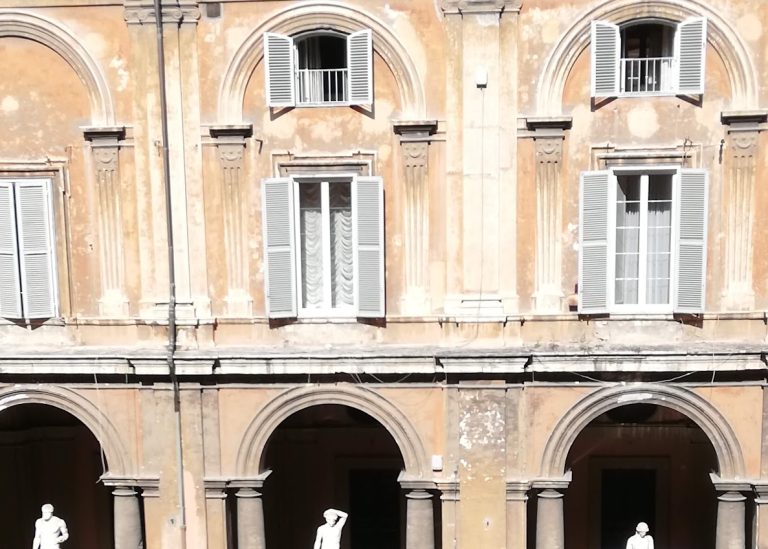
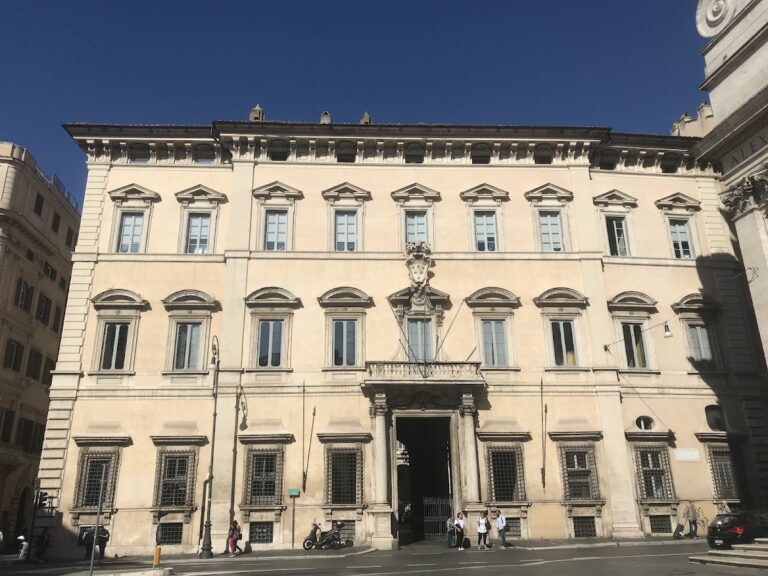
Palazzo Grazioli is a three-storey building that originated as a sixteenth-century Renaissance palace and was altered through later restorations. Its facade on Via del Plebiscito is articulated by pilasters with capitals. Some of the capitals incorporate lion heads, a motif resembling the heraldic emblem associated with the Gottifredi family.
Monumental entrance
The principal entrance is a monumental portal framed by two grey-granite Doric columns. The columns support a balcony with a balustrade. Above it, a window with an arched tympanum contains a mosaic bearing the Grazioli family coat of arms, while a large lion’s head surmounts the portal.
Piazza Grazioli wing
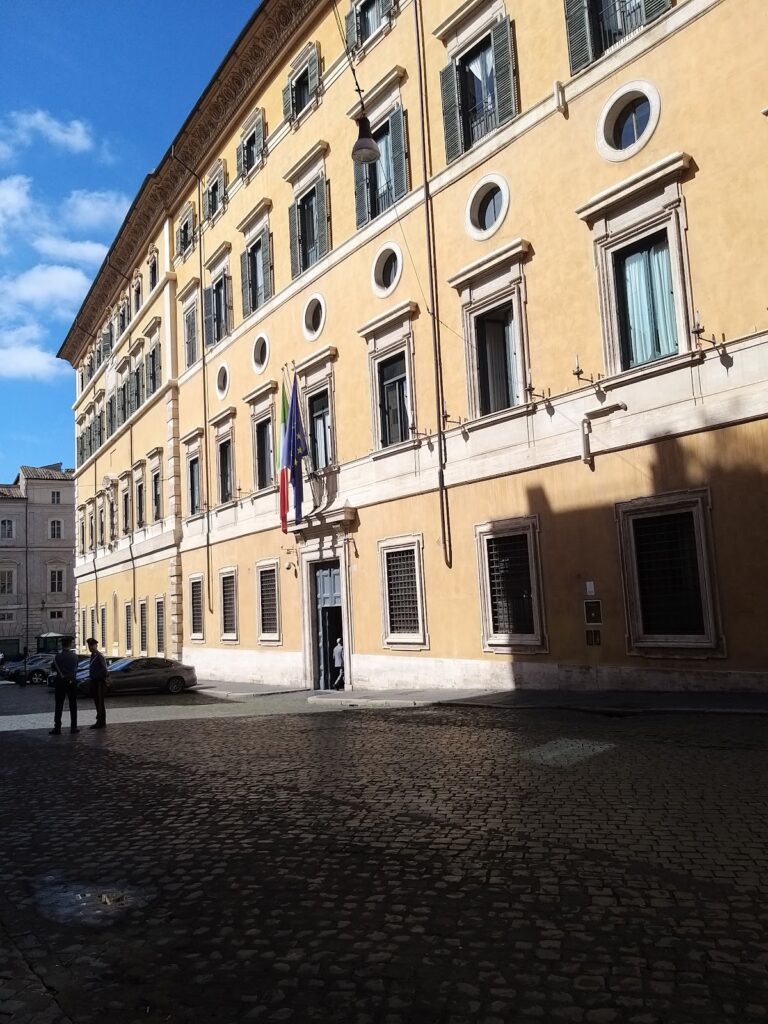
The wing facing Piazza Grazioli was added during Antonio Sarti’s restoration, completed in 1874. It forms part of the palace’s later expansion within the Campo Marzio setting, between Palazzo Doria-Pamphili and Palazzo Altieri.
Memorial plaque
On the side facing Piazza Grazioli, a marble-and-bronze memorial plaque commemorates Riccardo Grazioli Lante della Rovere and his death at Homs on 28 October 1911. The inscription’s subject connects the palace’s surviving fabric with the later history of the Grazioli Lante della Rovere family.
Nearby sites