Palazzo del Magnifico: Pandolfo Petrucci’s Renaissance Residence in Siena


Site at a Glance
- Rating
- 4.6
- Popularity
- Low
- Country
- Italy
- Primary era
- Early Modern
- External website
- Open
- Eras represented
- Early Modern
- Civilizations
- Republic of Siena
- Site type
- Domestic
- Remains
- Palace
On this page8 sections
History
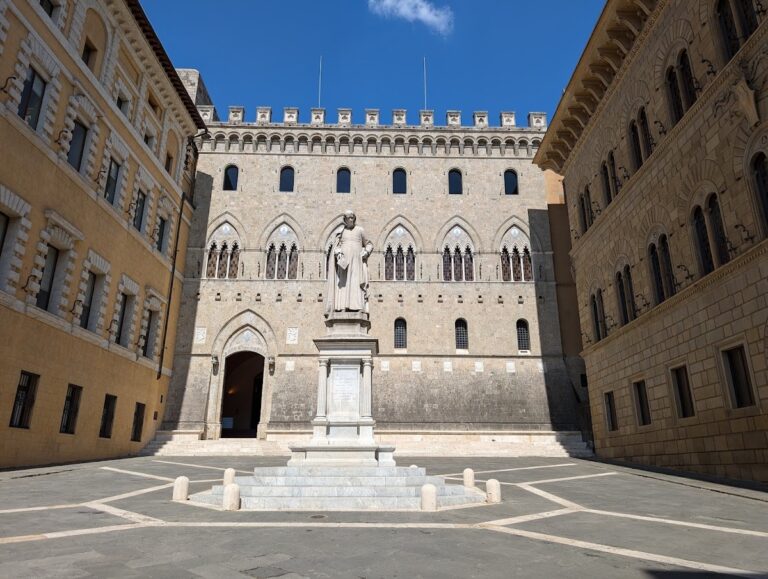
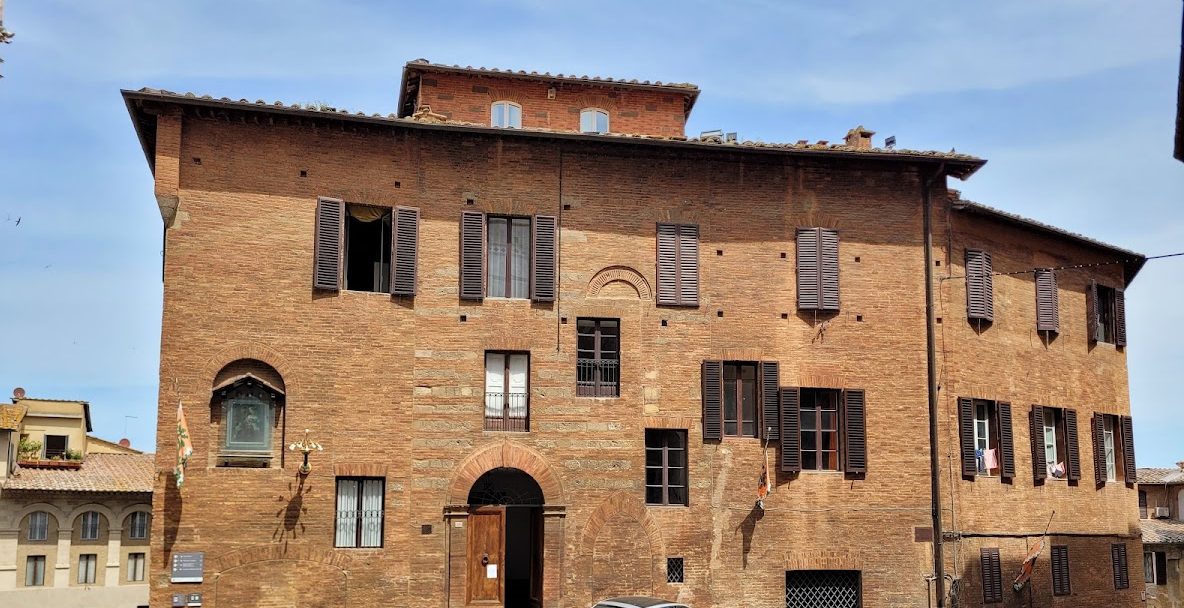
Palazzo del Magnifico, also known as Palazzo Petrucci, is a Renaissance palace in Siena, Italy, built by the Sienese for the aristocrat Pandolfo Petrucci in 1508. Designed by Giacomo Cozzarelli and constructed by Domenico di Bartolomeo, it served as a civil residence and was regarded as one of the most sumptuous Italian palaces of its time.
Pandolfo Petrucci and the palace
Pandolfo Petrucci effectively ruled Siena from 1487 to 1512. A wealthy member of the prominent Petrucci family, he exercised power without formally replacing the city’s governing institutions. His opposition to the authority of the Signoria, Siena’s governing council, brought him enemies and accusations of tyranny. He was nevertheless awarded the title “the Magnificent” after helping to pacify the city’s factions, following the example of Lorenzo de’ Medici, the powerful Florentine ruler whose patronage of artists offered a model for ambitious courtly culture.
The palace stood at Piazza San Giovanni, at the corner of Via dei Pellegrini, and expressed Petrucci’s political position through its scale and decoration. Its principal ceremonial rooms were conceived not simply as domestic spaces, but as settings in which the history, virtues, and aspirations of the family could be presented to guests.
The marriage of Borghese Petrucci
The decoration of the principal salon was probably completed in 1509 for the marriage of Pandolfo’s eldest son, Borghese Petrucci, to Vittoria Piccolomini on 22 September. The project brought together several leading Renaissance painters active in Siena, including Pinturicchio, Luca Signorelli, and Girolamo Genga. Carved wooden furnishings and architectural decoration were produced by the Sienese Barili workshop.
The decorative program addressed the newly married couple through stories of private, civic, and military virtue. Its subjects came from epic poetry, ancient history, mythology, and fourteenth-century poetry. The imagery also glorified Pandolfo and presented moral examples intended to guide Borghese. Heroic narratives referred to the returns from exile of Pandolfo and Borghese, the history of three generations of the family, and the hope that the son would follow his father’s virtuous example.
The decoration also drew on the Petrucci family’s political experience. Its allusions included Pandolfo’s conflict with Cesare Borgia, who sought to conquer Siena, and the alliance with the king of France that allowed Pandolfo to overcome this danger in 1503. The painted stories therefore combined mythological and ancient examples with references to recent political events.
Dispersal and later history
Pandolfo Petrucci died in 1512. Only a few months later, Borghese Petrucci was expelled from power in Siena. From that year, the palace’s interior decoration was progressively dispersed. The frescoes were eventually detached, and the salon’s carved fittings and other elements were dismantled.
Eighteenth-century descriptions by Guglielmo Della Valle and Giovanni Girolamo Carli preserve information about the palace’s ceremonial decoration. In the 1840s, the wall frescoes were detached. Some entered the collection of Joly de Bammeville, which later passed to the National Gallery in London, while others remained in Siena. The cycle is now divided among the Pinacoteca Nazionale in Siena, the National Gallery in London, and museums outside Italy. The ceiling panels have been in New York’s Metropolitan Museum since 1814. The surviving works consequently preserve only part of the original ensemble in its first setting.
Remains
Palace and ceremonial salon
Palazzo del Magnifico stands on Piazza San Giovanni at the junction with Via dei Pellegrini. Its facade was decorated with numerous small bells and refined bronze brackets. The bronze elements are now housed in the Palazzo Pubblico. The principal salon occupied a large, approximately square room on the piano nobile, the principal ceremonial upper floor of an Italian palace, measuring about 6.74 by 6.29 metres.
The salon brought together a painted ceiling, eight frescoed wall scenes, carved wooden work running around the walls, and a floor of decorated maiolica tiles. Maiolica is tin-glazed earthenware whose painted surface was suited to elaborate Renaissance ornament. Together, these elements formed a unified ceremonial interior, although the wall paintings and fittings were later separated from the room.
Painted ceiling
The ceiling was divided by gilded stucco, a plaster-like material used for modeled ornament, into compartments containing frescoed panels of varied shapes. Its central compartment held the Petrucci coat of arms inside a wreath supported by four flying angels among ribbons. Four oval panels around it showed the Rape of Europa, Helle Riding the Ram, a Nymph Riding a Seahorse, and the Judgment of Paris.
Four curved compartments along the edges originally contained additional scenes. Hercules and Omphale and the Calydonian Boar Hunt survive, while traces of the other two compartments were found in the late nineteenth century. Eight irregular hexagonal panels positioned between the ovals and curved compartments contained triumphal and chariot scenes, including the Triumph of Alexander the Great, a triumph of an unidentified warrior, the Rape of Proserpina, and the Triumphs of Cybele, Proserpina, Amphitrite, and the Sun.
Four corner medallions in frames decorated with ancient-style grotesques depicted Bacchus, Silenus, and Pan; Priapus, a satyr, and a nymph; Venus and Cupid; and the Three Graces. Additional mythological figures occupied the triangular areas between the stucco elements, together with scenes from Roman history and heraldic eagles associated with the Petrucci family.
The ceiling adapted the scheme of the Golden Vault of Rome’s Domus Aurea, the ancient Roman palace traditionally associated with Emperor Nero. Its rediscovered decorated vaults influenced Renaissance artists, while the use of grotesques, ornamental combinations of figures, plants, animals, and architectural motifs, created an intentionally antiquarian effect in updated Renaissance forms. Pinturicchio is credited with inventing the design, but much of the painting was probably carried out by assistants, including the Sienese Pacchiarotto and possibly the young Genga.
Wall paintings
The salon’s eight wall scenes used literary, historical, and mythological subjects to communicate moral and dynastic meanings. Luca Signorelli’s Love Defeated with the Triumph of Chastity referred to the wedding and incorporated echoes of Petrarch’s Triumphs. Pinturicchio’s Return of Ulysses alluded to the Petruccis’ returns from exile, while the Flight of Aeneas from Troy, by Girolamo Genga, represented three generations of the family.
Genga’s Redemption of Prisoners by the Son of Fabius Maximus expressed hopes for Borghese’s conduct. The Reconciliation of Coriolanus, attributed either to Pinturicchio or Signorelli, carried a dynastic implication. The Continence of Scipio, a subject associated with wedding chests, also belonged to the cycle’s moral vocabulary. Other subjects included the Triumph of a Condottiero, the Triumph of Amphitrite, and the Triumph of Cybele.
Several of the detached paintings can now be identified in museum collections. Love Defeated with the Triumph of Chastity, Pinturicchio’s Return of Ulysses, and the Reconciliation of Coriolanus are in the National Gallery in London. Genga’s Redemption of Prisoners by the Son of Fabius Maximus and Flight of Aeneas from Troy are in Siena’s Pinacoteca Nazionale, the city’s national picture gallery.
Signorelli’s Calumny of Apelles and Feast of Pan are lost. The Calumny of Apelles was described as having been covered by another fresco. The scene of Scipio and the Celtiberian Girl has an uncertain attribution, and its present location is not specified. The surviving paintings, together with the ceiling panels and accounts of the dismantled woodwork, allow the salon’s ambitious program to be understood even though the original decoration is no longer assembled inside the palace.