Santa Maria delle Nevi: A Renaissance Church in Siena
Site at a Glance
- Rating
- 3.7
- Popularity
- Very Low
- Country
- Italy
- Primary era
- Medieval
- External website
- Open
- Eras represented
- Medieval, Early Modern
- Civilizations
- Grand Duchy of Tuscany, Republic of Siena
- Site type
- Religious
- Remains
- Church
On this page12 sections
History
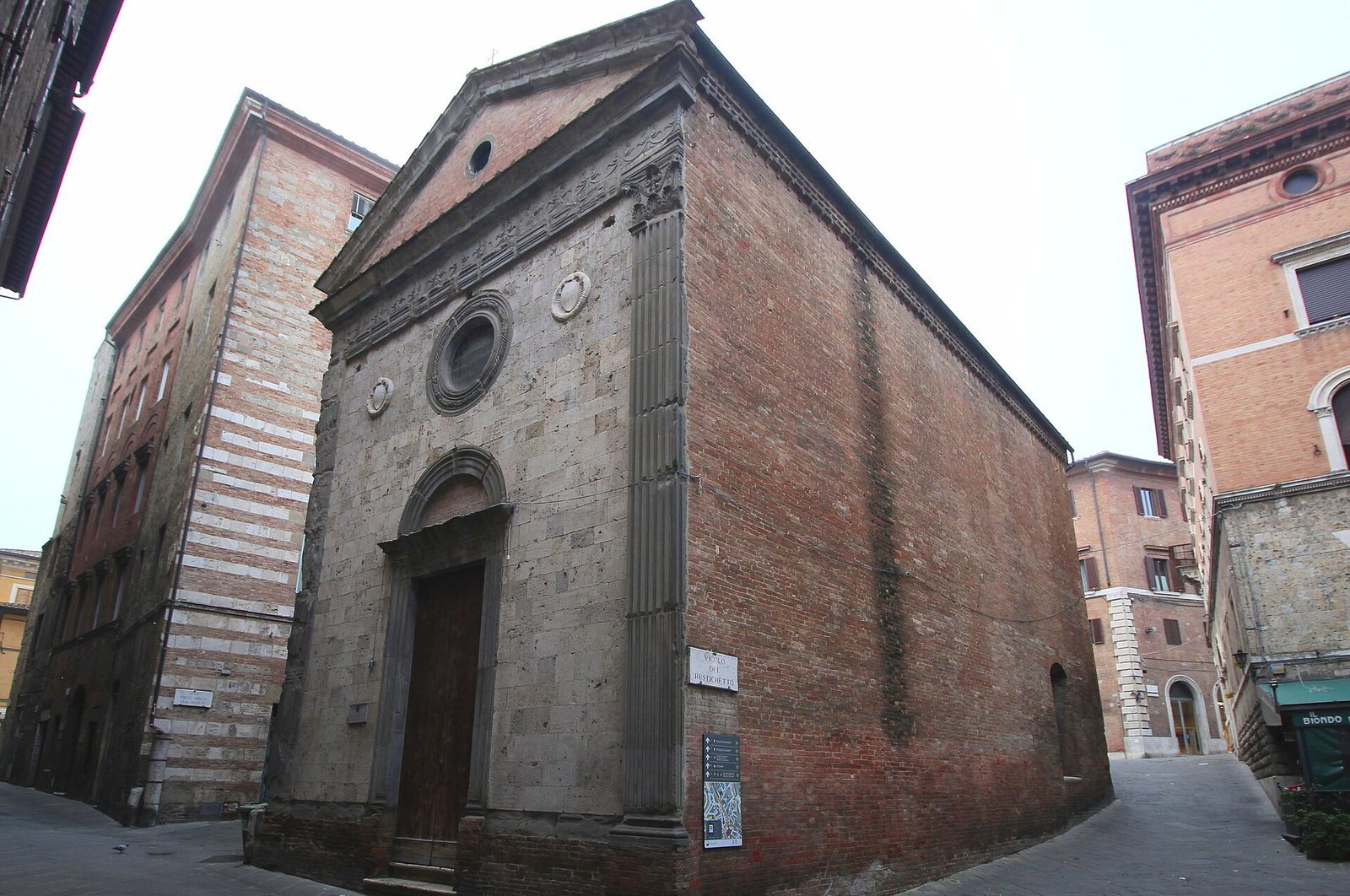
Santa Maria delle Nevi is a Roman Catholic Renaissance church on Via dei Montanini in Siena, Italy, commissioned for his family by Giovanni Cinughi, bishop of Pienza. Construction began around 1471–72 and was completed in 1477. The church is affiliated with the Archdiocese of Siena-Colle di Val d’Elsa-Montalcino. Its dedication to Our Lady of the Snows recalls a legend connected with Rome’s basilica of Santa Maria Maggiore, a story that inspired church dedications in many places.
Commission and construction
After Cinughi died, the funds needed to complete the interior ran out, and the church remained unfinished. In 1477, he commissioned an altarpiece for the church, which was made that year.
The Miracle of the Snow
The church’s title refers to a popular 13th-century legend about the founding of Santa Maria Maggiore. Mary is said to have appeared in dreams to Pope Liberius, bishop of Rome, and to the childless Roman patrician John and his wife. She promised the couple a child if they built a church on Rome’s Esquiline Hill where snow fell the following day. The couple discovered that they had shared the dream, and the pope had received the same instruction.
On August 5, during the hot Roman summer, the pope, the couple, and a procession of clergy found snow among the greenery. A church was founded at that place. The snowfall is dated either to 352 or 358, and the event became known as the Miracle of the Snow.
The convent and the church’s survival
Santa Maria delle Nevi originally belonged to the ancient convent of Sant’Egidio, associated with the Capuchin Sisters, women religious connected with a Franciscan reform. In the early 20th century, Siena’s municipality bought and demolished the convent to make way for a new square. Mayor Lisini, a historian and scholar, opposed destroying the church and losing the artworks inside it. The church was spared.
Remains
The church has a single nave, or main hall, divided into two bays and covered by cross vaults, ceilings formed by intersecting barrel-shaped sections. Its Renaissance design is attributed to Bastiano di Corso, Lorenzo di Pietro, known as Vecchietta, or another pupil of Francesco di Giorgio.
Building and layout
Façade
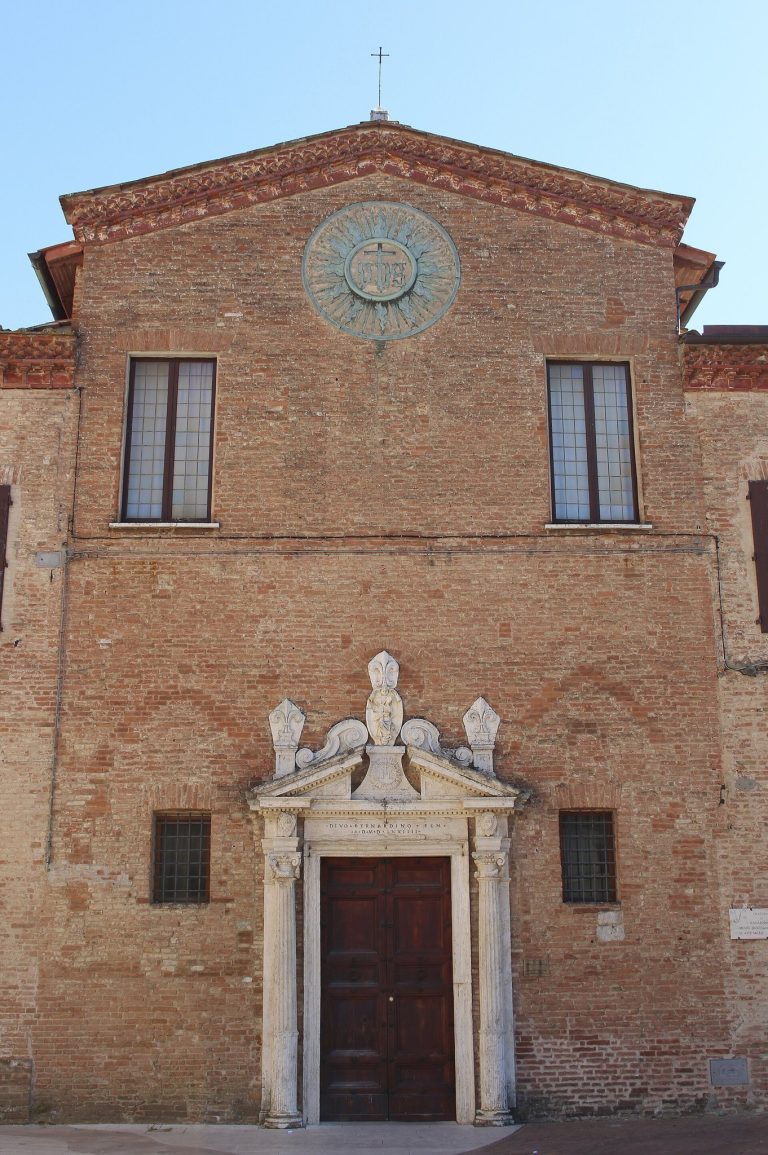
The façade is clad in travertine. It includes a tympanum, the enclosed area within a pediment, and pilasters, shallow projections resembling columns, topped by Corinthian capitals, ornate tops decorated with leaf forms. A round window sits above a gray sandstone portal, with marble shields bearing the Cinughi family arms on either side.
Nave and unfinished interior
The round window and two windows on the left provide light to the interior. Two windows planned for the right side were left unfinished, as were the decoration of the side walls and the vaults.
Former convent
The convent complex extended across both sides of Via Malavolti and joined the two sides with an arch over the street. Santa Maria delle Nevi formed part of this larger complex.
Altar and sculpture
Main altarpiece
The main altar holds a large tempera-on-wood altarpiece signed and dated 1477 by Matteo di Giovanni. It shows the enthroned Virgin and Child, with Saints Peter and John the Evangelist beside them and Saints Lawrence and Catherine of Siena in front. Behind the figures, angels carry trays of snow. The predella, the panel at the base of an altarpiece, depicts the snowfall as occurring in 358 and includes the Cinughi family arms. Catherine of Siena, represented in the painting, had been canonized in 1461.
Stucco reliefs
Stucco reliefs beside the altar depict Saint Joseph and Saint Mary Magdalene de’ Pazzi. The works, sculpted figures raised from a surface, are attributed to the Sienese sculptor Giuseppe Maria Mazzuoli and date to the 18th century.