Palazzo degli Sporti: A Mannerist Palace in Florence
Site at a Glance
- Popularity
- Very Low
- Country
- Italy
- Primary era
- Early Modern
- Eras represented
- Early Modern, Modern
- Civilizations
- Duchy of Florence, Holy Roman Empire
- Site type
- Domestic
- Remains
- Elite Residence
On this page6 sections
History
Palazzo degli Sporti, also known as Palazzo Busini Ugolini, is a Mannerist palace in Florence, Italy, built in its present form around 1532 by Luca degli Albizi. Mannerism was a sixteenth-century style that followed the High Renaissance. Earlier houses belonging to the Albizi family stood on the site. In 1508, Filippo di Michele da Nipozzano of the Albizi sold the nearly ruined properties to Anton Francesco degli Albizi, Luca’s father.
Ownership and literary society
Ownership passed from the Albizi to the Orlandi, who were creditors of the family, and then to the Busini. The palace later came by inheritance to a nun from a family associated with the monastery of Santa Caterina al Monte, also known as San Gaggio.
In 1631, the Bolognese man of letters Agostino Coltellini founded a society at the palace for young people from the School of Humanities to meet for “virtuous conversation.” Four years later, it became the Academy of the Apatists, a literary academy.
Later changes and recognition
A tradition credits the palace to Michelangelo, the Italian Renaissance artist, architect, and sculptor, but the attribution is considered unfounded. A connection to Baccio d’Agnolo, a Florentine Renaissance architect and woodworker, is also doubtful. In the nineteenth century, an alteration changed the building’s sharp projecting corner. In 1901, the palace appeared on a list of monumental buildings regarded as part of Italy’s national artistic heritage.
Remains
Layout and projecting façades
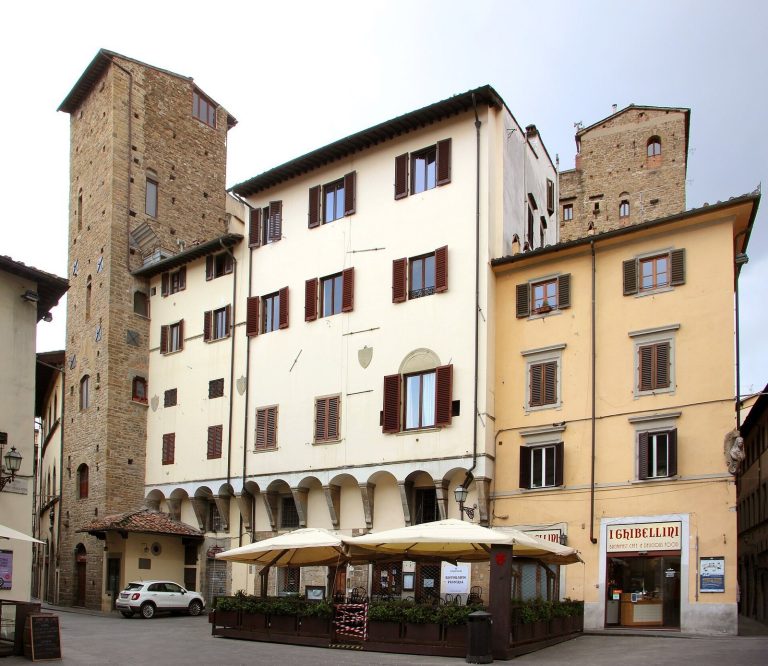
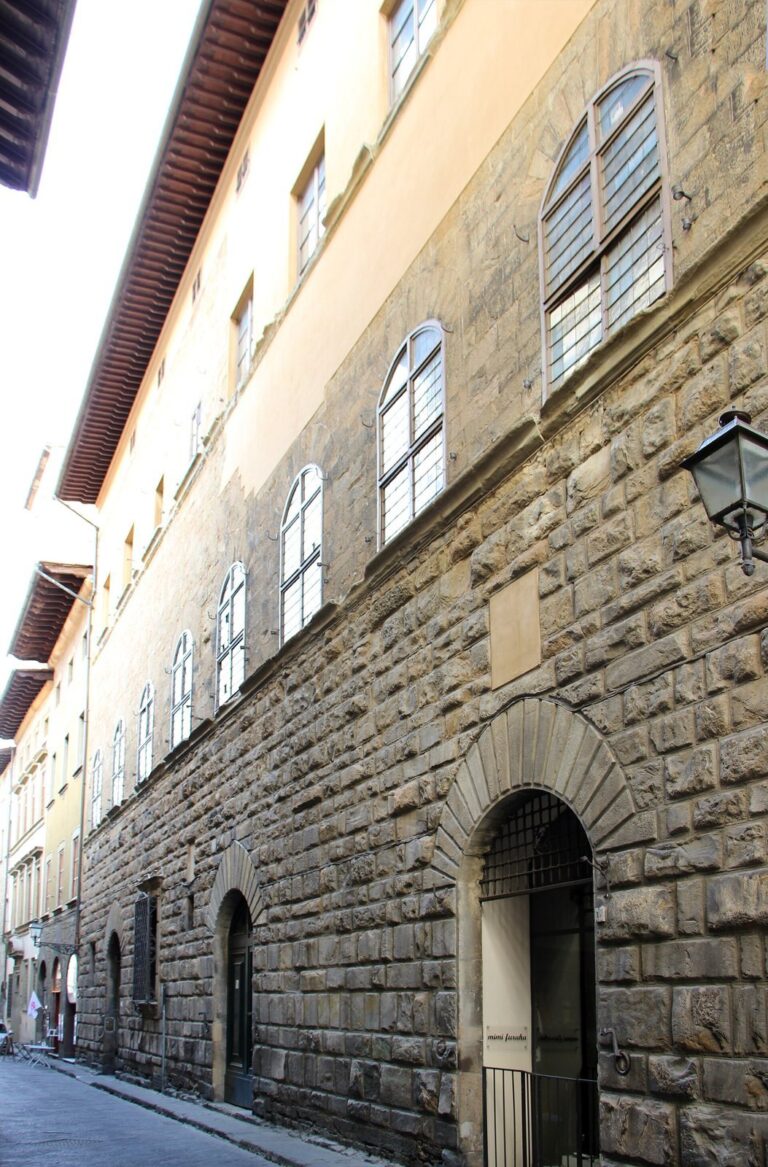
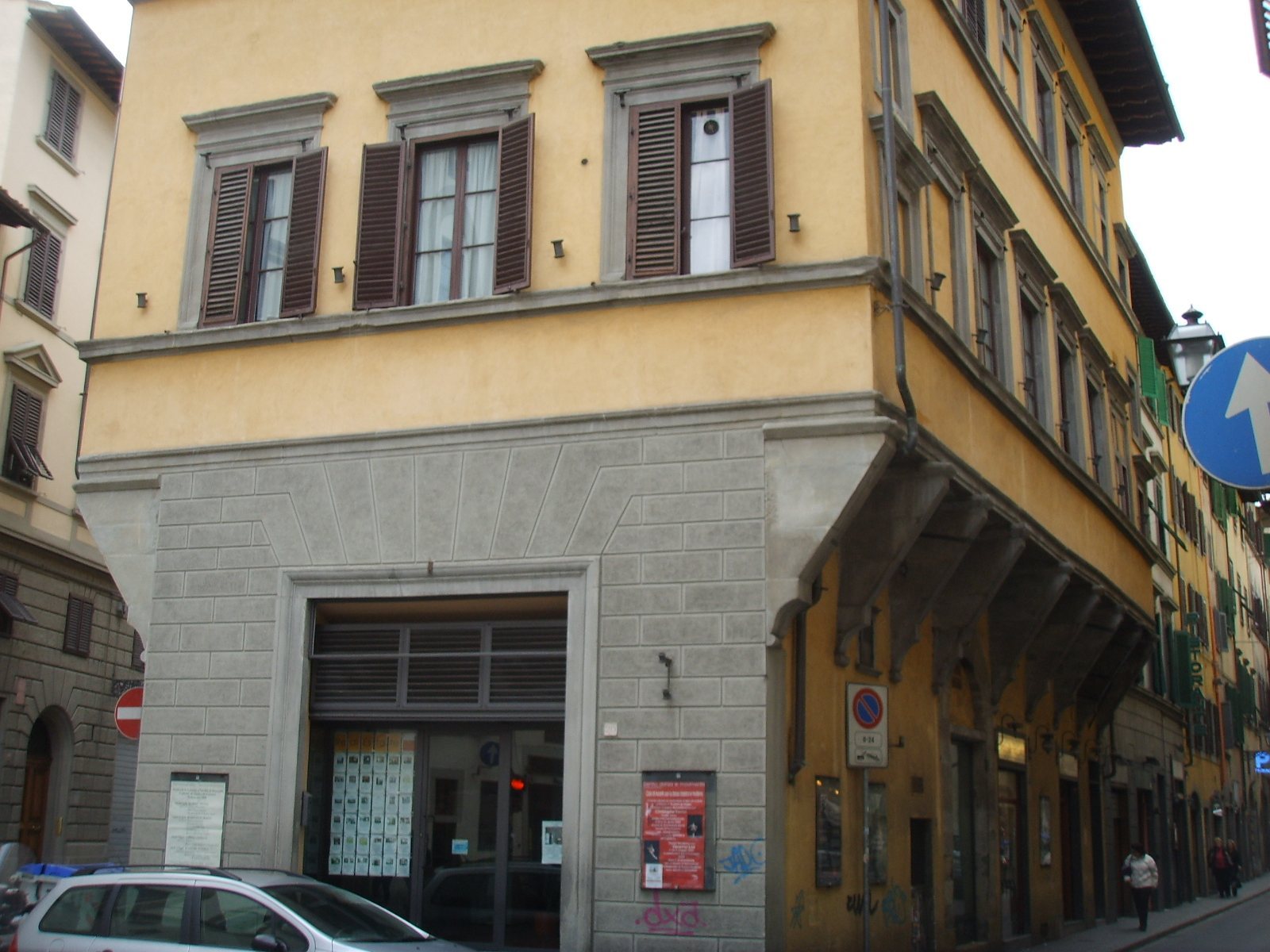
The three-storey palace stands at the corner of Via dell’Oriuolo and Via Sant’Egidio in Florence’s historic centre, facing both streets. It is opposite a small unnamed square near the San Pierino arch, at the junction with Borgo Pinti. Its Mannerist design features upper façades that project outward on corbels, short supports built into the wall. These projecting forms give the palace its name, Palazzo degli Sporti.
The projecting corner once ended in a sharp point resembling a ship’s prow. Its nineteenth-century chamfer, or cut-back corner, created a new façade on the short side, with imitation rough-cut stonework at ground level. The upper-storey elevations remain visually unified, suggesting that the alteration affected a low section, which may have formed the projecting point with a terrace.
Doorway emblems
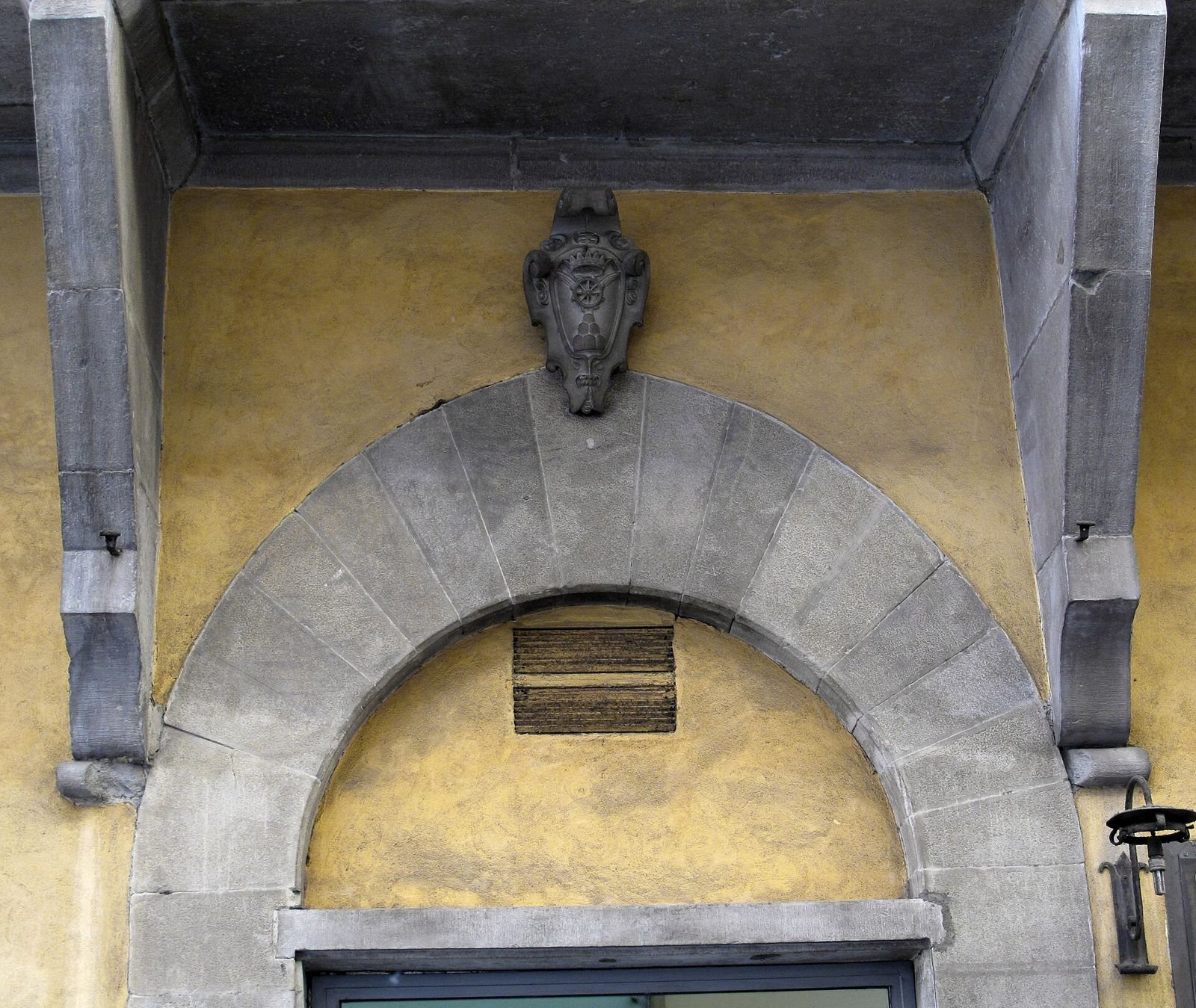
A wheel flanked by palms of martyrdom appears on the doorways facing Via Sant’Egidio and Via dell’Oriuolo. These are symbols of Saint Catherine of Alexandria, a Christian martyr traditionally associated with the wheel. Both doorways are now blocked. A recent restoration has left the building in good condition.