Palazzo Citterio: An Eighteenth-Century Palace and Brera Art Museum in Milan


Site at a Glance
- Rating
- 4.3
- Popularity
- Low
- Country
- Italy
- Primary era
- Early Modern
- External website
- Open
- Eras represented
- Early Modern
- Civilizations
- Habsburg
- Site type
- Domestic
- Remains
- Elite Residence
On this page11 sections
History
Eighteenth-century origins
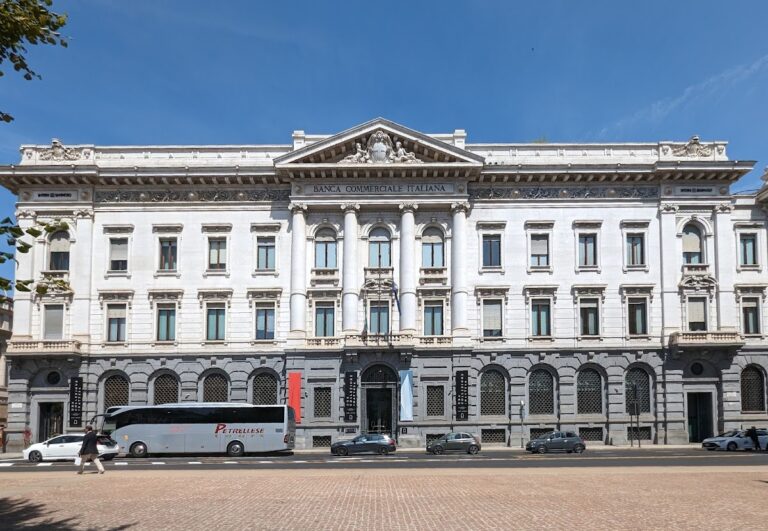
Palazzo Citterio is an eighteenth-century palace in Milan, Italy, built in the classical style for the Citterio family. The family originated in the Alessandria area before moving to Milan, where it established the residence as a noble urban palace.
Changing ownership
After the Citterio family, the palace was acquired first by the Fürstenberg family and later by the Rosenberg Colorni banking family. These successive owners preserved the building’s role as an important residence within the Brera district.
The Grande Brera project
The Italian state purchased Palazzo Citterio in 1972 as part of the Grande Brera, a redevelopment project intended to expand and reorganize Milan’s Brera cultural complex. The palace was planned to display part of the collections held in the Brera Picture Gallery, while also providing classrooms and offices.
Restoration and changes to the internal layout began in the 1980s. A principal phase took place from 2012 to 2018 under James Bradburne and Angelo Crespi. The works were completed in 2024 under Crespi’s directorship, with final interventions including air-conditioning, structural reinforcement, and new exhibition installations prepared between June and October.
Occupation and museum use
Following a provisional opening for an exhibition by Paul McCarthy, Palazzo Citterio was occupied on 19 May 2012 by Macao, a Milanese self-managed cultural and political collective. Its occupants had recently been evicted from the Torre Galfa, a Milan office tower. Police, Carabinieri, and the Italian Army took part in the operation that removed the occupants on 22 May.
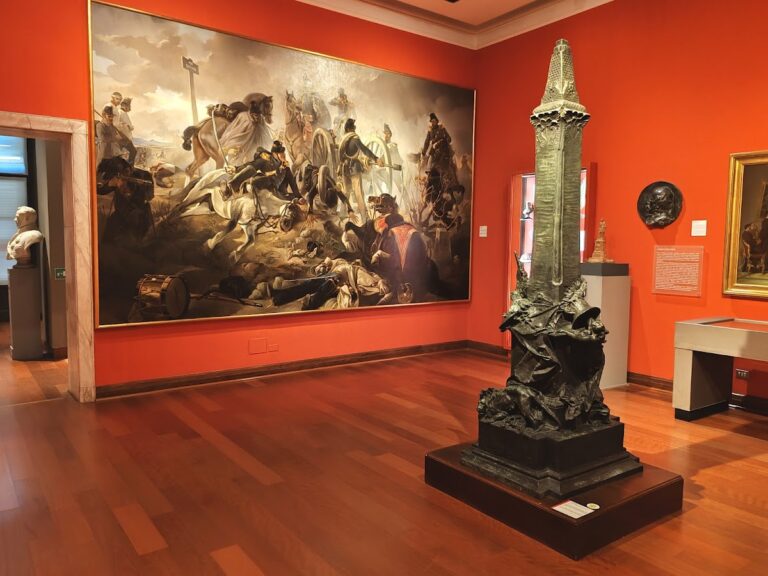
Since 6 December 2024, the palace has housed the nineteenth- and twentieth-century collections of the Brera Picture Gallery, including all of the gallery’s paintings created after 1861. These holdings include works by Umberto Boccioni, Giorgio Morandi, and Pablo Picasso. The building also presents older works by Leonardo da Vinci, Alberto Sozio, the Master of the Poldi Pezzoli Altarpiece, and the Master of San Martino alla Palma. The last two names are conventional designations for unidentified historical artists associated with particular works or locations.
Remains
Palace and interior layout
Street front and courtyard
Facing Via Brera, Palazzo Citterio retains the form of a classical eighteenth-century noble residence. Its front is distinguished by elegant iron balconies decorated with arabesque patterns. The entrance is placed on the ground floor, where the ticket office occupies part of the present museum arrangement. In the former courtyard stands a small wooden temple inspired by Raphael’s Marriage of the Virgin, a celebrated Renaissance altarpiece. The Salone del Mobile, Milan’s international furniture and design fair, donated the temple.
Floors and collections
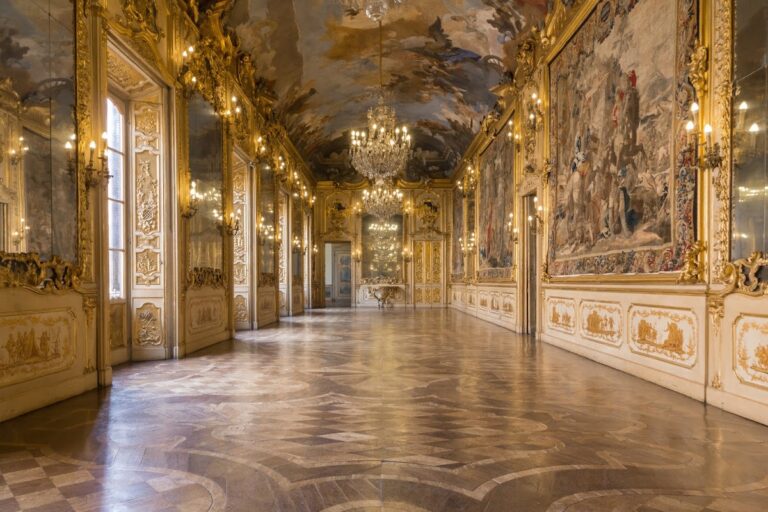
A monumental staircase leads from the entrance to three additional floors. The first, or piano nobile, is the principal ceremonial floor of a historic Italian palace and contains important reception rooms. The permanent Jesi Collection occupies the side facing Via Brera, while the Vitali Collection is installed toward the garden adjoining the Botanical Garden, a cultivated scientific garden. The ticket-office area includes a curved-line table sculpture that also functions as the bookshop.
Fiumana room
One room on the piano nobile was designed by Isabella Marini to contain Giuseppe Pellizza da Volpedo’s Fiumana. The painting is a study for the better-known The Fourth Estate, giving the room a specific connection to the presentation of the collection.
Temporary exhibition floors
The basement and second floors are used for temporary exhibitions. Their inclusion within the restored palace provides exhibition areas alongside the permanent collections and the rooms of the former residence.
Nearby sites