Palazzo Ceriana: A Nineteenth-Century Palace and Office Building
Site at a Glance
- Rating
- 5
- Popularity
- Very Low
- Country
- Italy
- Primary era
- Modern
- Eras represented
- Modern
- Civilizations
- Italian
- Site type
- Domestic
- Remains
- Elite Residence
On this page6 sections
History
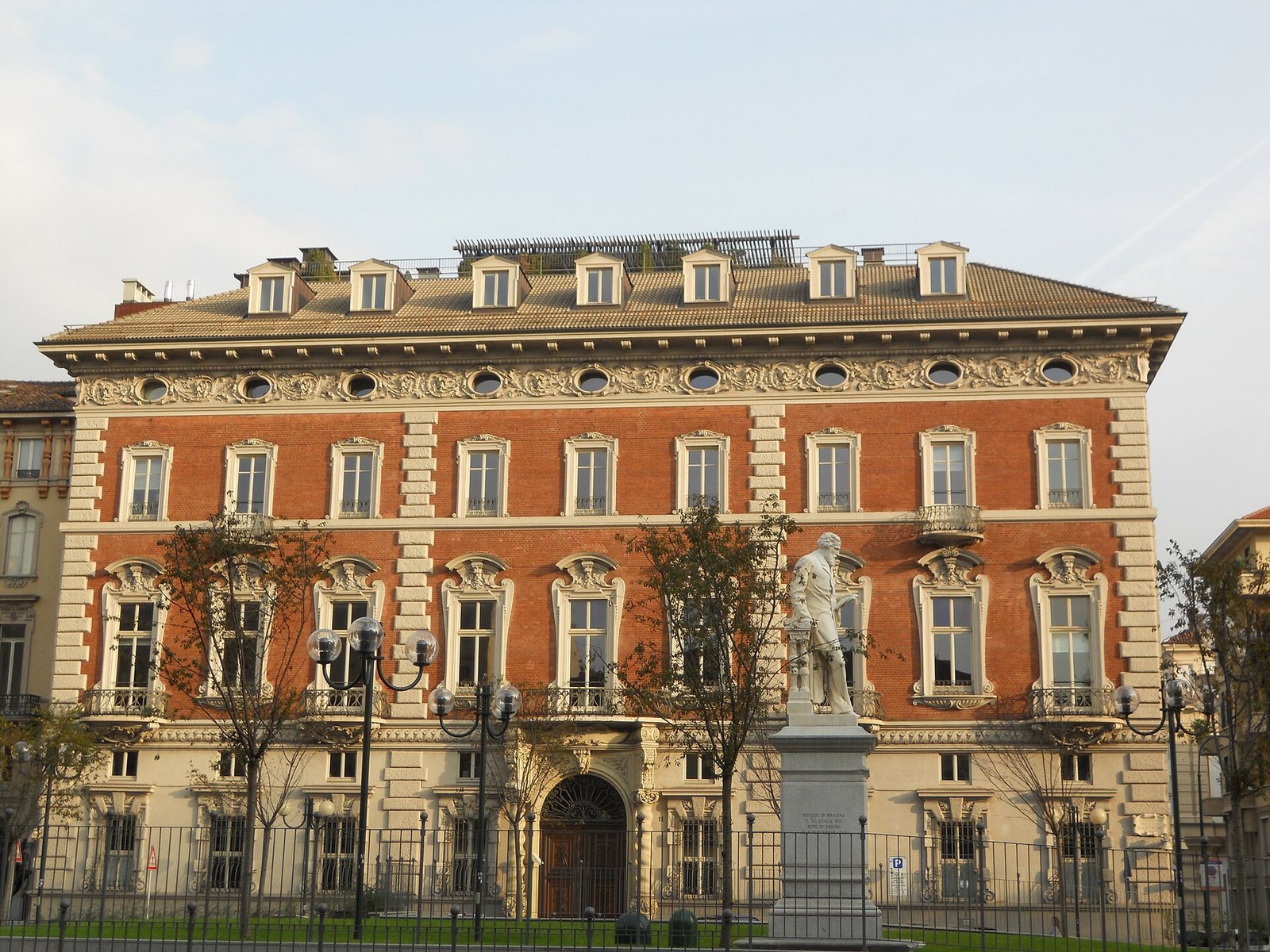
Palazzo Ceriana is a palace in Italy, commissioned by the Ceriana family, Turin bankers and silk industrialists, and built from 1870 to 1878 to a design by Carlo Ceppi. Its eclectic architecture combines elements from different styles, and its facade uses Neo-Baroque forms, a later revival of Baroque design.
Construction and Burgo offices
From 1940 to 1980, the palace housed the general management offices of the Burgo paper company. Cardinal Maurilio Fossati, then archbishop of Turin, attended the offices’ inauguration. In 1952, an electrician died while trying to repair an elevator in the building.
Toro Assicurazioni and later use
The palace later became the offices of Toro Assicurazioni, an Italian insurance company, which moved to a nearby building of the same name. An employee died of pleural mesothelioma, a cancer affecting the lining around the lungs, after exposure to asbestos fibers in a false ceiling on the fifth floor. In 1999, four Toro executives were sent for trial on a charge of negligent bodily injury in connection with the case.
The Giubergia family acquired the palace in 2003. It became the headquarters of Ersel, a Turin financial firm specializing in managing substantial assets, and continues to be used for offices.
A separate palace commissioned by the Ceriana-Mayneri branch in 1884 was also designed by Ceppi. That building now houses the administrative offices of the Circolo della Stampa (Press Club).
Remains
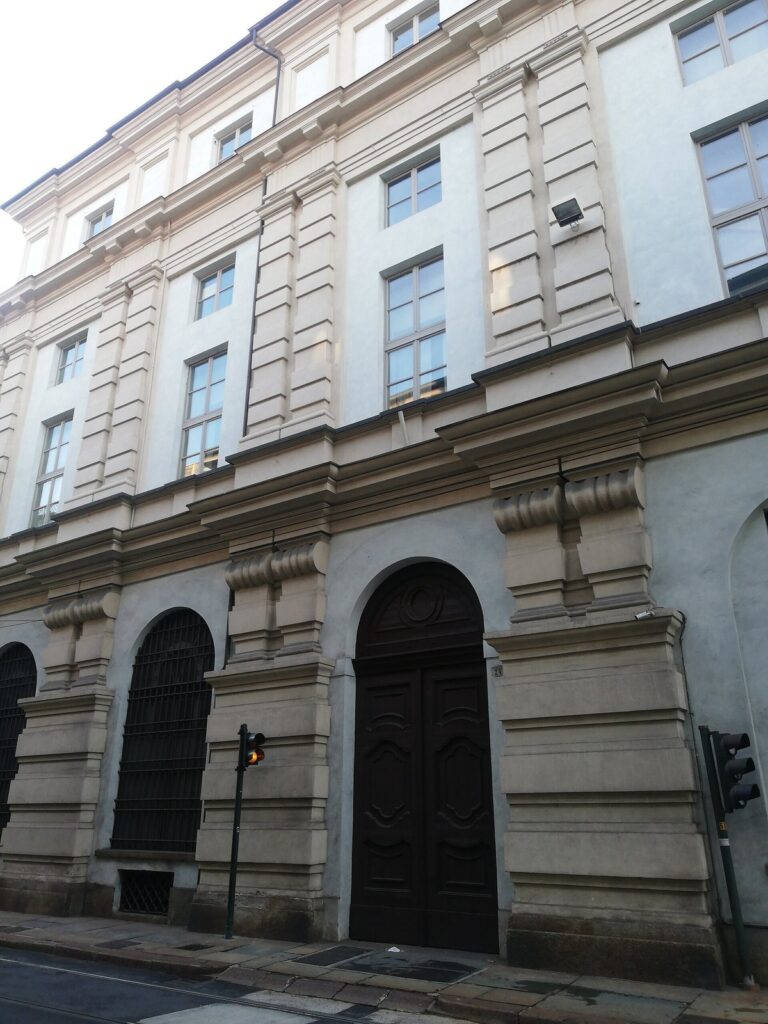
Palazzo Ceriana occupies the right-hand side of Piazza Solferino, at the corner with Via Arcivescovado. Its eclectic design draws on different styles, while the facade is Neo-Baroque.
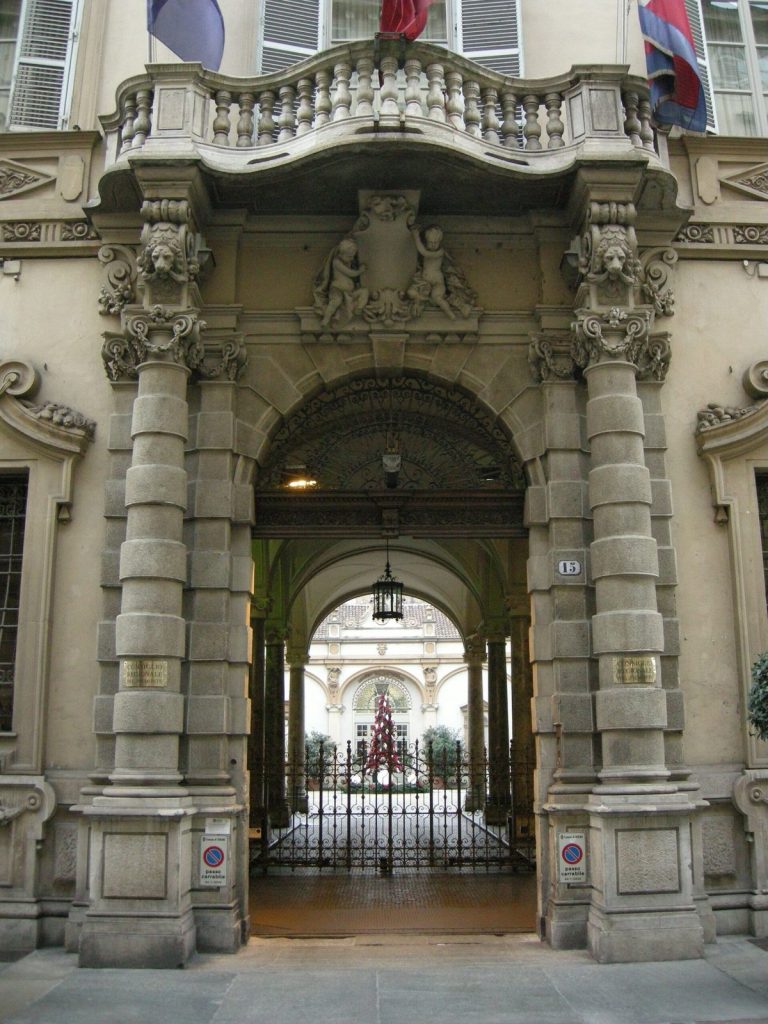
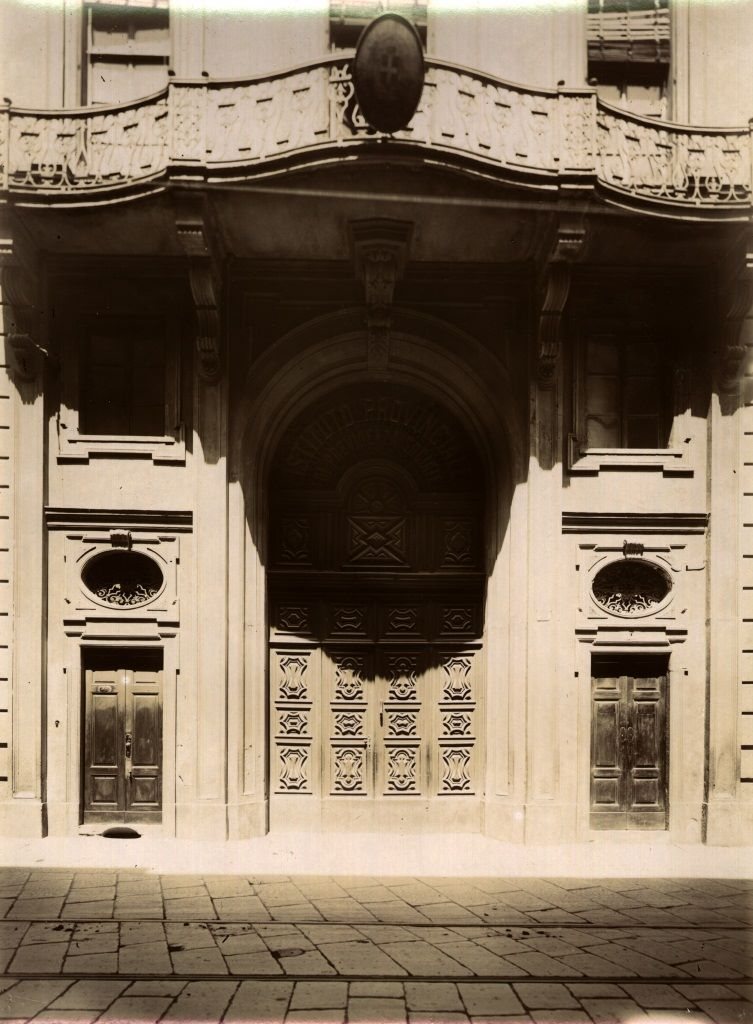
Facade and entrance
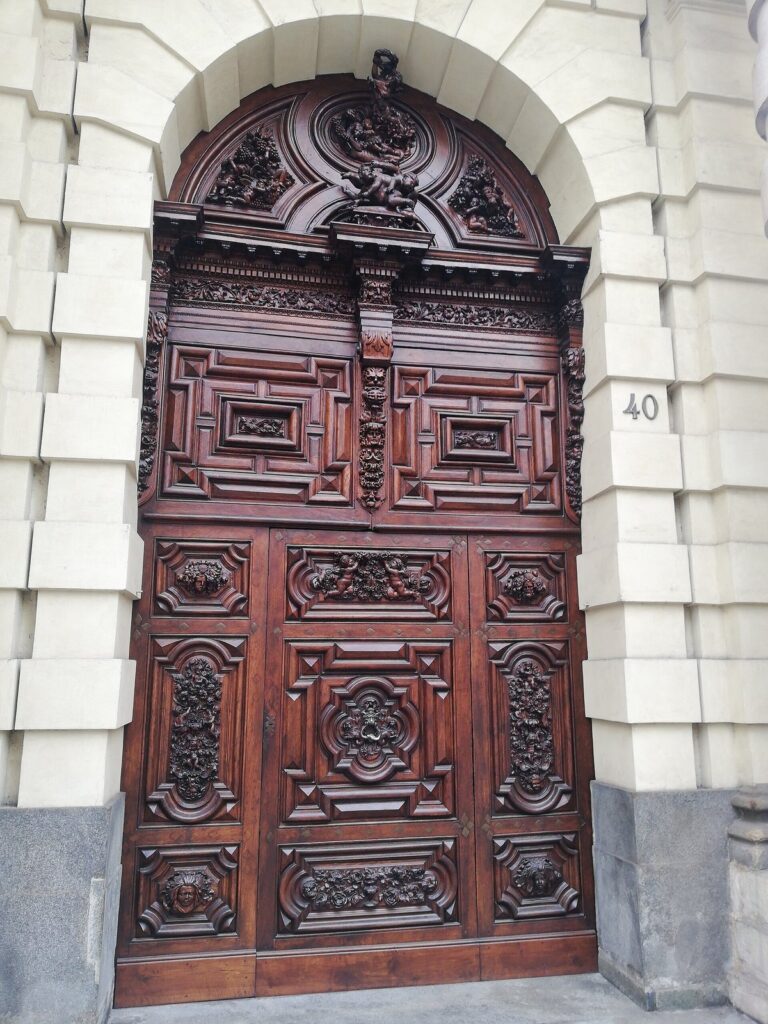
The entrance portal is made of marble and framed by twisted columns.
Main atrium
In the main atrium, large harpy figures form a circle. In Greek mythology, harpies have women’s faces and birds’ bodies; here, the figures are arranged as if guarding the palace.