Church in the Wood: St Leonard’s Parish Church in Hollington
Site at a Glance
- Popularity
- Medium
- Country
- United Kingdom
- Primary era
- Modern
- Eras represented
- Medieval, Modern
- Civilizations
- British, English, Norman
- Site type
- Religious
- Remains
- Church
On this page8 sections
History
Church in the Wood, also known as St Leonard’s Church, is an active Church of England parish church in Hollington, Hastings, East Sussex, in the United Kingdom. Its present church replaced an earlier chapel during the 13th century and is in the Early English Gothic style, a phase of English medieval architecture. A will written in 1139 refers to a chapel on this site in 1090.
Medieval origins and parish
Hollington manor appears in the Domesday survey of 1086, a major English record of landholding and resources, as comprising 4½ hides. A hide was a medieval measure for assessing land, although its area varied. The survey does not mention a church or chapel at Hollington. The church is almost certainly the successor to the chapel referred to in the later will, and a church had replaced it by the 13th century.
The manor house and its scattered settlement stood on a ridge about 2.5 miles northwest of Hastings. One tentative explanation for the church’s isolation is that the manor passed early to the lord of nearby Crowhurst, who may have left Hollington’s manor house and surrounding area. The chapel could then have been the only building still in use as woodland grew around it. Until after the Second World War, the church stood about half a mile from the nearest house.
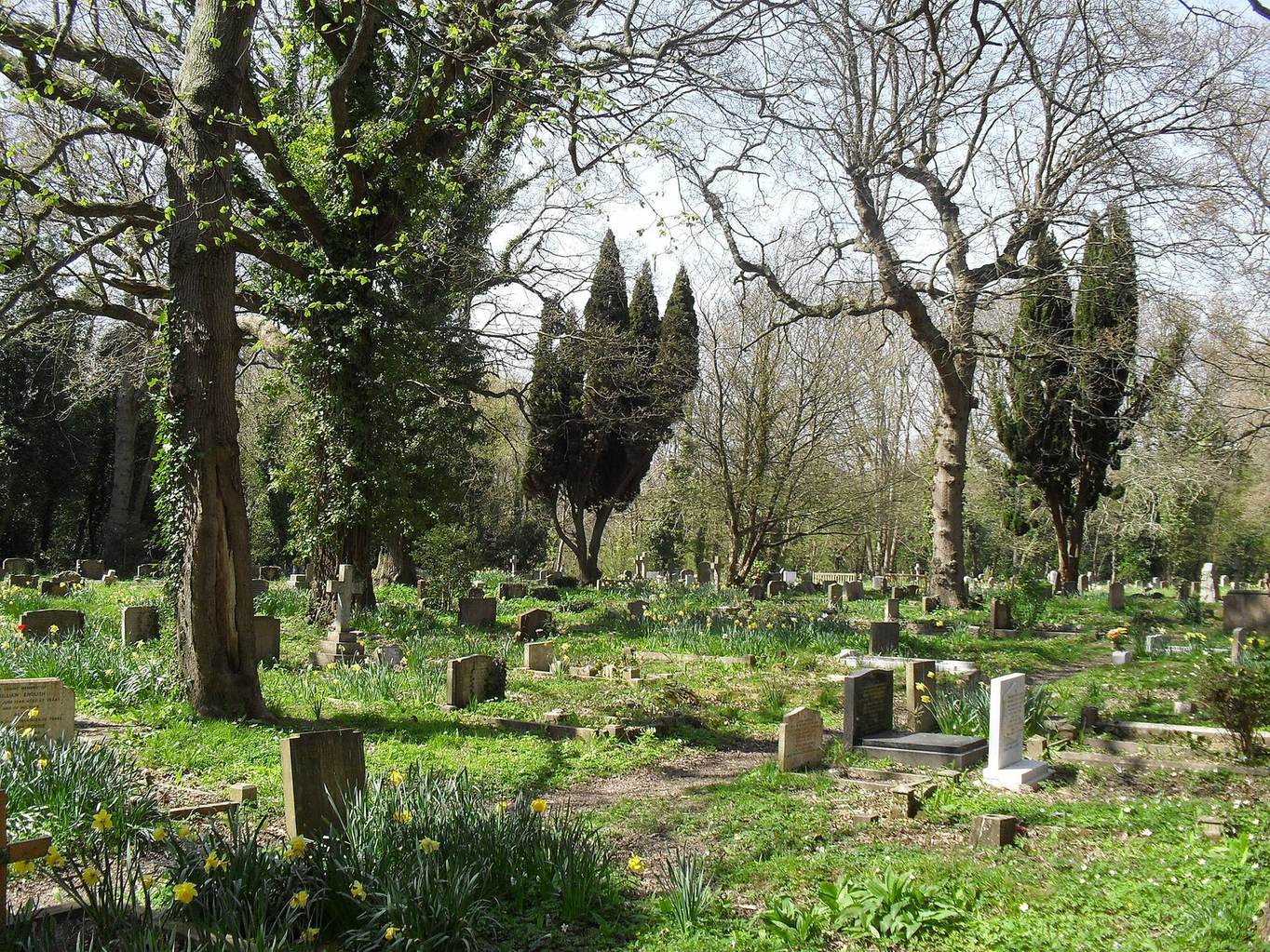
The first recorded vicar, or parish priest, dates to 1288. The earliest named vicar was John de Levenyngton, who moved to All Saints Church in Hastings Old Town in 1344. The churchyard has served as a burial ground for centuries; its first recorded burial was in 1606. It remains the last private burial ground in the Borough of Hastings.
Dedication, traditions, and isolation
The church’s original dedication was to St Rumbold, first recorded in 1562. Its later name came from a separate St Leonard’s Church near present-day Norman Road. That church was among seven churches listed in Hastings in 1291 and had disappeared by 1428. It then became a free chapel, an ecclesiastical foundation with a status distinct from an ordinary parish church, within Hollington’s parish, and its former parishioners worshipped at Hollington. The name St Leonard’s was first used for the Hollington church in 1712 and became established over the following 150 years. From the mid-19th century, “Church in the Wood” gained popularity after James Burton founded a new St Leonard’s Church in St Leonards-on-Sea and St John the Evangelist’s Church was established in Hollington.
A probably medieval legend attributes the church’s isolated position to a struggle with the Devil. In the tale, the builders’ work was destroyed each night and a voice demanded another site. After the church was rebuilt where the Devil approved, woodland grew around it, either to shield it from the Devil’s influence or to hide it from parishioners. A separate story attributed a miracle to a former vicar in 1488. Three men supposedly robbed him while he travelled to a service and cut out his tongue and eyes to stop him identifying them. His sight and speech were said to return in time for him to testify and secure their punishment.
Writers repeatedly remarked on the church’s seclusion. Descriptions from 1777 and 1874 emphasized the trees and the lack of nearby houses, while an 1845 guidebook considered the setting more striking than the building. After visiting Hastings in 1823, the English essayist Charles Lamb described a church standing alone in a grove, with no dwelling within a quarter mile and wooded paths leading to farmhouses.
Restoration and changing surroundings
By the mid-19th century the church was in serious decay, and in 1834 it was judged beyond advisable repair. Sir Charles Montolieu Lamb, a local landowner at nearby Beauport Park and unrelated to the writer, wanted it closed and replaced nearer his land. Parishioners instead called for the old church to be repaired. Work began in 1847 and continued for nearly two decades. The church closed temporarily during repairs in 1861. Matilda Dampner then paid for a complete restoration in 1865 in memory of her parents; the church closed again during the work and reopened in 1866. The restoration gave the building a predominantly Victorian appearance.
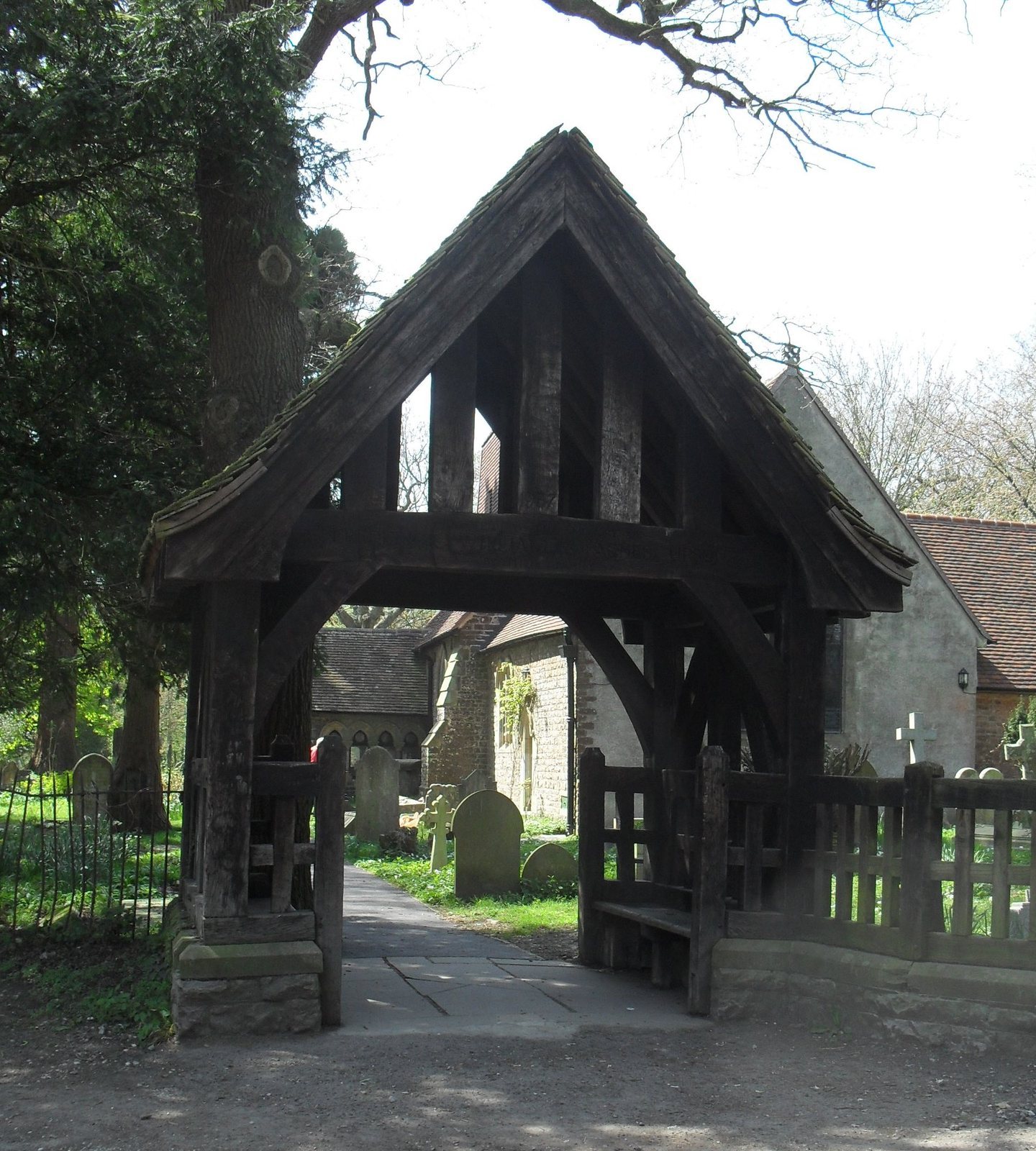
Hollington lost some parish territory to the newly built St John the Evangelist’s Church in 1870, and it became part of the Borough of Hastings in 1897. A lychgate was added at the churchyard entrance in 1937, followed by general repairs in 1964 and an extension in 1977. Twentieth-century housing growth, including a large council-estate scheme proposed in 1962, ended the church’s rural setting. The ancient woodland around it was preserved and is now one of Hastings borough’s six nature reserves.
Remains
Plan and medieval fabric
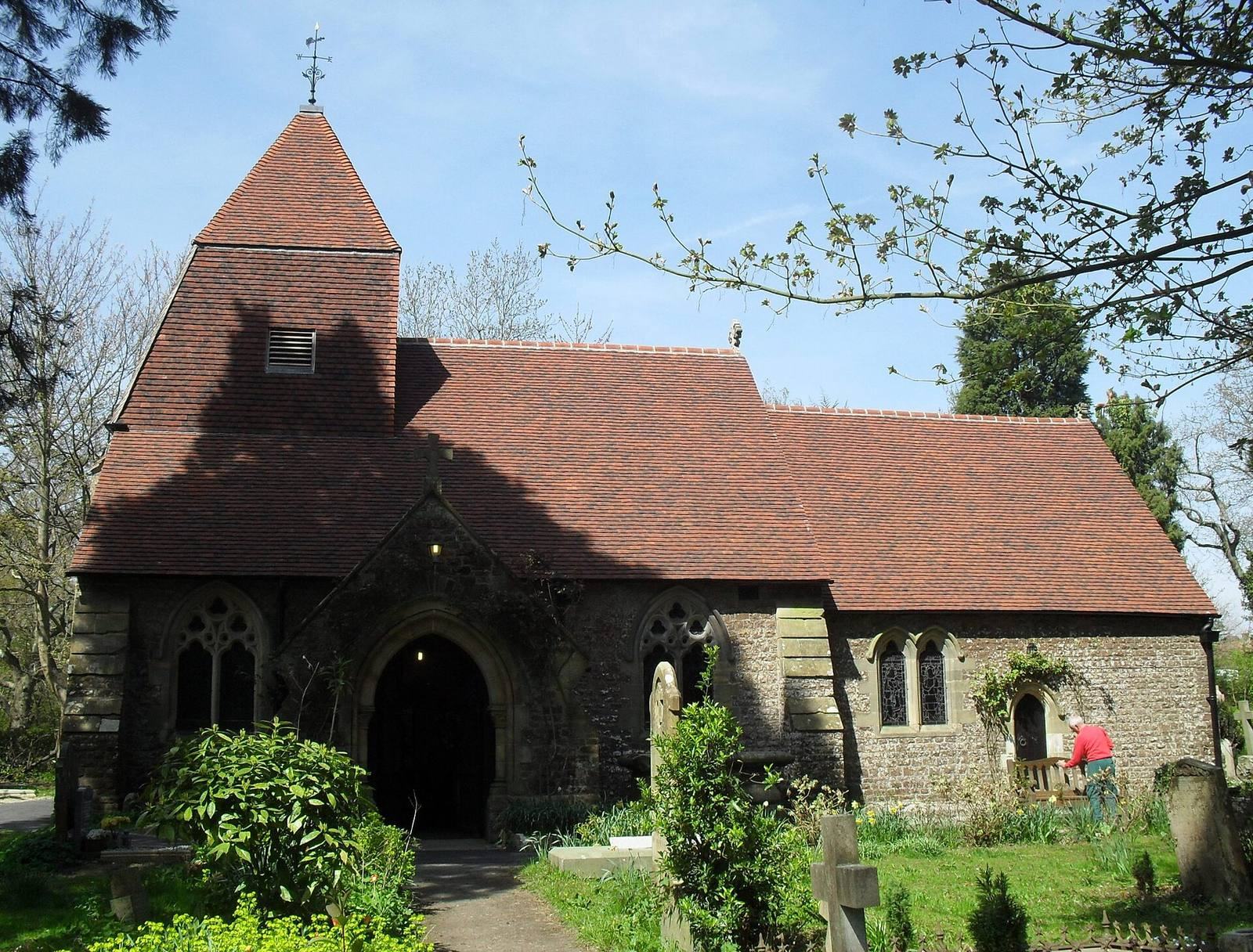
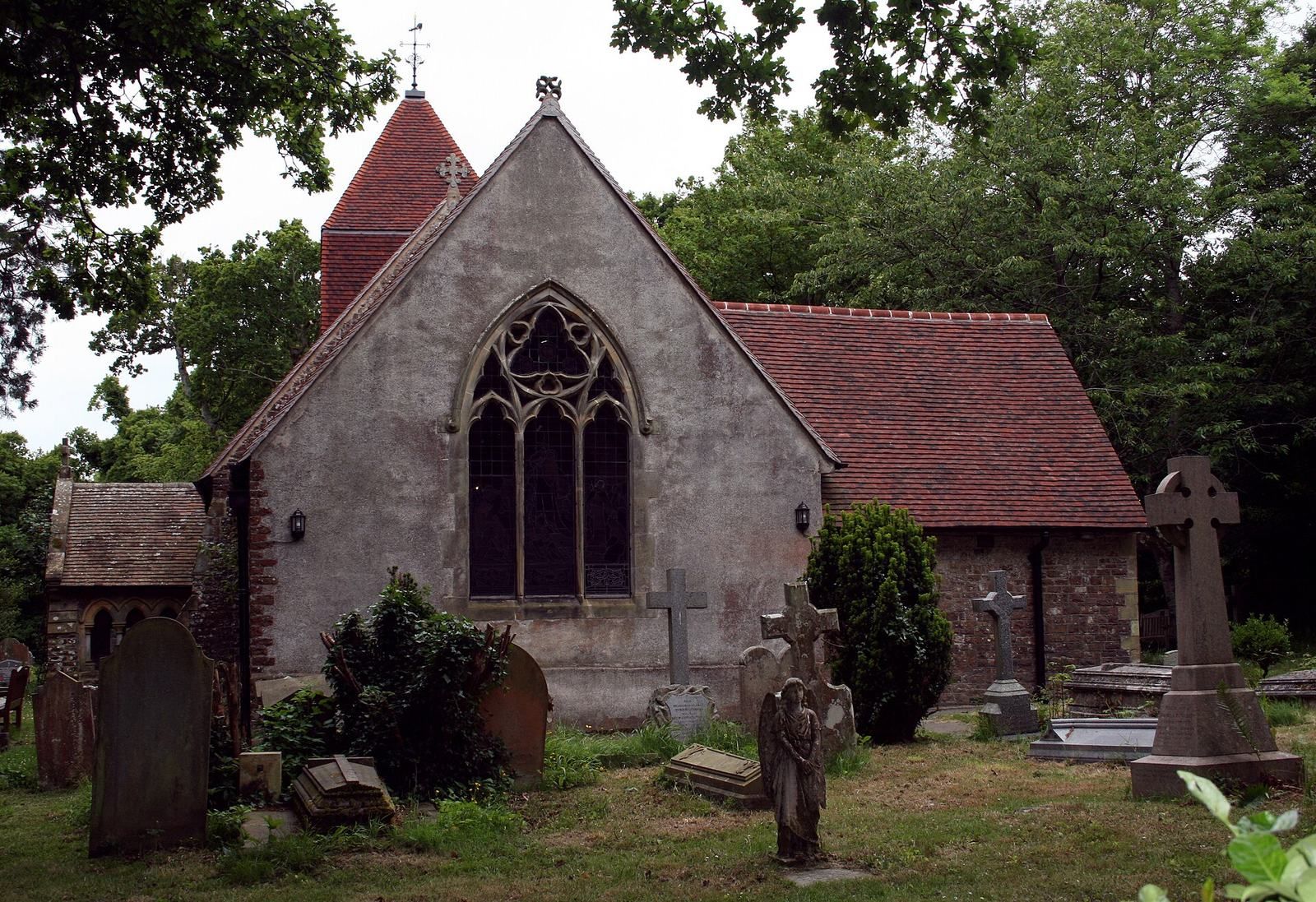
Set within ancient woodland and a large churchyard, the church has a three-bay nave, the main body divided into three structural sections, and a two-bay chancel, the altar area divided into two sections. At the west end is a low, two-stage bell tower; the building also includes a vestry, porch, and modern parish hall. A later extension provides a parish room and another vestry. The walls are built mainly of local blue-grey stone laid as irregular masonry, with dressings of Bath and Caen stone. The roof is tiled, and the tower has a pyramid-shaped, tile-covered cap that was originally weatherboarded.
Medieval stonework and timbers survive chiefly in the nave’s west and north walls and in the tower. Only a few fragments from the Norman period, the era following the Norman Conquest of 1066, remain after the Victorian restoration.
Chancel and windows
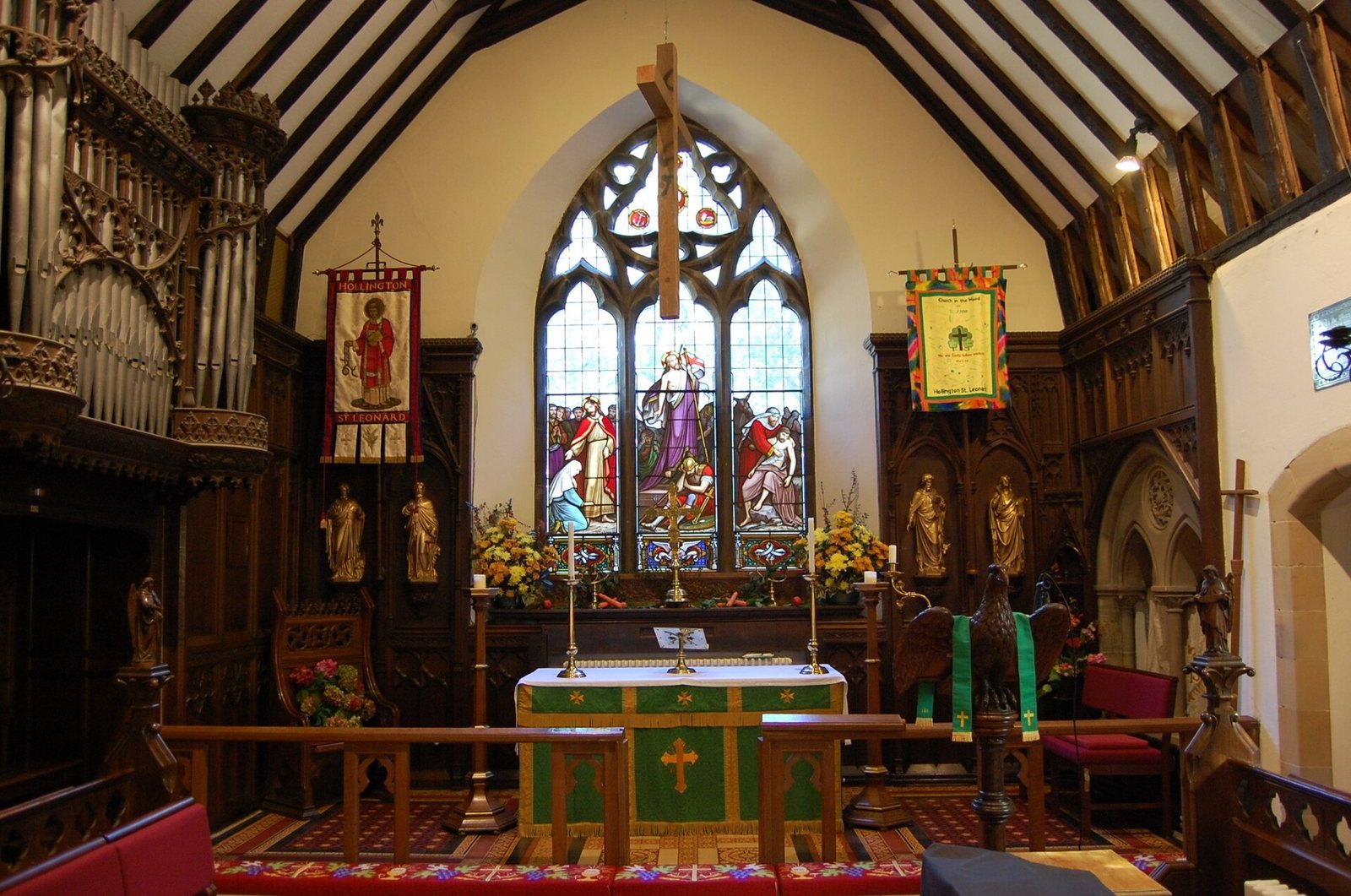
The chancel was rebuilt in 1865 at a lower height than its predecessor, and an ornate arch was added between it and the nave. Its east window has three narrow, pointed openings with Decorated Gothic stonework, a later phase of English medieval architecture. Jean-Baptiste Capronnier added stained glass showing the Resurrection, the Christian belief that Jesus rose from the dead, in 1873. A south-side window dated 1886 depicts Faith and Hope, while a north-wall window from 1875 depicts Charity. Both were probably made by the British firm Clayton and Bell.
Tower and churchyard features
The tower holds a bell cast between 1371 and 1392. It is the oldest bell in Hastings and among the oldest in Sussex. At the churchyard entrance stands the roofed lychgate, traditionally a place where a coffin could be set down before burial. The oldest surviving gravestone in the churchyard dates to 1678.