Palazzo Canossa: A Baroque Palace in Mantua
Site at a Glance
- Popularity
- Medium
- Country
- Italy
- Primary era
- Early Modern
- Eras represented
- Early Modern
- Civilizations
- Holy Roman Empire
- Site type
- Domestic
- Remains
- Elite Residence
On this page6 sections
History
Construction and Canossa family
Palazzo Canossa is a Baroque residence in Mantua, Italy, commissioned by Marquis Orazio Canossa and built between 1659 and 1673. The Mantuan Canossa were a branch of a noble family from Verona. The Gonzaga, Mantua’s ruling dynasty, granted them the title of marquis.
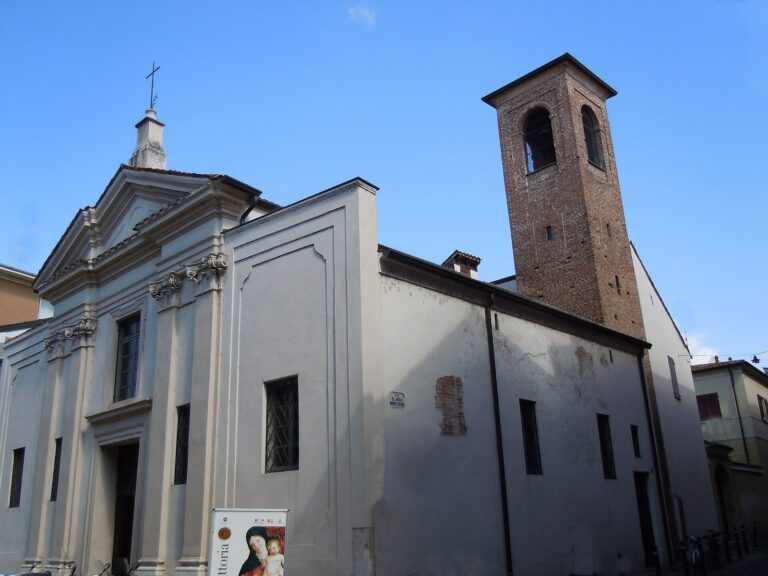
The Canossa family lived in the palace until the mid-nineteenth century. Across from it, the Church of Madonna del Terremoto, or Our Lady of the Earthquake, was erected in the mid-eighteenth century. It was associated with appeals for protection from earthquakes and with Mantua’s deliverance from them.
Changing uses and restoration
After the Canossa family’s period of residence, the palace’s rooms were put to a range of uses, including offices, schools, laboratories, and an outpatient clinic. The Colaninno family acquired the building in 2004. Restoration based on a design by architect Massimiliano Fuksas began in January 2011, and rehabilitation work was underway in 2015.
Remains
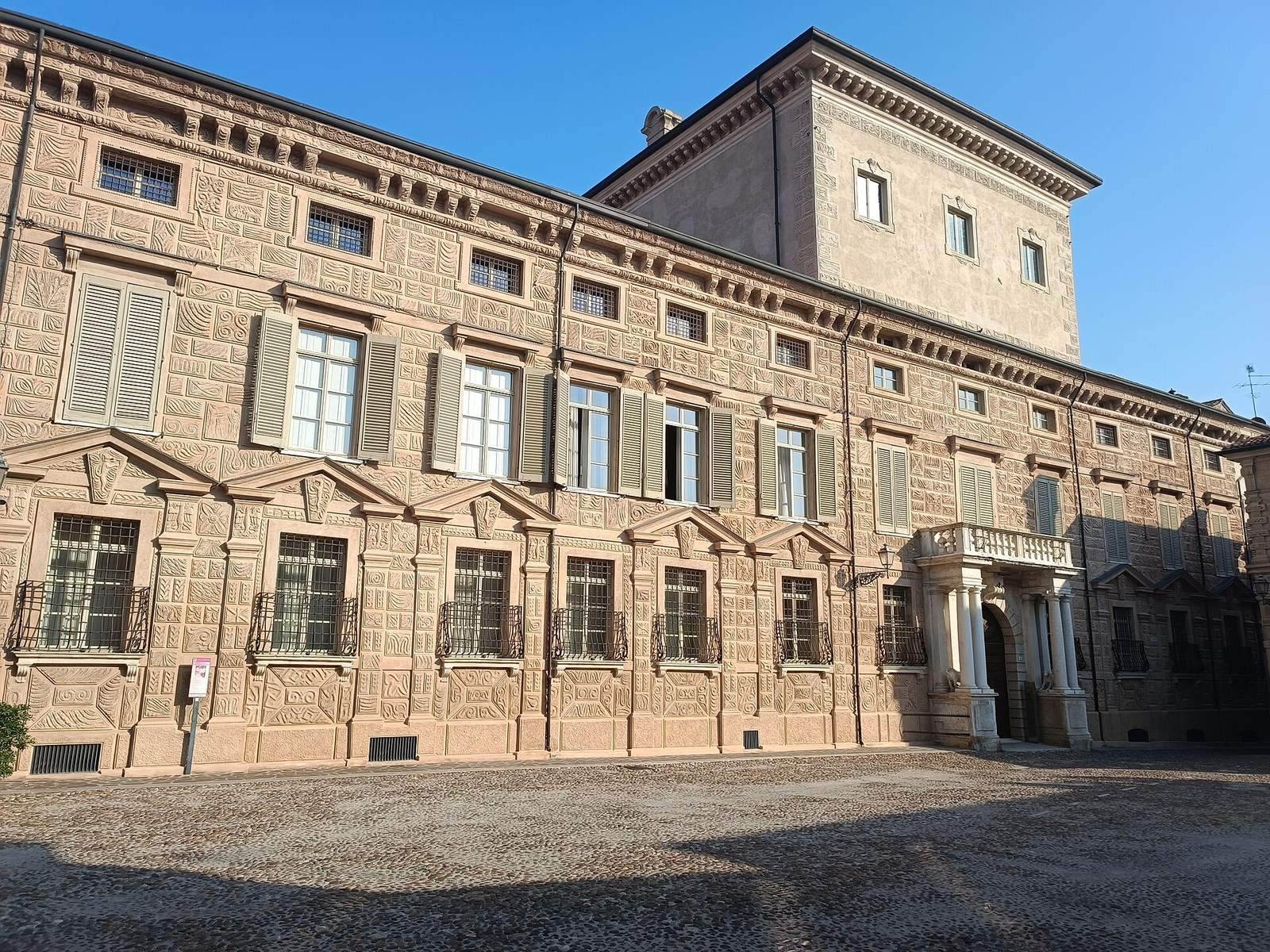
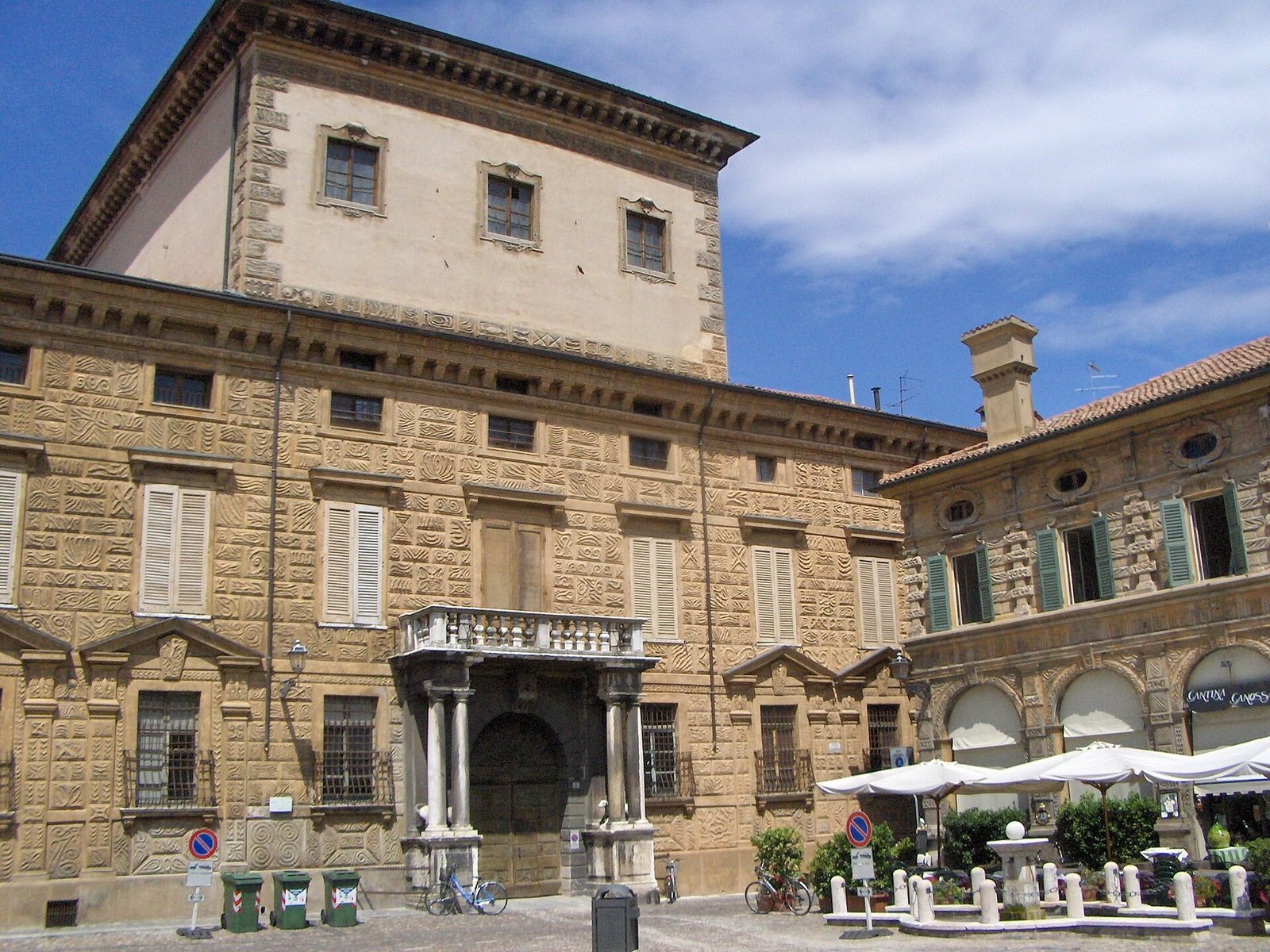
The palace combines a decorated street-facing facade and formal entrance with an interior staircase leading to the principal residential floor. Its Baroque design is expressed in the facade’s textured masonry and elaborate sculptural and painted decoration.
Facade and entrance
The facade is made with rough-faced masonry that emphasizes the joints between blocks. Raised plaster panels depict buildings and landscapes. Windows are arranged in stacked rows and topped with pediments whose upper outlines are interrupted. Decorations along the projecting roofline draw on the work of Renaissance architect and artist Giulio Romano. Marble columns frame the entrance and support a balcony. Two sculptures of dogs biting bones flank the portal, using the dog, the Canossa family’s heraldic symbol, as a motif.
Staircase and interiors
A large Baroque staircase rises to the principal residential floor. Its marble statues, made by sculptor Matteo Pedrali, depict Hercules, the hero of classical mythology, and the Roman gods Mars, Jupiter, Neptune, and Pluto, associated respectively with war, kingship, the sea, and the underworld. Painter Giovanni Battista Caccioli created frescoes, paintings made on wet plaster, on the staircase’s curved ceilings and in some rooms.