Palazzo Borromeo in Rome: A Papal Palace and Embassy to the Holy See
Site at a Glance
- Rating
- 4.2
- Popularity
- Very Low
- Country
- Italy
- Primary era
- Early Modern
- Eras represented
- Early Modern
- Civilizations
- Papal States
- Site type
- Religious
- Remains
- Palace
On this page6 sections
History
Palazzo Borromeo is a Renaissance palace in Rome, Italy, designed by Pirro Ligorio for Pope Pius IV in 1561, with construction also dated to that year. The Renaissance was a European cultural and artistic period spanning roughly the fourteenth to sixteenth centuries. The palace’s history began within a group of estates associated with a papal summer residence.
The papal vineyard and Borromeo heirs
The palace occupies the Old Vineyard, one of three estates that formed Pope Julius III’s summer residence. The other two were the Port Vineyard and the Del Monte Vineyard. The area of these estates now includes Palazzo Borromeo, Villa Giulia, and Villa Poniatowski.
In 1557, Pope Paul IV claimed the vineyards for the Holy See, arguing that they had been purchased with Church funds. Pope Pius IV later granted the unfinished palace to his nephews, Count Federico Borromeo and Cardinal Carlo Borromeo. After Federico’s early death and Carlo’s move to Milan, their sister Anna inherited the property. Her marriage to Fabrizio Colonna brought the palace into the Colonna family.
From noble ownership to embassy
The palace experienced changing fortunes during roughly three centuries of Colonna ownership, including a period of abandonment. In 1920, Roman antiquarian and art dealer Ugo Jandolo bought and restored the building, which had belonged to the Balestra family.
In 1929, after the Lateran Pacts, the Italian state acquired Palazzo Borromeo for its embassy to the Holy See, the governing institution of the Catholic Church and its diplomatic authority, distinct from Vatican City State. The agreements settled relations between Italy and the Holy See and established Vatican City State. The embassy continues to operate in the palace. It is the only embassy worldwide without the special legal privileges and immunities commonly called extraterritoriality; the term does not mean that diplomatic premises are literally foreign territory.
Remains
Palace and fountain
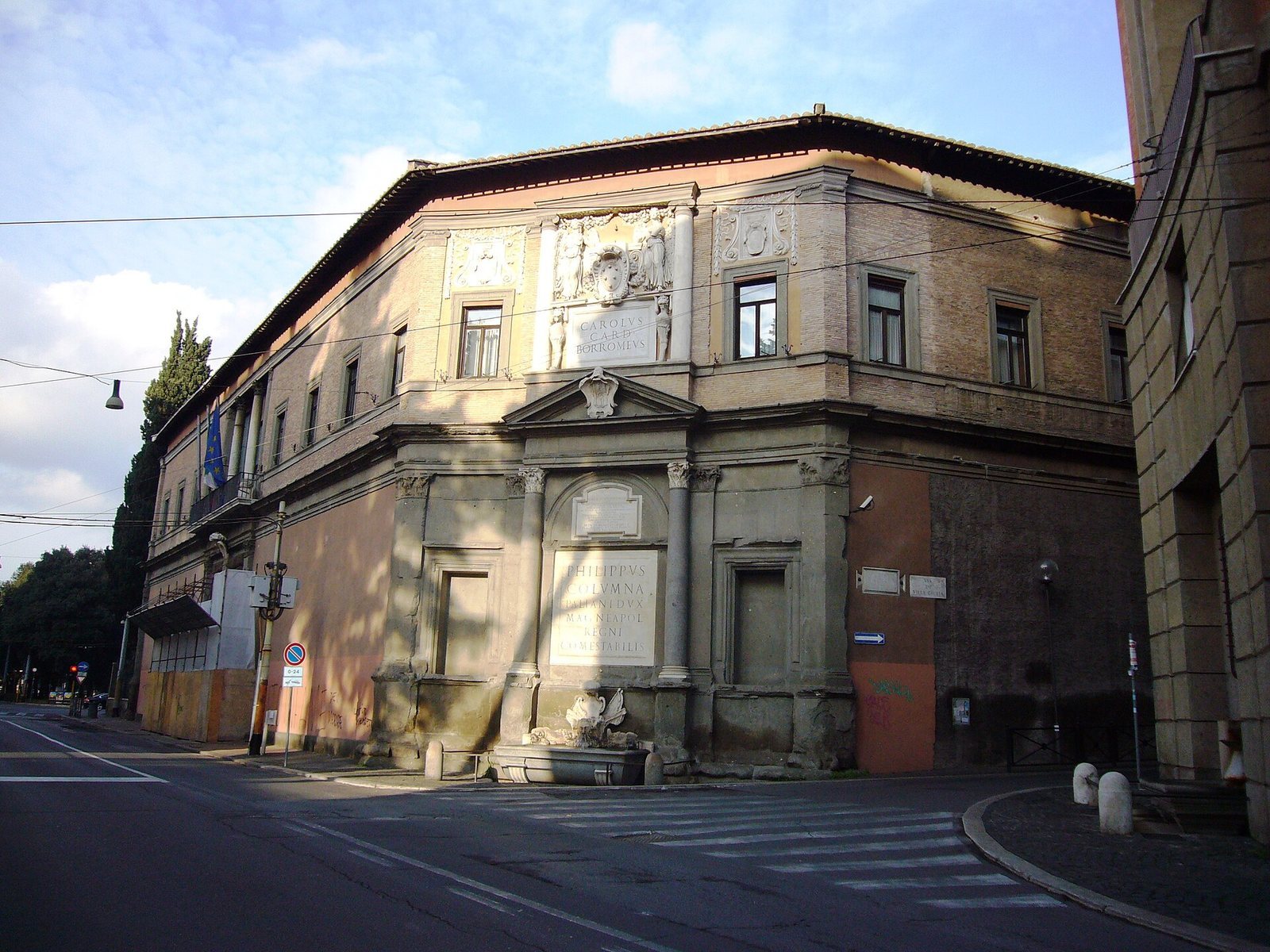
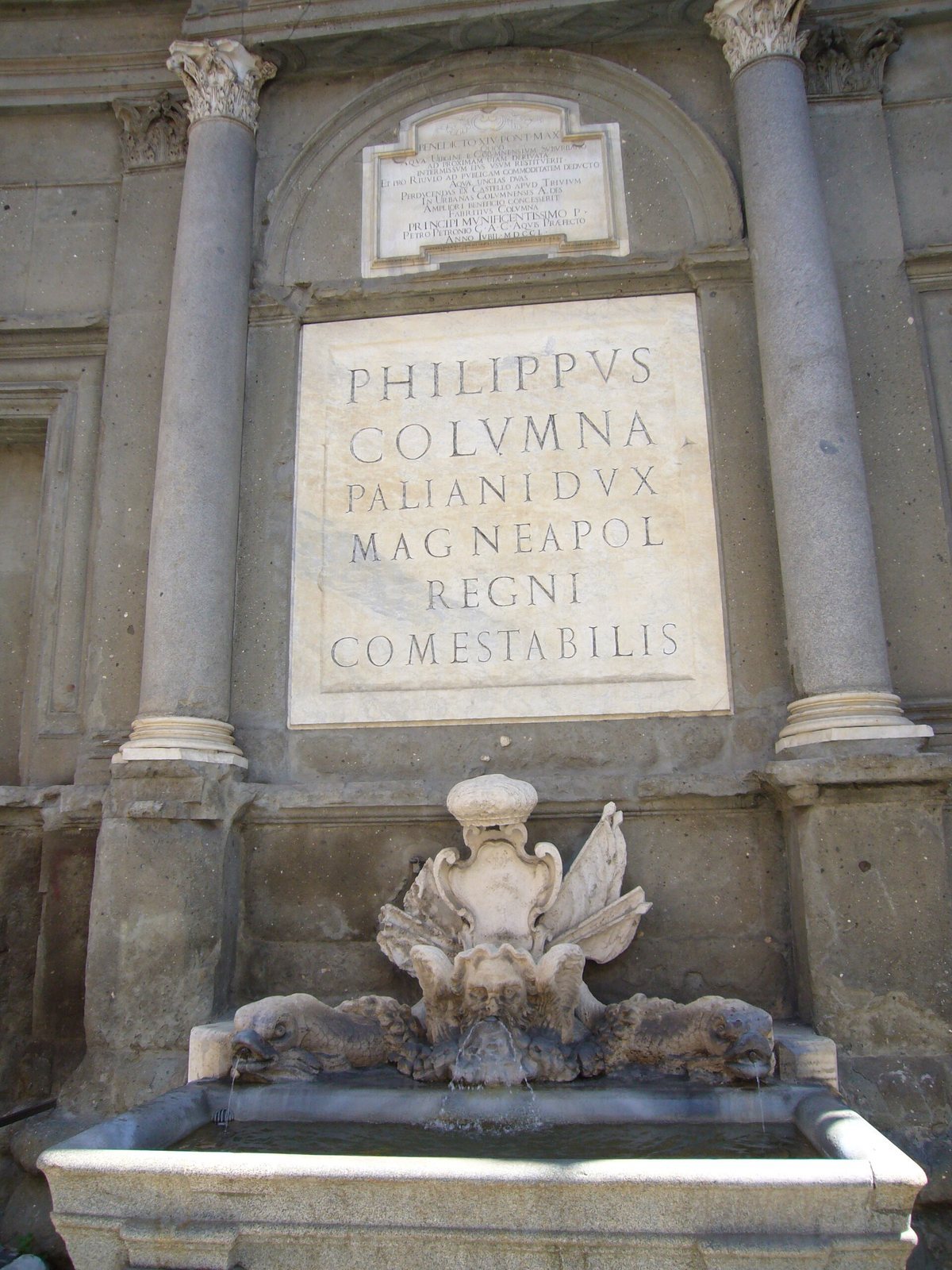
The Renaissance palace stands on Via Flaminia, with its entrance on Via delle Belle Arti. Built against a pre-existing fountain associated with Pope Julius III, it incorporates the fountain into the building. Made by Bartolomeo Ammannati, the fountain faces the junction of Via Flaminia and Via di Villa Giulia.
Interior decoration
The palace’s interiors include stuccoes and frescoes commissioned by Pope Pius IV and Marcantonio Colonna.