Chertsey Abbey: A Benedictine Monastery in the United Kingdom
Site at a Glance
- Rating
- 3.2
- Popularity
- Very Low
- Country
- United Kingdom
- Primary era
- Medieval
- Eras represented
- Medieval
- Civilizations
- English
- Site type
- Religious
- Remains
- Monastery
On this page13 sections
History
Foundation and early endowment
Chertsey Abbey was a Catholic monastery of Benedictine monks, members of an order shaped by the Rule of St Benedict, founded by Erkenwald in the United Kingdom in AD 666 and dedicated to St Peter, one of Jesus’s apostles, traditionally regarded as the first bishop of Rome. Erkenwald became its first abbot and, in 675, Bishop of London.
The monastery’s early name, Cerotaesei, meant “Cerot’s island.” Its first possessions came from Ecgberht I, king of Kent. Between 672 and 674, Frithuwold, a ruler of Surrey under a higher king’s authority, granted it extensive lands as Wulfhere, king of Mercia, extended his influence south of the Thames.
Raid and refoundation
Vikings raided and sacked the abbey around 870. Abbot Beocca and another monk were killed and later venerated as martyrs. The medieval chronicler William of Malmesbury recorded their deaths. Clergy remained at Chertsey for more than a decade, but monastic life ended there soon afterward.
In 964, King Edgar re-established the monastery with monks from Abingdon Abbey, after expelling secular clergy, churchmen who served outside monastic communities. Chertsey became an important Benedictine house in Anglo-Saxon England, the period when Anglo-Saxon kingdoms held sway before the Norman Conquest.
Medieval rebuilding and royal burial
After the Norman Conquest, the Norman takeover of England in 1066, the abbey remained in the favor of William the Conqueror. Its buildings fell into disrepair, however, because its income was lower than that of other major monasteries. Rebuilding began in the first decade of the 12th century and continued, with many alterations, through the end of the 13th century.
King Henry VI was buried at Chertsey in 1471, but his body was moved to St George’s Chapel at Windsor Castle in 1484. Shakespeare’s Richard III refers to the journey: Lady Anne directs those carrying Henry’s body toward Chertsey, describing their burden as holy.
Dissolution and later history
In 1537, commissioners acting for Henry VIII dissolved the abbey, closing the monastery, and its community moved to Bisham Abbey in Berkshire. The site was granted to Sir William Fitzwilliam and later bought, in 1602, by Dr John Hammond, a physician in the royal household of James I.
Thirteenth-century floor tiles were found during excavations in 1852. Excavations in the mid-19th century were supervised by Samuel Angell, an architect and archaeologist. In 1862, he published an account and a ground plan of the abbey church.
Remains
The abbey site
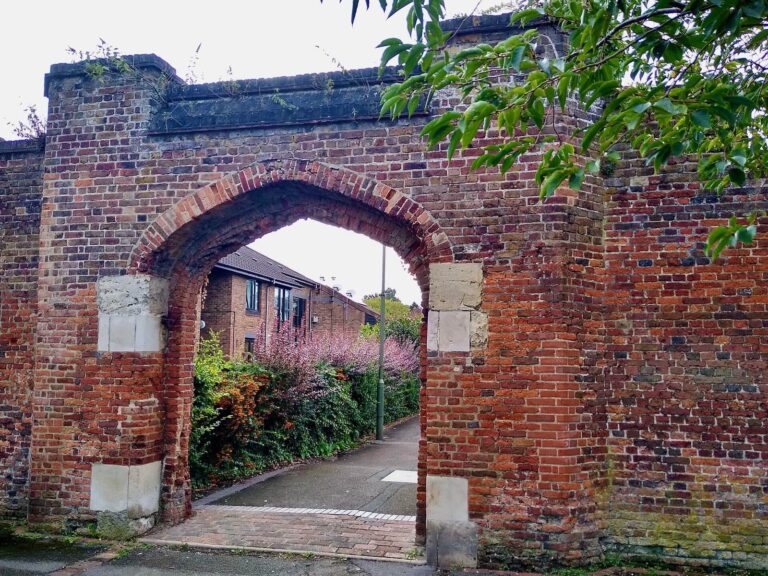
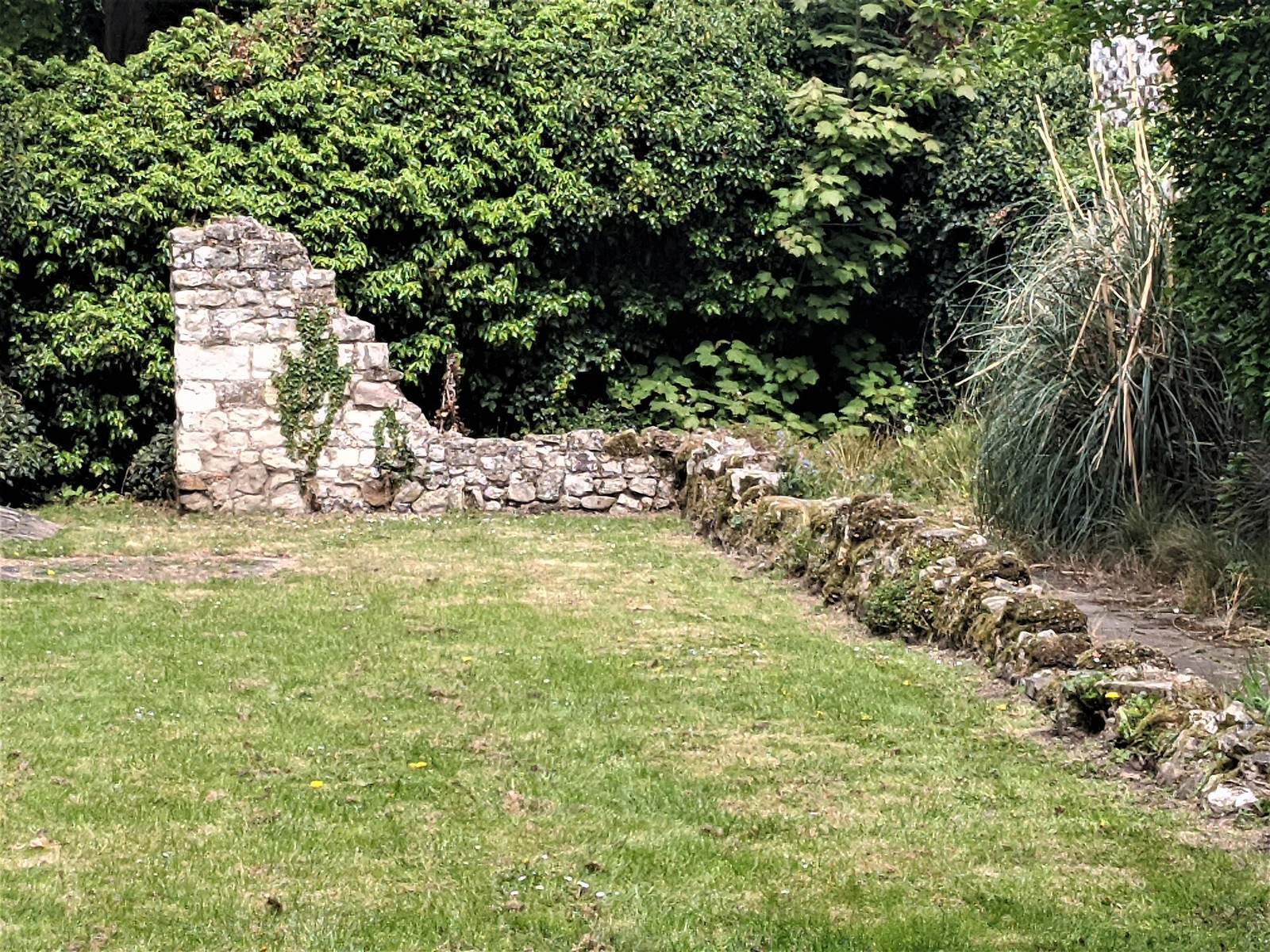
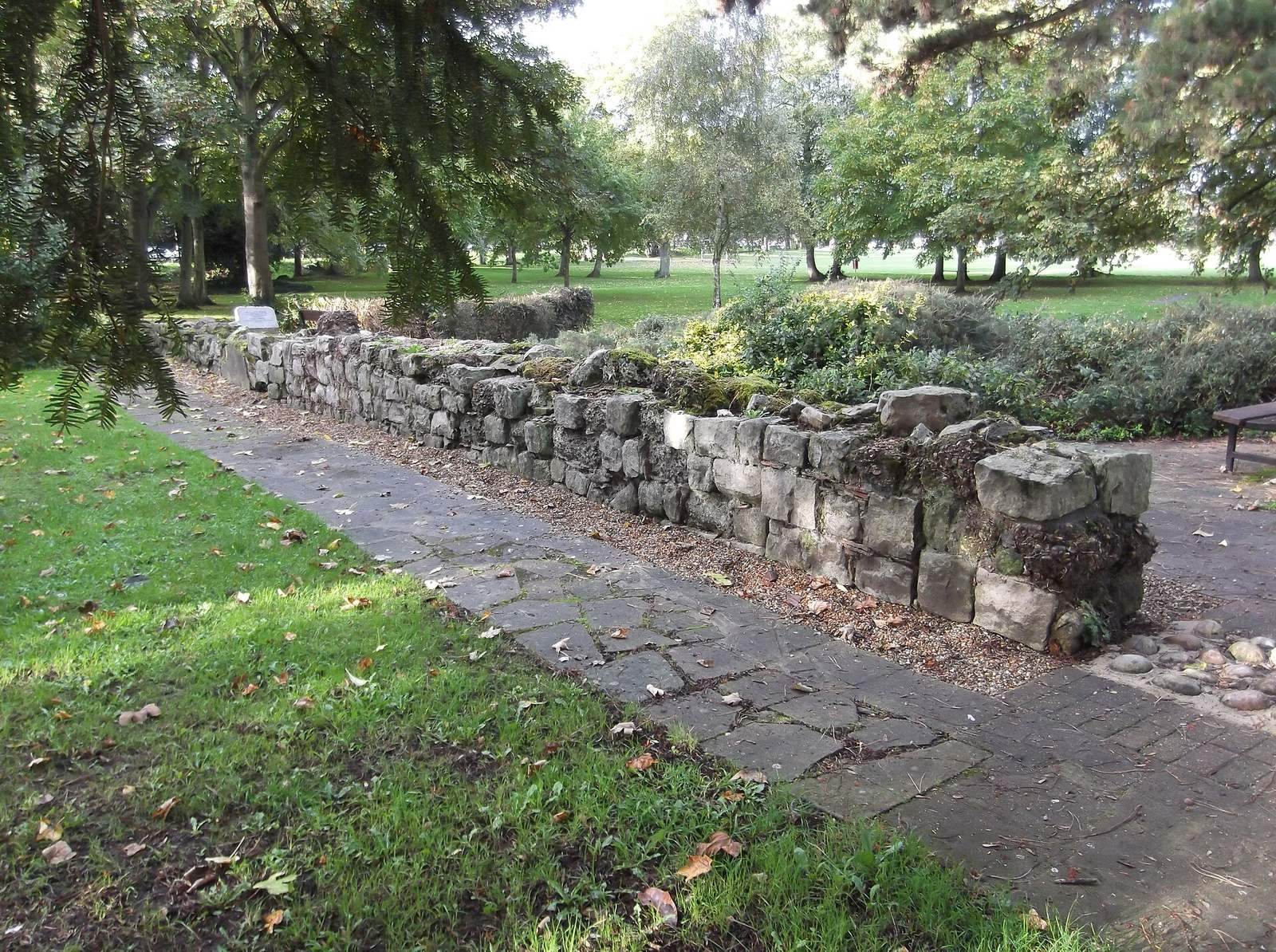
Only slight traces of the abbey survive among later buildings, including a ruined wall. A ground plan of the abbey church preserves a record of its arrangement.
The Abbey River
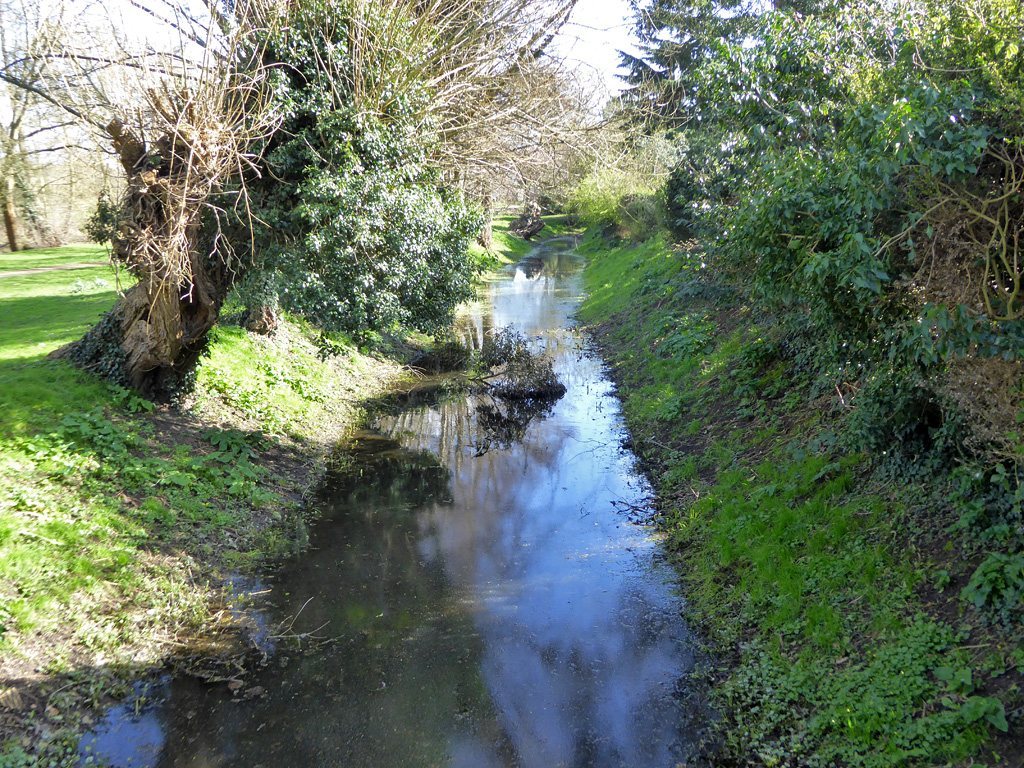
The Abbey River is a channel branching from the Thames. The monks cut it to supply water power to the abbey’s mill, and it remains a physical trace of their alteration of the landscape.
Floor tiles
The abbey’s 13th-century floor tiles include individual letters, especially examples from the second half of the century, which could be arranged to form religious inscriptions. Because the letters could be rearranged into different texts, linguist Herbert Brekle interpreted them as an early form of movable-type printing, a method using separate reusable characters to compose words. Other tiles depict scenes from romances, including Sir Tristrem and Richard Coer de Lyon, as well as the story of Tristan and Iseult. Some tiles from the site are displayed in the British Museum.
Objects and manuscripts associated with the abbey
The bell
A bell cast at a Wokingham foundry around 1380 weighs slightly more than half a ton. It remains in use as the fifth bell in the set of eight at St Peter’s Church in Chertsey and is among the oldest bells still in use in Surrey.
Stained glass and heraldry
A medieval stained-glass panel displaying the abbey’s coat of arms is held by the Burrell Collection near Glasgow. The design, a heraldic emblem identifying the abbey, includes a sword and the crossed keys of St Peter. The keys also appear in the official Banner of Arms of Surrey County Council.
Books
Illuminated manuscripts associated with the abbey survive in collections. The Chertsey Breviary, a book of prayers and readings for daily church services, dates to about 1300 and is held by the Bodleian Library in Oxford.