Palazzo Barberini: A Baroque Palace and National Gallery of Ancient Art
Site at a Glance
- Popularity
- Very High
- Country
- Italy
- Primary era
- Early Modern
- Eras represented
- Classical, Early Modern, Modern
- Civilizations
- Italian, Papal States, Roman
- Site type
- Domestic
- Remains
- Elite Residence
On this page15 sections
History
Origins and construction
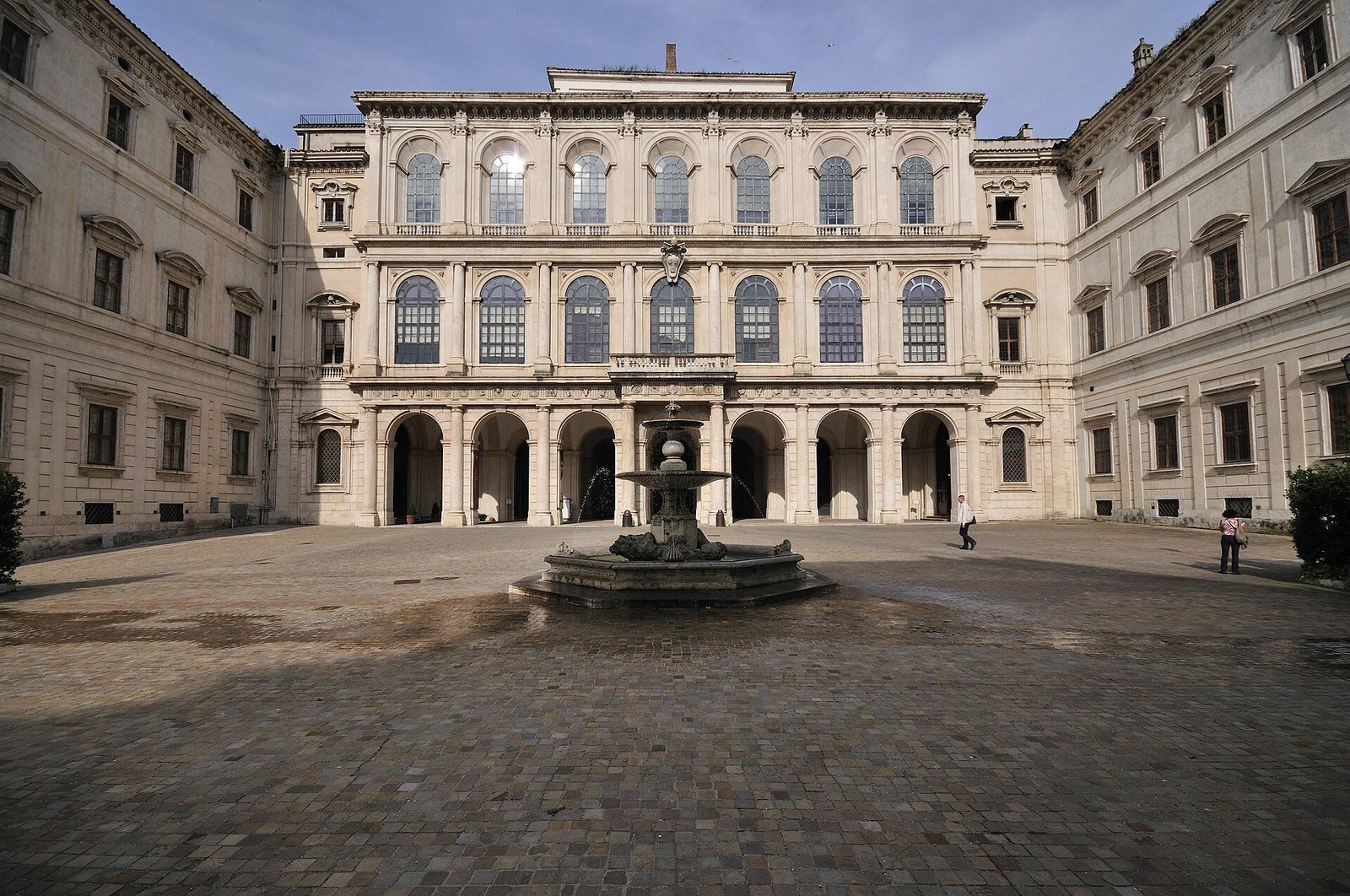
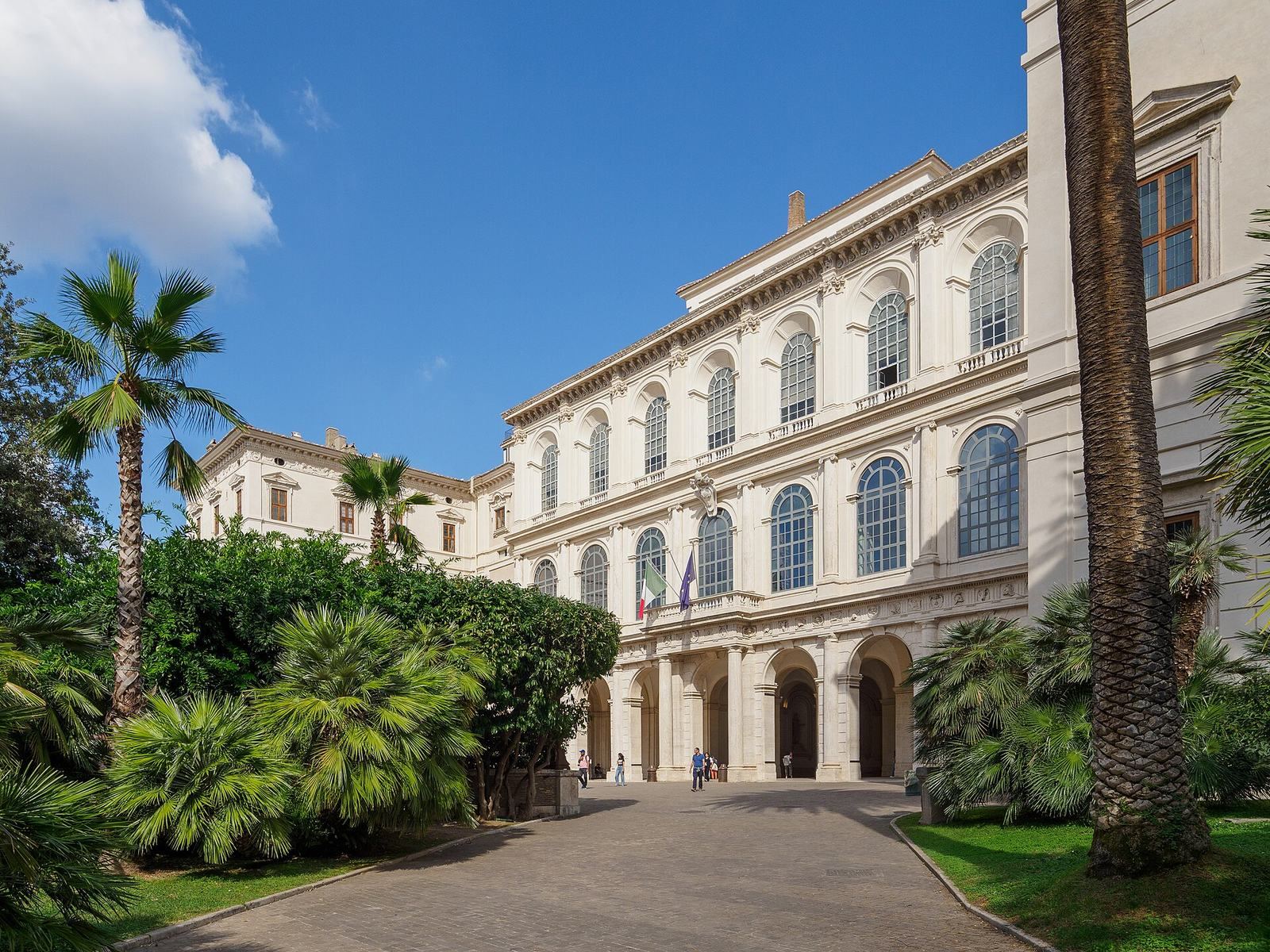
Palazzo Barberini is a Baroque palace on the Quirinal Hill in Italy, commissioned by Maffeo Barberini, later Pope Urban VIII. Built from 1625 to 1633, it brought together an urban palace and a villa with gardens in a style known for dramatic movement and effects.
The property had earlier belonged to Cardinal Rodolfo Pio da Carpi. Around 1549, Cardinal Alessandro Sforza acquired its garden and vineyard, and the Sforza family built a small palace there. Maffeo Barberini bought the estate in 1625, two years after becoming pope. Carlo Maderno began work in 1627. Following Maderno’s death in 1629, Gian Lorenzo Bernini directed the project, with Francesco Borromini continuing to contribute. Pietro da Cortona also worked on the palace under Bernini’s direction. The design changed from a Renaissance-style block, a form associated with renewed interest in classical art and learning, to a residence combining formal city rooms and a garden villa. In the eighteenth century, the palace inspired another Palazzo Barberini in Potsdam, Germany.
Family residence and performances
Pope Urban VIII’s nephews, Francesco and Taddeo Barberini, chiefly occupied the palace, each living in a separate wing. Francesco established a tapestry workshop there, active from 1627 to 1679, as well as a small natural-science museum, a botanical garden, and a library of ancient Greek and Roman manuscripts. The family’s collections reflected his interest in ancient sculpture, coins, and inscriptions.
The palace hosted a series of musical dramas. Performances included Il Sant’Alessio in 1632 and a revised version in 1634, L’Erminia sul Giordano in 1633, and I santi Didimo e Teodora in 1635 and 1636. Chi soffre speri, also known as L’Egisto, was performed in 1637. In 1639, an expanded version opened the palace’s large theater. Giulio Rospigliosi wrote its libretto, or opera text, from a story by Boccaccio, while Bernini created the scenery and stage machinery and devised the intermezzo, a short dramatic or musical interlude, called La fiera di Farfa. The 1642 production Il palazzo incantato d’Atlante, with music by Luigi Rossi and a libretto by Rospigliosi based on Ariosto, starred Marcantonio Pasqualini.
After Urban VIII’s death and the Wars of Castro, conflicts between the papacy and the Farnese rulers of the Duchy of Castro, Pope Innocent X confiscated the palace for the papal treasury. It returned to the Barberini family in 1653. The theater resumed performances after a break of more than a decade, presenting Dal male il bene in 1653, L’armi e gli amori in 1654–55, and La vita umana in 1656, with music by Marco Marazzoli and texts by Rospigliosi. In 1656, the courtyard hosted a celebration for Christina of Sweden, who had abdicated and converted to Catholicism. Its equestrian carousel was a staged parade of riders.
Collections and public use
The Barberini art collections grew during the seventeenth century, with antiquities held both at the family’s Villa Barberini in Castel Gandolfo and at the palace. In 1895, the National Gallery of Ancient Art was founded to bring together works from private collections and the Monte di Pietà, a charitable lender that accepted pledged goods.
A royal decree in 1934 lifted the legal restrictions binding the Barberini collection in return for 16 paintings from a collection of about 640. This allowed works to be dispersed, including abroad. Items that left Italy included ancient sculptures and paintings by Albrecht Dürer, Caravaggio, Guido Reni, Guercino, and Nicolas Poussin. Among them were Dürer’s Christ Among the Doctors at the Age of Twelve, Caravaggio’s Saint Catherine of Alexandria and The Cardsharps, and Poussin’s Death of Germanicus. Rare panels by the Master of the Barberini Panels, later identified as Fra Carnevale, also left the collection.
The Italian state bought the palace in 1949 to expand the National Gallery of Ancient Art. Its holdings had grown through acquisitions from the Torlonia, Chigi, Odescalchi, and Colonna di Sciarra collections, alongside paintings that remained with the Barberini family. Palazzo Corsini continued as another gallery location. A large part of the palace had been leased to the Armed Forces Officers’ Club in 1934. Although the lease was due to end in 1953, it was extended to 1965, and the club remained after that date. A dispute between government ministries lasted from 1974 until an agreement in 1997 for the club to leave. With limited space, the Gallery could display about a fifth of its collection; the palace was fully assigned to it in 2006, followed by restoration.
On 11 January 1947, Giuseppe Saragat founded the Italian Socialist Workers’ Party at the palace; it adopted the name Italian Democratic Socialist Party in 1951. A plaque on the main façade commemorates the founding. The European Convention on Human Rights was signed there on 4 November 1950.
Remains
Plan and entrances
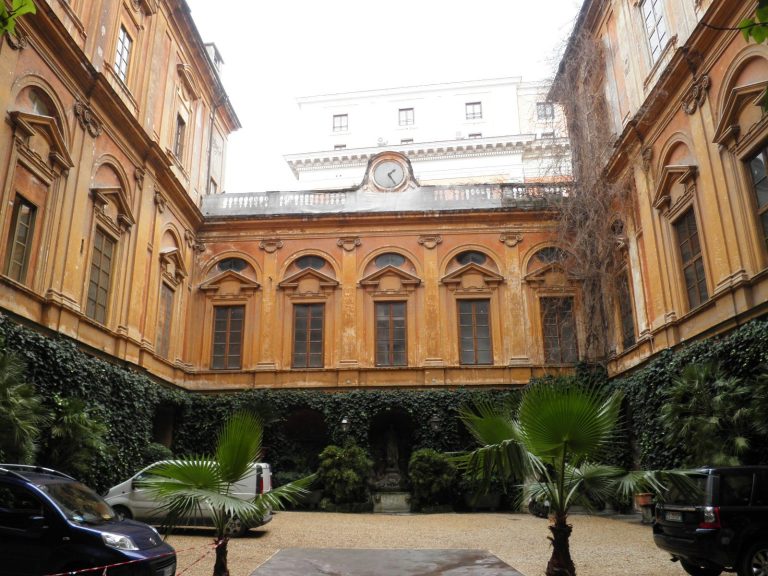
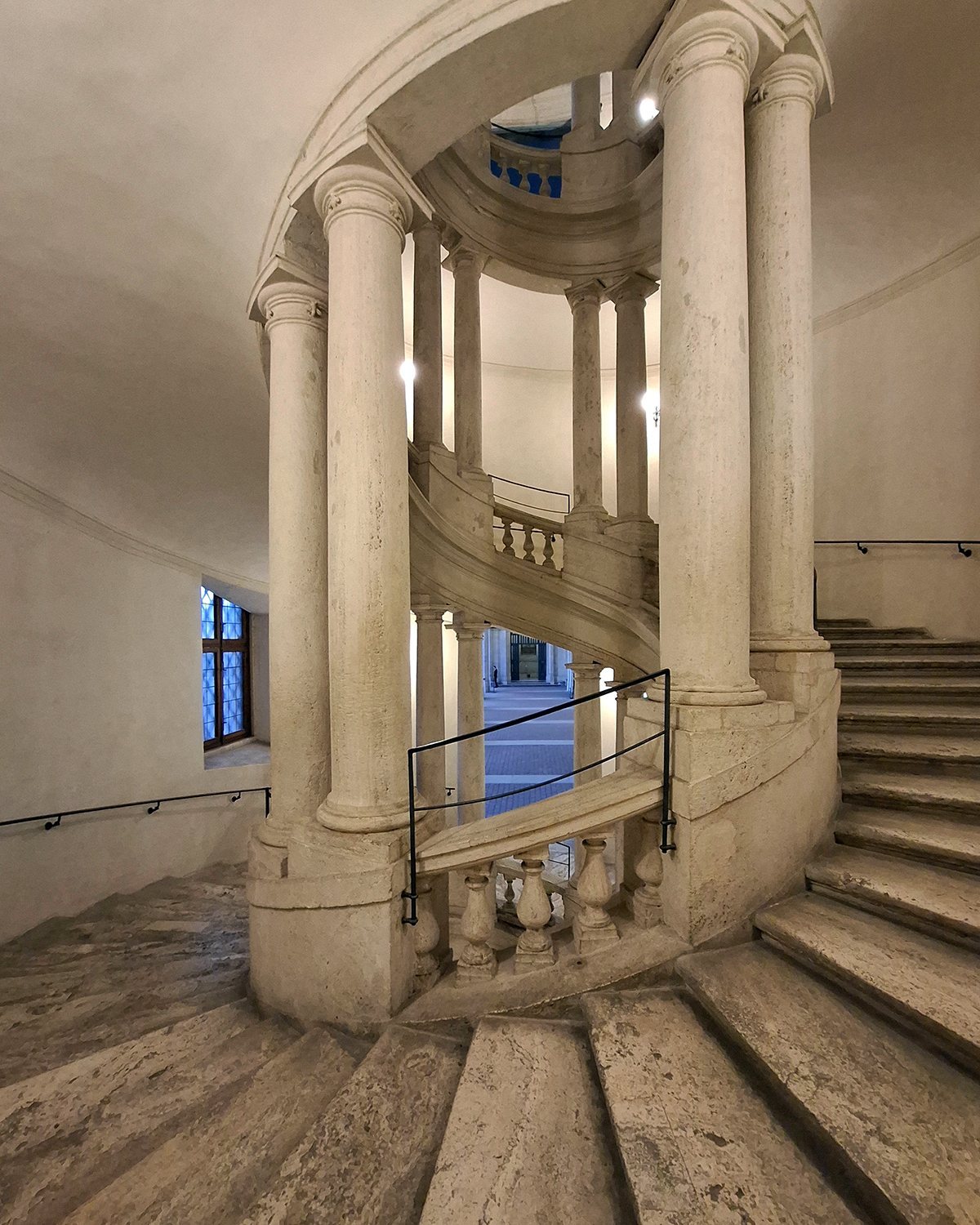
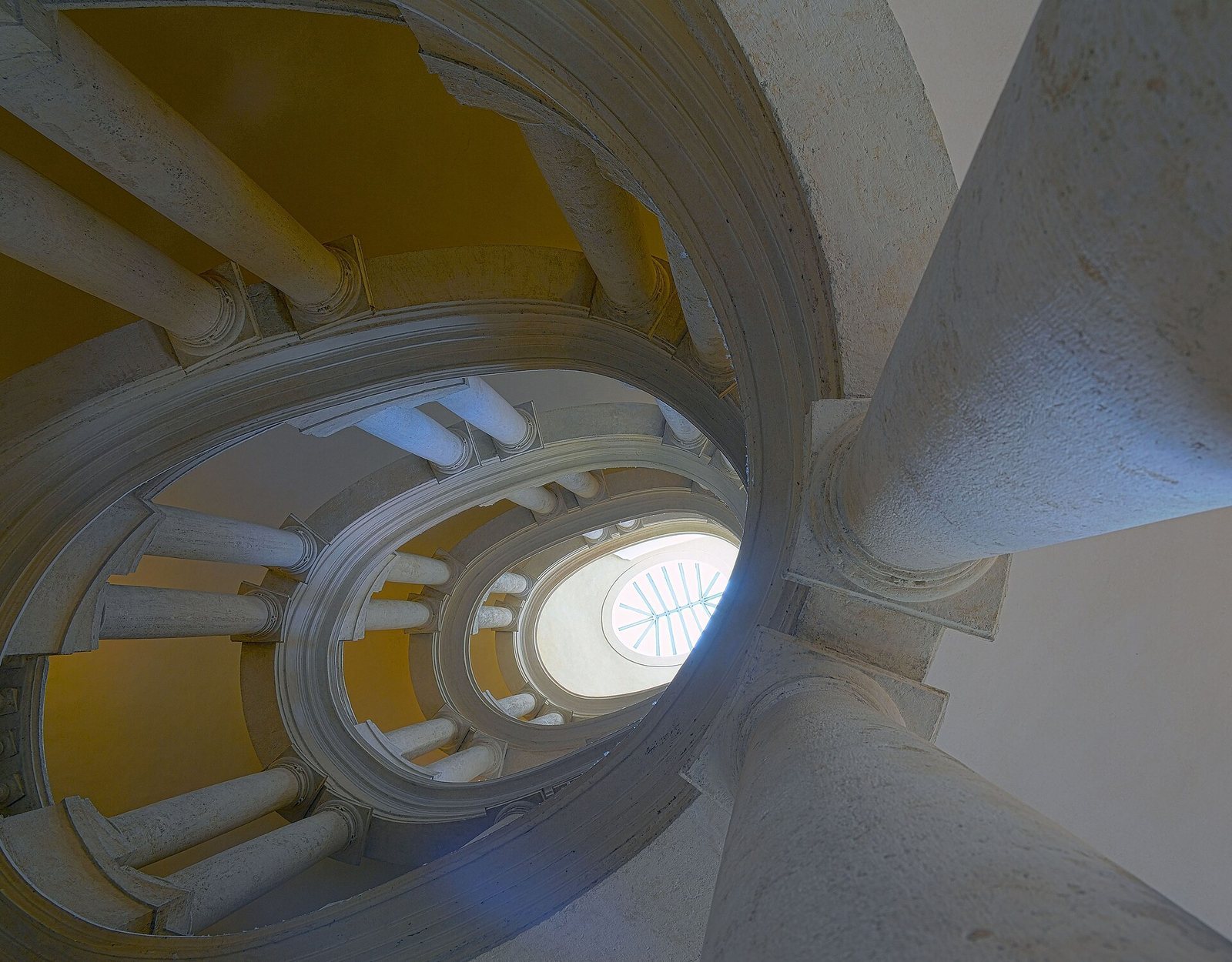
The palace stands on sloping ground on the Quirinal Hill. Its arrangement includes a central hall linking parallel wings in an H-shaped plan, with the Sforza wing facing the piazza. The design also combines a formal city-facing front with a garden-side villa arrangement, including a horseshoe-shaped plan and a concealed garden. The main façade faces Piazza Barberini and extends across seven bays and three levels. Its arcades use Doric, Ionic, and Corinthian classical orders, established systems of architectural design, from the lower to the upper levels. The upper windows use false perspective to give an impression of greater depth. The Via delle Quattro Fontane entrance passes through an elaborate gate designed by Azzurri in 1848 and installed in 1865. Its sculpted decoration includes dragons and large male figures used as architectural supports, called telamons. Inside, an elliptical entrance hall is flanked by two side staircases; a central stair rises toward the gardens, which stand above ground-floor level. Bernini’s square-plan staircase serves the north wing, while Borromini’s oval spiral stair is in the south wing.
Decorated interiors
Grand salon and chapel
The palace’s principal ceremonial floor, the piano nobile, contains a grand salon with a ceiling fresco, a painting made on wet plaster, by Pietro da Cortona. Painted between 1632 and 1639, it depicts the Triumph of Divine Providence and Barberini Power in a dramatic upward-looking composition. Cortona and his assistants also painted frescoes in the chapel.
Sacchi’s ceiling and other rooms
Andrea Sacchi’s Allegory of Divine Wisdom, dated 1629–32, decorates a room’s vault. Its astronomical and astrological imagery celebrates Urban VIII; its symbolism may also relate to Galileo Galilei’s research and discoveries. The composition is thought to draw inspiration from Raphael’s Parnassus in the Vatican Stanze. Other rooms contain frescoes by Sacchi, Giovan Francesco Romanelli, Giuseppe Passeri, and Andrea Camassei.
Library and upper apartment
Carved furniture made by Giovanni Battista Soria belonged to Cardinal Francesco Barberini’s library. Around the middle of the eighteenth century, a top-floor apartment received decoration in the Rococo style, known for its elaborate ornament.
Theater and garden
Theater
A large theater occupied a separate building attached to the palace’s north side and had its own entrance. Its auditorium measured about 17.5 by 30 meters and could hold 3,000 people. From 1822 to 1834, Danish sculptor Bertel Thorvaldsen had a studio in the palace complex.
Garden
The original garden was a large park extending along the Pia road, now Via XX Settembre, as far as the present Salita di San Nicola da Tolentino. Its Italian-style grounds included a secret garden and exotic animals such as ostriches and camels. Late in the eighteenth century, the grounds were altered with tall trees in a Romantic-style area and a cork house opposite the stairway between garden and palace. A public ball-game arena built at the garden’s upper corner in 1814 remained until 1881. As Rome expanded after Italian unification, buildings took over parts of the garden’s edges. A greenhouse was built beside the carriage ramp in 1875; the Savorgnan di Brazzà building rose behind the cork house in 1936, and buildings along Via delle Quattro Fontane were replaced by the Palazzo dei Beni Stabili in 1938. A monument to Thorvaldsen stands in the garden.
Subterranean sanctuary
Excavations for the Savorgnan di Brazzà building in 1936 uncovered a Mithraeum in cellars at the rear of the palace. A Mithraeum is a sanctuary associated with the ancient mystery religion of Mithras; this one likely dates to the second century AD.
Works in the gallery
The present collection includes Raphael’s La Fornarina, Caravaggio’s Judith Beheading Holofernes, Hans Holbein’s portrait of Henry VIII, and Antonio Corradini’s sculpture Vestal Virgin Tuccia. It also contains paintings by Filippo Lippi, Titian, Tintoretto, El Greco, Guido Reni, and Guercino, as well as detached frescoes by Polidoro da Caravaggio and Maturino da Firenze.