Palace of the Senate: Spain’s Parliamentary Seat in Madrid
Site at a Glance
- Rating
- 4
- Popularity
- Low
- Country
- Spain
- Primary era
- Early Modern
- External website
- Open
- Eras represented
- Early Modern, Modern
- Civilizations
- Spanish
- Site type
- Civic
- Remains
- Palace
On this page8 sections
History
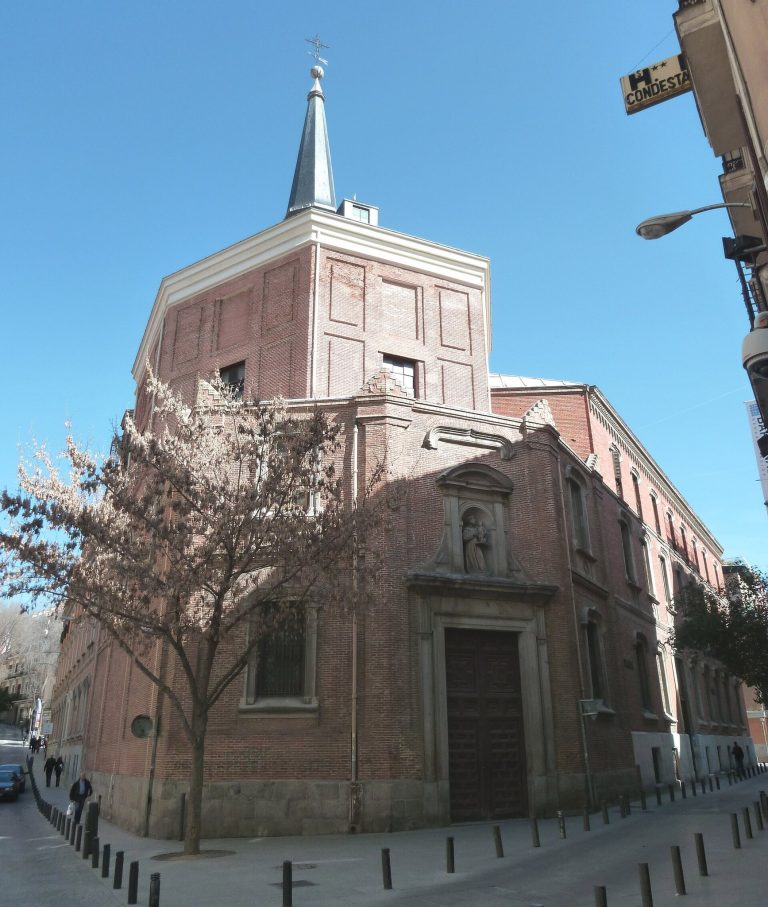
The Palace of the Senate is Spain’s Senate complex in Madrid, Spain, with origins in a sixteenth-century Augustinian college. Designed by Francisco de Montalbán, the building was part of the Monastery of the Incarnation and was also known as the College of the Incarnation or College of Mary of Aragon. Its architecture came to combine Herrerian, a Spanish style marked by restrained ornament and strong geometric forms, with Neoclassical elements. The college was among the notable institutions of the Madrid court. Its church held several paintings by El Greco, which are now in the Prado Museum.
Conversion to parliamentary use
During the early nineteenth-century transfer of church property to the state, the college ceased to operate and the building was assigned to parliamentary use. The Cortes of Cádiz, an early Spanish parliamentary assembly, met there in 1814. Later that year, King Ferdinand VII abolished the Constitution, and the building was abandoned. After the Constitution was restored in 1820, architect Isidro González Velázquez was commissioned to convert the church into an assembly hall. The Cortes met there during the Liberal Triennium, Spain’s period of constitutional government from 1820 to 1823.
The Royal Statute of 1834 created a two-chamber Cortes, including the Chamber of Peers as its upper house. The peers initially met at the Casón del Buen Retiro before moving to the former college in 1835. Between 1844 and 1850, Aníbal Álvarez Bouquel and Emilio Rodríguez Ayuso remodeled the interiors. Despite changes to the building’s name and purpose, it continued to house the upper chamber until 1923.
Twentieth-century political changes
In 1923, the dictatorship of General Miguel Primo de Rivera dissolved the Cortes. The National Consultative Assembly that followed met at the Palace of the Cortes, not at the Palace of the Senate. During the Second Republic, established in 1931, the unicameral parliament also met at the Palace of the Cortes, while constitutional debates took place at the Crystal Palace. Under dictator Francisco Franco, the Senate building housed the National Council of the Movement, a political body of his regime; the Francoist Cortes met at the Palace of the Cortes.
During Spain’s democratic transition, the institution operating as the Senate took part in preparing the 1976 Political Reform Act. The Senate was restored in 1977 and joined the Congress of Deputies in adopting the 1978 Constitution. Since the 1979 general elections, the palace has housed the Spanish Senate. To accommodate the modernization of political activity, an annex designed by Salvador Gayarre Ruiz de Galarreta was added between 1987 and 1991.
Remains
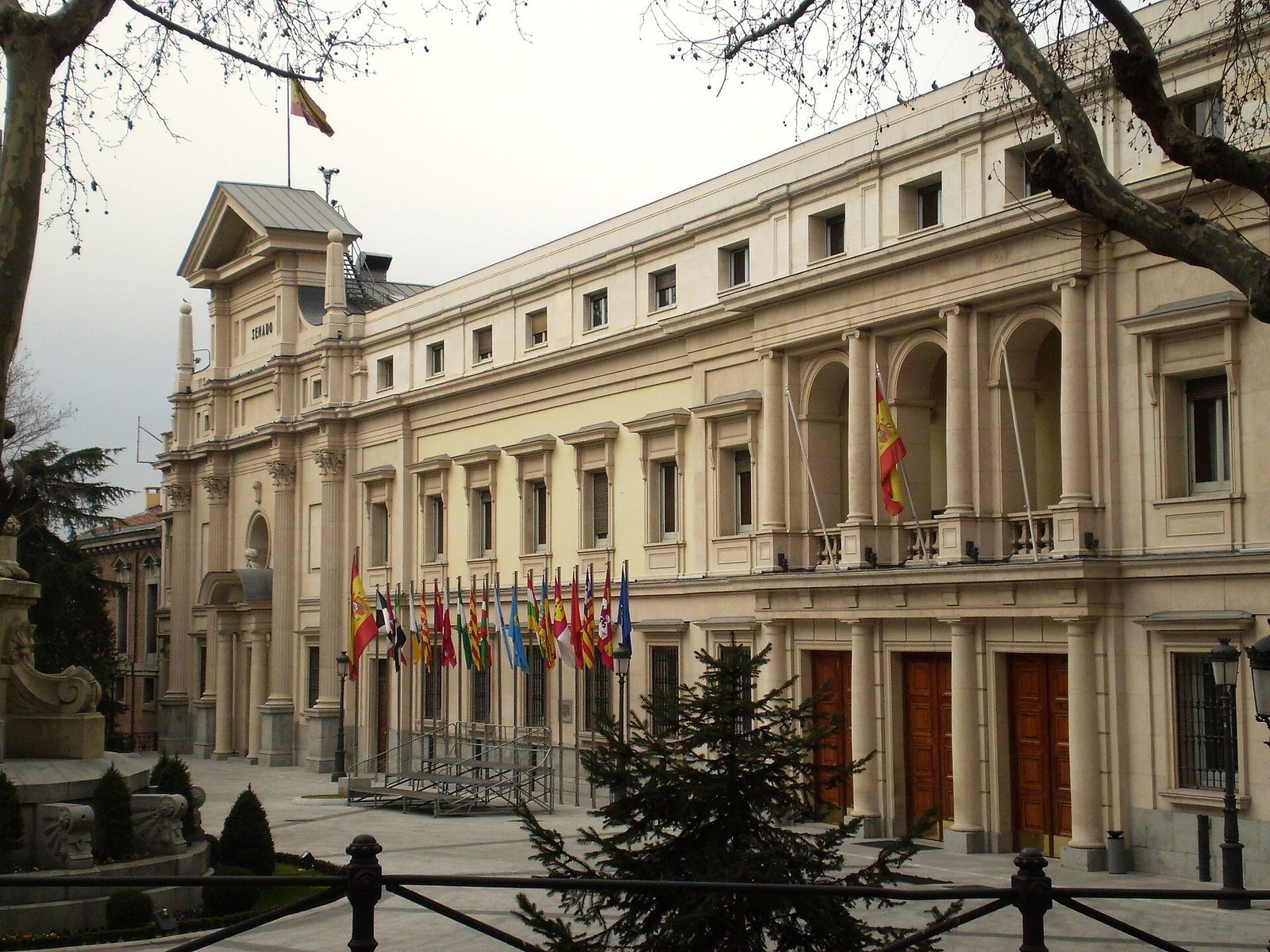
The complex combines the original palace with a later annex. Its main building stands immediately northeast of the Royal Palace, and its principal façade faces Spanish Navy Square.
Buildings and collections
Main palace
The building’s architectural character brings together Herrerian and Neoclassical styles. Its nineteenth-century main façade, added during the building’s parliamentary transformation, follows a Neoclassical Herrerian manner.
Annex
The 1987–1991 annex has a semicircular façade facing Bailén Street, forming a later part of the parliamentary complex.
Library and art collection
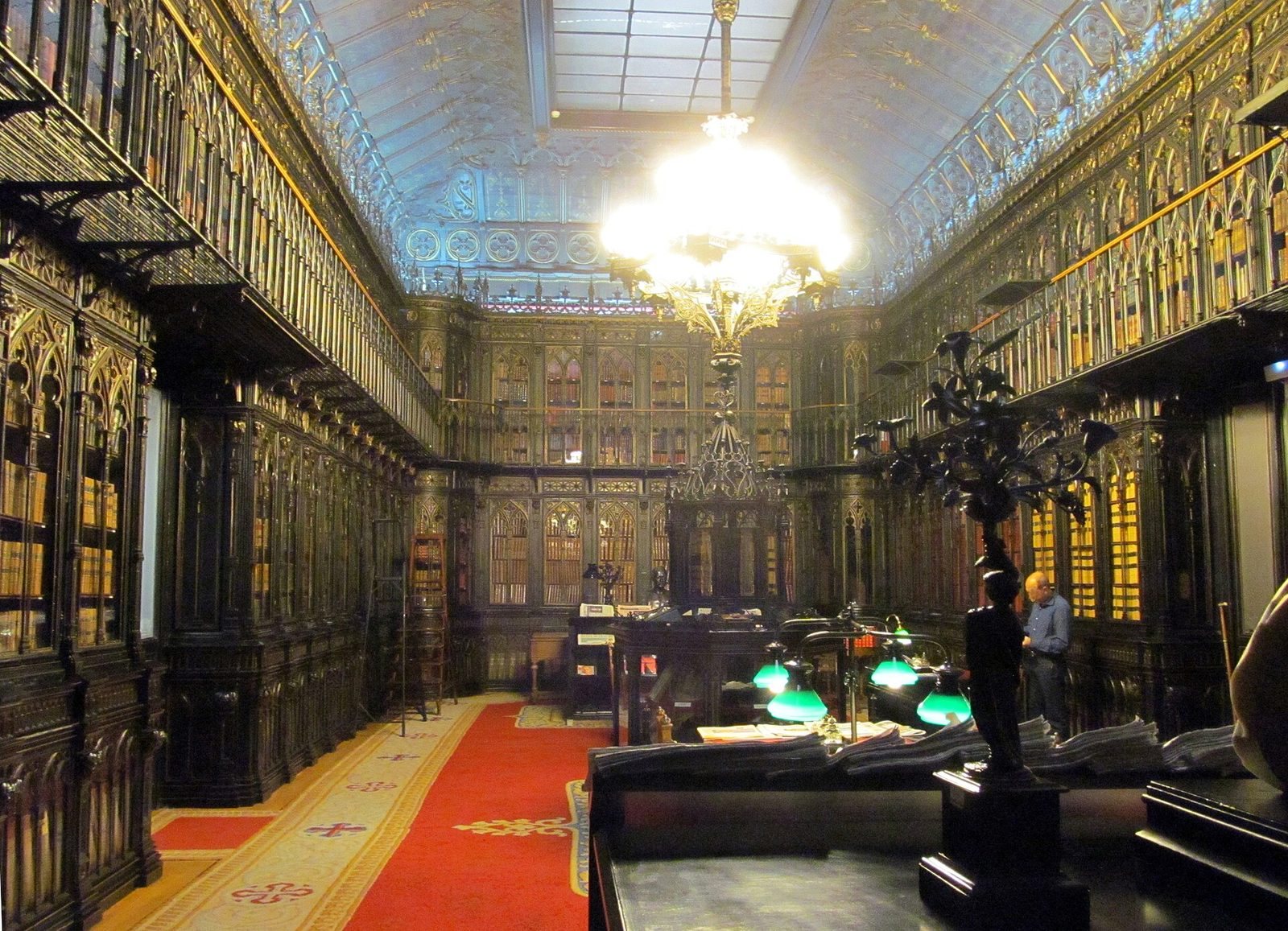
The palace contains a large library and a collection of nineteenth-century art, with historical paintings as a particular focus. Works in the collection include Last Moments of Ferdinand IV the Summoned by José Casado del Alisal and The Battle of Lepanto by Juan Luna.