Mother of God Church: A Gothic Marian Pilgrimage Church in Slovenia
Site at a Glance
- Popularity
- Low
- Country
- Slovenia
- Primary era
- Medieval
- Eras represented
- Medieval, Early Modern, Modern
- Civilizations
- Austrian Empire, Duchy of Styria, Habsburg, Holy Roman Empire
- Site type
- Religious
- Remains
- Church
On this page7 sections
History
Foundation and early record
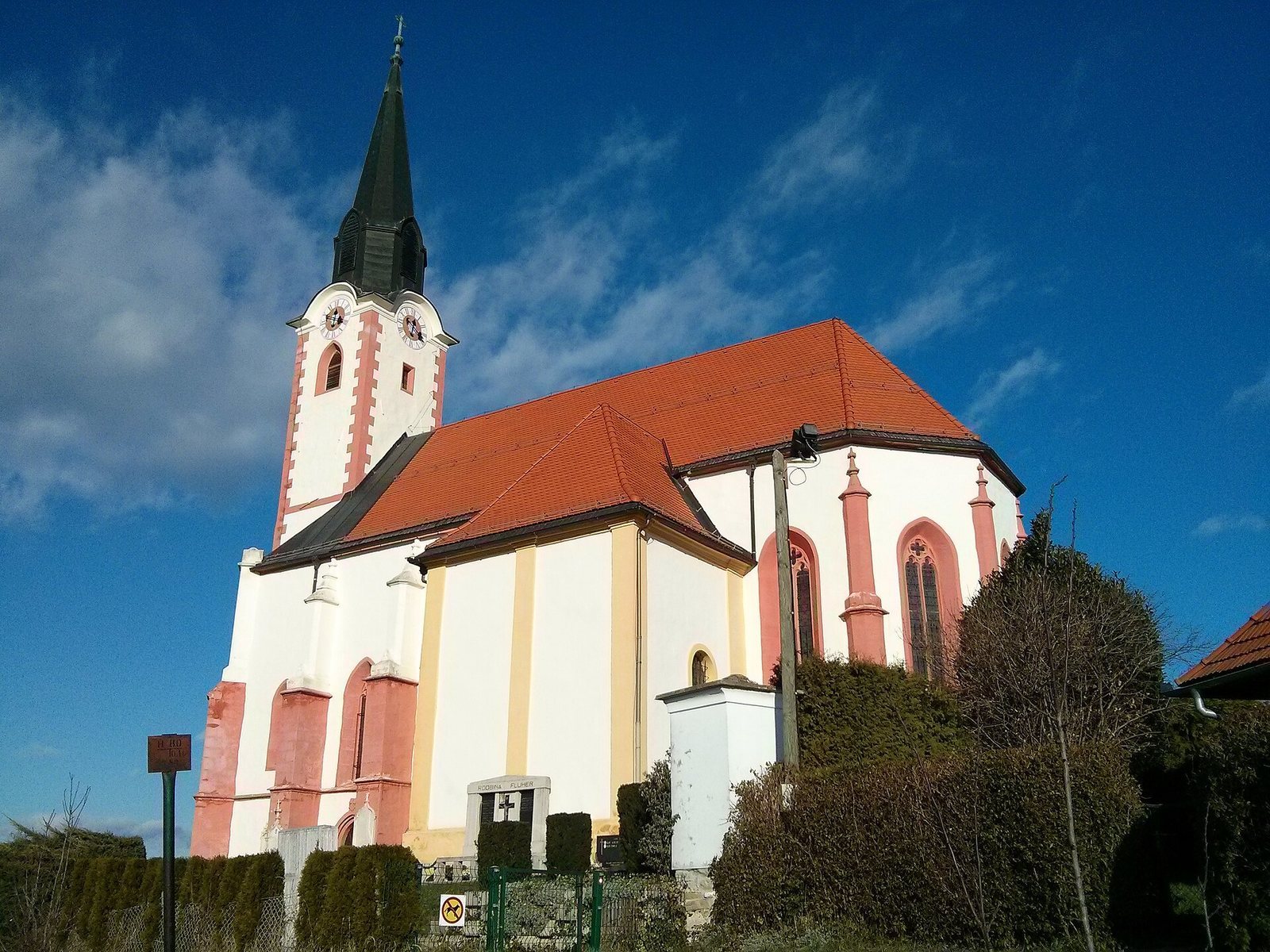
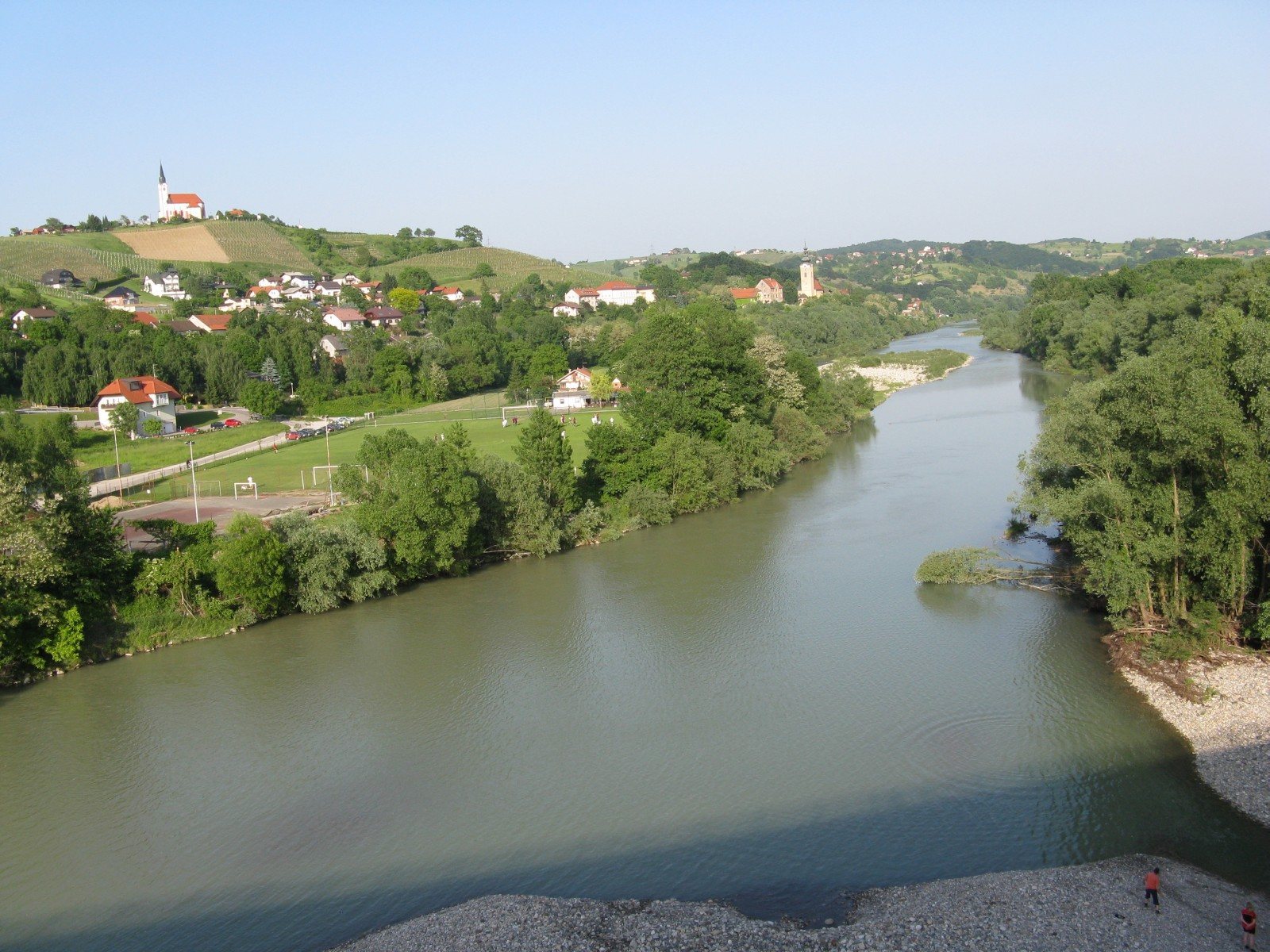
Mother of God Church is a Gothic Roman Catholic pilgrimage church on Gorca above Malečnik, Slovenia, and serves as an active branch church dedicated to the Virgin Mary. It belongs to the Parish of St Peter near Maribor, within the Maribor deanery, the Archdiocese of Maribor, and the Maribor ecclesiastical province. Built in the 15th century, the church was completed in 1517.
The church first appears in a parchment dated 12 July 1493. Maribor citizens Krištof and Marjeta Altzweg asked the Friars Minor, the Franciscan order, to pray continually for their ancestors and, after their deaths, for them as well. They bequeathed the friars a vineyard near Nebova, next to a vineyard owned by the church on Gorca.
Pilgrimage and later history
The church was renovated between 1860 and 1864, while Marko Glaser led the parish. It is part of an international Marian pilgrimage route linking Częstochowa in Poland, Levoča in Slovakia, and Mariazell in Austria, before passing through Graz and Slovenia toward Croatia. Its principal annual pilgrimage takes place on 8 September, the Feast of the Nativity of Mary, with a solemn Mass. By tradition, pilgrims gather the previous evening for a candlelit procession carrying a decorated statue of the Virgin Mary.
On 2 June 2023, the church entered a spiritual affiliation with Rome’s Basilica of Saint Mary Major, a major papal basilica dedicated to Mary, and was included on its list of important Marian churches worldwide. At the request of Archbishop Alojzij Cvikl and parish administrator Sebastijan Valentan, the Vatican’s Apostolic Penitentiary, the office responsible for indulgences, granted the church the privilege of a plenary indulgence. In Catholic teaching, this remits temporal punishment for sins whose guilt has already been forgiven. Subject to prescribed conditions, worshippers may obtain it on 5 August, 8 September, other solemn Marian feast days, major pilgrimage days, and one additional day of their choice each year. The affiliation was solemnly announced on 8 September 2023.
Remains
Building and tower
The Gothic church has a bell tower, five side altars, and four bells, including one known as the wishing bell. The tower’s roof has pointed window frames, decorative pinnacles, and cross-shaped ornaments.
Gothic interior
Slender half-columns with chalice-shaped capitals, the shaped upper ends of columns, line the interior, while tall colored windows bring light into the church. Projecting ribs, the bands that form a ceiling’s framework, create star patterns across the nave ceiling and a network over the area around the altar. These late Gothic ribs have double-grooved cross-sections.
Paintings and devotional objects
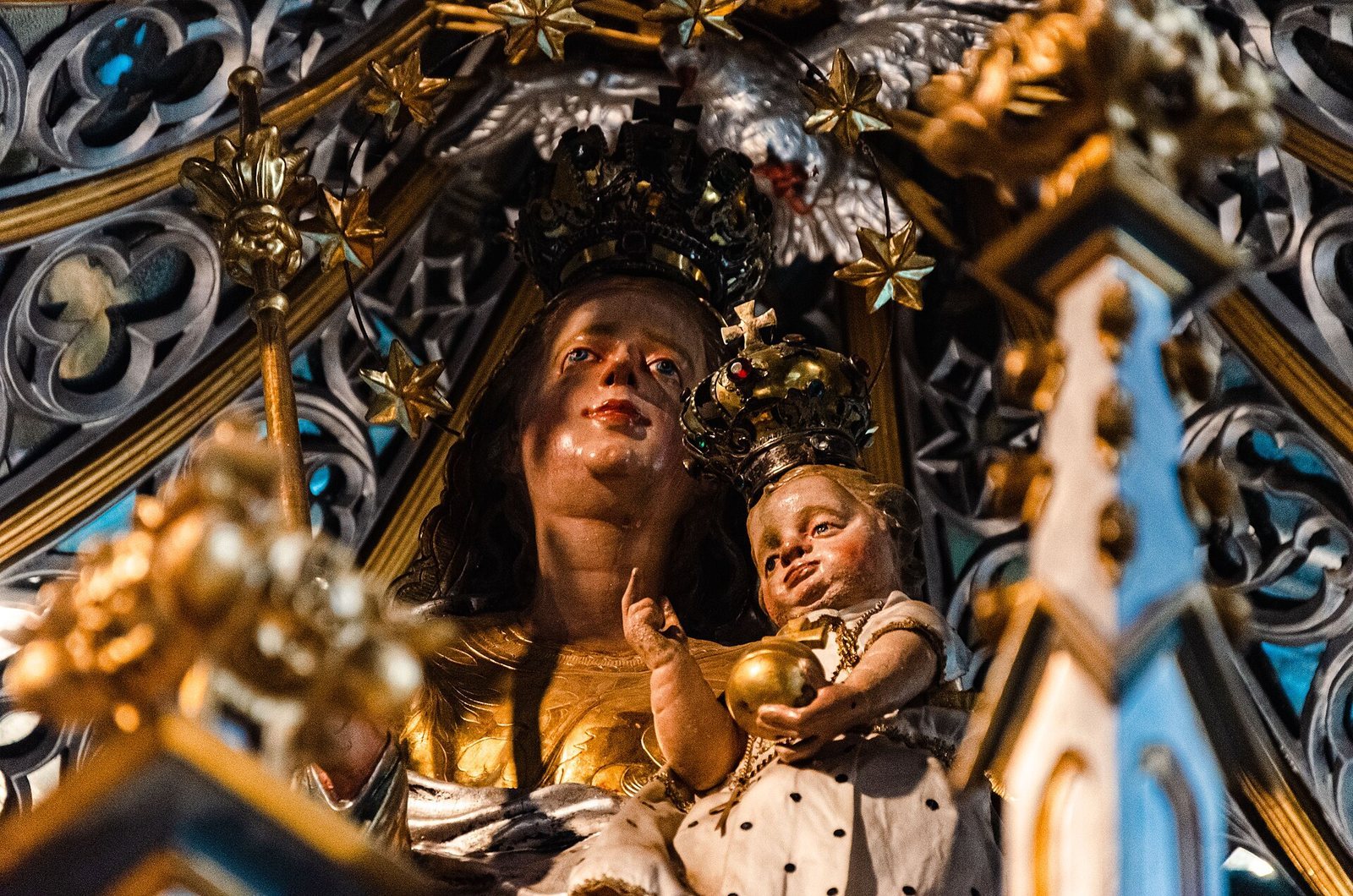
Friulian painters Tomaž Fantoni and Jakob Brollo decorated the church on fresh plaster. Scenes from Mary’s life cover the walls, while the ceiling features allegories drawn from the Litany of Loreto, a Catholic prayer invoking titles of Mary, alongside angels bearing Marian emblems. The painted arch above the sanctuary shows devotees beneath Mary’s mantle, including Bishop Anton Martin Slomšek, later beatified by the Catholic Church, and parish priest Marko Glaser. The church also holds a Gothic statue of Mary with the Child. Tradition attributes miraculous powers to the statue, and votive images reflect healings that worshippers attributed to Mary’s intercession. Relics of Blessed Anton Martin Slomšek are also kept in the church.