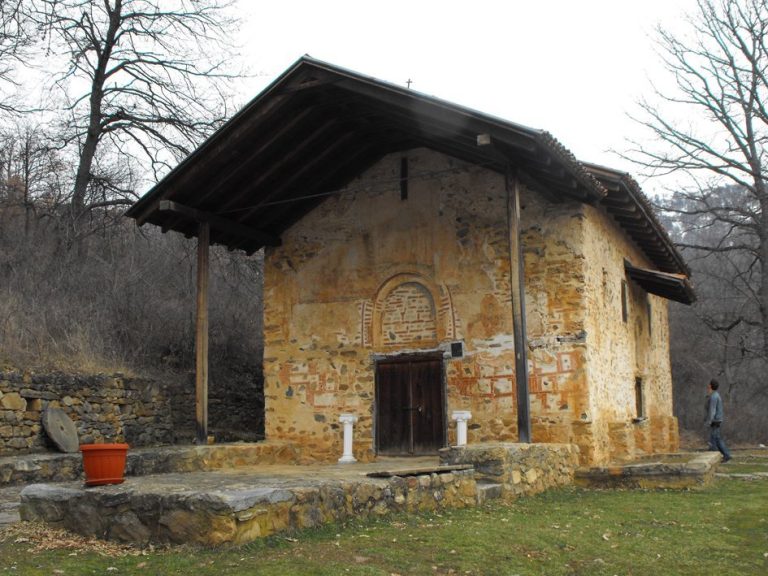
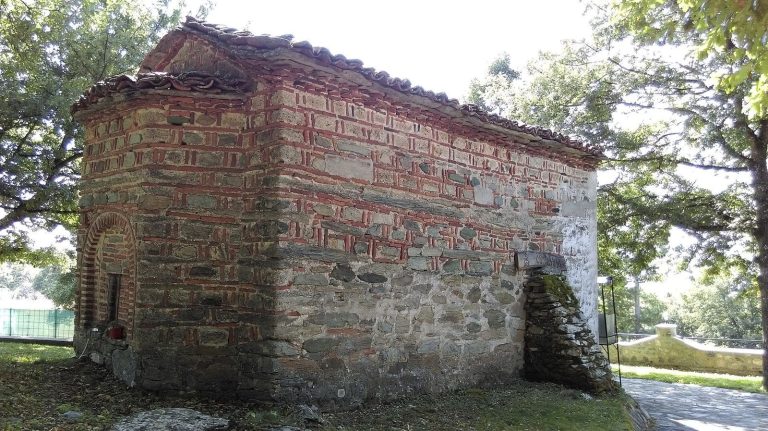
Our Lady Porfyra Church: The Monastery Church on St. Achillios Island, Greece
Site at a Glance
- Popularity
- Very Low
- Country
- Greece
- Primary era
- Early Modern
- Eras represented
- Early Modern
- Civilizations
- Ottoman
- Site type
- Religious
- Remains
- Church
On this page5 sections
History
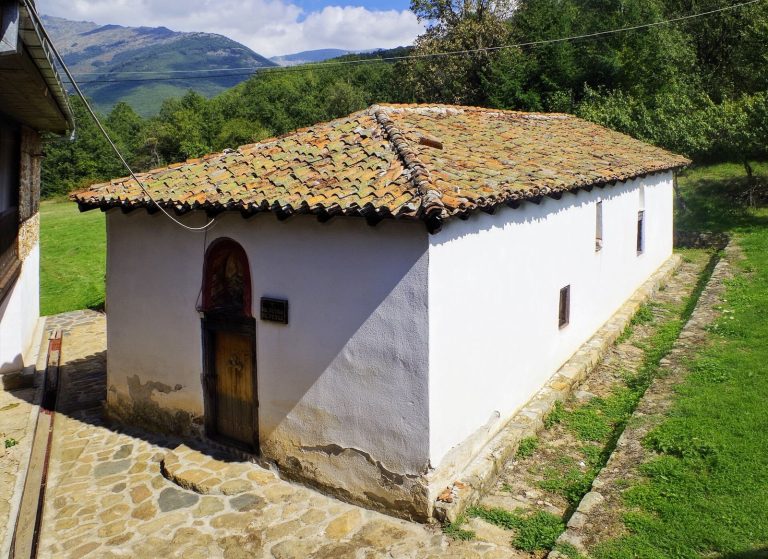
Our Lady Porfyra Church is a late-medieval church on a hillside in the southern part of St. Achillios Island in Prespa, Greece. It was built around the middle of the sixteenth century and served as the principal church of a monastery.
The church originally belonged to the Ohrid Archbishopric, an Eastern Orthodox jurisdiction. It is now part of the Diocese of Florina, Prespa and Eordaea under the Ecumenical Patriarchate, a major Eastern Orthodox see, and is administered by the autocephalous Church of Greece. The church remains active.
Remains
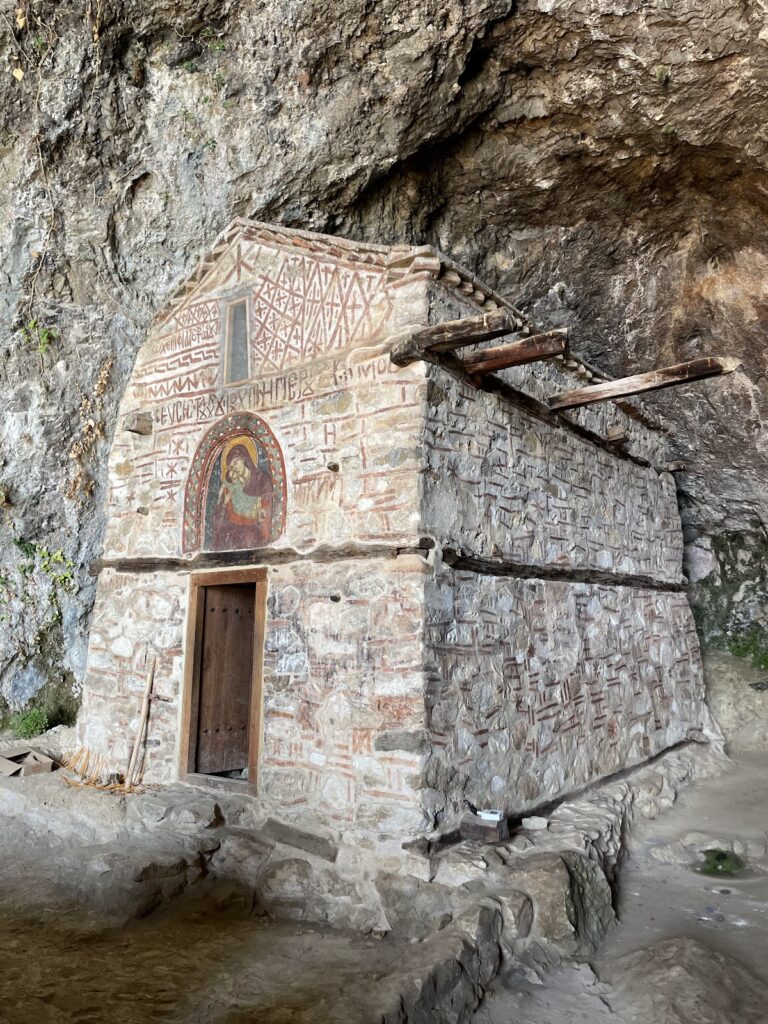
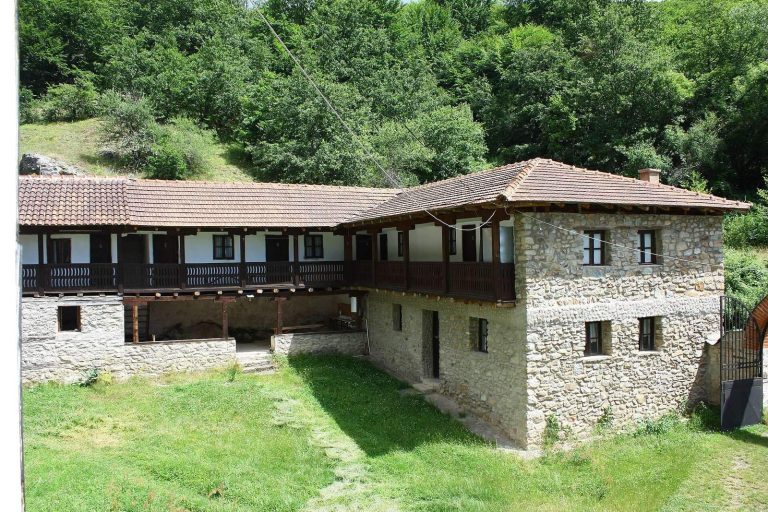
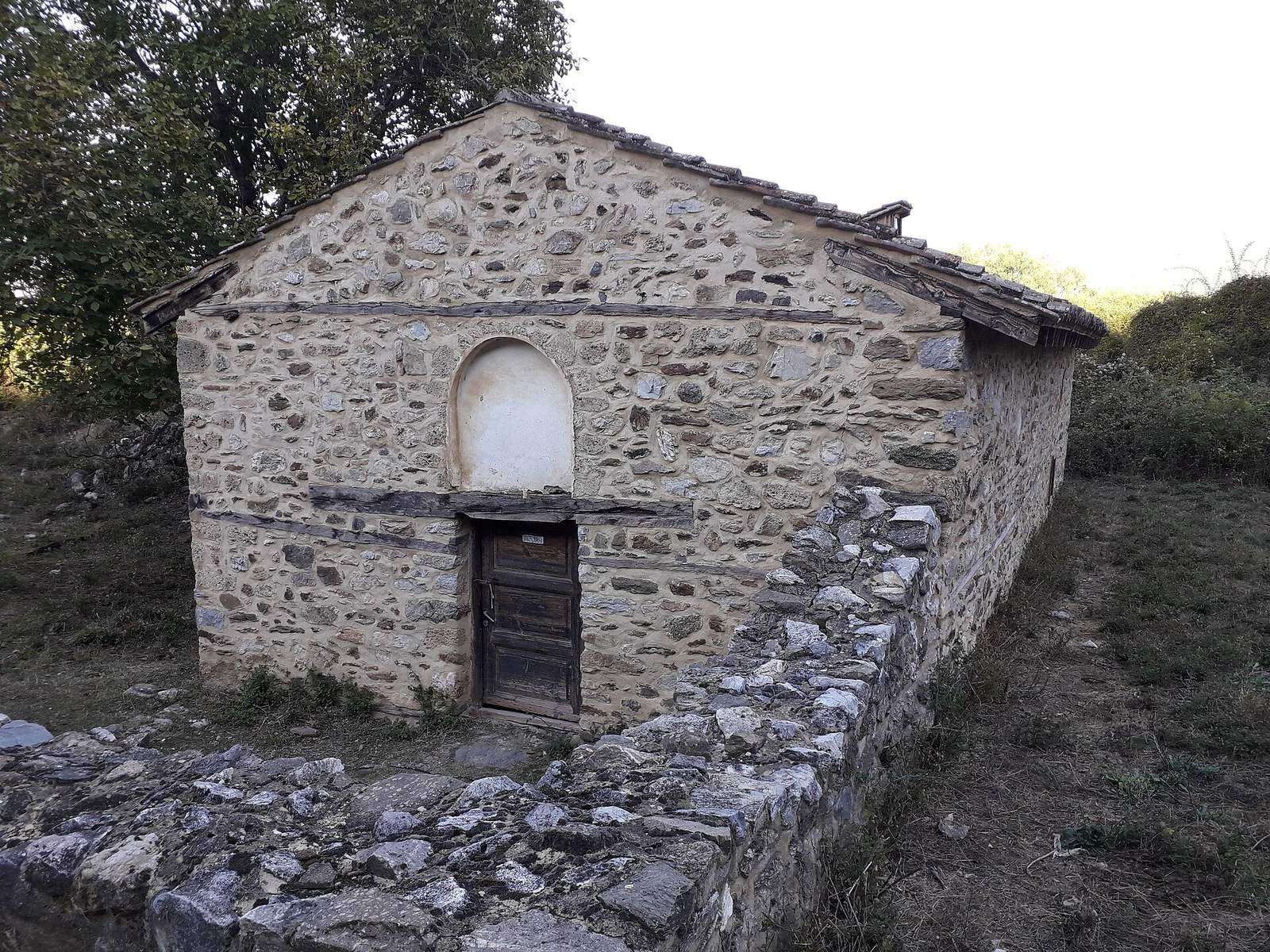
The church is a small, single-nave building, with one main worship space, in relatively good condition. The site also includes remains of monastic cells and other auxiliary buildings.
Murals
Sixteenth- and seventeenth-century paintings
The oldest murals are dated to 1524 by an inscription on the wall between the narthex, or entrance area, and the nave. They depict the Transfiguration, when Jesus revealed his divine glory to disciples, the Dormition, or the Virgin Mary’s death in Eastern Christian tradition, and saints. The work was carried out under the care of hieromonk Theodosius, a monk ordained as a priest. Other surviving paintings date from the sixteenth and seventeenth centuries.
A mid-sixteenth-century image above the entrance shows the Virgin holding the Child. Her purple garment gave the monastery its name.
Murals of 1745
Murals dated to 1745 decorate the sanctuary and south wall. Made under the care of Bishop Parthenius, a senior Christian cleric overseeing a diocese, they include the Melismos, an image of the Eucharistic sacrifice, and the Virgin of Blachernae, a title associated with Constantinople. The paintings also depict the local saints Achillios and Germanus, and Saint Christopher in the rare dog-headed form found in Eastern Christian art. This decoration belongs to the same period as the murals at the Church of Saint Germanus.