Oršić Castle in Gornja Stubica: A Baroque Residence and Museum
Site at a Glance
- Popularity
- Medium
- Country
- Croatia
- Primary era
- Early Modern
- Eras represented
- Early Modern, Modern
- Civilizations
- Habsburg
- Site type
- Domestic
- Remains
- Castle
On this page7 sections
History
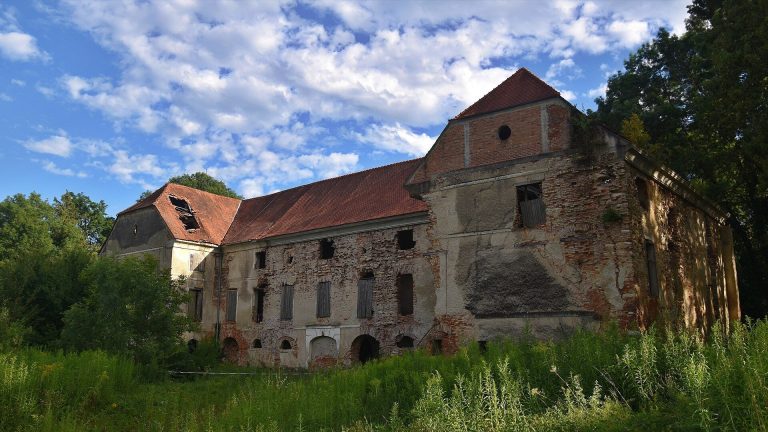
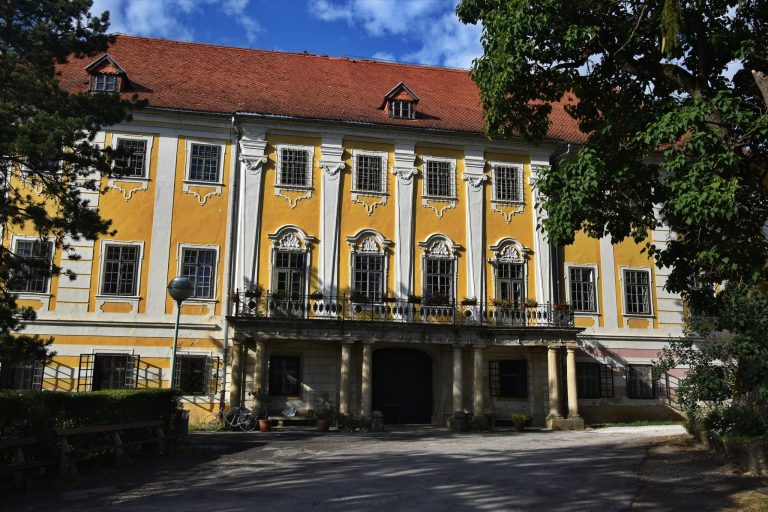
Oršić Castle in Gornja Stubica, Croatia, is a Baroque residence, built in 1756 by Croatian count Krsto Oršić on the site of a medieval fortress. Baroque is an ornate European artistic style. The castle later became a museum devoted to the Croatian-Slovenian Peasants’ Revolt of 1573, an uprising against feudal authority led by Matija Gubec.
The Oršić family residence
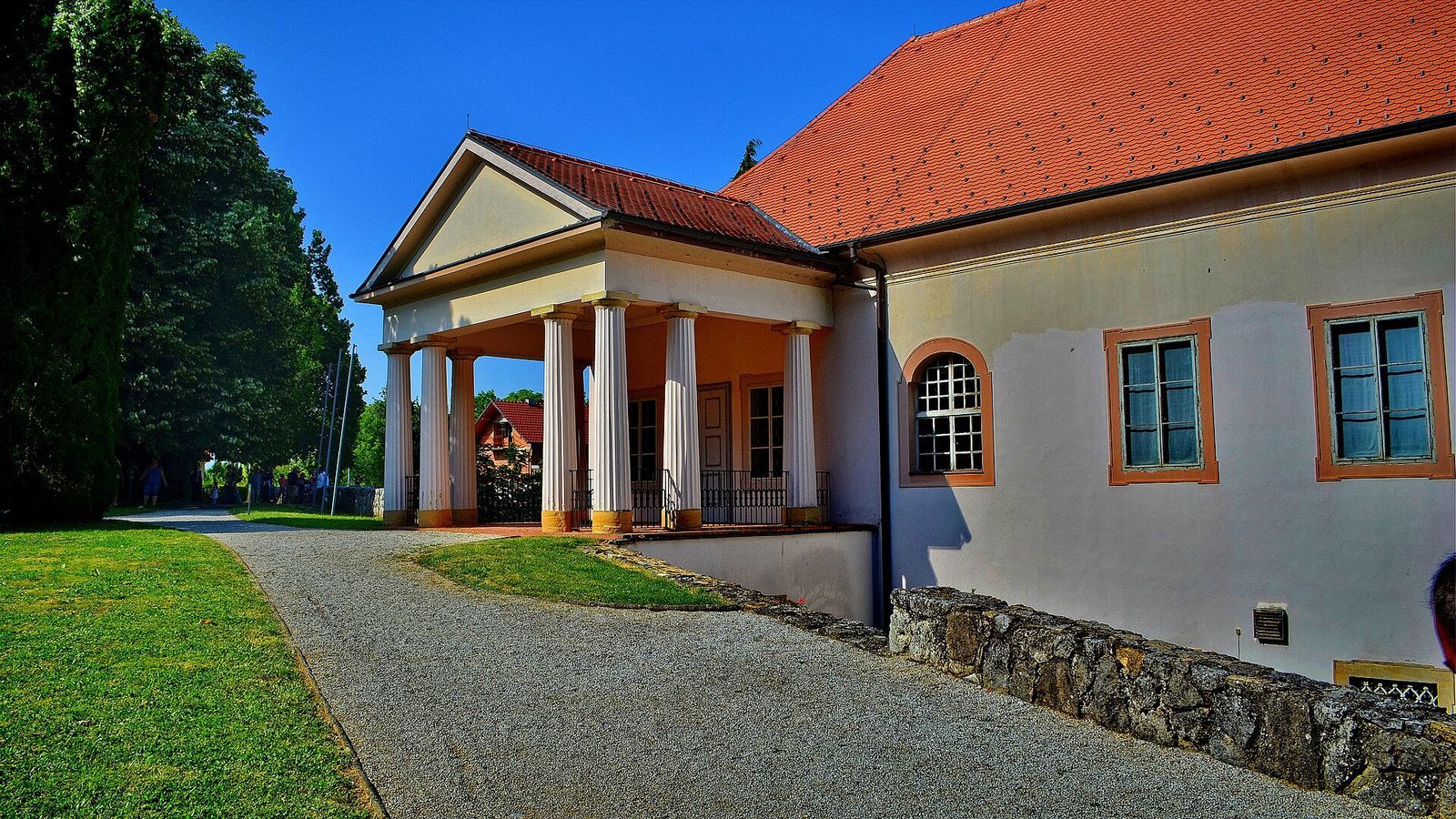
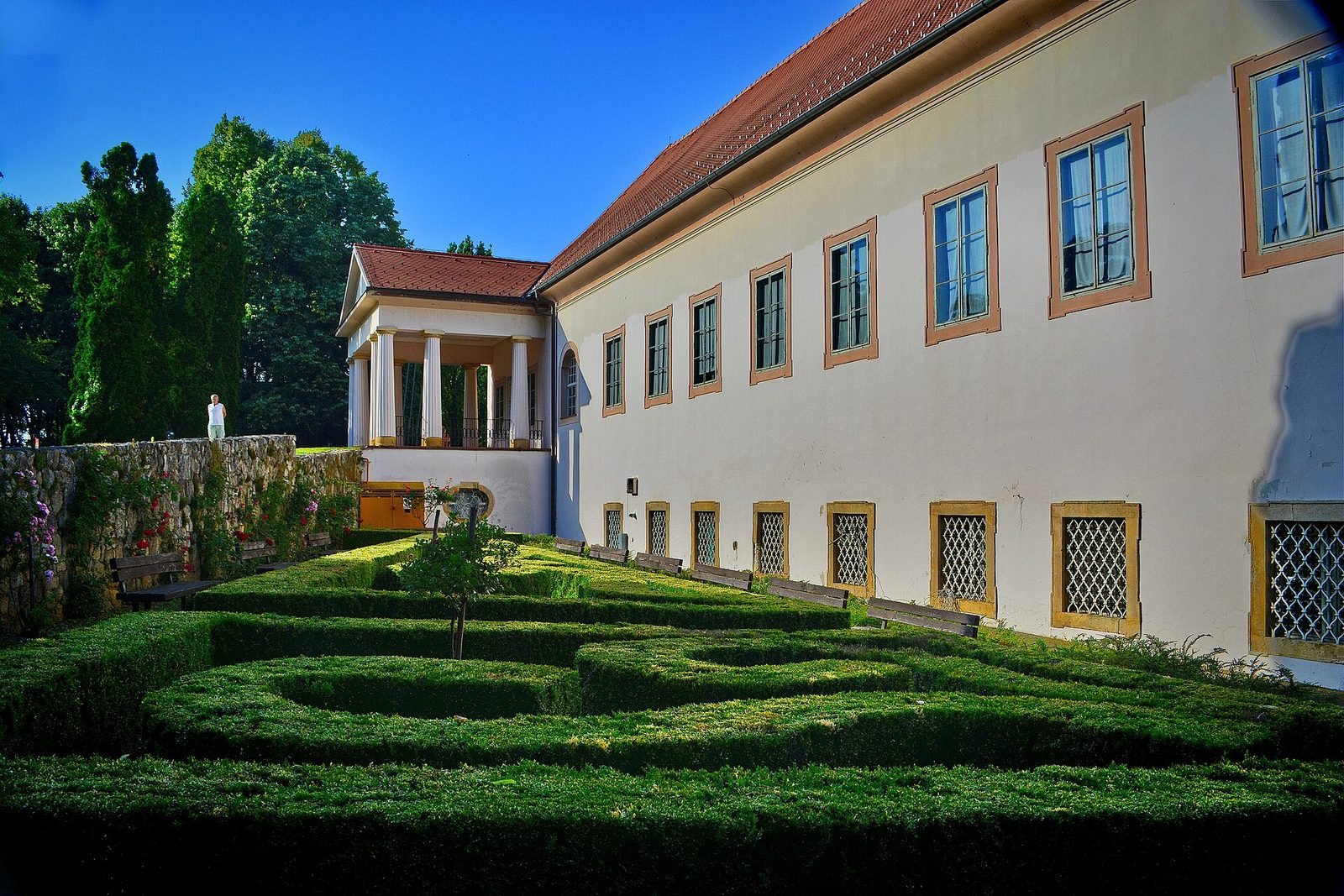
The castle served as the Oršić family’s residence until the family’s last members moved away in 1924. The family also owned other Croatian estates, including castles at Gornja Bistra, Slavetić, and Jurketinec, and palaces in Zagreb and Varaždin. After a major earthquake in the nineteenth century, a Classicist portico was added. Classicist architecture draws on classical forms.
Later uses
After the Oršić family left, part of the castle housed a primary school and an agricultural enterprise operated by a local farmers’ cooperative. Extensive renovation in the late 1960s and early 1970s adapted the building as a museum about the 1573 revolt.
Remains
Castle and portico
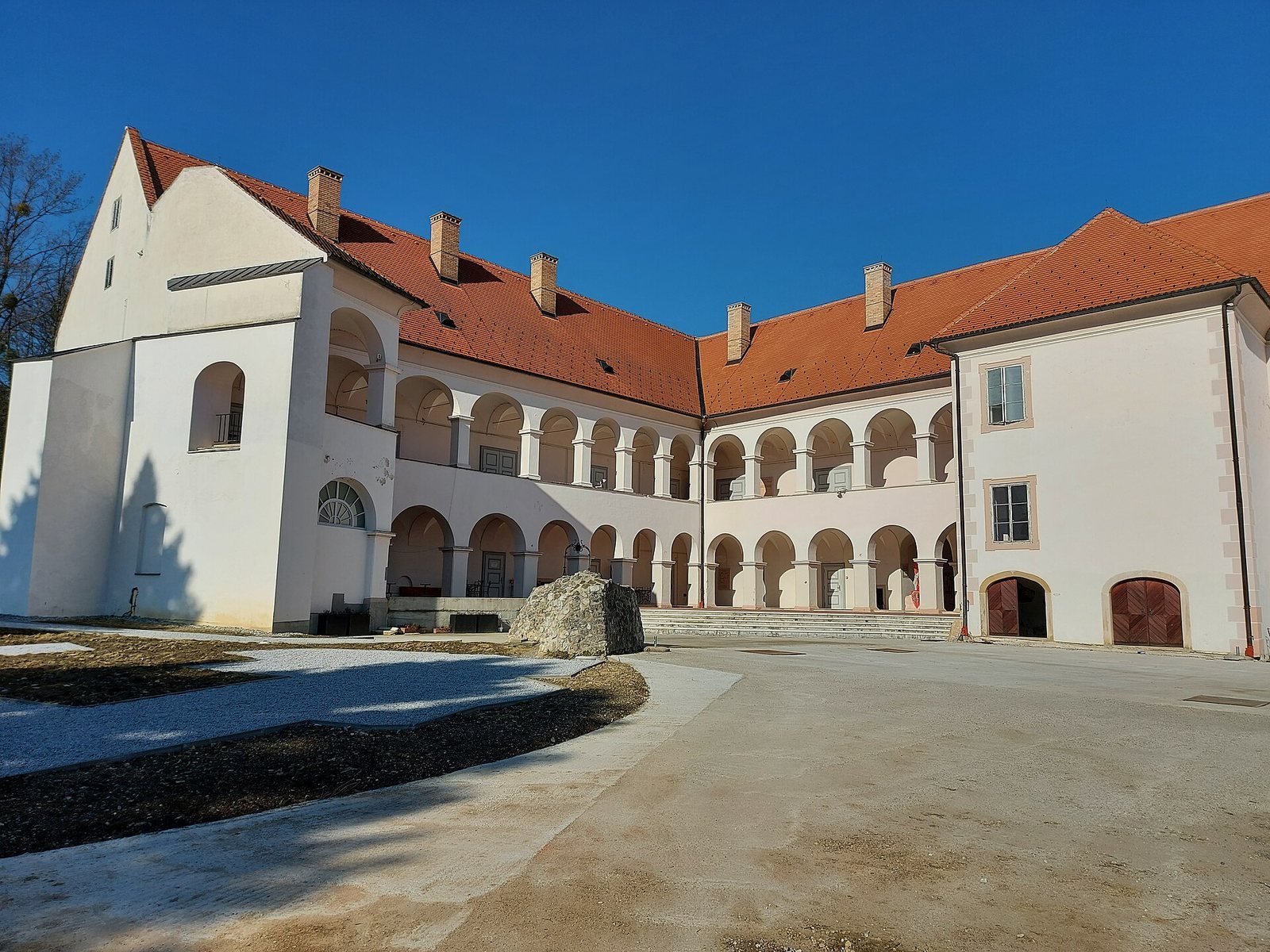
The castle has an L-shaped plan, with two wings whose courtyard-facing sides open onto arcades, or rows of arches, along the corridors. Its exterior is relatively plain, with regularly aligned windows and a few rustic details at the corners. The portico has a tympanum, the central field within a pediment, and Doric columns, a classical type of column.
Chapel
A well-preserved chapel contains illusionistic wall paintings, whose painted effects suggest depth, as well as an illustrated Baroque altar.
Park monument
A park surrounds the castle. It contains a large monument dedicated to the Peasants’ Revolt and its leader, Matija Gubec, made by prominent Croatian sculptor Antun Augustinčić.