St. Simon and Jude Thaddeus Church, Zagreb: A Historic Catholic Parish Church


Site at a Glance
- Rating
- 4.8
- Popularity
- Low
- Country
- Croatia
- Primary era
- Medieval
- External website
- Open
- Eras represented
- Medieval, Early Modern, Modern
- Civilizations
- Habsburg, Hungarian, Kingdom of Croatia
- Site type
- Religious
- Remains
- Fortified Church
On this page8 sections
History
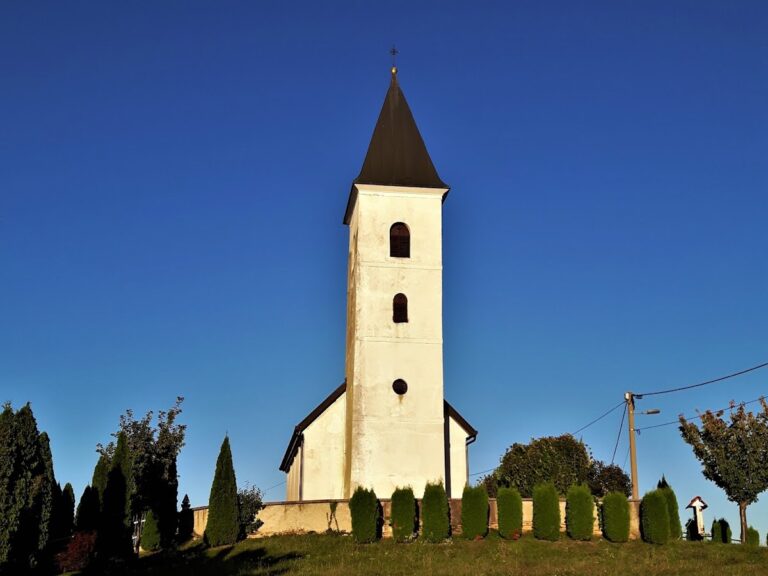
St. Simon and Jude Thaddeus Church is a Catholic parish church in Zagreb, Croatia, built and dedicated in 1476 on the foundations of an earlier church. Its present form combines Romanesque, Gothic, and Baroque elements, with much of its appearance shaped by rebuilding and expansion in the late nineteenth century. The church is dedicated to St. Simon and St. Jude Thaddeus, Christian apostles who are commemorated together as its patron saints.
Medieval foundation and Ottoman-era defenses
The church’s Gothic sanctuary was added in 1476. During the sixteenth century, a defensive wall was constructed around the church in response to the danger posed by Ottoman incursions. This enclosure gave the parish church a fortified setting during a period when ecclesiastical buildings could also serve as places of refuge.
Baroque additions
The building was enlarged during the early modern period. The Chapel of St. Anthony of Padua was added on the north side in 1688 and later incorporated into the north aisle. In that period the church had three altars, including a main altar carrying a statue of the Blessed Virgin Mary.
The church received much of its artistic form during the eighteenth century through the initiative of the parish priest Dumbović. The octagonal bell tower was built in 1702 and raised in 1760. A stone enclosure walkway surrounding the church, known as a cinktor, dates from 1754 and formed part of the complex’s earlier walled character.
Earthquake, restoration, and continuing repairs
The Zagreb earthquake of 1880 severely damaged the church. Restoration was completed by 1883 in accordance with the ideas of Herman Bollé, the nineteenth-century architect whose approach influenced the rebuilding. The church was expanded on the north side and received a sacristy on the south side. Most of its present appearance dates from this late-nineteenth-century intervention.
The church interior was replastered in 1996 and repainted in 2013. Areas affected by damp were partially repaired in 2017, and the bell tower was restored in 2019. The earthquake of 22 March 2020 caused severe damage, followed by further damage from the earthquake that struck Croatia in December of the same year. A temporary prefabricated worship building was begun nearby in November 2020. Liturgical celebrations were still being held there in 2025 while restoration of the parish church continued, with the relocation of the church’s altars, statues, and furnishings planned as part of the response.
The church, the Chapel of Our Lady of the Angels, the parish rectory, and an ancillary building form a protected sacred complex. The complex is protected cultural property of the Republic of Croatia as an immovable individual property in the category of sacred complexes. A new wall enclosed the entire complex in 1962.
Remains
The church interior
The church combines Romanesque, Gothic, and Baroque elements within a building largely shaped by its late-nineteenth-century form. Both polygonal sanctuaries have Gothic rib vaults, vaulted ceilings supported by projecting ribs. In the apse, the rounded or polygonal end of the main nave, the principal wooden altar carries a painting of St. Simon and Jude Thaddeus. The apse of the north aisle contains an altar with a statue of St. Anthony of Padua, accompanied by statues of St. Thérèse of Lisieux and St. Joseph. A pulpit dating from 1755 stands in the main nave, whose painted surfaces contribute to the interior decoration.
Bell tower and former enclosure
An octagonal bell tower forms part of the church complex. Its construction dates to 1702, and it was increased in height in 1760. The earlier defensive wall surrounded the church, while part of the stone cinktor, an enclosure or covered walkway around a church, survives from 1754. The wider sacred complex is now enclosed by the wall built in 1962. The church remains heavily damaged by the 2020 earthquakes, and restoration was still underway in 2025.
Wider sacred complex
The church stands within a larger sacred complex that includes the Chapel of Our Lady of the Angels, the parish rectory, and an ancillary building. These structures, together with the church and its enclosing walls, form the protected architectural group associated with the parish.