Vurberk Castle: A Medieval Fortress and Cultural Site in Slovenia
Site at a Glance
- Rating
- 4.6
- Popularity
- Very Low
- Country
- Slovenia
- Primary era
- Early Modern
- Eras represented
- Medieval, Early Modern
- Civilizations
- Habsburg, Holy Roman Empire
- Site type
- Military
- Remains
- Castle
On this page9 sections
History
Medieval origins and rebuilding
Vurberk Castle is a medieval fortress in Slovenia, standing on Vurberk Hill above the Drava Plain. Its earliest remains date from the twelfth century. The castle was first indirectly mentioned in 1238 through its builder, Wigand of Wrmberch, and was directly recorded in 1244 as Wuermwerg, when Amelrik of Stubenberg pledged it to Swiker of Humperk.
After Swiker’s death, Hartnid of Ptuj received Vurberk and Wurmberch as a fief from the Archbishop of Salzburg. In this feudal arrangement, Salzburg’s archbishop acted both as a senior church authority and as a territorial lord who could grant estates in return for service or property. The castle was later held by the Counts of Hollenburg, also known as the Lords of Vurberk. Their name became associated with the castle and with its coat of arms, which depicted a worm or legendary serpent-dragon. A dragon already appeared on the coat of arms of Amelrik of Hollenburg, the first known possessor, in a record from 1204.
Vurberk was briefly controlled by the Hungarians during the war between Ottokar II of Bohemia and the Hungarian forces. King Ottokar probably destroyed the castle in the 1260s. After Rudolf of Habsburg defeated Ottokar at the Battle of the Marchfeld in 1278, the Habsburgs, a European ruling dynasty that later governed extensive territories in Central Europe, brought Styria under their rule. The Lords of Ptuj then rebuilt Vurberk.
Salzburg, Stubenberg, and Renaissance defenses
Salzburg retained possession of Vurberk until 1438. An inheritance agreement in 1441 transferred it to Neža, the sister of Friderik, who was married to Leutold of Stubenberg. The Stubenbergs held the castle until 1616, when Jurij Stubenberg sold the estate to Filibert Schranz of Schranzenegg.
The castle withstood a Turkish attack in 1493, when the attackers failed to capture it. During the sixteenth century, Vurberk was remodeled and strengthened with Renaissance fortifications. This type of defense adapted castles to the spread of gunpowder artillery through substantial walls, towers, loopholes, and an encircling defensive plan. A defensive tower was added during this period, and a courtyard addition carried the date 1592.
Seventeenth-century owners and the Herberstein conflict
Wolfgang Žiga, Baron Herberstein, acquired Vurberk in 1619. In 1627 it passed to Colonel Baron Johan Wechsler. His daughter, known as “Huda Liza,” sold the castle back to the Herbersteins in 1639. Jurij Gunter, Count of Herberstein, owned it before 1677.
Jurij Gunter von Herberstein became involved in a violent conflict with armed subjects from the neighboring estates of Ravno Polje and Šentjanž. Those estates belonged to Count Ivan Kristjan Galler and Terezija Marija, née Countess Breuner. After Herberstein invaded their property, killed one subject, and mortally wounded two others, the neighboring subjects killed him. A trial lasting several years followed in Graz. The six peasants prosecuted in the case were not sentenced to death.
Attems ownership and twentieth-century destruction
In 1715, Kristina Krescencija Baroness Herberstein married Count Ignacij Marija Attems, and Vurberk passed to the Attems family. They retained the castle until 1885. It then entered bourgeois ownership, before the Herbersteins reacquired it in 1907.
After the First World War, the Russian Red Cross established a sanatorium for pulmonary diseases in the castle. It continued to operate until the Second World War, when German forces occupied Vurberk and converted it into a training center for German military and political commissars. The castle is also described as having housed a Nazi political school.
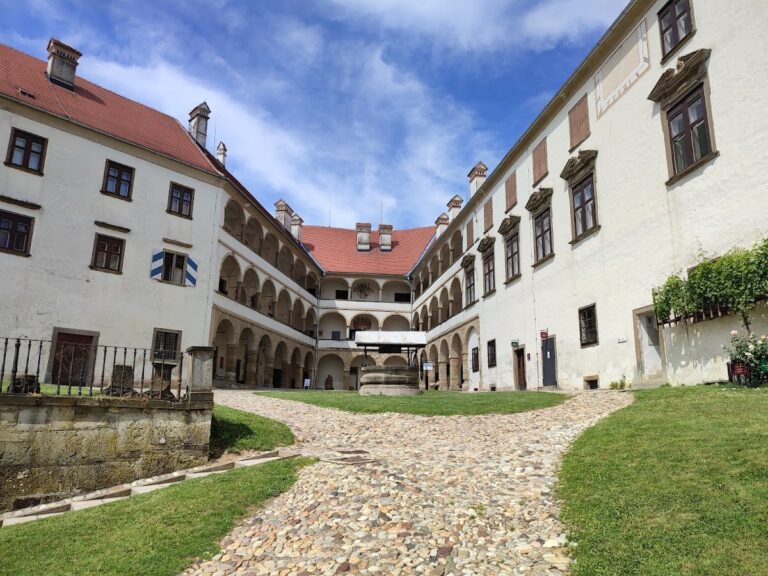
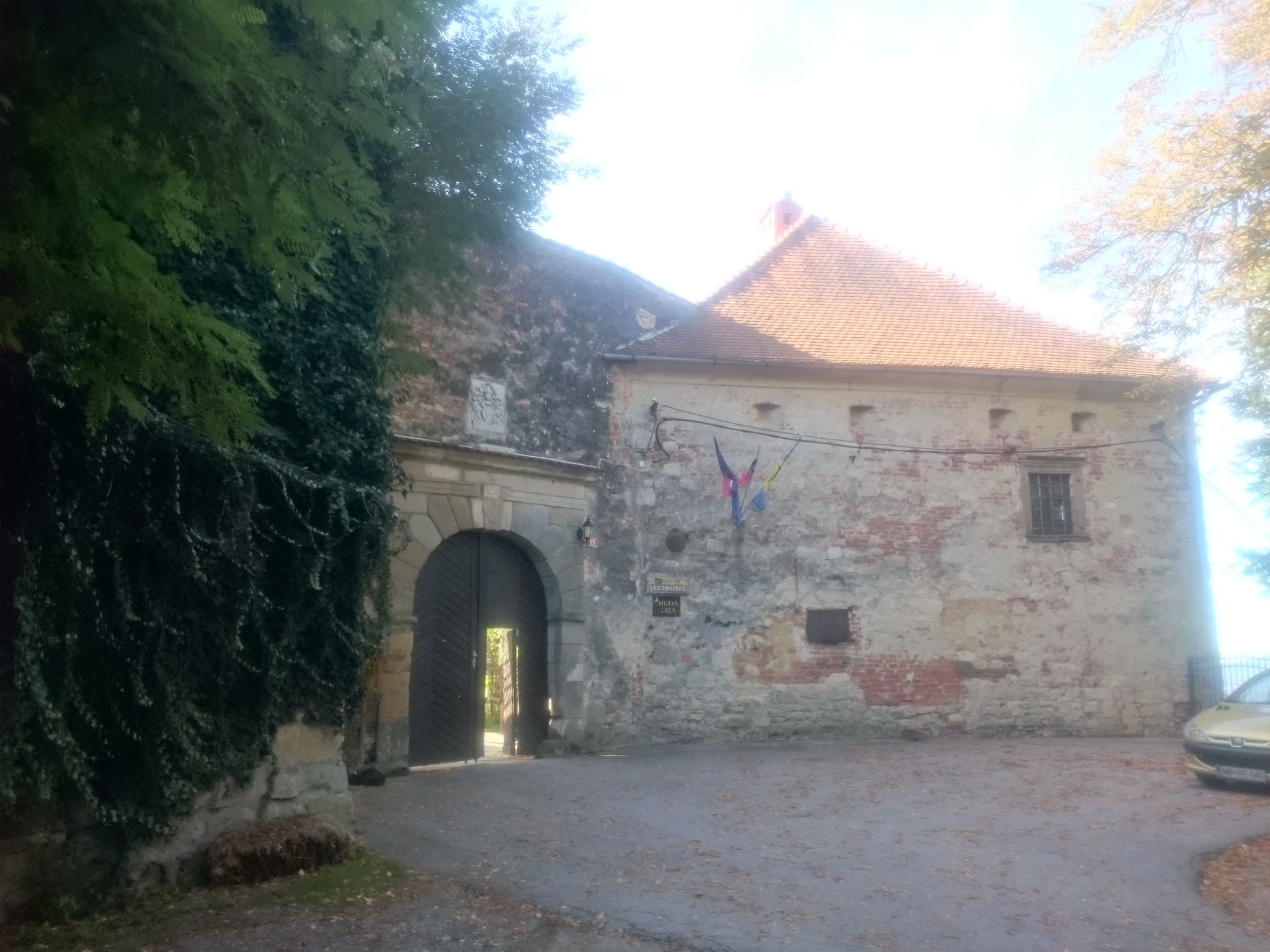
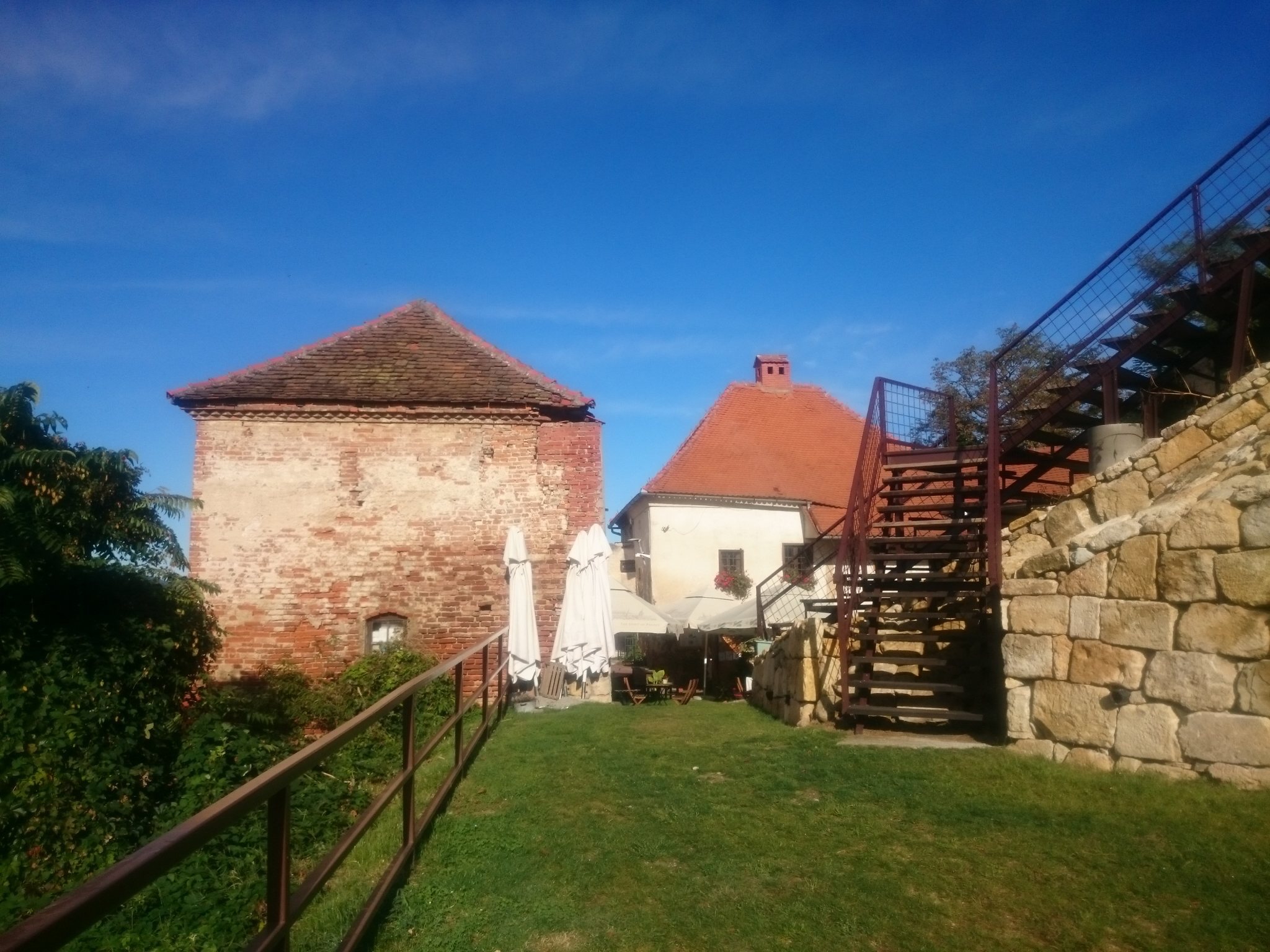
On 22 February 1945, South African military aviation attacked Vurberk and severely damaged the castle. After the war, the ruins were removed, and local residents used the castle as a source of building material. In 1979, the Vurberk Tourist Association restored the surviving lower courtyard, entrance portal, walls with loopholes, and two small buildings. The inner courtyard was later adapted as an open-air theater, while rooms in the bastion came into use by the association.
Vurberk was declared an immovable monument of local importance under the official name “Vurberk Castle” in 1992. Since that year, the courtyard has hosted an annual popular folk-music festival, as well as other cultural events such as the Štajerska poje choral festival.
Remains
Hilltop layout and surviving structures
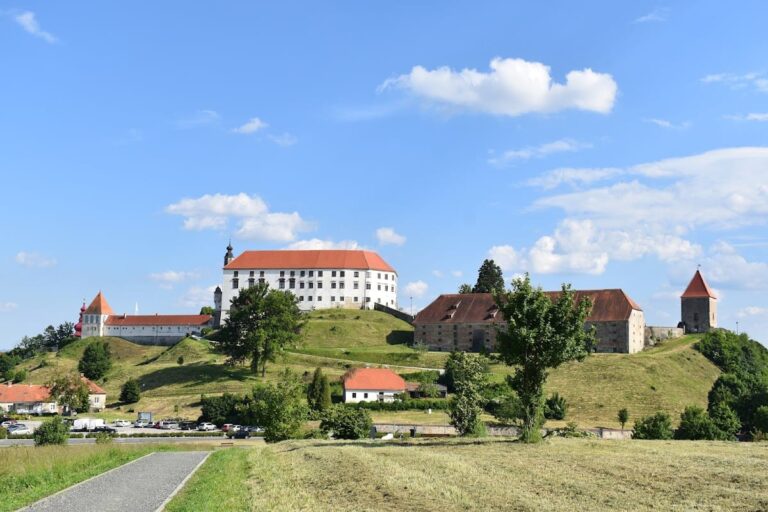
Vurberk stands on the steep left bank of the Drava River, on a rounded hill in the southern Slovenske Gorice. The castle was probably rectangular and was built on exposed bedrock. Reconstructions based on old drawings and photographs indicate a ground floor and two upper stories. The ground floor contained a prison and administrative rooms, while the first floor had 22 rooms and the second had 14.
The courtyard was enclosed by arcades and reportedly included a Renaissance trifora, a three-light window, on one wall. A cistern stood at its center, together with a 72-meter-deep well. Water was raised from the well by a treadwheel. This arrangement has been described as the only known example in Slovenia and as a rarity elsewhere in Europe. The restored courtyard now functions as an outdoor theater and event space.
Fortifications and courtyard features
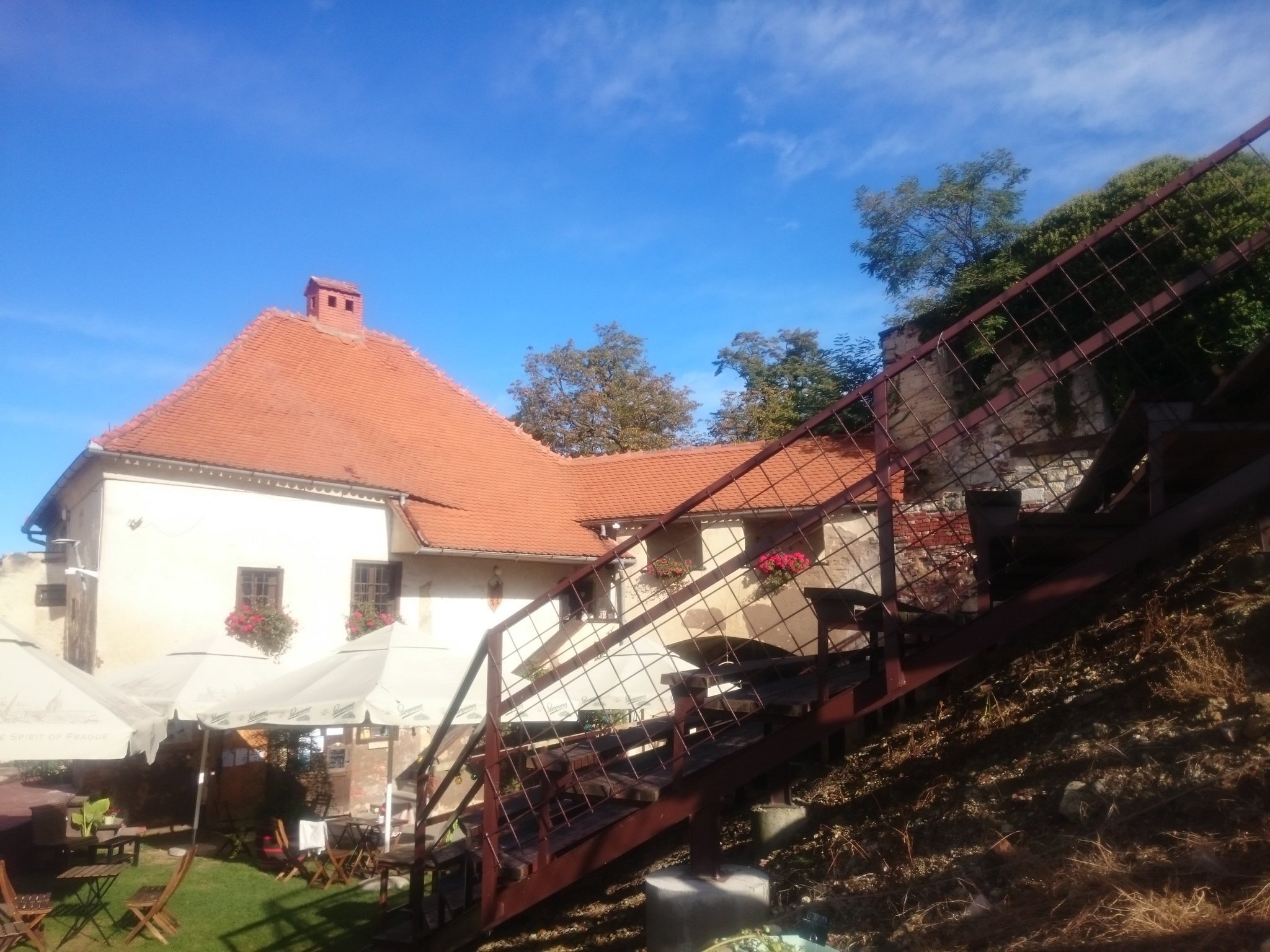
A Renaissance defensive ring surrounded the central castle. Its walls and towers are partly preserved, including walls pierced by loopholes, narrow openings through which weapons could be used, and the lower courtyard entrance portal. The surviving bastion, a projecting fortified structure that strengthened the defensive wall and provided weapon positions, contains rooms used by the Vurberk Tourist Association.
The northeast wing contained two built-in slabs bearing the Stubenberg coat of arms. These elements preserve a direct connection with the family that held Vurberk for much of the late medieval and early modern period. The courtyard and its surrounding defensive remains also retain evidence of the castle’s sixteenth-century strengthening.
Arms and former collections
The 1525 inventory records extensive weaponry at Vurberk. Armor and related equipment were kept in the armory, while other weapons occupied a smaller weapons room. Spears and lances were stored in a building in front of the chapel. The inventory also lists field serpents, three stake-mounted guns, two bombards, several cartauns, other cannon, and their ammunition. Field serpents, bombards, and cartauns were types of early gunpowder artillery.
The castle formerly held a collection of old furniture, weapons, torture instruments, artworks, and smaller furnishings. Parts of that collection are now located at Ptuj Castle, in Graz, and in Libochovice in the Czech Republic. These dispersed objects preserve elements of Vurberk’s former interior and material history beyond the surviving walls and courtyard.