Oratorio di San Pellegrino: A Medieval Catholic Oratory in Bominaco
Site at a Glance
- Country
- Italy
- Primary era
- Medieval
- Eras represented
- Medieval
- Civilizations
- Kingdom of Sicily
- Site type
- Religious
- Remains
- Chapel
On this page12 sections
History
The Oratorio di San Pellegrino is a medieval Roman Catholic oratory in Bominaco, Italy, and part of the monastic complex associated with Santa Maria Assunta. An inscription dates its construction to 1263. Dedicated to San Pellegrino, a Christian martyr venerated in the area, the oratory is believed to have been built over his tomb. Its frescoes, together with those at Santa Maria ad Cryptas in Fossa, are an important record of medieval painting in Abruzzo.
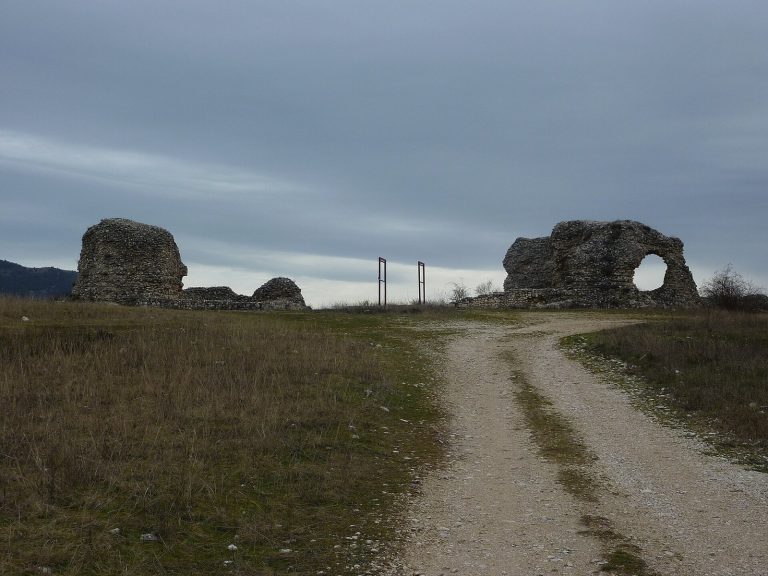
The monastic foundations
A church had been built over San Pellegrino’s tomb by around the eighth century, and the later oratory is also believed to occupy the tomb site. The monastic community linked to Santa Maria Assunta began in the Carolingian era, the period and dynasty associated with Charlemagne and his successors. Charlemagne gave land to the church and donated the foundation to Farfa Abbey, a Benedictine monastery belonging to a Christian monastic order shaped by the Rule of Saint Benedict. Monks from Farfa established a community at Bominaco. In 1001, a large land donation from Count Oderisio, a medieval aristocratic title-holder, enabled the community to become independent of Farfa.
The oratory and its later status
A rear-wall inscription names Abbot Teodino, the head of the monastery, as the person who commissioned the oratory. It was declared a national monument in 1902. The building remains an active Roman Catholic oratory administered by the Archdiocese of L’Aquila.
Remains
Plan and entrances
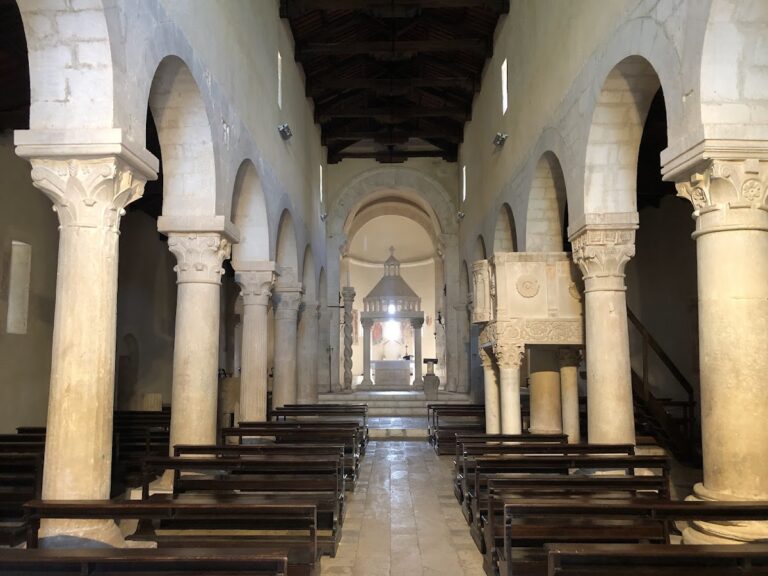
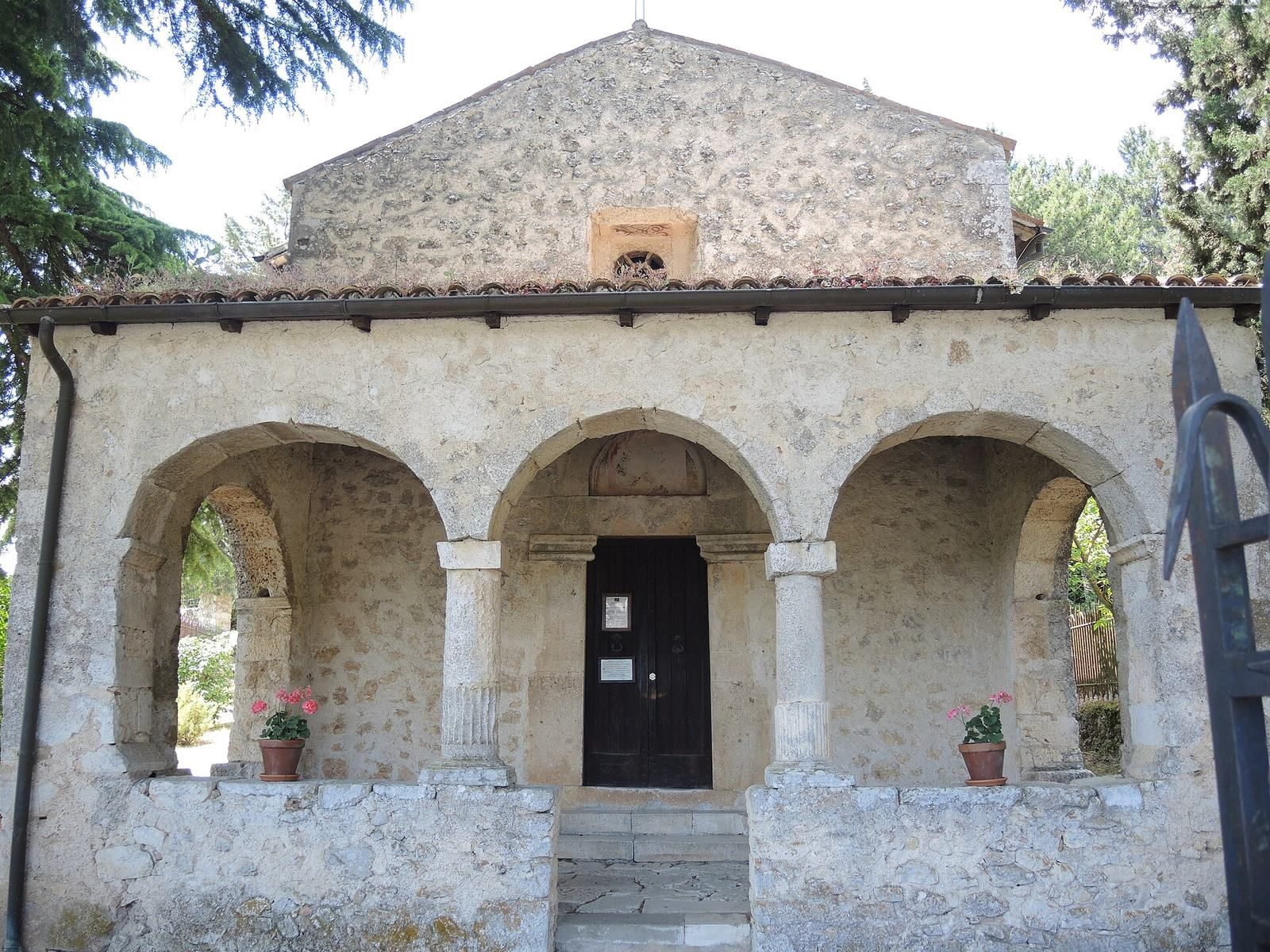
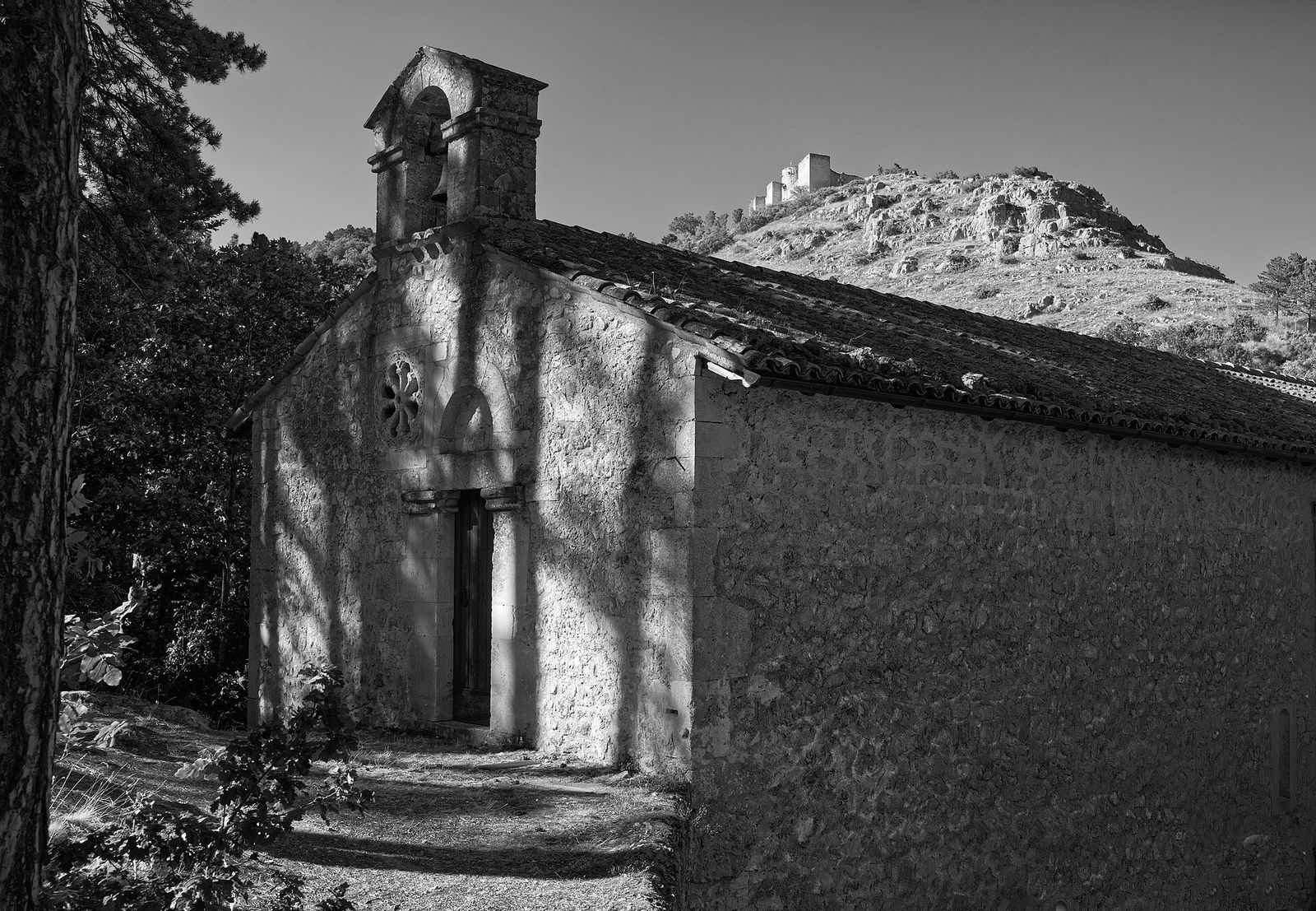
The oratory is a compact, single-nave building, with a nave, or main worship space, measuring 18.7 metres long and 5.6 metres wide. Its pointed barrel vault is divided into four sections. Six narrow windows, three on each side, and circular rose windows in the front and rear façades admit light. A post-medieval porch stands before the front façade. At the rear, a bell gable, a raised wall structure holding bells, rises above a second entrance that was reserved for religious residents of the adjoining monastery. The rocky slope places this doorway higher than the porch, and two flights of stairs lead to it. A third doorway opens in a side wall.
Interior divisions
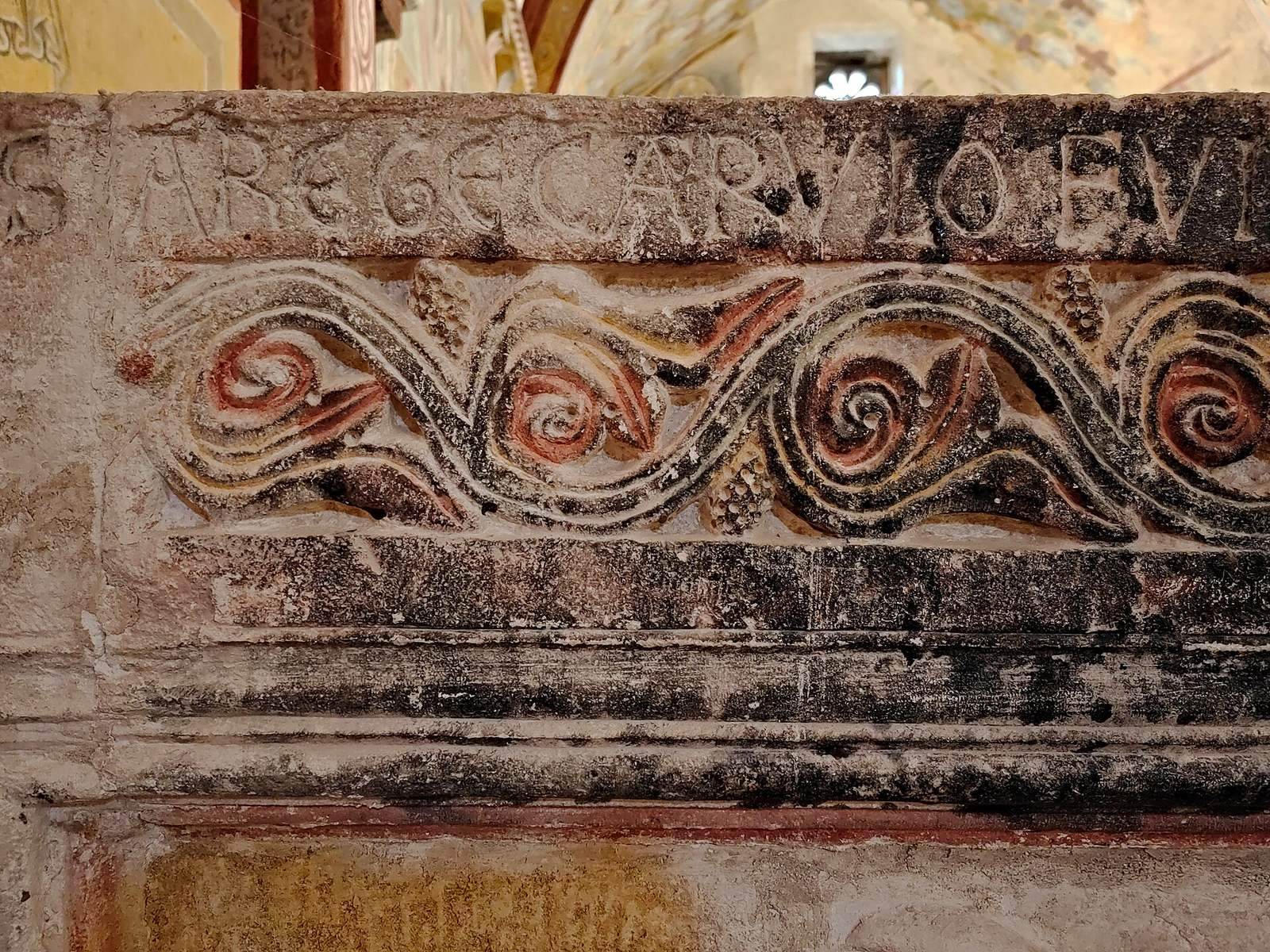
Two stone screens divide the interior between the area for the faithful and the space for catechumens, people receiving instruction in the Christian faith before baptism. A dragon appears on the left screen and a griffin on the right.
Painted decoration
Arrangement and artistic traditions
Frescoes cover the interior walls and date to the late thirteenth century, contemporary with the oratory’s construction. Three horizontal narrative bands rise above a painted base that resembles hanging curtains; geometric ornament and stylized bands also decorate the central wall areas and vault. The cycles overlap across the walls, with some episodes continuing on the opposite side. At least three artists are thought to have contributed. The paintings draw on Byzantine-Roman traditions of Christian art, while their lively naturalism has also been linked to northern Gothic art, a distinct medieval artistic tradition.
Christ’s childhood
The childhood cycle includes the Annunciation, Visitation, Nativity, and Massacre of the Innocents. In the Visitation, Mary wears a maphorion, a mantle worn by the Virgin in Christian art, over a garment patterned with diamonds. The scenes combine Byzantine models, especially those associated with Eastern miniature painting, with Western and local Abruzzese elements. The Adoration of the Magi includes imagery inspired by French art, while some episodes move beyond the stillness often associated with Byzantine-Roman painting.
Jesus’s final days
The cycle of Jesus’s final days shows the Last Supper, Judas’s betrayal, Jesus’s arrest and trial, his removal from the cross, his burial, and his appearance at Emmaus. The scenes give attention to small details, ordinary life, and expressive gestures. The figures at Emmaus include a man in a short tunic carrying a staff. The painter uses color freely and favors a popular, two-dimensional approach over the representation of volume or depth.
San Pellegrino and the Last Judgment
Six episodes from the life of San Pellegrino use a spare visual style and conventional models, without a clearly defined iconographic tradition. The Last Judgment is arranged as separate scenes around the interior rather than as one composition on the wall opposite the main entrance. These episodes show the weighing of souls, Peter opening the gates of Paradise, the patriarchs with the blessed, and the torments of the damned. Beneath a large figure of San Pellegrino are images of Saints Christopher, Onofrio, Martin, and Francis of Assisi.
The calendar and the fragmentary Charlemagne cycle
The calendar cycle is legible for its first six months. Each month combines a zodiac sign with human activity and festivals associated with the diocese of Valva. January shows a man drinking wine, February a man pruning a tree, March a sleeping man, April a man holding two flowers, May a mounted man with a flower, and June a man gathering fruit. The sequence follows a calendar form associated with the diocese of Sulmona-Valva, an ecclesiastical district that included Santa Maria Abbey. A fragmentary cycle has also been proposed as a depiction of Charlemagne.