Omrit: A Roman Temple Complex in Israel
Site at a Glance
- Rating
- 4.5
- Popularity
- Low
- Country
- Israel
- Primary era
- Classical
- Eras represented
- Classical, Medieval
- Civilizations
- Byzantine, Roman
- Site type
- Religious
- Remains
- Temple
On this page10 sections
History
Omrit is an archaeological site containing a Roman temple complex in Israel, at the foot of Mount Hermon where the western Golan Heights meet the Upper Jordan Valley. Positioned above the Hula Valley near Banias, the site preserves several successive sanctuaries built from the mid-first century BCE into the Roman period.
Discovery and successive sanctuaries
A brushfire in 1998 exposed part of a wall and brought Omrit to archaeological attention. Systematic excavations began in 1999 under Professor Andrew J. Overman of Macalester College, with participation from Carthage College, Queens College, and Tel-Hai College, as well as local assistance from Kfar Szold. Work has continued over several seasons and remains unfinished.
Excavation revealed three temple-construction phases, each built within the preceding sanctuary. The earliest was constructed around the middle of the first century BCE. A second phase, dated to about 20 BCE, is attributed to Herod the Great, the ruler responsible for major building projects in Judea and nearby territories. It is believed to have been built near Banias in honor of Augustus, the first Roman emperor, whose temples expressed allegiance to Roman imperial authority.
The identification of the second-phase temple with a sanctuary described by Josephus, a first-century Jewish historian, remains an archaeological interpretation based on Omrit’s proximity to Banias and its architectural remains. A later Roman phase dates from the first century CE. The temple was destroyed in the Galilee earthquake of AD 363. During the early Byzantine period, when the eastern Mediterranean was governed by the Christian Roman Empire, a small chapel was erected on the site using stones from the ruined temple. The complex continued in use into the Byzantine period.
Road connection and modern protection
Omrit was connected with a nearby Roman road by a street lined with columns. Shops and other installations, including a wine press used to extract juice from grapes, formed part of the activity around the compound. The site stands beside the tomb or shrine known as Nabi Yehuda. It is state property managed by the Israel Nature and Parks Authority.
Remains
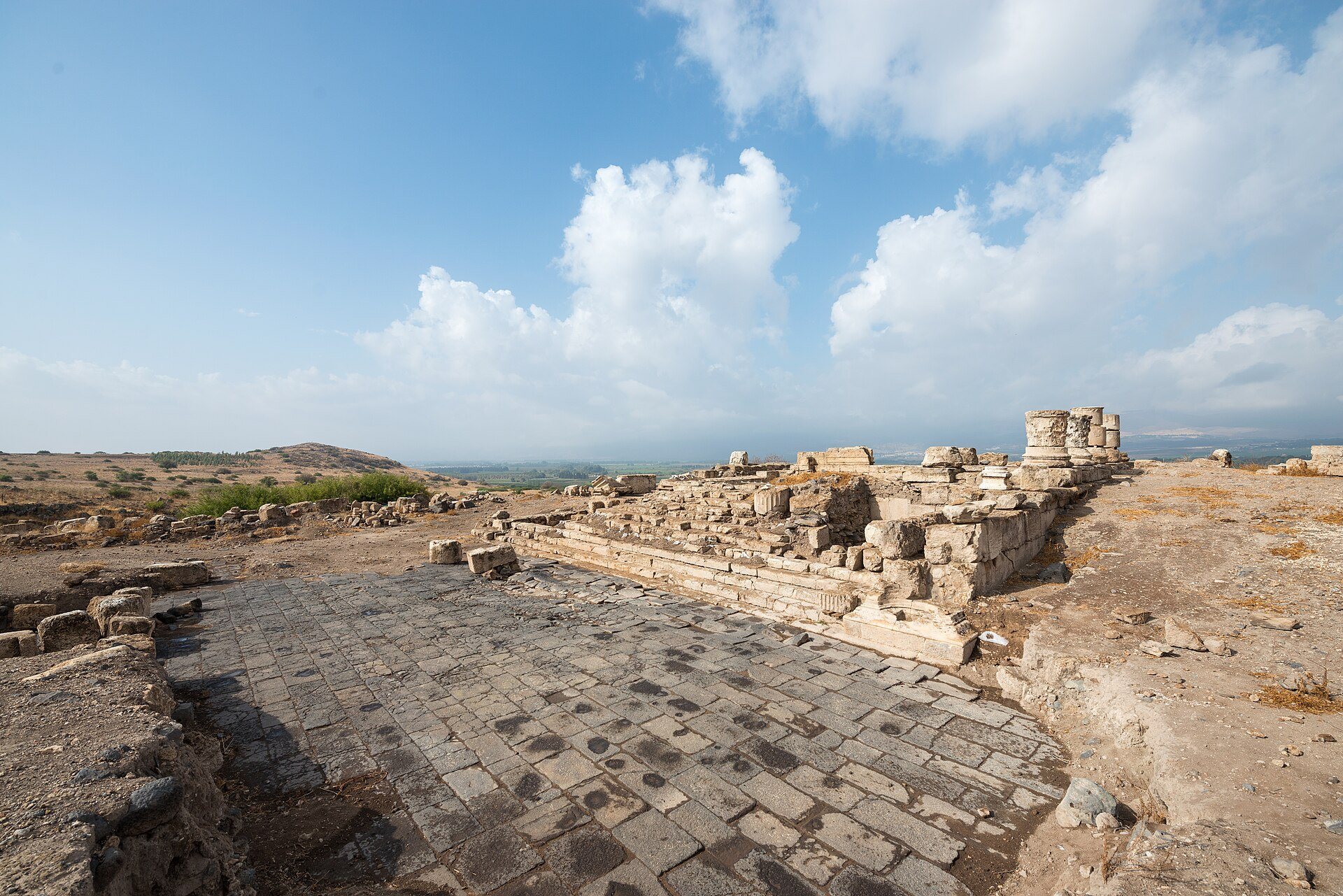
The temple complex occupies the center of a small hill about 159 metres above sea level, near the foothills of Mount Hermon and approximately 4 kilometres southwest of Banias. The hill overlooks the Hula Valley to the west. A Roman road lies to the north, while the successive sanctuaries occupy the central architectural position.
Temple structures
Earlier sanctuaries
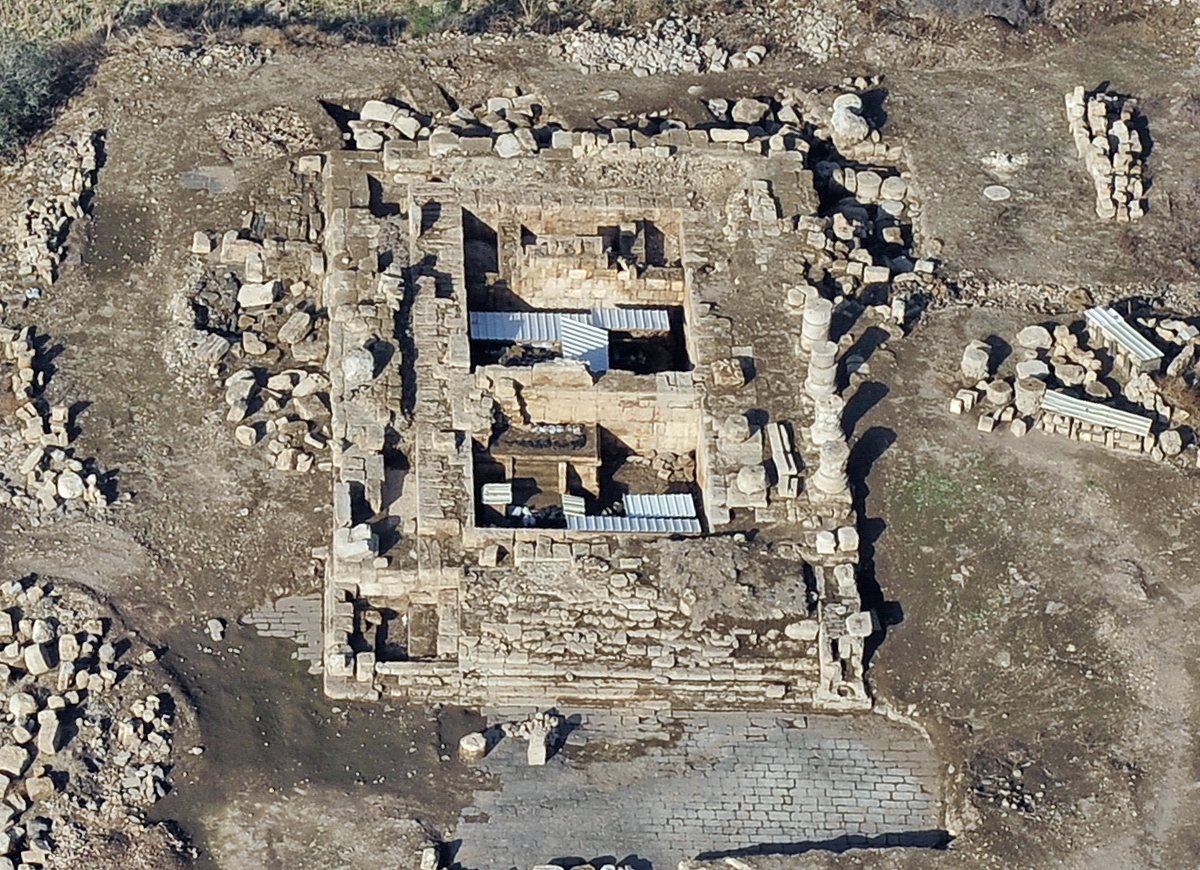
The sanctuaries were constructed one above another. The earliest temple was incorporated beneath the later Herodian building, below its floor, and could be reached by a staircase. This arrangement preserves the physical sequence of the site’s temple phases within the later structure.
Herodian temple
The Herodian temple stood on a podium, a raised platform supporting a building, approximately 2.5 metres high. Finely cut ashlar stones formed the podium, while limestone and plaster were used in the temple. The rectangular building measured approximately 25.22 metres in length and 13.16 metres in width, and is described as having been about 22 metres high.
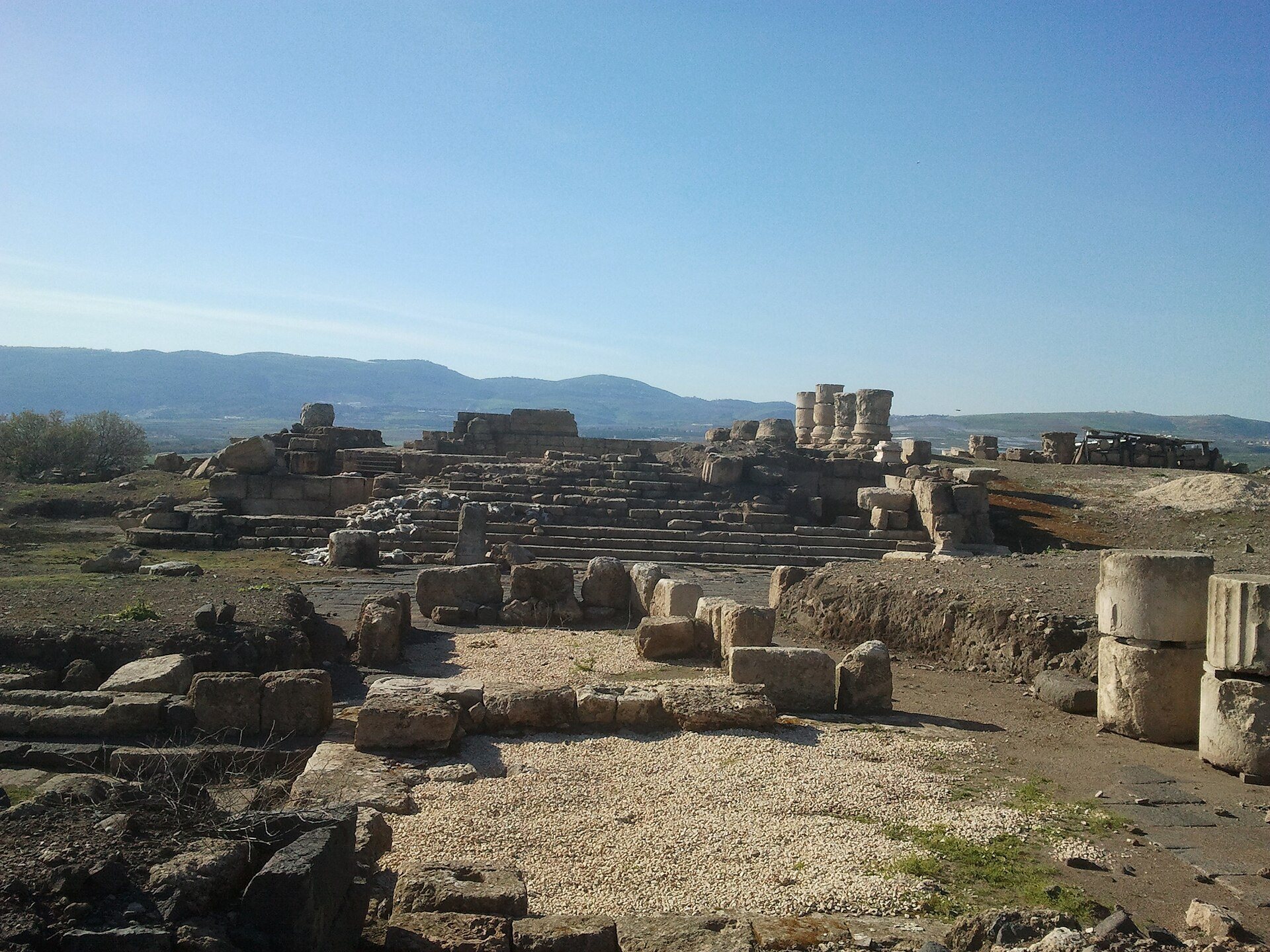
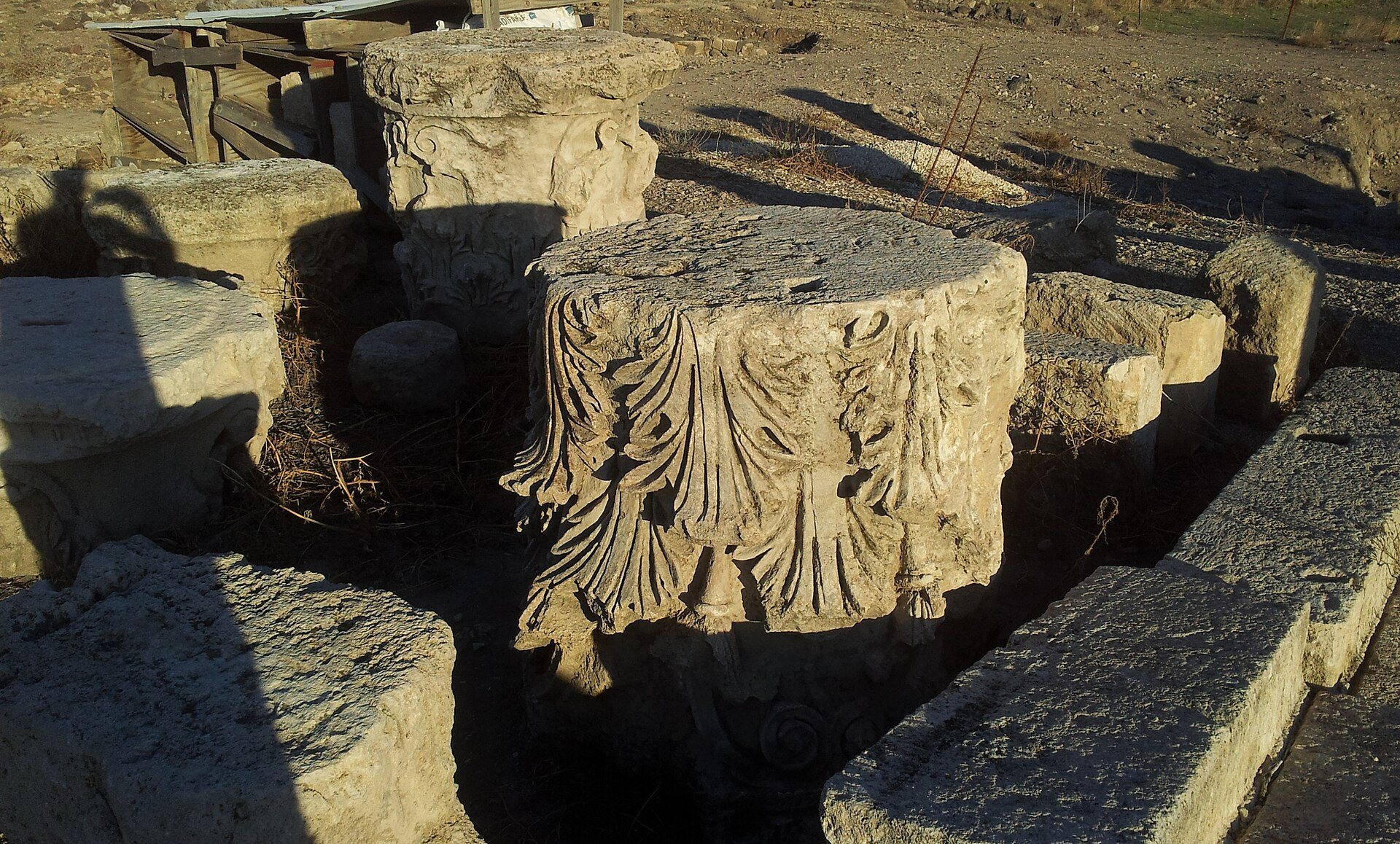
A large basalt forecourt lay before the temple, with a broad staircase leading upward to the building. Its facade had four columns arranged in a distyle-in-antis design, meaning that two columns stood between projecting side walls. Inside were a hall and an inner sanctuary. During an early-second-century renovation, the temple was surrounded by columns with Corinthian decoration, whose capitals were ornamented with acanthus-leaf forms.
Surviving elements include columns, walls, Corinthian capitals, an altar, and a base for a statue. The temple itself is ruined, while a reconstruction model of the Roman building is displayed at the Israel Museum.
Approach and associated installations
Colonnaded street
A column-lined street linked the temple compound with the Roman road. Associated road remains include a guard tower and a sacred complex, placing the temple within a wider built setting rather than as an isolated structure.
Shops and wine press
Excavations also uncovered shops, a wine press, and other installations near the temple compound. These remains record activity around the sanctuary and complement the surviving architectural elements of the temple itself.