Old Jewish Cemetery, Prague: A Historic Jewish Burial Ground
Site at a Glance
- Popularity
- Very High
- Country
- Czechia
- Primary era
- Early Modern
- Eras represented
- Medieval, Early Modern, Modern
- Civilizations
- Austria-Hungary, Habsburg, Holy Roman Empire, Kingdom of Bohemia
- Site type
- Burial
- Remains
- Necropolis
On this page17 sections
History
The Old Jewish Cemetery in Prague, Czechia, served the city’s Jewish community from the first half of the 15th century until 1787. It is one of Europe’s largest Jewish cemeteries and one of Prague’s most important Jewish historical monuments.
Origins and early history
The cemetery succeeded an earlier burial ground known as the Jewish Garden, near the Vyšehrad road in the New Town. King Vladislaus II of Bohemia ordered the Jewish Garden closed in 1478 after complaints from townspeople. The site later disappeared beneath New Town streets.
The Old Jewish Cemetery’s exact foundation date is unknown, though it was probably in use by 1439. The first known written reference is a 1440 record concerning land purchased from a brewer named Hanuš.
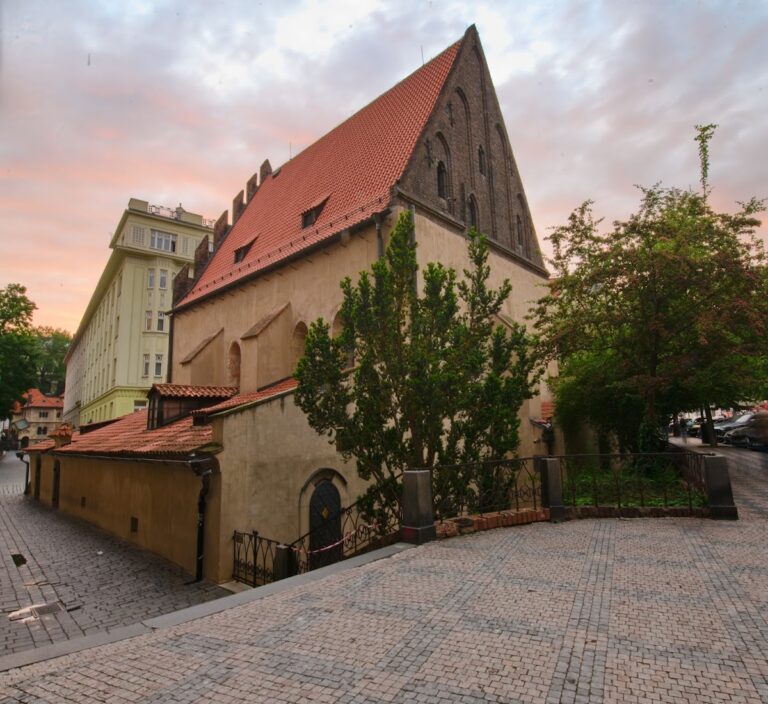
Rabbi and poet Avigdor Kara witnessed the 1389 pogrom, a violent attack on Prague’s Jewish community, and wrote an elegy about it. The poem describes looters destroying a cemetery and disturbing graves. The cemetery is generally thought not to have existed yet in 1389, so the location described in the elegy remains uncertain. Some scholars have argued that Kara’s writing influenced Jan Hus. The elegy is still recited at the Old-New Synagogue on Yom Kippur, the Jewish Day of Atonement.
Expansion and community life
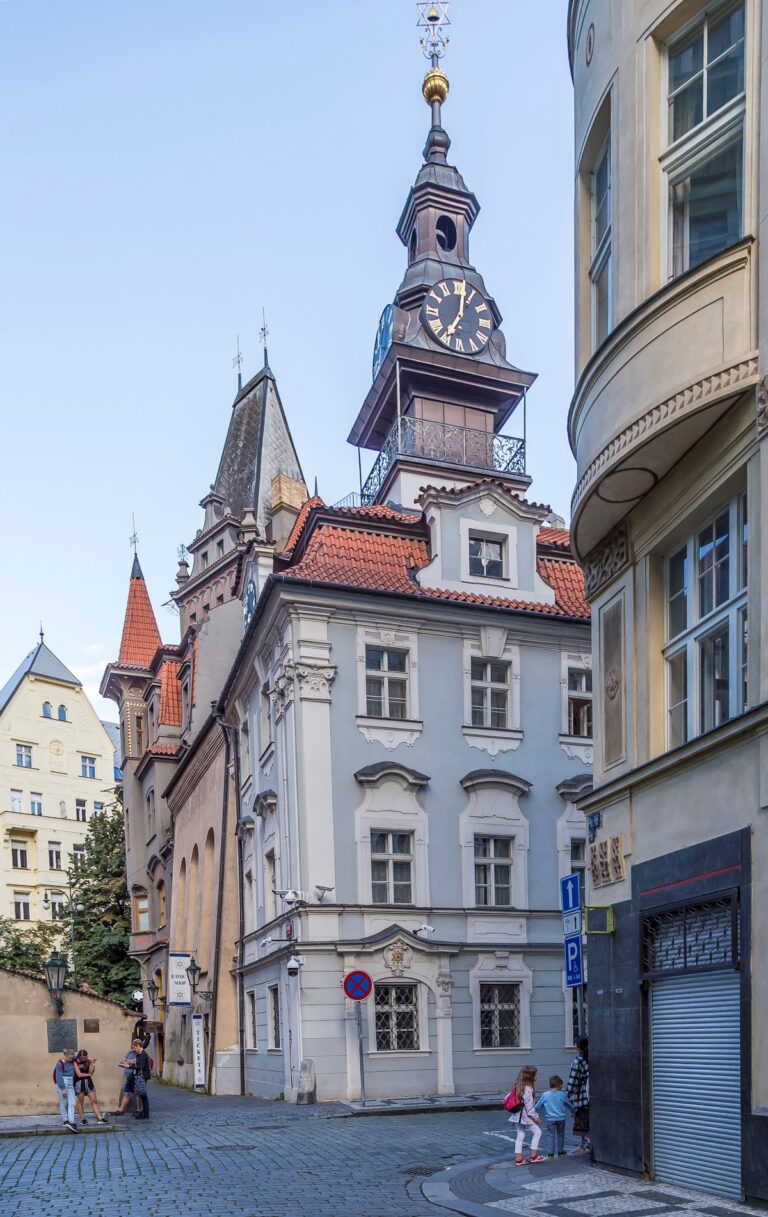
From the first half of the 16th century, two separate burial grounds operated within the Jewish ghetto. They had been joined by the end of the 17th century. The community acquired land for burials on several occasions. Mordecai Maisel, a community leader and benefactor, helped secure burial land. He was also a court Jew under Rudolf II, a Habsburg ruler whose court fostered learning and patronage, and funded public buildings including the High and Maisel synagogues, the Jewish town hall, and three small buildings on the site of the later Klausen Synagogue. The last area in which burials took place was obtained in 1630; the cemetery’s final land expansion came on 10 November 1768.
Several prominent figures in Prague’s Jewish community were associated with the cemetery. Aharon Meshulam Horowitz, who died around 1545, initiated construction of Pinkas Synagogue as a family synagogue. Rabbi Judah Liva ben Bezalel, known as Maharal of Prague or Rabbi Löw, died in 1609. A prominent Hebrew scholar, he taught David Gans, whose work included the Hebrew chronicle Tzemach David, a history that also recounts events in Czech lands. Later legends about Rabbi Löw include the Golem, an artificial being in Jewish legend.
Prague’s Jewish printing trade was represented by Mordecai Katz and his son Betzalel. Their ancestor Gerson Cohen founded the family printing house, which produced works including a 1526 Passover Haggadah, a text used during the Passover ritual meal. Hendel Bassevi, who died in 1628, was known as the mother of the poor. Her husband, Jacob Bassevi, led Prague’s Jewish community and became the first Jew in Bohemia to receive a title of nobility. David Oppenheimer, Prague’s chief rabbi and provincial rabbi of Bohemia, died in 1736; his extensive library is now held by the Bodleian Library at the University of Oxford.
Closure and later changes
In 1784, Emperor Joseph II, a Habsburg ruler associated with Enlightenment-era reforms, prohibited burials in old cemeteries within urban centers for hygienic reasons. The cemetery’s last burial was that of Moses Lipman Beck on 17 May 1787. Afterward, Prague’s Jewish community used a plague cemetery in Žižkov, established in 1680 and in use until 1890. Some of its remains now lie beneath the Žižkov Television Tower. From 1890, burials took place at a new Jewish cemetery associated with the Olšany cemetery complex.
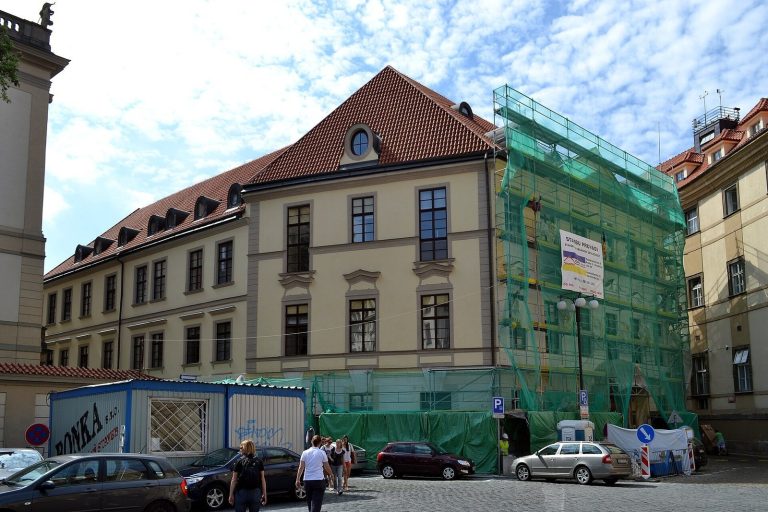
Proposals to abolish part of the Old Jewish Cemetery during the reign of Emperor Francis I, who ruled after Joseph II, were not carried out, chiefly because of opposition from Prague Archbishop Václav Leopold Chlumčanský. The cemetery was reduced during redevelopment of the Old Town and Josefov after 1903. Despite Jewish protests, its northern and southwestern edges were taken for street widening and new streets, and some land was allocated to the Museum of Decorative Arts.
Cultural memory
The cemetery’s history and fate inspired Czech artists and writers, including painters Antonín Mánes, Jaroslav Čermák, and Jindřich Štyrský, and poets Jaroslav Vrchlický and Vítězslav Nezval. It also became the setting for fictional treatments of antisemitic conspiracy theories. Hermann Goedsche’s 1868 novel Biarritz depicts a secret midnight meeting of rabbis supposedly plotting a Jewish conspiracy, with the Devil appearing. The invented scene resembles one in Alexandre Dumas’s 1848 novel Giuseppe Balsamo and is associated with the forged Protocols of the Elders of Zion, fabricated by the Russian secret service to incite antisemitism in Russia. Umberto Eco’s 2010 novel The Prague Cemetery takes its name from the site and addresses this theme.
Remains
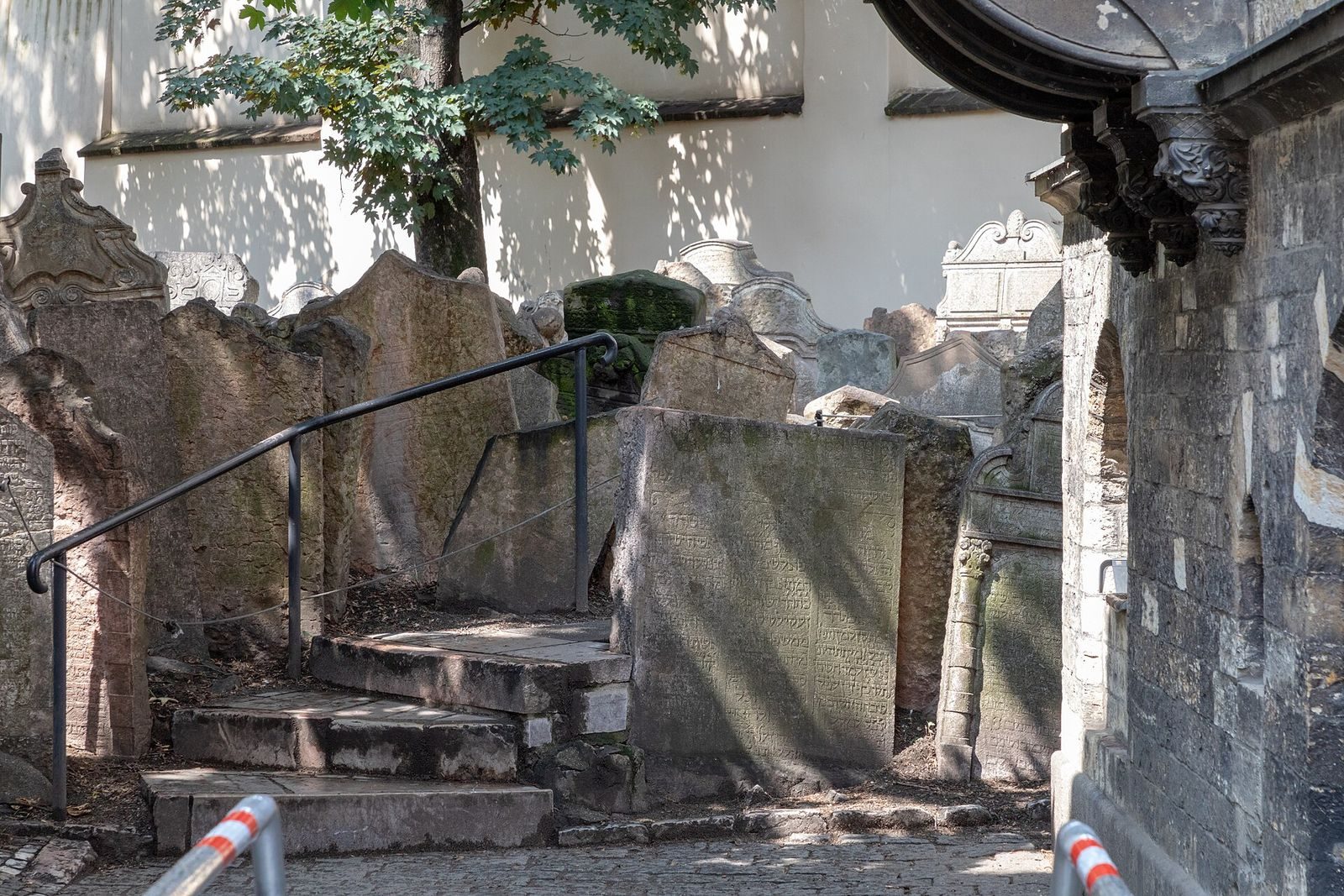
The cemetery occupies the highest hill of the historic Jewish Town, in Josefov, at an elevation of about 192 metres. Its area is 11,142 square metres, with thousands of gravestones crowded together. Limited space and the prohibition on disturbing existing graves led to repeated layers of soil and burials. In some places graves were stacked to about a dozen levels, raising the ground several metres above the surrounding streets. Retaining walls support the raised surface, and older stones were sometimes covered or lifted to the newer ground level.
Gravestone forms and decoration
Stone forms and carved symbols
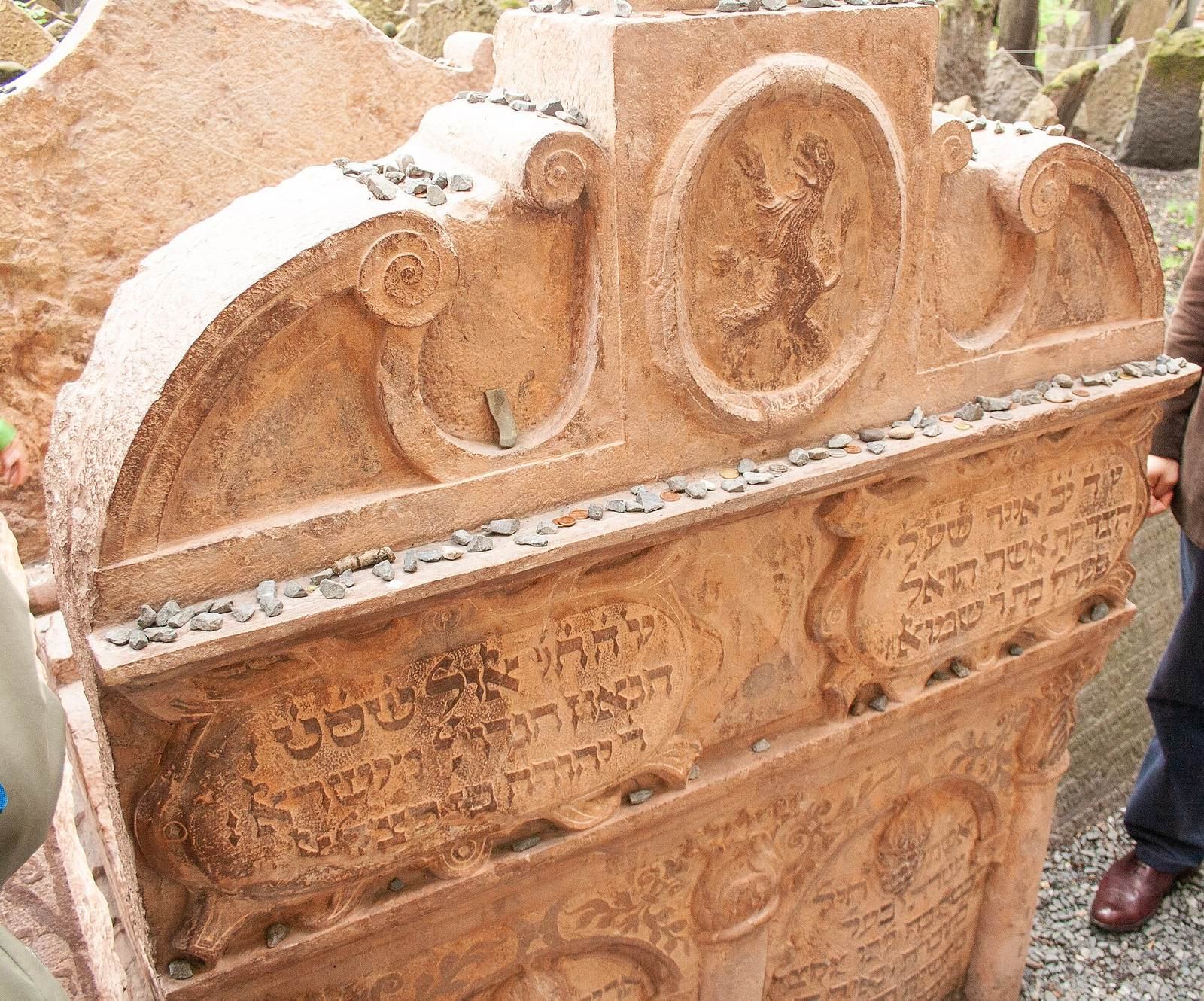
The oldest gravestones are simple sandstone slabs with semicircular, shield-shaped, or flat tops and decorative inscriptions. Carved ornament became more common from the 15th century and probably reached its height in the 17th. After 1600, Baroque four-sided tomb monuments appeared in place of earlier upright slabs. The burials lie in the ground beneath these structures, not inside them. Rococo details appeared from the middle of the 18th century, after which stones became flatter and simpler again.
From the 16th century, carved symbols indicated religious affiliation, personal or family names, qualities, and occupations. The Star of David is identified as the earliest such symbol. Blessing hands mark priestly families, while jugs and bowls for washing the hands identify graves of Levites, a distinct lineage associated with religious service. A crown represents a good reputation, and grapes signify fertility and a prosperous life. Animals and plants could refer to names: lions to Judah, deer to Naftali, bears to Issachar, wolves to Benjamin, birds to several women’s names, roses to Rosa, mice to Maisel, and geese to Gans. Scissors indicate a tailor, a lancet a physician, a book a cantor, a harp or violin a musician, and a calf a butcher.
Inscriptions and names
Gravestone inscriptions use Hebrew script. Before about 1500, letters were usually cut into the stone; raised lettering became more common afterward. Inscriptions identify the deceased and usually give the father’s name, or for a woman her husband’s name, as well as an occupation, a community honorific, and the date of death or burial. Dates may appear in ordinary form or as a chronogram, a date encoded through the numerical values of selected letters or words. Brief eulogies and longer tributes praise the deceased’s piety, devotion to God, charity, learning, and character. Concise Renaissance texts gave way to more expansive Baroque and Rococo inscriptions.
From the 16th century, inscriptions often included the name of a town or region where a person came from or had lived. More than 250 place-derived surnames refer to Libeň, including Lieben; about 150 derive from Roudnice, 100 from Sobotka, and 80 from Kolín. Other surnames on the stones refer to towns including Příbram, Náchod, Jičín, Libochovice, Pardubice, and Mělník.
Burial areas and named monuments
Near the entrance and Klausen Synagogue
Near the entrance beside Klausen Synagogue are the gravestones of physicians Beer Teller, who died in 1688, and his son Löw Teller, who died in 1697. Close by, a double Rococo monument marks the graves of physician Solomon Gumperz, who died in 1729, and his son Moses, who died in 1742. Moses Lipman Beck’s monument stands near the entrance, along the route to the cemetery’s original entrance.
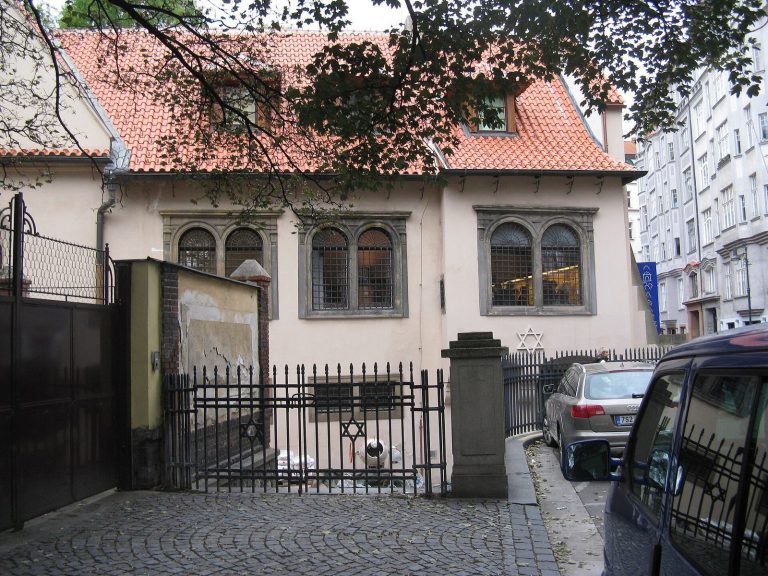
Pinkas Synagogue area
Burials in the area beside Pinkas Synagogue began around the middle of the 16th century. David Gans’s small gravestone has a pointed gable and carved symbols of a Star of David and a goose. The graves of printers Mordecai Katz and his son Betzalel are also in this area. David Oppenheimer’s tomb monument bears a hexagram on its upper front wall.
Renaissance and marble tombs
Mordecai Maisel’s Renaissance-style tomb is the cemetery’s oldest tomb monument. A separate Renaissance tomb marks the graves of Judah Löw and his wife and carries carvings of a lion and grapes. Hendel Bassevi’s marble tomb has a lion holding a coat of arms on its front and is probably the cemetery’s most representative monument.
Other named graves
The cemetery also contains monuments to Solomon Ephraim Luntschitz, known as Keli Yakar, a chief rabbi and commentator on the Mishnah, an early compilation of Jewish oral law, and to Joseph Solomon Delmedigo de Candia, a physician and scholar from Crete. Their graves are among the cemetery’s named memorials.
Early markers, wall fragments, and reburials
Avigdor Kara and Gothic gravestones
The cemetery’s oldest gravestone is the plain rectangular marker of Avigdor Kara, dated to 1439. It stands near a newer building on the site of the former hospital. On the cemetery’s left side, fragments of older Gothic gravestones are built into the wall. They were found in 1866 during construction of the Měšťanská beseda building on today’s Vladislavova Street.
Nefele mound and displaced burials
The mound called Nefele, a name derived from a Hebrew term for miscarriage, lies beside Klausen Synagogue on the site of a Jewish hospital that burned in 1689. Remains removed from cleared sections of the cemetery were reburied in the mound. Gravestones from those areas were also buried in unused parts of the cemetery or built into its side wall, where some remain visible. A black gravestone for Aharon Meshulam Horowitz lies opposite the mound.